Wheelchair Wars: Appendum

A cinematic science-fiction archival illustration for a novel appendix: an imposing sapient bipedal reptilian warrior resembling a Komodo dragon stands on the alien world Tarkonia, surrounded by ancient clan-world architecture and a vast starfield. The atmosphere is ominous and imperial, suggesting a classified Emperor's Archives dossier about a hostile enemy species. Include subtle hints of countless worlds and orbital warfare in the distant sky. Dramatic moonlight, muted bronze, deep red and black palette, highly detailed, serious literary sci-fi cover-art style. No text, no labels, no logos.

Hi guys, this is an extract of the appendum I’m thing of putting at the end of the novel. Any thoughts?

You have been granted privileged, exclusive access to the Emperor’s Archives on the planet Libricus. A world of one billion subjects filled with records of the Empire. Care must be always taken with these sensitive materials.

The material in the archives may contain passages that contain chaotic thoughts. These should be treated with caution and must not be repeated to the general populace.

Long Live the Emperor!

The Tarks

Status: Hostile – Enemy of the Empire. To be Eliminated.

Homeworld: Tarkonia

Number of systems: Exact number unknown but estimated to be in the region of four million.

Biology: The closest similar creature in the Empire is the Komodo Dragon on Earth. A sapient bipedal reptilian species. Reproduction is through internal fertilization and waterproof amniotic eggs.

The eggs are usua

Politics: No overall government. Instead, each world is a clan world. Kin is everything. They may join at times; nit it will only be a matter of time before the alliance fractures.

Armies: Excellent Warriors with elite weaponry, never surrenders. Little care for their wounded, considered shameful to return mutilated from the battlefield.

Weakness: Lack coordinated action on a grand scale. Their eggs are very vulnerable to destruction from orbital fire.

The Fix: Kabul, Tehran, and an Old-School Mission of Redemption

A cinematic movie review aesthetic image featuring popcorn in a striped bucket, a vintage film reel, a clapperboard, and soft dramatic cinema lighting. Warm golden and deep red tones, moody atmosphere, film grain texture overlay. Horizontal composition, editorial feel.

My dear readers, this is a very interesting film I watched earlier. I have to say, I really enjoyed it.

The Fix is the kind of mid-budget action thriller Hollywood used to make with more regularity: long, loud, a little overstuffed, and unexpectedly sincere about the damage that follows the men who do the dirty work. Directed by Guy Moshe from a story that began with former CIA officer Bazzel Baz, it follows a team of disgraced operators from the wreckage of Kabul to the streets of Tehran, chasing both a hidden fortune and a last shot at meaning. It is not a lean machine. It is a bruising, old-fashioned mission picture that wants spectacle and conscience, and for long stretches it gets both.

The film opens in August 2021, in the collapsing chaos of the American withdrawal from Afghanistan. Tucker, played by Zachary Levi with a clenched, exhausted gravity far from his superhero charm, leads a CIA special-operations team tasked with extracting a valued Afghan ally before the Taliban close in. This is not really that well explained in the film, and this could become a major shortcomings in time when the average viewer won’t know the history. The mission goes wrong in the way these missions always seem to go wrong: too late, too little air cover, impossible choices. Tucker makes one of those choices — one that saves some lives and ends another — and the Agency answers by discarding the entire unit. Liam Neeson’s Larry, their handler and something close to a father figure, is left equally stranded. The first half-hour is the film at its most effective: dusty, panicked, morally ugly, and unusually willing to sit with the shame of a botched rescue rather than rushing to the next explosion.

A year later, Tucker is adrift. The movie takes time with that drift — the strained marriage, the son he barely knows how to talk to, the nights that never quite end. Then Larry, now frail and slipping, lets something slip: in 1981, after the embassy fell, he and others bricked $25 million into a wall in Tehran for a counterrevolution that never came. The money is still there. So is an Iranian former asset who will only give up the location if Tucker also extracts her activist daughter. What begins as a payday becomes a redemption job, then a rescue, then a tangle of both. Tucker does what operators like him do. He calls the old team.That team is the movie’s secret weapon. Wes Chatham, Quincy Isaiah, Jake Choi, Augusto Aguilera, and Grant Harvey play the kind of interchangeable-looking operators who, in lesser films, vanish into beards and tactical vests. Here they have enough texture — grief, gallows humor, private debts — to feel like a unit rather than a firing squad. Elnaaz Norouzi’s Zara, recruited as Tucker’s cover wife and Farsi-speaking partner on the ground, gives the infiltration scenes a live-wire tension; Lara Wolf’s Maryam, the young woman they have to get out, refuses to be cargo. Annet Mahendru and Titus Welliver fill the edges with the bureaucratic and personal wreckage these men left behind. Neeson, used sparingly, is the film’s moral weather system: gravel, regret, and the sense that he has already paid more than the plot will admit.

Once the team is inside Iran, Moshe starts stacking plates. Cover identities, hotel corridors, Revolutionary Guard compounds, a train extraction running in parallel with a heist. The New York Times called that dual sequence lunacy that “plays,” and that is exactly right. Moshe cross-cuts with real showmanship: one team moving people, another tearing into a wall that has waited forty years, both clocks running out at once. It is the high point of the movie — messy, improbable, and genuinely exciting in the way a good heist-rescue hybrid should be. Larry Smith’s cinematography keeps the Tehran sequences readable even when the geography gets busy; the action is physical and a little brutal, more 13 Hours than slick superhero cleanup.

Visually, the film is very impressive with long camera shots of the Iranian landscape, further immersing you in the action, and making it all “feel” very real.

What distinguishes The Fix from a dozen other “one last job” pictures is its preoccupation with aftermath. These men are not looking for glory. They are looking for a version of themselves that can sleep. The script keeps circling sin, loyalty, and the difference between following an order and doing the right thing when the order is already too late. Faith language flickers at the edges — truth, freedom, the possibility of being remade — without turning the film into a sermon. Plugged In, of all places, noticed that the movie is about flawed people trying to make a better choice after they have already failed. That is the heartbeat under the gunfire. Tucker is not a superhero who discovers his power. He is a man who already used his power and cannot forget what it cost.

The film is long — 141 minutes — but I didn’t feel it. Moshe knows when to add a twist, a double-cross, or another corridor. Some of the geopolitics is broad. Some of the plotting is the kind of late-movie convolution that makes you throw up your hands and then, a minute later, lean forward anyway because the set piece is working. Variety called it polished but uneven, watchable even when it misses the bullseye. That is a fair description of its best self: not elegant, but committed. The performances hold when the story overreaches. Levi, asked to play the strong-silent type, finds something wounded and stubborn rather than blank. Neeson can do this role in his sleep and still makes it sting. The supporting women, given less room than they deserve, still register as people with agency rather than prizes.

The Fix will not convert anyone who wants lean, modern, morally tidy thrillers. It is an unapologetic American action movie about operators who break rules, bury cash, and then try to dig something better out of the wall. It is also, in its better hours, a film about what happens when the war ends and the men who fought it are still standing in the rubble, looking for a job that might feel like grace. See it for the Kabul opening, for the train-and-compound cross-cut, for Neeson’s quiet wreckage, and for a team that actually feels like a team.

Four point five stars out of five from me.

Netflix’s ‘Monster: The Lizzie Borden Story’ Is a Gothic Knockout

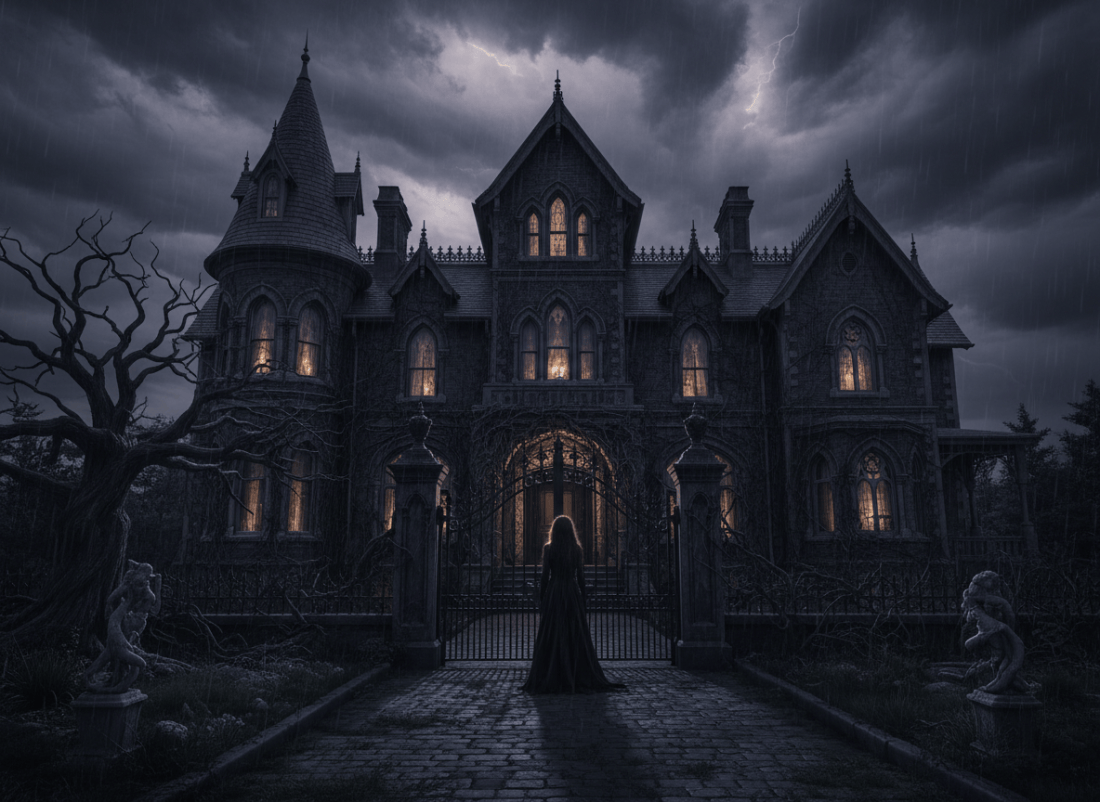
A dark, gothic Victorian house at dusk, with a stormy sky and dim candlelight flickering in the windows. Eerie and atmospheric, with a moody cinematic quality. Silhouette of a lone woman standing in front of the house. Deep shadows, muted tones of dark grey, burgundy, and black.

A new Monster series has just been released. I really enjoyed the ones about Dahmer and Ed Gein, so I immediately turned it on. I always make good decisions.

Monster: The Lizzie Borden Story is the most atmospheric, stylish, and emotionally charged entry in Ryan Murphy and Ian Brennan’s Netflix anthology yet — a gothic fever dream that finally gives the franchise a female center of gravity and refuses to treat its subject as a punchline or a nursery rhyme.

variety.comReleased September 17, 2026, this eight-episode season follows Lizzie Borden (Ella Beatty), a repressed daughter in a cruel Fall River household, as she and housemaid Bridget “Maggie” Sullivan (Vicky Krieps) collide with Andrew Borden (Charlie Hunnam) and stepmother Abby (Rebecca Hall). The show uses the 1892 axe murders as raw material rather than a courtroom transcript. That is the point. Monster has always been more interested in myth, desire, and the making of a legend than in a police blotter. Here, that instinct pays off.

Ella Beatty is a revelation. She plays Lizzie not as an obvious monster but as a woman who is hard to pin down: lonely, watchful, simmering with anger she has nowhere to put. You feel the corset, the locked rooms, the humiliation of being treated like property in a house that runs on money and contempt. Beatty never overplays the “future killer” wink. She lets the pressure build until the house itself starts to feel like an accomplice.

The supporting cast is stacked and often delicious. Rebecca Hall commits fully to Abby as a vicious, scene-chewing stepmother — theatrical in the best Murphy tradition and frequently the most entertaining person on screen. Vicky Krieps gives Bridget a sly, destabilizing intelligence; the relationship between maid and daughter is the season’s beating heart, whether you read it as romance, conspiracy, or both. Charlie Hunnam’s Andrew is cold, miserly, and casually cruel, a patriarch who makes the household’s explosion feel inevitable. Billie Lourd, Jessica Barden, and Sarah Paulson (as Aileen Wuornos, in a framing device that links women history branded as monsters across time) add texture and a larger argument about who gets called evil and who gets forgiven.

Visually, this is a knockout. The Borden house is rendered as a velvet-lined trap: dark wood, cramped hallways, heat, blood, and a production design that makes Victorian respectability look like a crime scene waiting to happen. The violence is graphic, as the Monster brand demands, but it is also staged with a kind of grim pageantry. When the series leans into camp — and it does — it does so with brio rather than cheapness. Period details, costumes, and the contrast between public piety and private rot give the season a richness earlier installments sometimes lacked.

What makes this season feel like a genuine step forward is its focus. After Dahmer, the Menendez brothers, and Ed Gein, The Lizzie Borden Story is the first Monster chapter built around an alleged female perpetrator, and it uses that shift to talk about female rage, bodily confinement, class, and the thin line between a “difficult woman” and a legend. It is not a documentary. It invents psychology, intimacy, and motive. If you want a careful reconstruction of the 1893 trial, look elsewhere. If you want a lush, angry, operatic portrait of a woman history reduced to forty whacks and forty-one, this is the one.

Fours stars out of five.

Band of Brothers: Legacy Review – A Moving 25th Anniversary Tribute

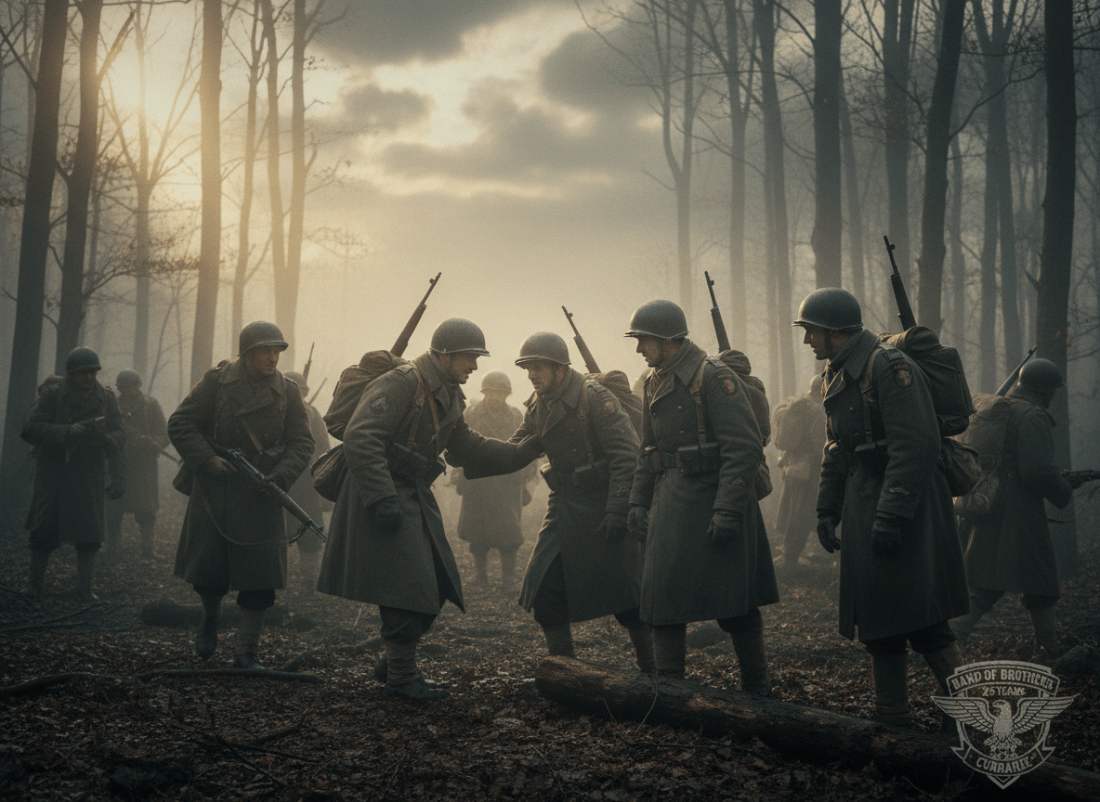
A cinematic, moody image evoking the 25th anniversary of Band of Brothers — soldiers in WWII uniforms moving through a misty European landscape, warm golden light breaking through overcast skies, a sense of brotherhood, sacrifice, and legacy. Dramatic and emotional tone, film still aesthetic.

Now for a trip down down memory lane. Anyone of my vintage will remember Band of Brothers with great war scenes and comraderie. Recently, a documentary about its impact was released.

Band of Brothers: Legacy is a 62-minute HBO documentary that premiered on HBO Max on September 9, 2026—exactly 25 years after the original miniseries debuted. Directed by former Green Beret Chase Millsap and executive-produced by Tom Hanks and Gary Goetzman through Playtone, it is a compact, affectionate tribute to the 2001 series and the real Easy Company men whose stories it preserved.

It is not a replacement for the original 10-hour epic or the 2001 companion documentary We Stand Alone Together. It is a reflection on why that work still matters after the last Easy Company veteran, Bradford Freeman, died in 2022.What the documentary actually covers – Millsap intercuts new interviews with the actors—Damian Lewis (Dick Winters), Ron Livingston (Lewis Nixon), Michael Cudlitz (Bull Randleman), David Schwimmer (Herbert Sobel), Neal McDonough (Buck Compton), James Madio, Frank John Hughes, and others—with previously unseen archival interviews of the veterans themselves, including Winters, Bill Guarnere, Carwood Lipton, Babe Heffron, and Randleman. It’s remarkable that so many of the actors are now so familiar from other shows they were on.

The film follows the original series’ arc in miniature: boot camp under retired Marine Capt. Dale Dye, the actors meeting the men they portrayed, visits to European battlefields, and the lasting personal impact of those relationships. Lewis still speaks movingly about the two days he spent with Winters. The actors describe carrying those connections for a quarter-century rather than treating the roles as just another job. Behind-the-scenes footage and practical-effects stories (exploding trees, large-scale sets) appear, but they serve the larger theme of respect and authenticity rather than becoming a standard making-of reel.

A recurring thread is timing. The original series premiered two days before 9/11. Dye and others note how it landed with a country suddenly at war again. Millsap, a veteran filmmaker, frames Easy Company’s story as standing in for millions of ordinary men who served, and he credits the series with helping later generations of service members “get it right when it mattered.” The extra veteran footage is the documentary’s greatest asset. Viewers who know the original episode-opening interviews get more of the same voices—sometimes at battle sites, sometimes expanding on brotherhood and the things they would not discuss about themselves. That material is now irreplaceable. Several reviewers called these sequences the most emotional parts of the film.

The actor interviews work because they stay specific. Hughes recalls Guarnere telling him, “I was a 19-year-old paid killer. Don’t forget that.” The cast discusses the 10-day boot camp, the difficulty of earning the veterans’ trust, and how playing these men changed them. The documentary argues that Band of Brothers captured lightning in a bottle at the last possible moment, when the men who lived it could still look the actors and cameras in the eye. That argument lands.

At just over an hour it does not overstay its welcome. It feels like a thoughtful anniversary special rather than a cash-in.

Four stars from me.

Why Blood Sacrifice Is a Must-Watch Nordic Noir on Netflix

Stockholm waterfront with City Hall tower, boats, and sunset

Now, for something a bit different from Sweden. Blood Sacrifice is one of the sharpest, most satisfying Nordic noirs Netflix has delivered in years. The five-episode Swedish series, created by George Kay (Lupin, Hijack) and directed by Kristoffer Nyholm (The Killing), dropped on August 20, 2026 and immediately announced itself as a late-summer standout: taut, emotionally grounded, and constructed for a single sitting.

It is summer in Stockholm, when the light never fully dies. An emergency call about a home invasion at a summer house in the archipelago sends two officers to a scene that appears empty. The next day their bodies are found. What follows is a string of attacks that appear to target the police themselves. Detective Thomas Berg (Jakob Oftebro) is put in charge and, against every instinct, turns to the last person he wants involved: his estranged father Alfred (Peter Andersson), a retired detective whose career ended in disgrace. That is the setup. The show never wastes it.

It has facets of a love story between an estranged father and son… wrapped up inside a dark horror. The procedural engine is strong—the killer’s pattern, the institutional pressure, the sense that time is running out—but the real voltage comes from the relationship between Thomas and Alfred. Oftebro plays the younger Berg as tightly controlled, professional, and quietly furious at the man who was never there. Andersson gives Alfred a lived-in mix of bitterness, residual brilliance, and the particular loneliness of someone who knows the job better than the people still doing it. Their scenes together have the uncomfortable intimacy of people who share history they would rather not examine. The supporting ensemble (Electra Hallman, Henrik Norlén, Lisette T. Pagler and others) feels lived-in rather than decorative.

Nyholm’s direction is a major asset. He uses the strange, lingering Nordic summer light as both atmosphere and metaphor: everything is visible and nothing feels safe. The Stockholm and archipelago locations are photographed with a cool precision that never tips into postcard prettiness. Violence, when it arrives, is sudden and ugly rather than stylized. The five-episode length (episodes run roughly 44–58 minutes) is the show’s secret weapon. There is no room for padding. Clues land, tensions escalate, and the father-son dynamic is allowed to breathe without being subordinated to endless red herrings. The result is a series you can finish in an evening and still feel you’ve watched something substantial.

Four stars out of five from me.

How to Ace a Management Interview

Two serious-looking professionals sitting across a table from each other in a formal interview setting. Corporate office environment, neutral tones, professional attire, tense and focused atmosphere, realistic style.

So, my dear readers, as I reach out to my half century, it might be time I become a manager of something or other. I applied for a position in a local company.

With an almost bald head, I let my facial hair grow to show my tinge of grey. Because nothing says management, better.

Still, the two-person panel insisted on asking me annoying questions.

What is your greatest achievement?

Thanks for asking, I’d say it was that time I hammered my brother in FIFA.

Was he really good?

Hardly, he was only 6. You should have seen him cry to his Mammy afterwards.

Have you ever managed a Team?

Eh, you know what FIFA is?

How would you motivate staff?

With sweets.

How would you deal with someone not pulling their weight?

I’d tell them to lose some.

What is performance management?

Getting kinky, I like it.

Have you ever made a mistake?

That kid is not mine, ok!

What do you know about the organization?

Hold on, I think I can remember the name.

Hopefully, I get it, I could do with the extra few bob.

Thanks everyone, don’t forget to subscribe, if you haven’t already done so.

Instadocs: The Decoy Plane Review

A dramatic, cinematic scene of a tarmac at night with two planes — one in the foreground bathed in spotlights (the decoy), one departing in the background under a dark stormy sky. The atmosphere is tense and shadowy, with a documentary film aesthetic. Moody blue and grey tones, slightly grainy texture evoking real-world footage. A cluster of journalists with cameras and microphones stand on the tarmac looking confused, watching the wrong plane. Political thriller documentary style.

Sometimes truth is stranger than fiction. This is a short documentary about a recent bizarre incident, where Trump abandoned journalists to their fate while he took a decoy plane to potentially save his bacon.. Instadocs: The Decoy Plane is a sharp, tightly constructed 28-minute documentary that turns a real-world security operation into a gripping reconstruction. It does exactly what the best short-form docs should: it takes a story that first broke as a Washington Post scoop and lets the people who lived it walk you through what actually happened on the tarmac in Ankara.

nThe film is strongest when it stays close to the firsthand voices. Reporters and photographers who boarded the older Air Force One and were told to pull the window shades describe the oddness in the moment and the later realization that they had been flying on a decoy. Dan Lamothe, who helped break the original story, provides useful context without turning the piece into a lecture. Former Secret Service and Air Force One crew perspectives add operational texture that most news coverage skipped. The result feels like a well-paced briefing rather than a partisan recap.

Production-wise it is clean and economical. The runtime never drags. Archival footage, tarmac video, and simple graphics make the sequence of events easy to follow: public boarding of the 747, the catering-truck transfer out of view, the C-32A departure, and the later switch-back that preserved the public appearance. It treats the Iranian threat and the Secret Service decision as the driving facts rather than editorializing them into a morality play. If you want a concise, well-sourced look at how presidential movement actually works when the threat picture changes, this Instadoc delivers. It is short, specific, and unusually good at letting the participants tell the story themselves. Worth the half hour.

And remember: The Secret Service are only there to protect the President lol.

Fightland Review: Boxing, Blood Feuds and London’s Dark Underbelly

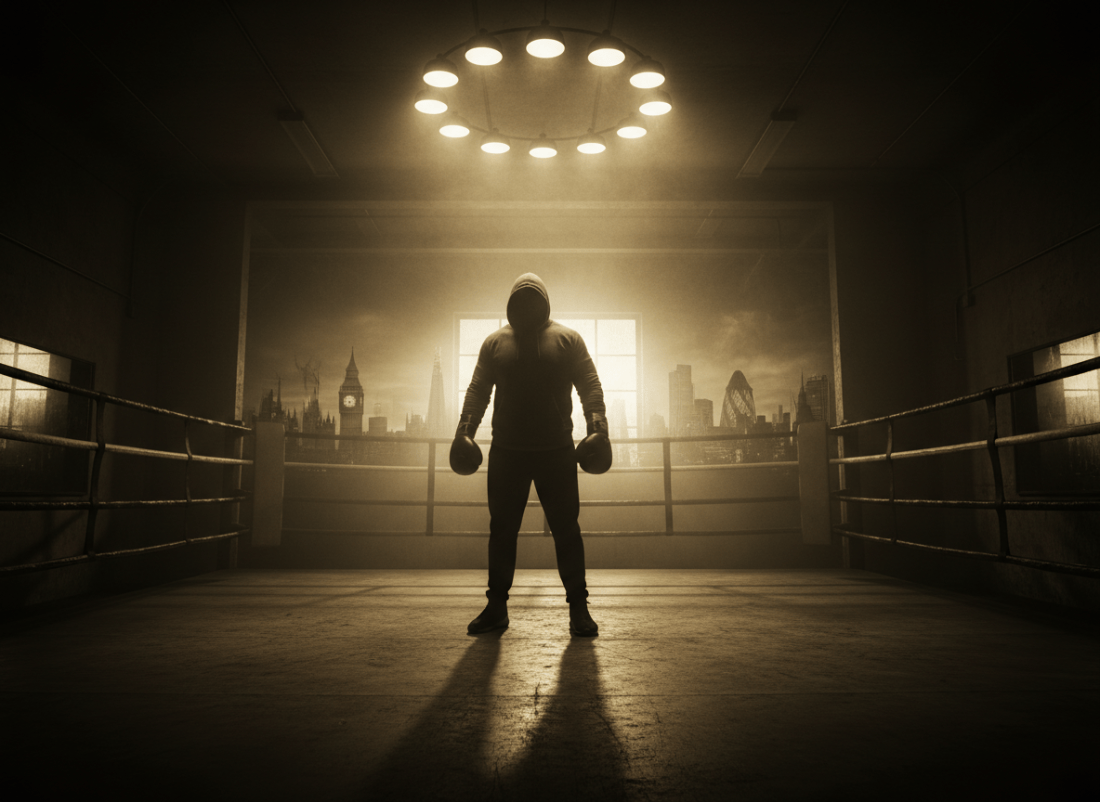
A dramatic, cinematic scene of a lone heavyweight boxer standing in a dimly lit boxing ring in London at night. The fighter wears boxing gloves and a hood, silhouetted against the glow of ring lights. Dark, moody atmosphere with shadows suggesting danger and the London skyline barely visible through a smoky haze in the background. Crime drama aesthetic, high contrast black and dark gold tones.

This is a new series that I’ve just started watching. Fightland is a lean, muscular revenge drama that knows exactly what it wants to be: a bruising collision of the boxing ring and London’s criminal underworld, driven by grief, family fracture, and a champion who has nothing left to lose.

On the night British-born heavyweight Maduka “Duke” Kilroy (Howard Charles) becomes world champion, his brother Calvin is murdered. Duke’s response costs him eight years in a U.S. prison. When he returns to London, he is no longer the golden boy of the sport. He is a man with a plan: get close to the Marshalls — the crime family that once promoted him — and take them apart from the inside to avenge his brother’s death. His former promoter, Kingsley Marshall (Nicholas Pinnock), is the man he believes set him up. Kingsley’s wife Joy (Deborah Ayorinde) is the woman Duke once loved. Their children, Zeek and Cece, are already circling the family business. The setup is classic, but the execution has bite.

Howard Charles is the series’ greatest asset. He plays Duke as a coiled, watchful presence rather than a shouting avenger. The physicality is convincing — you believe he was a champion — but the performance lives in the quieter moments: the way he studies a room, the flicker of old tenderness when Joy appears, the barely contained fury when someone underestimates him. It is the kind of lead turn that holds a pulpy story together and makes you care about the outcome. Nicholas Pinnock, even when not constantly on screen, gives Kingsley a dangerous stillness that lingers. Deborah Ayorinde, Charles Babalola and Anita-Joy Uwajeh give the Marshall family real texture: loyalty, resentment, ambition and the particular strain of growing up in a house where love and power are the same currency.

The boxing world is not window dressing. Gyms, promoters, fighters on the make, and the money that sloshes around title fights feel lived-in. The crime side — drugs, gambling, shifting alliances — sits naturally beside it. London itself is a character: South London streets, late-night venues, the particular mix of glamour and threat that 50 Cent’s G-Unit productions have always liked. Otto Bathurst directing early episodes helps; the action has weight without becoming empty spectacle. When the show throws punches, they land.

What makes Fightland more than a standard revenge yarn is the family mess it keeps circling. Duke is not a lone wolf operating in a vacuum. He is pulling at old relationships, using people who once used him, and discovering that the Marshalls are not a monolith. Zeek’s insecurity, Cece’s sharpness, Joy’s divided loyalties.s.

Fightland is not trying to reinvent British crime drama. It is trying to entertain you while a damaged champion walks back into the life that ruined him. On that score it succeeds. Charles carries it. The Marshalls give him something worth fighting. And Sky Atlantic has another late-night series that punches harder than it needs to.

Too early for a rating but its looking good.

Wheelchair Wars (Sisters of Revenge)

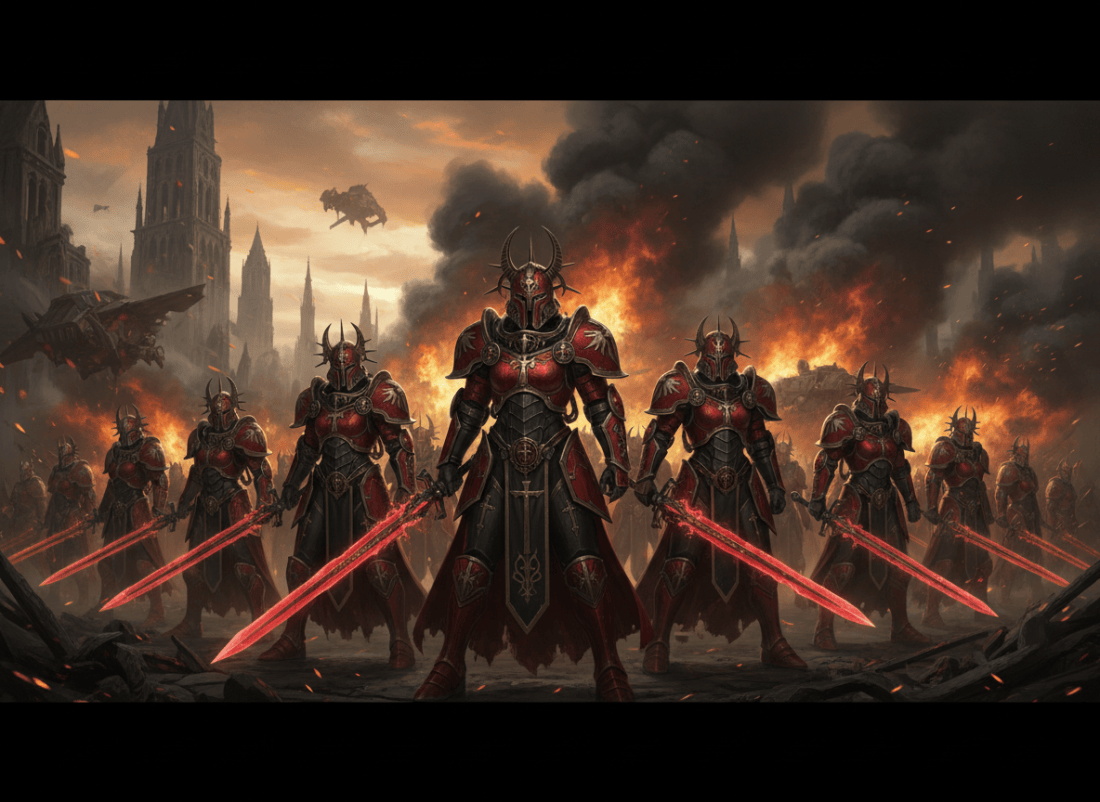
A dramatic sci-fi illustration of a group of fierce, armored women warriors standing in formation in a dark, burning medieval-futuristic city. The women wear ornate religious military armor with red and black color scheme, evoking both devotion and ruthlessness. The background shows the city of Nantes in flames, with smoke rising into a dystopian sky. The mood is dark, epic, and cinematic — reminiscent of a grimdark future empire.

The following except is from the historian Axel Macron book “The Beginning of the Empire” written in 125 EY –

In 3Y there was a rebellion against the Emperor in the city of Nantes in the province of France. Most of the Emperors Troops in the city had been sent to the African front to quell the last pocket of resistance on Earth.

It started like many such events innocuously. Global heating had led to the worst harvest in years in that part of the world. In a dispute over the price of bread, a young man was shot and killed.

Street protests broke out that after three days (or as recently decreed, time-cycles) led to anarchy. Anyone connected with the Emperor’s administration was hung or set alight.

An all-female army of devoted Troops from the island of Britain were dispatched. With religious zeal, they ended the rebellion, slaughtering much of the city as a warning to never again repeat what had happened.

Six ringleaders were identified, and their heads sent to the Emperor. Impressed by their devotion, the Emperor decreed the creation of the Sisters of Vengeance. Their mission to worship and further the will of the Emperor by all available means.

The first convent was created in Bristol, with the Sisters then spreading throughout Earth and the Empire.

The Epic Career of Samuel L. Jackson, Hollywood’s Iron Man

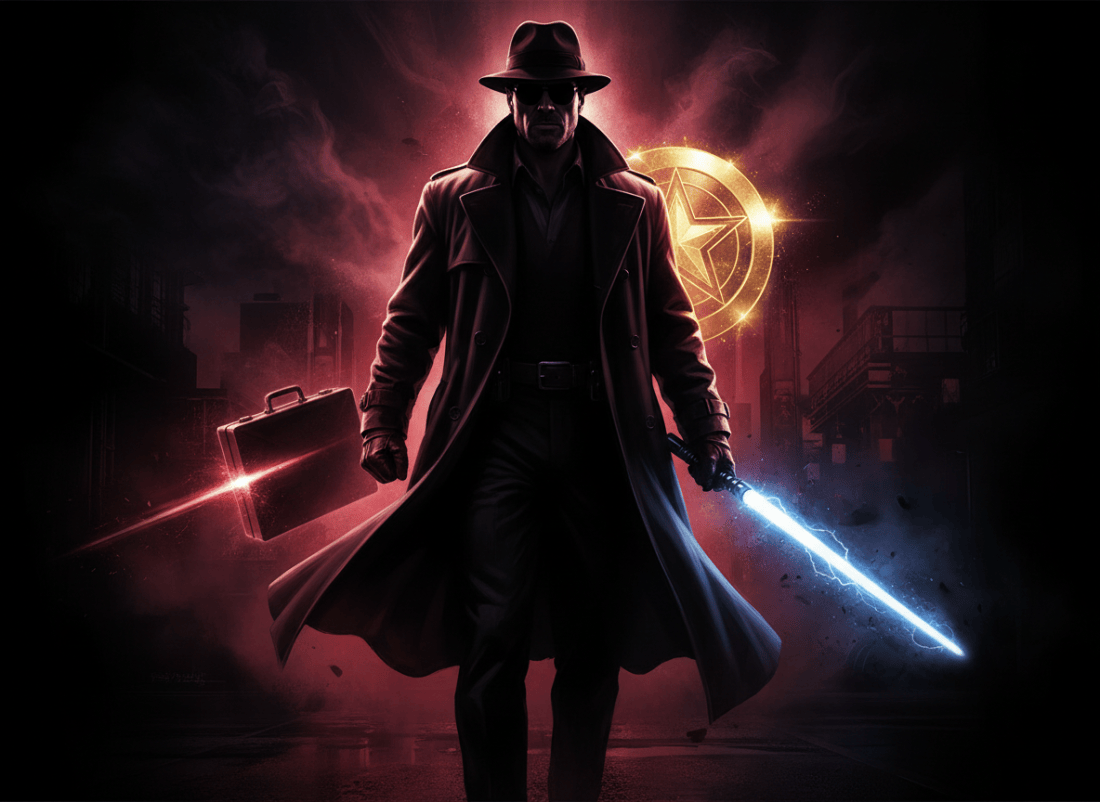
A dramatic, cinematic illustration of a powerful, charismatic Hollywood actor on a dark, moody background. The scene evokes classic film noir combined with blockbuster energy — a silhouette of a commanding figure in a long coat, standing center frame with confident posture, surrounded by subtle visual references to iconic movie moments: a briefcase, a lightsaber glow, a shield emblem. Rich blacks, deep reds, and gold tones. Epic and timeless in feel.

Now, for a post about one of my favorite actors, the iconic Samuel L. Jackson. His career is one of the great American acting stories: late-blooming, relentlessly productive, and built on a rare mix of craft, presence, and pop-cultural permanence. He didn’t land a major role till his mid-forties. Over more than five decades he has gone from regional theater and bit parts to becoming one of the most recognizable faces in world cinema—and, by several box-office measures, among the highest-grossing actors of all time.

Born Samuel Leroy Jackson on December 21, 1948, in Washington, D.C., and raised in Chattanooga, Tennessee, he found acting while studying at Morehouse College. A stutter led a speech therapist to suggest the stage; he switched from architecture to drama and never really left. After graduating in 1972 he worked in New York theater, originating roles such as Private Louis Henderson in Charles Fuller’s A Soldier’s Play and Boy Willie in August Wilson’s The Piano Lesson. That stage foundation—precision of language, physical command, and an ability to hold a room—still shows in almost everything he does.

The film work started small: Coming to America (1988), Spike Lee’s School Daze and Do the Right Thing, a flash in Goodfellas. Then came Jungle Fever (1991). As Gator Purify, the crack-addicted brother of Wesley Snipes’s architect, Jackson was so raw and specific that the Cannes jury created a special supporting-actor prize for him. He used some of his own problems with drugs to help him reflect the rawness of it all. It was the first time many people outside the theater world saw what colleagues already knew: he could make a supporting part feel like the center of the movie.

Pulp Fiction (1994) made him a star. Jules Winnfield—scripture-quoting, briefcase-guarding, morally awakening hit man—is one of the defining performances of 1990s cinema. Jackson won the BAFTA for Best Supporting Actor and earned an Oscar nomination; the Ezekiel 25:17 monologue became part of the culture. This is my favorite role that he played.

He followed it with a run that proved range rather than type: Zeus Carver in Die Hard with a Vengeance, Carl Lee Hailey in A Time to Kill, Mitch Henessey opposite Geena Davis in The Long Kiss Goodnight, and Ordell Robbie in Tarantino’s Jackie Brown, which won him the Silver Bear at Berlin. He could be terrifying, funny, righteous, or all three in the same scene.

Then came the franchises that turned a great character actor into a global brand. As Mace Windu in the Star Wars prequels he gave the Jedi Council a steel spine and a purple lightsaber—his own request so he could find himself in the crowd. As Nick Fury in the Marvel Cinematic Universe, beginning with a post-credits cameo in Iron Man (2008), he became the connective tissue of the biggest film series of the 21st century. Marvel had already modeled Ultimate Nick Fury on his likeness; Jackson signed a multi-picture deal and made the eyepatch, the trench coat, and the dry authority feel inevitable. He also voiced Frozone in The Incredibles films, proving he could sell heroism with nothing but a voice.

What is most impressive is that the blockbusters never replaced the interesting work. He kept returning to Spike Lee and Quentin Tarantino (Django Unchained, The Hateful Eight), took on Unbreakable and Glass with M. Night Shyamalan, led Shaft, and later went back to Broadway in the 2022 revival of The Piano Lesson, earning a Tony nomination. In 2022 the Academy gave him an Honorary Oscar, describing him as “a cultural icon whose dynamic work has resonated across genres and generations and audiences worldwide.” That citation is accurate.

The numbers only underline the consistency. His films have collectively grossed well over $27 billion worldwide; Guinness and box-office trackers have repeatedly placed him at or near the top of actor gross lists, with dozens of titles clearing $100 million. He works constantly, chooses roles that amuse him as much as they pay him (Snakes on a Plane is the famous example), and still sounds like himself—wry, precise, a little dangerous—whether he is quoting scripture or assembling the Avengers.

The career is a model of durability without calcification. Jackson did not become a movie star until his mid-forties, then spent the next thirty years refusing to shrink. He made supporting parts legendary, leading parts bankable, and franchise parts human. That combination—theater-trained intensity, pop-star recognizability, and a work ethic that never cooled—is why the review of his career stays so easy to write in the positive: there is simply an enormous amount of good work, and it keeps arriving.