How to Ace a Management Interview

Two serious-looking professionals sitting across a table from each other in a formal interview setting. Corporate office environment, neutral tones, professional attire, tense and focused atmosphere, realistic style.

So, my dear readers, as I reach out to my half century, it might be time I become a manager of something or other. I applied for a position in a local company.

With an almost bald head, I let my facial hair grow to show my tinge of grey. Because nothing says management, better.

Still, the two-person panel insisted on asking me annoying questions.

What is your greatest achievement?

Thanks for asking, I’d say it was that time I hammered my brother in FIFA.

Was he really good?

Hardly, he was only 6. You should have seen him cry to his Mammy afterwards.

Have you ever managed a Team?

Eh, you know what FIFA is?

How would you motivate staff?

With sweets.

How would you deal with someone not pulling their weight?

I’d tell them to lose some.

What is performance management?

Getting kinky, I like it.

Have you ever made a mistake?

That kid is not mine, ok!

What do you know about the organization?

Hold on, I think I can remember the name.

Hopefully, I get it, I could do with the extra few bob.

Thanks everyone, don’t forget to subscribe, if you haven’t already done so.

Wheelchair Wars (Sisters of Revenge)

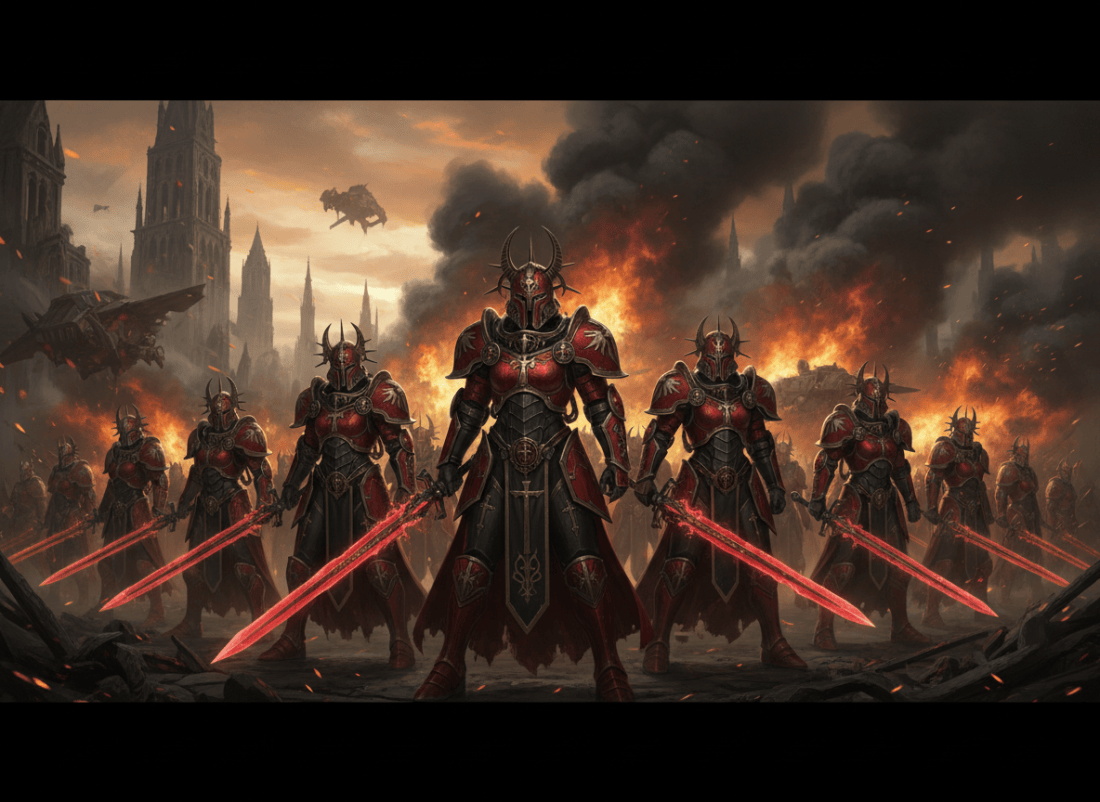
A dramatic sci-fi illustration of a group of fierce, armored women warriors standing in formation in a dark, burning medieval-futuristic city. The women wear ornate religious military armor with red and black color scheme, evoking both devotion and ruthlessness. The background shows the city of Nantes in flames, with smoke rising into a dystopian sky. The mood is dark, epic, and cinematic — reminiscent of a grimdark future empire.

The following except is from the historian Axel Macron book “The Beginning of the Empire” written in 125 EY –

In 3Y there was a rebellion against the Emperor in the city of Nantes in the province of France. Most of the Emperors Troops in the city had been sent to the African front to quell the last pocket of resistance on Earth.

It started like many such events innocuously. Global heating had led to the worst harvest in years in that part of the world. In a dispute over the price of bread, a young man was shot and killed.

Street protests broke out that after three days (or as recently decreed, time-cycles) led to anarchy. Anyone connected with the Emperor’s administration was hung or set alight.

An all-female army of devoted Troops from the island of Britain were dispatched. With religious zeal, they ended the rebellion, slaughtering much of the city as a warning to never again repeat what had happened.

Six ringleaders were identified, and their heads sent to the Emperor. Impressed by their devotion, the Emperor decreed the creation of the Sisters of Vengeance. Their mission to worship and further the will of the Emperor by all available means.

The first convent was created in Bristol, with the Sisters then spreading throughout Earth and the Empire.

The Epic Career of Samuel L. Jackson, Hollywood’s Iron Man

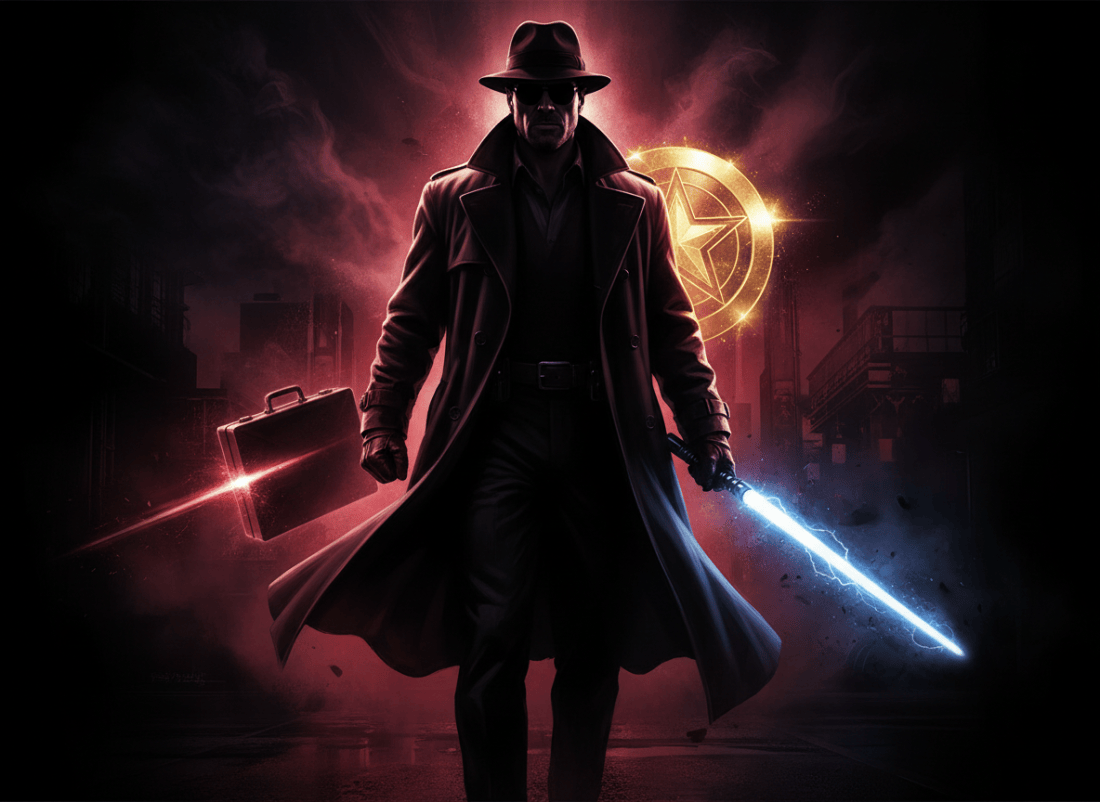
A dramatic, cinematic illustration of a powerful, charismatic Hollywood actor on a dark, moody background. The scene evokes classic film noir combined with blockbuster energy — a silhouette of a commanding figure in a long coat, standing center frame with confident posture, surrounded by subtle visual references to iconic movie moments: a briefcase, a lightsaber glow, a shield emblem. Rich blacks, deep reds, and gold tones. Epic and timeless in feel.

Now, for a post about one of my favorite actors, the iconic Samuel L. Jackson. His career is one of the great American acting stories: late-blooming, relentlessly productive, and built on a rare mix of craft, presence, and pop-cultural permanence. He didn’t land a major role till his mid-forties. Over more than five decades he has gone from regional theater and bit parts to becoming one of the most recognizable faces in world cinema—and, by several box-office measures, among the highest-grossing actors of all time.

Born Samuel Leroy Jackson on December 21, 1948, in Washington, D.C., and raised in Chattanooga, Tennessee, he found acting while studying at Morehouse College. A stutter led a speech therapist to suggest the stage; he switched from architecture to drama and never really left. After graduating in 1972 he worked in New York theater, originating roles such as Private Louis Henderson in Charles Fuller’s A Soldier’s Play and Boy Willie in August Wilson’s The Piano Lesson. That stage foundation—precision of language, physical command, and an ability to hold a room—still shows in almost everything he does.

The film work started small: Coming to America (1988), Spike Lee’s School Daze and Do the Right Thing, a flash in Goodfellas. Then came Jungle Fever (1991). As Gator Purify, the crack-addicted brother of Wesley Snipes’s architect, Jackson was so raw and specific that the Cannes jury created a special supporting-actor prize for him. He used some of his own problems with drugs to help him reflect the rawness of it all. It was the first time many people outside the theater world saw what colleagues already knew: he could make a supporting part feel like the center of the movie.

Pulp Fiction (1994) made him a star. Jules Winnfield—scripture-quoting, briefcase-guarding, morally awakening hit man—is one of the defining performances of 1990s cinema. Jackson won the BAFTA for Best Supporting Actor and earned an Oscar nomination; the Ezekiel 25:17 monologue became part of the culture. This is my favorite role that he played.

He followed it with a run that proved range rather than type: Zeus Carver in Die Hard with a Vengeance, Carl Lee Hailey in A Time to Kill, Mitch Henessey opposite Geena Davis in The Long Kiss Goodnight, and Ordell Robbie in Tarantino’s Jackie Brown, which won him the Silver Bear at Berlin. He could be terrifying, funny, righteous, or all three in the same scene.

Then came the franchises that turned a great character actor into a global brand. As Mace Windu in the Star Wars prequels he gave the Jedi Council a steel spine and a purple lightsaber—his own request so he could find himself in the crowd. As Nick Fury in the Marvel Cinematic Universe, beginning with a post-credits cameo in Iron Man (2008), he became the connective tissue of the biggest film series of the 21st century. Marvel had already modeled Ultimate Nick Fury on his likeness; Jackson signed a multi-picture deal and made the eyepatch, the trench coat, and the dry authority feel inevitable. He also voiced Frozone in The Incredibles films, proving he could sell heroism with nothing but a voice.

What is most impressive is that the blockbusters never replaced the interesting work. He kept returning to Spike Lee and Quentin Tarantino (Django Unchained, The Hateful Eight), took on Unbreakable and Glass with M. Night Shyamalan, led Shaft, and later went back to Broadway in the 2022 revival of The Piano Lesson, earning a Tony nomination. In 2022 the Academy gave him an Honorary Oscar, describing him as “a cultural icon whose dynamic work has resonated across genres and generations and audiences worldwide.” That citation is accurate.

The numbers only underline the consistency. His films have collectively grossed well over $27 billion worldwide; Guinness and box-office trackers have repeatedly placed him at or near the top of actor gross lists, with dozens of titles clearing $100 million. He works constantly, chooses roles that amuse him as much as they pay him (Snakes on a Plane is the famous example), and still sounds like himself—wry, precise, a little dangerous—whether he is quoting scripture or assembling the Avengers.

The career is a model of durability without calcification. Jackson did not become a movie star until his mid-forties, then spent the next thirty years refusing to shrink. He made supporting parts legendary, leading parts bankable, and franchise parts human. That combination—theater-trained intensity, pop-star recognizability, and a work ethic that never cooled—is why the review of his career stays so easy to write in the positive: there is simply an enormous amount of good work, and it keeps arriving.


Why The Mandalorian and Grogu Is My New Favorite Star Wars Movie

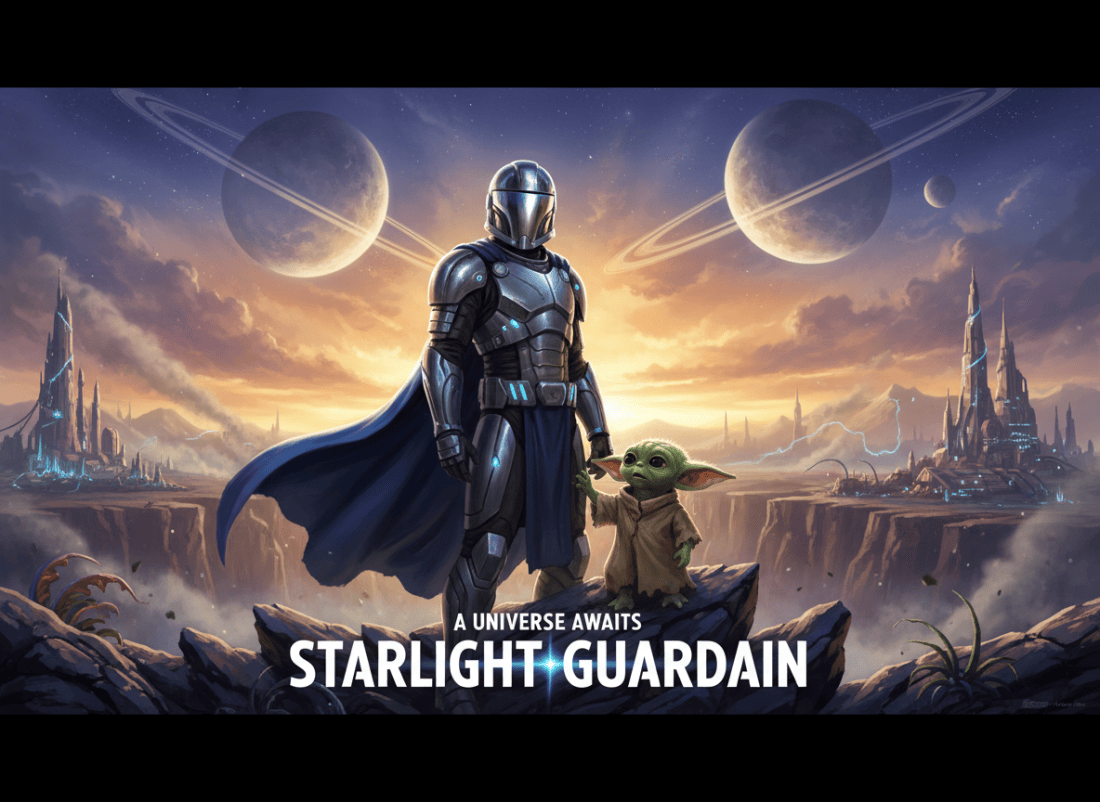
A cinematic, epic movie poster illustration of a lone armored space warrior in a silver helmet and dark cape standing protectively next to a small, wide-eyed green alien with big ears. Set against a dramatic alien landscape at dusk with golden and purple skies, distant moons, and a sci-fi atmosphere. Emotional and visually stunning composition.

What a prize I have for you my dear readers. I only watched this last night on Disney, and I knew I’d be telling you about it today. This is now my favorite Star Wars film. Thankfully, there’s no sign of the Jedi death cult. It’s pure adventure.

Star Wars: The Mandalorian and Grogu is a warm, visually rich, and genuinely affectionate return to the galaxy that feels like coming home. Jon Favreau’s 2026 feature takes the heart of the Disney+ series and gives it cinematic scale without losing the intimate father-son (or father-foundling) bond that made Din Djarin and Grogu so beloved in the first place. It is not trying to be the next Empire Strikes Back. It is trying to be a big, crowd-pleasing adventure about two characters who have already earned our affection, and on that front it succeeds with charm to spare. Make sure to watch the Series on Disney if you’ve not already done so.

The film is set after the fall of the Empire, with Imperial warlords still scattered and the fledgling inept New Republic struggling to hold the peace. Colonel Ward (Sigourney Weaver) recruits the legendary bounty hunter Din Djarin and his Force-sensitive apprentice Grogu for a mission that pulls them into Hutt territory and a rescue involving Rotta the Hutt. The setup is straightforward and accessible even if you have not watched every episode of the series; Favreau and co-writers Dave Filoni and Noah Kloor designed it that way. What matters is the relationship at the center.

Pedro Pascal’s voice and presence as Din remain perfect: stoic, weary, and quietly devoted. The suit performers (Brendan Wayne and Lateef Crowder) give the physicality weight and grace. Grogu, however, is the film’s secret weapon and its greatest joy. The combination of puppetry, animatronics, and effects work makes him feel like a living, thinking little person rather than a merchandising mascot. His expressions, his stubbornness, his emerging sense of agency, and especially the mid-film sequence in which he tends to an injured Din are some of the most touching moments in recent Star Wars. That quiet stretch—shelter, food, care—lands harder than many of the bigger set pieces because it shows how far their bond has come.

arstechnica.comThe creature work is a highlight. Phil Tippett’s stop-motion contributions and the practical-heavy approach give the film a tactile quality that digital-heavy Star Wars entries sometimes lack. The swamp creatures, the Hutt environments, and the various beasts Din has to fight feel gross, weird, and alive in the best Ray Harryhausen-meets-del Toro tradition. Ludwig Göransson’s score mixes his established Mandalorian motifs with unexpected energy; it keeps the movie moving and occasionally surprises you with its texture.

Sigourney Weaver brings welcome authority and a dry, no-nonsense energy as the New Republic officer who hires the pair. Jeremy Allen White’s voice work as Rotta adds personality to a character who could have been just another slug. Cameos and returning faces are used sparingly enough that they feel like treats rather than homework. The action is punchy and readable—blaster fights, ship sequences, and creature encounters that play well on a big screen or at home.At 132 minutes the movie is paced like a generous two-part episode rather than an overstuffed epic, which is a feature, not a bug. It does not pretend to reinvent the franchise. It delivers what fans of this corner of the galaxy actually want: more time with Din and Grogu, more strange planets, more practical weirdness, and a reminder that “This is the Way” can also mean loyalty, protection, and found family. The theatrical run may not have been a record-breaker, but the film itself is a satisfying, good-hearted adventure that rewards both longtime viewers and newcomers who just want to watch a helmeted dad and his tiny green kid get into trouble together.

Make sure to give it a watch. A future cult classic.

Vince Young’s Rise, Fall and Reckoning in Netflix’s ‘Untold’

A lone American football player silhouetted against the bright stadium lights at dusk, standing on an empty field, cinematic and moody atmosphere evoking reflection, reckoning, and the weight of fame and legacy

This is well worth a watch. It’s very different from previous documentaries I’ve reviewed in that this is the story of a sports star who didn’t end up with a great professional career. Untold: The Testimony of Vince Young is one of the most affecting entries in Netflix’s sports documentary series: a raw, first-person reckoning that treats a college football icon as a full human being rather than a cautionary headline.

Directed by John Henion and clocking in at a tight 78 minutes, it opens with Vince Young’s blunt admission that he is still not at peace with his journey. That honesty sets the tone. The film does not simply replay the 2006 Rose Bowl—the fourth-and-five scramble, the national championship, the “greatest individual performance” lore—then fade to black. It uses that night as the starting point for a deeper story about pressure, absent fathers, the wrong coach at the wrong time, sudden grief, and the long work of owning your mistakes.

Young’s college years are presented with the electricity they deserve. Mack Brown’s Texas program needed a transcendent talent to restore relevance; Young delivered it. The documentary captures both the physical gifts (the run, the jump, the throw) and the emotional ones: a young man who grew up without a father in the house, who found surrogate guidance in Brown and especially in Steve McNair, and who still carries the ache of watching other Heisman finalists celebrate with their dads. When McNair is later murdered, the loss lands as more than sports tragedy. Heroes are not supposed to die, Young says. The film lets that wound stay open.

The NFL section is where the documentary becomes most compelling. Young was Offensive Rookie of the Year. He was the face of a franchise and a video game. Then injuries, a frosty relationship with Jeff Fisher, public outbursts, and personal unraveling took over the narrative. Fisher sits for an interview and remains strikingly unrepentant—“He showed weakness”—which gives the film a clear dramatic foil without turning Young into a simple victim. Young himself takes responsibility for drinking, partying, fighting, financial wreckage, and the moments he let people down. The testimony in the title is not spin. It is a man in his forties looking at the highlight reels and the wreckage and refusing to flatten either.

What elevates the film beyond a standard rise-and-fall sports doc is its refusal to treat redemption as a tidy third act. Young is now back at Texas as a special assistant, a husband and father of three, still working through forgiveness toward the father who left. The movie does not pretend the last chapter is written. It simply insists the last public image—the flameout, the pads thrown into the stands, the bankruptcy—does not have to be the whole story.

Henion’s film is lean, well-paced, and emotionally direct. Interviews with Brown, teammates, Matt Leinart, and Young’s family give it texture without turning it into a talking-head parade. Archival footage of the Rose Bowl still thrills; the quieter scenes of Young reflecting on what he needed and what he never got are what linger. It is bittersweet, captivating, and unexpectedly generous. For anyone who remembers that January night in 2006, or anyone interested in how talent, timing, and trauma collide, this is essential viewing. It does what the best Untold films do: it complicates the legend without diminishing it.

Four stars out of five.

Grand Theft Auto VI: A Cinematic Preview on Netflix

Sports car driving on a wet coastal boulevard beneath neon casino signs

Ah, Grand Theft Auto. It brings back so many warm memories. I’m old enough to remember the original. It was shocking at the time. Stealing cars, running over pedestrians. It felt like we were right hoodlums!

Of course, you really had to use your imagination.

Wow, the world has really changed.

Grand Theft Auto VI: An Extended Look is currently being shown on Netflix. It looks more like a film.

Rockstar’s 26-minute compilation of in-game footage, captured on a base PlayStation 5 and presented like a cinematic short, dropped exclusively on the platform first and immediately shot to the top of the charts. It treats Vice City and the wider state of Leonida as a living, breathing world rather than a tech demo. The result feels less like a trailer and more like a taut, sun-drenched crime romance that happens to be playable.

Jason Duval and Lucia Caminos instantly register as the series’ most compelling leads. Their partnership has a Bonnie-and-Clyde charge mixed with everyday intimacy—raiding a fridge, arguing in an apartment, then exploding into a drug-deal-gone-wrong shootout and a frantic getaway. The footage lets their chemistry breathe between the chaos, suggesting a story that can be as much about two people trying to stay together as it is about heists and police chases. Missions that can be tackled together or separately, plus the ability to swap characters on the fly, give the relationship real mechanical and emotional weight.

Visually it is staggering. Lighting on wet asphalt, distant skylines during a parachute jump, the texture of Florida-inspired swamps, neon-soaked nightclubs, and even a tutu-wearing chihuahua all look photorealistic without losing Rockstar’s signature satirical edge. Everyday moments—driving through emergent street life, working out, grabbing food—sit comfortably next to high-octane sequences, selling the fantasy that this world exists whether you’re causing trouble or not. The editing keeps the pace cinematic while still showing off systems: wanted-level management, dual-character play, and a living city that reacts.

The soundtrack choices (Depeche Mode, Phil Collins, and more) land perfectly against the images, and the whole piece ends on a quietly effective note that makes November 19 feel both imminent and worth the wait. Netflix listing it under crime and action genres was the right call; people have already started logging it on Letterboxd as if it were a short film, which is exactly the energy it earns.

This isn’t just marketing. It’s a confident, stylish, frequently breathtaking preview that reminds you why Grand Theft Auto still matters. If this is the appetizer, the full game is going to be a feast.

Three stars – worth a quick watch.

Pegasus (Part 93)

Glowing network lines overlaid on dark interconnected infrastructure

The impact of the terrorist attack soon becomes apparent. The ship is undated with system wide communications that a no fly zone is being implemented.

Maeve brings up a schematic of the locations of the ships in the sky in the vicinity and watches their number starts to decline. “What’s happening?”

“The hunters have become the hunted,” Derek replies. “We’ll become very conspicuous very soon.”

“What will we do?” Maeve asks, her eyes wide open.

“We’ll need to fly much lower to the ground, hovering a few feet off the ground.” Derek frowns. “This will slow is down, a lot. I’ll have to drive the ship much slower. We’ll do that as a last resort.”

Further communications are received. Disorder is breaking out in cities across the world. There are warnings to stay away from major urban centers.

Maeve observes. “Things are going more or less according to plan. I think we need to descent now, though. There are only a few ships left in the airspace.

Derek guides the ship down to only a few feet from the ground of lush green farmland. “It’ll be a few hours before we arrive.”

“Let’s hope that the rest of the team made it back,” Lisa added.

Dear Killer Nannies – Must Watch Series

Vintage microphone, photographs, and red threads arranged on a detective evidence board

Okay, everyone I think everyone agrees that Pablo Escobar has been done to death. But this series comes from a new vantage point – that of his son.

Dear Killer Nannies is one of the most distinctive and emotionally resonant crime dramas of recent years — a coming-of-age story told from inside one of history’s most infamous households rather than another retread of Pablo Escobar’s empire.

Co-created by Juan Pablo Escobar (Sebastián Marroquín) himself, the eight-episode Hulu/Disney+ miniseries follows young Juampi as he grows up in luxury in 1980s Medellín, surrounded by bodyguards he treats as playmates and nannies. He sees his father as a generous benefactor. The devastating revelation that those caregivers are hired killers, and that his father is the world’s most wanted drug trafficker, is handled with unusual restraint and psychological honesty.

What sets the series apart is its focus on the quieter devastation of a child losing his innocence. The obligatory shootouts and car crashes exist, but the real impact comes from bloodless moments: a boy finishing off an injured animal because the men around him treat it as normal, the slow collapse of his idealized image of his father, and the weight of a surname that turns his life into a flight from death. The time jumps between childhood, adolescence, and later years feel purposeful rather than gimmicky, building a portrait of inherited trauma and the struggle to choose a different path.

The performances elevate the material. John Leguizamo brings unexpected warmth and complexity to Pablo, portraying a loving father whose affection is constantly at war with his criminal life. The young actors playing Juampi at different ages — especially Miguel Tamayo as the seven-year-old — capture both wide-eyed belief and the first cracks of understanding with remarkable naturalism. The ensemble of “nannies” (Juanita Molina, Danharry Colorado, Rafael Zea, and others) makes the surreal domestic arrangement feel lived-in and strangely intimate: hardened killers who are also dysfunctional uncles and protectors. Laura Rodríguez grounds the family as Victoria, a mother desperately trying to shield her children while knowing the truth.

The first-person narration by the real Juan Pablo adds a layer of intimacy and moral ambiguity that most cartel stories lack. The show never excuses the violence or the empire, but it humanizes the boy caught in its crossfire and the men assigned to keep him alive. Production values, period atmosphere, and the mix of Spanish-language authenticity with accessible storytelling make it bingeable in its half-hour episodes without sacrificing weight.

This is not just another Pablo Escobar show. It is a surprisingly literate examination of adultification, masculinity, loyalty, and the long shadow of a last name. For anyone who thinks the subject has been exhausted, Dear Killer Nannies proves there was still a deeply personal story left to tell — and it tells it with heart, craft, and unexpected tenderness.

Make sure to give it a watch. Four stars from me.

Wheelchair Wars Addition Part 2

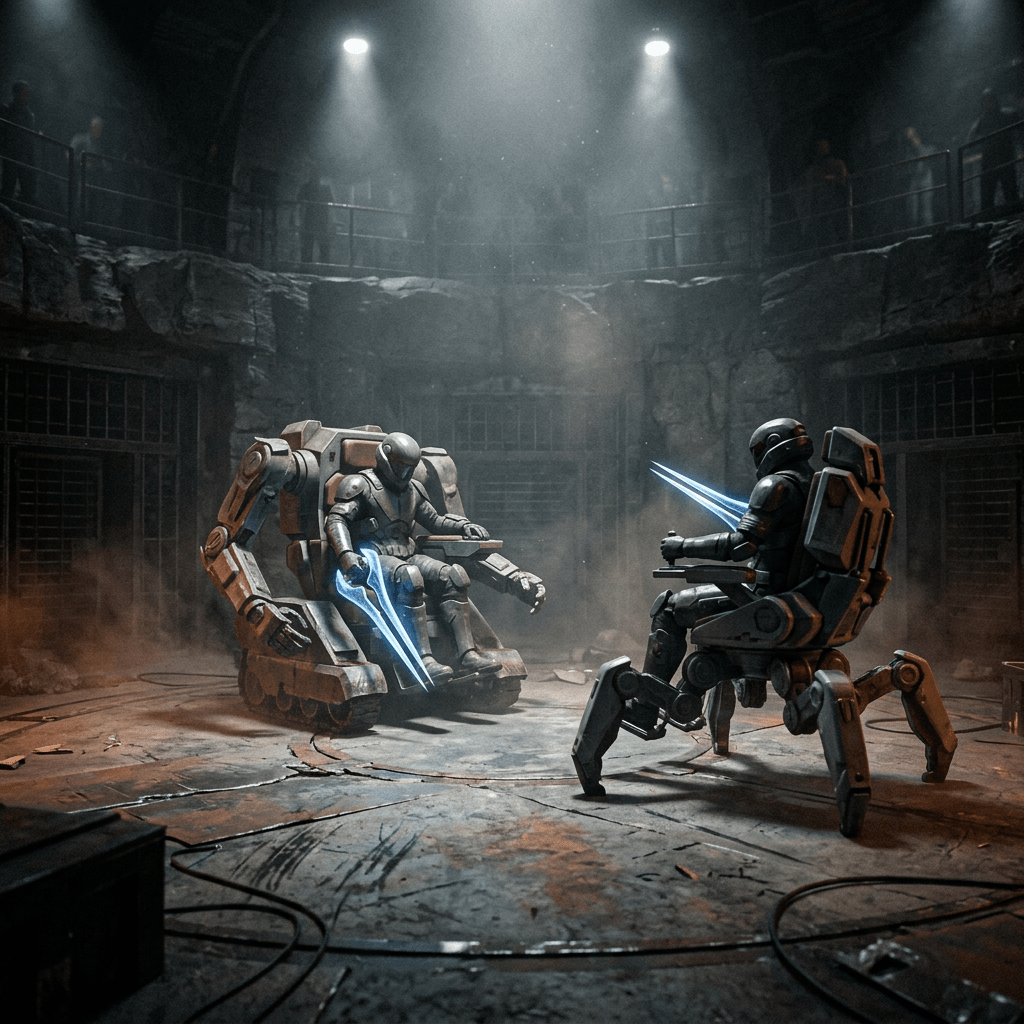
Two armored robots duel with glowing blue blades in an underground arena

Using the mind control on the battlechair, Timothy slashed his sword this way and thar through the airs. His anger unabated.

Audrey appeared, gaunt and ashen faced. “Let’s do this. It seems to be all you care about.”

She transferred into her battlechair and armed herself with a long sword like Timothy. They were not to be used for training, only real battles. Gasps went up around the hall. All the other teams stopped practicing.

Audrey drove toward Timothy and the sound of metal clashing reverberated through the air.

Timothy swerved this way and that, his entire being focus on the fight.

Driving forwards, he aimed for her torso. She parried and then parried again.

Her reactions slowed as adrenaline flowed through Timothy.

His sword swung once more and Audrey’s fell to the floor. He advanced and put his sword to her neck.

The terror in her eyes sent a tingling down his spine.

What am I doing?

He took a deep breath, and dropped the sword. “I’m sorry.”

Turning to the onlookers, he roared, “What are you looking at?”

They returned to what they were doing. When Timothy turned back, Audrey was gone.

Wheelchair Wars Addition Part 1

Shattered neon highway spiraling through outer space

This is an extra bit I’m thinking of adding to Wheelchair Wars. It’s after the Gargantuan battle.

The following time-cycles were filled with sorrow. Timothy was filled with an emptiness, each death replaying in his mind. He kept thinking that he had seen one of his fallen comrades, only to feel sick moments later with the realization he would never ever see any of them again. They were gone and would not be returning.

Still, he turned up for practice. All eyes fixated on one of the “heroes” that had killed a Gargantuan. Audrey did not appear, and with no new teammates allocated, he sparred alone with his shadow.

His dad had little to say except, “You should go to see her. She’s not leaving her room or eating.”

Timothy didn’t reply, instead staring into the distance.

I don’t feel like a hero. Or, that we won.

It was the fifth time-cycle, and Timothy found himself sparring alone again. His jaw clenched as rage boiled through his body.

He drove out of the hall, and towards Audrey’s room, knocking hard on her door.

Silence.

Knocking again he shouted, “I know you’re in there, Audrey.”

A weak, muffled voice replied. “What do you want? Leave me alone.”

With that, he departed to the hall.

“It’s time to practice. I expect to see you in the hall in five minutes. We won the battle, and I’ll not let you sully it.”