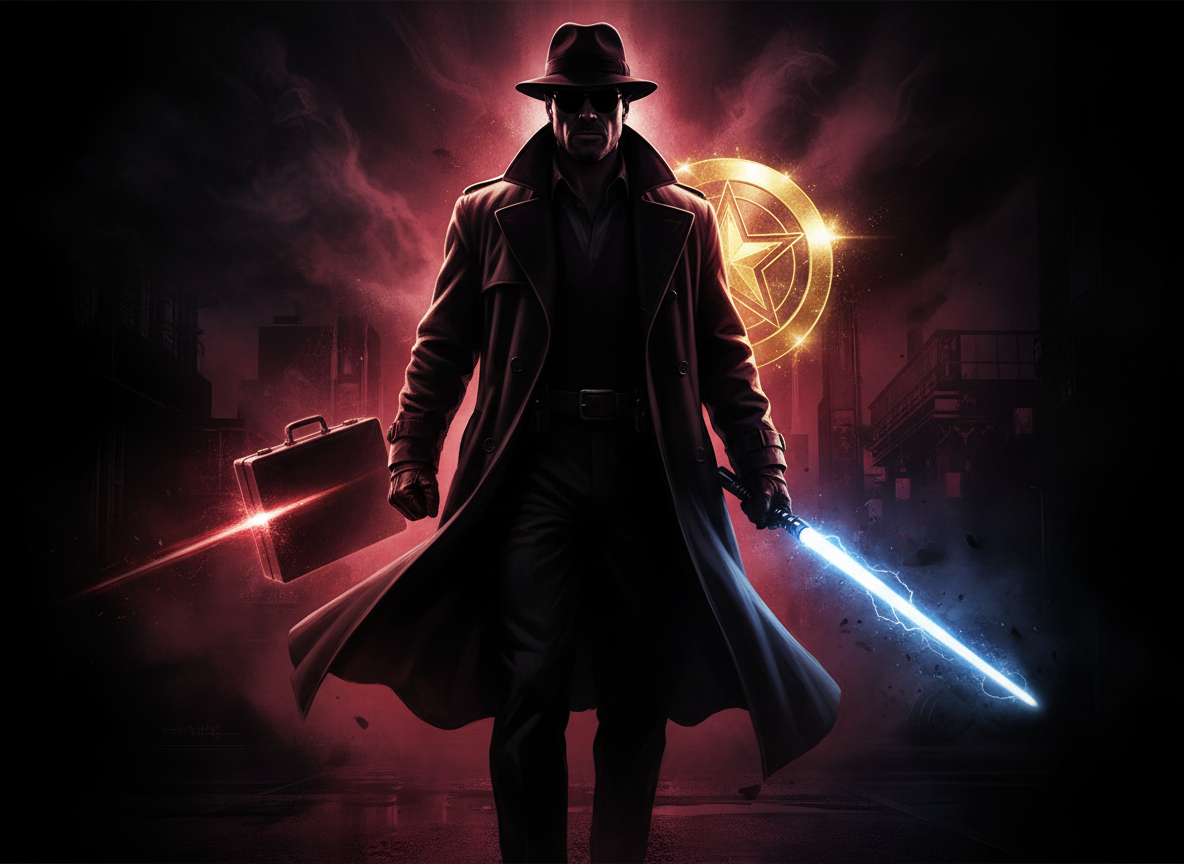

Now, for a post about one of my favorite actors, the iconic Samuel L. Jackson. His career is one of the great American acting stories: late-blooming, relentlessly productive, and built on a rare mix of craft, presence, and pop-cultural permanence. He didn’t land a major role till his mid-forties. Over more than five decades he has gone from regional theater and bit parts to becoming one of the most recognizable faces in world cinema—and, by several box-office measures, among the highest-grossing actors of all time.
Born Samuel Leroy Jackson on December 21, 1948, in Washington, D.C., and raised in Chattanooga, Tennessee, he found acting while studying at Morehouse College. A stutter led a speech therapist to suggest the stage; he switched from architecture to drama and never really left. After graduating in 1972 he worked in New York theater, originating roles such as Private Louis Henderson in Charles Fuller’s A Soldier’s Play and Boy Willie in August Wilson’s The Piano Lesson. That stage foundation—precision of language, physical command, and an ability to hold a room—still shows in almost everything he does.
The film work started small: Coming to America (1988), Spike Lee’s School Daze and Do the Right Thing, a flash in Goodfellas. Then came Jungle Fever (1991). As Gator Purify, the crack-addicted brother of Wesley Snipes’s architect, Jackson was so raw and specific that the Cannes jury created a special supporting-actor prize for him. He used some of his own problems with drugs to help him reflect the rawness of it all. It was the first time many people outside the theater world saw what colleagues already knew: he could make a supporting part feel like the center of the movie.
Pulp Fiction (1994) made him a star. Jules Winnfield—scripture-quoting, briefcase-guarding, morally awakening hit man—is one of the defining performances of 1990s cinema. Jackson won the BAFTA for Best Supporting Actor and earned an Oscar nomination; the Ezekiel 25:17 monologue became part of the culture. This is my favorite role that he played.
He followed it with a run that proved range rather than type: Zeus Carver in Die Hard with a Vengeance, Carl Lee Hailey in A Time to Kill, Mitch Henessey opposite Geena Davis in The Long Kiss Goodnight, and Ordell Robbie in Tarantino’s Jackie Brown, which won him the Silver Bear at Berlin. He could be terrifying, funny, righteous, or all three in the same scene.
Then came the franchises that turned a great character actor into a global brand. As Mace Windu in the Star Wars prequels he gave the Jedi Council a steel spine and a purple lightsaber—his own request so he could find himself in the crowd. As Nick Fury in the Marvel Cinematic Universe, beginning with a post-credits cameo in Iron Man (2008), he became the connective tissue of the biggest film series of the 21st century. Marvel had already modeled Ultimate Nick Fury on his likeness; Jackson signed a multi-picture deal and made the eyepatch, the trench coat, and the dry authority feel inevitable. He also voiced Frozone in The Incredibles films, proving he could sell heroism with nothing but a voice.
What is most impressive is that the blockbusters never replaced the interesting work. He kept returning to Spike Lee and Quentin Tarantino (Django Unchained, The Hateful Eight), took on Unbreakable and Glass with M. Night Shyamalan, led Shaft, and later went back to Broadway in the 2022 revival of The Piano Lesson, earning a Tony nomination. In 2022 the Academy gave him an Honorary Oscar, describing him as “a cultural icon whose dynamic work has resonated across genres and generations and audiences worldwide.” That citation is accurate.
The numbers only underline the consistency. His films have collectively grossed well over $27 billion worldwide; Guinness and box-office trackers have repeatedly placed him at or near the top of actor gross lists, with dozens of titles clearing $100 million. He works constantly, chooses roles that amuse him as much as they pay him (Snakes on a Plane is the famous example), and still sounds like himself—wry, precise, a little dangerous—whether he is quoting scripture or assembling the Avengers.
The career is a model of durability without calcification. Jackson did not become a movie star until his mid-forties, then spent the next thirty years refusing to shrink. He made supporting parts legendary, leading parts bankable, and franchise parts human. That combination—theater-trained intensity, pop-star recognizability, and a work ethic that never cooled—is why the review of his career stays so easy to write in the positive: there is simply an enormous amount of good work, and it keeps arriving.

