The Epic Career of Samuel L. Jackson, Hollywood’s Iron Man

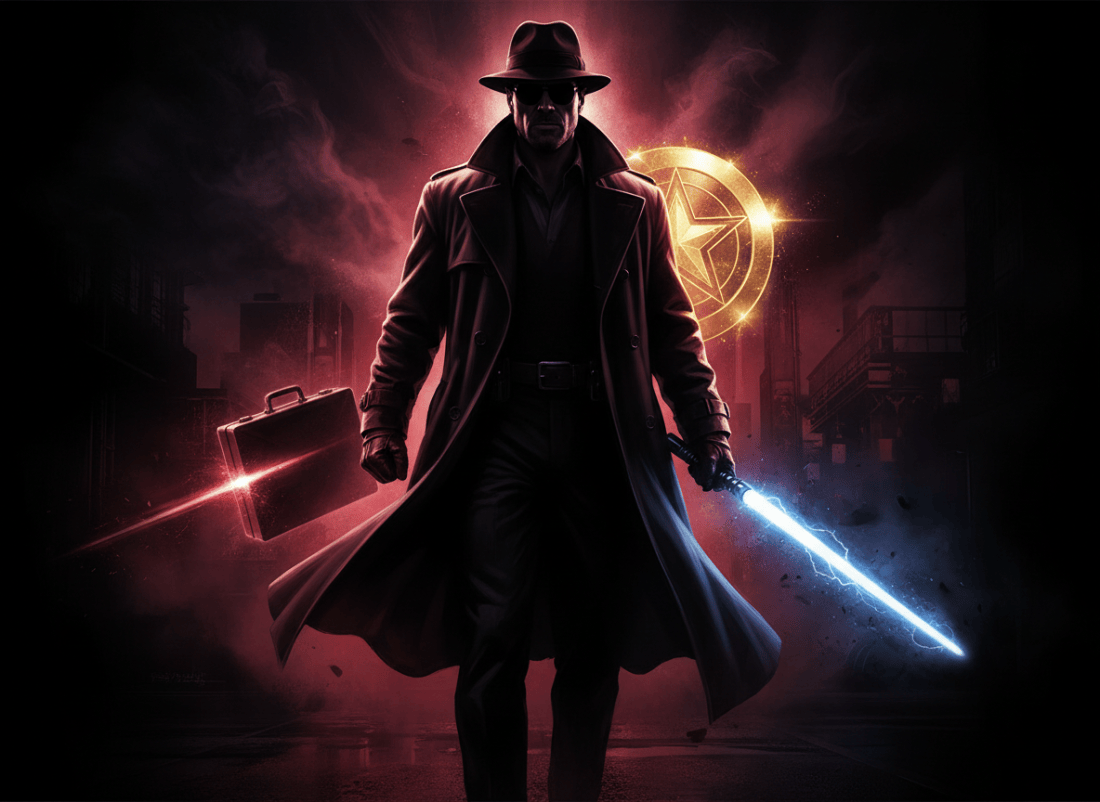
A dramatic, cinematic illustration of a powerful, charismatic Hollywood actor on a dark, moody background. The scene evokes classic film noir combined with blockbuster energy — a silhouette of a commanding figure in a long coat, standing center frame with confident posture, surrounded by subtle visual references to iconic movie moments: a briefcase, a lightsaber glow, a shield emblem. Rich blacks, deep reds, and gold tones. Epic and timeless in feel.

Now, for a post about one of my favorite actors, the iconic Samuel L. Jackson. His career is one of the great American acting stories: late-blooming, relentlessly productive, and built on a rare mix of craft, presence, and pop-cultural permanence. He didn’t land a major role till his mid-forties. Over more than five decades he has gone from regional theater and bit parts to becoming one of the most recognizable faces in world cinema—and, by several box-office measures, among the highest-grossing actors of all time.

Born Samuel Leroy Jackson on December 21, 1948, in Washington, D.C., and raised in Chattanooga, Tennessee, he found acting while studying at Morehouse College. A stutter led a speech therapist to suggest the stage; he switched from architecture to drama and never really left. After graduating in 1972 he worked in New York theater, originating roles such as Private Louis Henderson in Charles Fuller’s A Soldier’s Play and Boy Willie in August Wilson’s The Piano Lesson. That stage foundation—precision of language, physical command, and an ability to hold a room—still shows in almost everything he does.

The film work started small: Coming to America (1988), Spike Lee’s School Daze and Do the Right Thing, a flash in Goodfellas. Then came Jungle Fever (1991). As Gator Purify, the crack-addicted brother of Wesley Snipes’s architect, Jackson was so raw and specific that the Cannes jury created a special supporting-actor prize for him. He used some of his own problems with drugs to help him reflect the rawness of it all. It was the first time many people outside the theater world saw what colleagues already knew: he could make a supporting part feel like the center of the movie.

Pulp Fiction (1994) made him a star. Jules Winnfield—scripture-quoting, briefcase-guarding, morally awakening hit man—is one of the defining performances of 1990s cinema. Jackson won the BAFTA for Best Supporting Actor and earned an Oscar nomination; the Ezekiel 25:17 monologue became part of the culture. This is my favorite role that he played.

He followed it with a run that proved range rather than type: Zeus Carver in Die Hard with a Vengeance, Carl Lee Hailey in A Time to Kill, Mitch Henessey opposite Geena Davis in The Long Kiss Goodnight, and Ordell Robbie in Tarantino’s Jackie Brown, which won him the Silver Bear at Berlin. He could be terrifying, funny, righteous, or all three in the same scene.

Then came the franchises that turned a great character actor into a global brand. As Mace Windu in the Star Wars prequels he gave the Jedi Council a steel spine and a purple lightsaber—his own request so he could find himself in the crowd. As Nick Fury in the Marvel Cinematic Universe, beginning with a post-credits cameo in Iron Man (2008), he became the connective tissue of the biggest film series of the 21st century. Marvel had already modeled Ultimate Nick Fury on his likeness; Jackson signed a multi-picture deal and made the eyepatch, the trench coat, and the dry authority feel inevitable. He also voiced Frozone in The Incredibles films, proving he could sell heroism with nothing but a voice.

What is most impressive is that the blockbusters never replaced the interesting work. He kept returning to Spike Lee and Quentin Tarantino (Django Unchained, The Hateful Eight), took on Unbreakable and Glass with M. Night Shyamalan, led Shaft, and later went back to Broadway in the 2022 revival of The Piano Lesson, earning a Tony nomination. In 2022 the Academy gave him an Honorary Oscar, describing him as “a cultural icon whose dynamic work has resonated across genres and generations and audiences worldwide.” That citation is accurate.

The numbers only underline the consistency. His films have collectively grossed well over $27 billion worldwide; Guinness and box-office trackers have repeatedly placed him at or near the top of actor gross lists, with dozens of titles clearing $100 million. He works constantly, chooses roles that amuse him as much as they pay him (Snakes on a Plane is the famous example), and still sounds like himself—wry, precise, a little dangerous—whether he is quoting scripture or assembling the Avengers.

The career is a model of durability without calcification. Jackson did not become a movie star until his mid-forties, then spent the next thirty years refusing to shrink. He made supporting parts legendary, leading parts bankable, and franchise parts human. That combination—theater-trained intensity, pop-star recognizability, and a work ethic that never cooled—is why the review of his career stays so easy to write in the positive: there is simply an enormous amount of good work, and it keeps arriving.


Star Trek: Strange New Worlds Season 4 Review

Starship bridge crew operating controls during warp speed travel

My regular readers will know how much I love Star Trek. And my favorite series is the Strange New Worlds one.

So, I was ecstatic to see that Season 4 is now available on Paramount+. Happy days. So far, the first three episodes have dropped.

Star Trek: Strange New Worlds Season 4 is a vibrant, inventive, and deeply satisfying return that captures the spirit of classic Trek while delivering bold genre swings, strong character work, and pure adventure. Premiering on Paramount+ on July 23, 2026, the 10-episode season (releasing weekly through a September 24 finale) picks up with Captain Christopher Pike and the USS Enterprise crew continuing their exploratory missions in the years before The Original Series. Showrunners Akiva Goldsman and Henry Alonso Myers double down on the series’ episodic strengths—each outing offering a distinct tone and style—while deepening the ensemble and leaning into hope, ethics, friendship, and wonder. Early critical reception has been strong (including an initial perfect Rotten Tomatoes score that settled into Certified Fresh territory), with many calling it reinvigorated and among the show’s best work.

The season opens with “Valles Marineris,” a thrilling time-travel adventure that flings the Enterprise 65 million years into the past amid a stellar storm. What follows mixes dinosaurs (with impressive effects and practical elements), first-contact diplomacy with a warrior culture, moral dilemmas about interfering with history, and Pike confronting his own path and predetermined future. Anson Mount anchors it with quiet intensity and moral clarity, while guest star Saffron Burrows delivers a memorable counterpart. It’s ambitious, bittersweet, philosophically rich in classic Trek fashion (echoing themes from episodes like “The City on the Edge of Forever”), and a fun, high-concept kickoff that balances action, wonder, and character.

“The Griffin Incident,” shifts hard into psychological horror and body horror as Spock, La’an, and a returning young James T. Kirk (Paul Wesley) investigate a derelict Federation ship. It’s tense, visually striking, and unflinching, using the isolated setting and escalating hallucinations to probe the characters’ deepest fears and conflicts (including Spock’s dual nature and Kirk’s emerging sense of responsibility). Christina Chong, Ethan Peck, and Wesley shine in the high-stakes intensity, delivering one of the franchise’s more visceral standalone tales while advancing relationships. This is one of the best episodes of Star Trek every, right up there with Picard’s interactions with the Borg.

“Human Best Friend” provides welcome levity as a shore-leave comedy (with clear nods to TOS “Shore Leave” and hangover-style antics). The crew’s overworked bridge officers hit a pleasure planet whose atmosphere has intoxicating effects, leading to chaotic, character-revealing hijinks. It centers a delightful buddy dynamic between Erica Ortegas (Melissa Navia) and Montgomery Scott (Martin Quinn), turning prior friction into mutual respect and growth, while giving Spock and Kirk further bonding moments. Silly by design yet grounded in friendship, teamwork, and the crew’s need to blow off steam, it’s pure Strange New Worlds charm.

What elevates Season 4 is the consistent excellence of the cast and the freedom to experiment. Mount’s Pike remains a standout—reflective, principled, and human—while Rebecca Romijn’s Number One, Peck’s Spock, Jess Bush’s Chapel, Celia Rose Gooding’s Uhura, Babs Olusanmokun’s M’Benga, and the rest of the ensemble get meaningful moments and pairings. Wesley’s Kirk continues to integrate naturally, and returning guests like Carol Kane’s Pelia add texture. The showrunners emphasize pure episodic storytelling without a single overarching “big bad,” allowing for cowboys, black holes, dinosaurs, haunted ships, comedy, and more (including a planned Jim Henson’s Creature Shop puppet episode). Production values remain high, the writing mixes sincerity with playful genre pastiche, and the hopeful, exploratory ethos feels reenergized.

It ranks among the more lively and memorable runs, giving every performer room to shine across adventure, horror, drama, and comedy. Minor notes about tonal shifts or underdeveloped threads in a highly episodic structure don’t overshadow the overall joy and quality.

As the penultimate season (with a shortened final Season 5 already ordered to bridge toward TOS), Season 4 feels like a celebration of what makes Strange New Worlds special: a crew worth spending time with, strange new worlds and ideas, ethical questions, and the enduring optimism of Starfleet. It’s peak modern Trek—entertaining, thoughtful, and endlessly rewatchable.

Five stars out of five from me.

Gomorrah: The Origins – Captivating Storytelling in 1977 Naples

Wet cobblestone street with people holding umbrellas and lit shop signs in Italian town

This is a new Series on Sky that I recently started watching. It is a prequel to the much vaunted Gomorrah, a series that I absolutely loved and was hoping for more of the same.

Gomorrah: The Origins is a stylish, atmospheric, and compelling prequel that deepens the world of the original series while standing strongly on its own. Set in 1977 Naples, the six-episode series traces the early years of a young Pietro Savastano (Luca Lubrano), a street-smart kid from the impoverished Secondigliano neighborhood.

Alongside his friends, he navigates petty crime, cigarette smuggling, and the allure of local power while idolizing neighborhood figure Angelo “A Sirena” (Francesco Pellegrino). What begins as survival gradually pulls him deeper into the criminal underworld, exploring ambition, loyalty, first love, and the irreversible choices that shape a future boss.

The production captures the era with rich period detail—leather jackets, haircuts, cars, music, and the textured, poverty-stricken streets of a transforming Naples—creating a vivid, immersive atmosphere. There’s a freshness and even a surprising tenderness amid the grit that sets it apart from more formulaic crime dramas. The cinematography and direction (with Marco D’Amore helming early episodes) deliver tension, style, and emotional weight without overstaying their welcome across the tight six-episode run.

My favorite moment so far has been Angela outwitting his opponent at a party just as all appeared to be lost.

Performances are a major strength. Lubrano brings quiet intensity and complexity to young Pietro, making his transformation feel earned and human. The supporting cast, including Pellegrino and others portraying friends and emerging figures in the local hierarchy, adds authenticity and chemistry that echo the original series’ strengths while feeling distinctly of this earlier time.

As a prequel to the acclaimed Gomorrah saga (inspired by Roberto Saviano’s work), it rewards fans with meaningful backstory on key characters and the roots of the Camorra world, yet remains accessible and engaging for newcomers. It balances coming-of-age elements with the harsh realities of organized crime, delivering moments of real tension, friendship, and moral ambiguity. Overall, Gomorrah: The Origins is a worthy expansion of the franchise—gritty yet stylish, intimate yet epic in its implications. Four stars out of five from me.

Legends: A Gripping Look at Britain’s Drug War Drama

Police officer in reflective jacket speaking with a man on a rainy urban street at night with a police car.

Readers, I am so excited to tell you about this series. It surpassed my expectations. Legends is a British crime drama television series written and created by Neil Forsyth and produced by his Tannadice Pictures production company.

In the face of a surging heroin and cocaine epidemic flooding Britain’s streets during the Thatcher era’s “War on Drugs,” a small team of ordinary Customs and Excise civil servants—airport screeners, clerks, and everyday bureaucrats with zero espionage training—are thrust into the shadows. Their mission: infiltrate some of the country’s most dangerous international drug gangs from the inside. What unfolds is a riveting cat-and-mouse game where the lines between duty, identity, and survival blur dangerously.

The series excels at showing the absurdity and bravery of this real-life operation. These aren’t polished MI6 agents; they’re relatable underdogs risking everything—families, sanity, and lives—for a cause bigger than themselves.

The cast is phenomenal and elevates the material to must-watch status:

  • Steve Coogan delivers one of his strongest dramatic turns as Don, the haunted, world-weary mentor figure assembling and leading the ragtag team. He brings layers of dry wit, quiet intensity, and emotional depth, balancing comic relief with profound gravitas.
  • Tom Burke (as Carter, a dedicated family man) is magnetically intense—his portrayal captures the personal toll of undercover work with raw vulnerability and steely resolve.
  • Supporting players, including Tom Hughes and others in the ensemble, round out a believable crew of misfits. The chemistry crackles, making you genuinely care about these characters’ fates.

The antagonists—ruthless yet charismatic gang figures—are equally well-drawn, adding moral complexity rather than cartoonish villainy.

Forsyth’s writing shines with sharp dialogue, meticulous research, and a perfect mix of tension and levity. The ’90s period detail is impeccable: lived-in fashion, iconic Britpop soundtrack (with some fitting anachronisms that enhance the vibe), gritty London and regional locations, and a palpable sense of bureaucratic chaos meeting street-level danger.

Pacing is deliberate yet propulsive—each episode builds on the last, culminating in a satisfying, high-impact conclusion across the compact season. It’s binge-friendly without feeling rushed, offering moments of quiet reflection amid the adrenaline.

What makes Legends special is its heart. Amid the procedural thrills and undercover intrigue, it explores themes of sacrifice, loyalty, identity erosion, and the human cost of systemic battles like the drug war. It’s thrilling and thoughtful—funny in spots thanks to the unlikely recruits’ fish-out-of-water moments, yet never losing sight of the stakes.

Quite simply, this is must watch tv. Five stars out of five from me. Now start Netflixing.

Malcolm in the Middle Revival: A Nostalgic Return

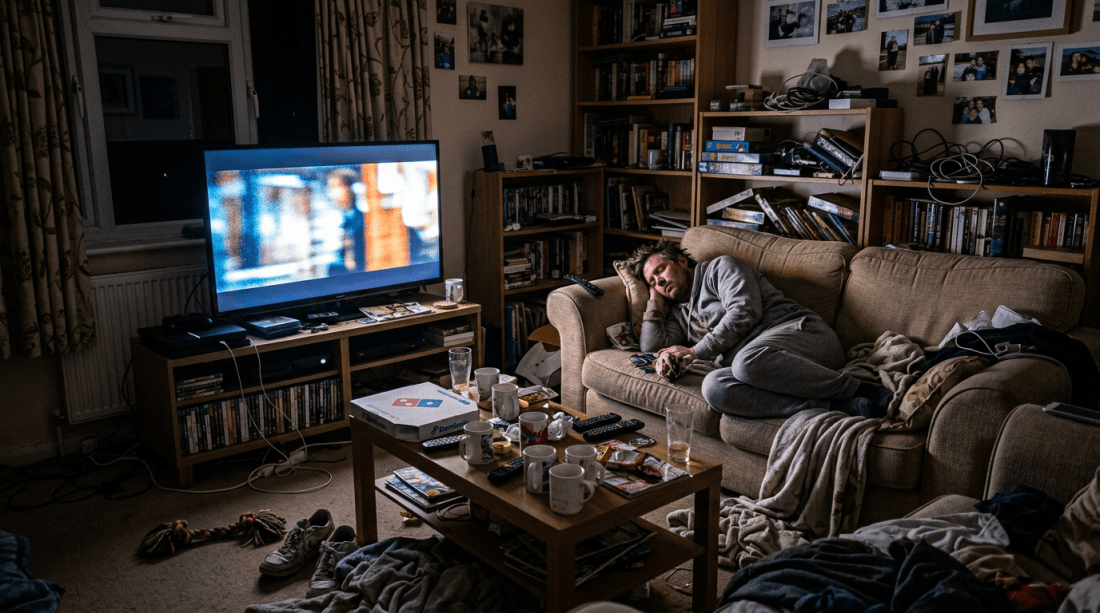
Man sleeping on beige couch in a cluttered living room with TV on and empty cups on table

Twenty years ago, Malcolm in the Middle was a mainstay on television. It was a single-camera comedy series that followed a dysfunctional working-class family and starred Frankie Muniz in the lead role as Malcolm, a child prodigy. The ensemble cast included Bryan Cranston and Jane Kaczmarek as Malcolm’s parents, Hal and Lois.

It was a show that I watched with my friends and family.

So, what’s the latest series like? Well, it appears life is still unfair..

This four-episode limited revival, which dropped on Hulu (and Hulu on Disney+) on April 10, 2026, brings back the original magic with Frankie Muniz as Malcolm, Bryan Cranston as the ever-optimistic Hal, and Jane Kaczmarek as the formidable Lois. Nearly 20 years after the original series ended, it feels like no time has passed — except now the kids are grown, Malcolm has a daughter, and the family dysfunction has evolved into even wilder, more relatable territory.

The premise is pure Malcolm: After years of keeping his distance to build a stable life for himself and his daughter, Malcolm gets pulled back into the family vortex for Hal and Lois’s 40th wedding anniversary. What follows is a rapid-fire barrage of slapstick, awkward family revelations, gross-out humor, and surprisingly touching moments about growing up, parenting, and the unbreakable (if exhausting) bonds of family.

The cast chemistry is electric. Cranston steals scenes as the aging but still manic Hal — his physical comedy and wild energy are peak form. Muniz slips back into Malcolm’s exasperated genius with ease, while Kaczmarek’s Lois remains the unstoppable force of nature we love (and fear). The brothers (Reese, Dewey — with a recast that works surprisingly well — and Francis) bring their distinct flavors of chaos, and the whole ensemble feels lived-in and authentic.

I found the end of the first series particularly hilarious, but I won’t spoil.

The show keeps the signature fourth-wall breaks, fast-paced editing, and irreverent tone, but adds emotional depth around adulthood, legacy, and what happens when the “genius” kid becomes the reluctant adult trying to escape the cycle.

Five stars out of five from me. You know what to do.

Zendaya Shines in Euphoria’s Electrifying Season Premiere

Broken mirror shards, spilled foundation, red lipstick, powders, brushes, and glitter on a wooden surface

Euphoria Season 3 Episode 1, titled “Ándale,” is an electrifying return to form that reminds us exactly why this show has captivated audiences for years. After a long wait, the series picks up with its signature raw intensity, delivering a premiere that feels both fresh and deeply rooted in the chaotic lives we’ve come to know.

The opening sequence is one of the best I’ve seen in years. Rue tries to literally drive over Trumps wall (a very large palisade fence) using long planks of wood. They are already in place. However, she gets stuck at the top as the back wheels are in the air when she needs thrust to go downwards. Then she tries to move her weight around to see if it makes a difference, it doesn’t. So, she has to get out of the car, walk down the plank and walk. A classic start.

Zendaya once again delivers a powerhouse performance as Rue, capturing the vulnerability, wit, and quiet desperation of her character with breathtaking nuance. The episode’s opening sequence is a masterclass in tension and visuals—cinematography that is nothing short of stunning, blending high-stakes action with the show’s trademark stylized beauty. It’s thrilling, visually immersive, and sets a gripping tone for the new chapter as the characters navigate life beyond high school.

What stands out most is the blend of dark humor and emotional honesty that permeates the hour. Moments of levity cut through the heavier themes in ways that feel authentic and surprisingly funny, while the character dynamics remain as messy, compelling, and addictive as ever. The direction keeps everything feeling intimate yet epic, and the absence of over-the-top explicit content in this episode allows the story and performances to shine even brighter.This premiere expertly reintroduces us to a world that’s evolved but still pulses with the same heart-wrenching energy. It’s bold, beautifully crafted, and leaves you eagerly counting down the days until the next episode. If this is any indication, Season 3 is going to be an unforgettable ride. Highly recommended—Euphoria is back. Four stars out of five from me.

Animal Kingdom Review: A Gripping Crime Drama on Netflix

Hello readers, I do hope you are all keeping good. A nice series for you on this Monday afternoon. It’s called Animal Kingdom, and currently available on Netflix.

It’s one of those rare television series that grabs your attention from the very first episode and never lets go. Animal Kingdom is an American crime drama television series developed by Jonathan Lisco. It is based on the 2010 Australian film of the same name, which in turn was inspired by the criminal Pettingill family. The series was produced by David Michôd, who wrote and directed the original film.

The series centers on Joshua “J” Cody who, after the death of his mother when he was 17 years old, moves in with his estranged relatives, the Codys, who run a criminal family enterprise set in Oceanside, California, that is governed by the respected matriarch Janine “Smurf” Cody.

What makes the show truly exceptional is how it balances high-stakes criminal activity with rich emotional storytelling. The family’s heists are thrilling and expertly staged, but the real drama comes from the relationships within the family—loyalty, betrayal, jealousy, and the constant struggle for power.

The writing throughout the episodes I’ve seen (First seven episodes of first series) is consistently sharp and layered. Each episode builds tension in a natural way, developing long-term storylines while keeping the pace gripping. The characters evolve significantly over time, which makes the journey feel authentic rather than repetitive. You genuinely feel the consequences of their choices, and the show never shies away from the darker sides of its characters.

The performances are outstanding across the board. Ellen Barkin delivers a magnetic portrayal of Smurf, creating a character who is both intimidating and strangely charismatic. The younger members of the Cody family are equally compelling, each bringing their own personality and internal conflicts to the story. Their dynamics—sometimes supportive, often volatile—create the emotional core of the series.

Another strength of the series is its realism. The criminal world is portrayed with grit and consequence rather than glamor. Every heist carries risk, and every decision has repercussions that ripple through the family. This grounded approach makes the drama feel far more impactful than many typical crime shows.

Drawbacks –

It is unclear how Smurf maintains control. She threatens them with being out of the family, never physically. It’s unclear why she cannot simply be bypassed.

Not much violence. A cop has been accidentally killed so far.

So far, I give the show 3 and a half marks out of five.

Have you seen it? Let me know what you think.

I’ll be back when I get through the six seasons.

Star Trek: Starfleet Academy Review – A New Era of Cadets

My dear readers, a new Star Trek series is here! Star Trek: Starfleet Academy is the 12th Star Trek series and part of executive producer Alex Kurtzman’s expanded Star Trek Universe. Set in the 32nd century, the far-future time period that was introduced in the later seasons of the series Star Trek: Discovery (2017–2024), Starfleet Academy follows the first new class of Starfleet cadets in over a century as they come of age and train to be officers. This is the period after “The Burn” that almost totally destroyed the Federation

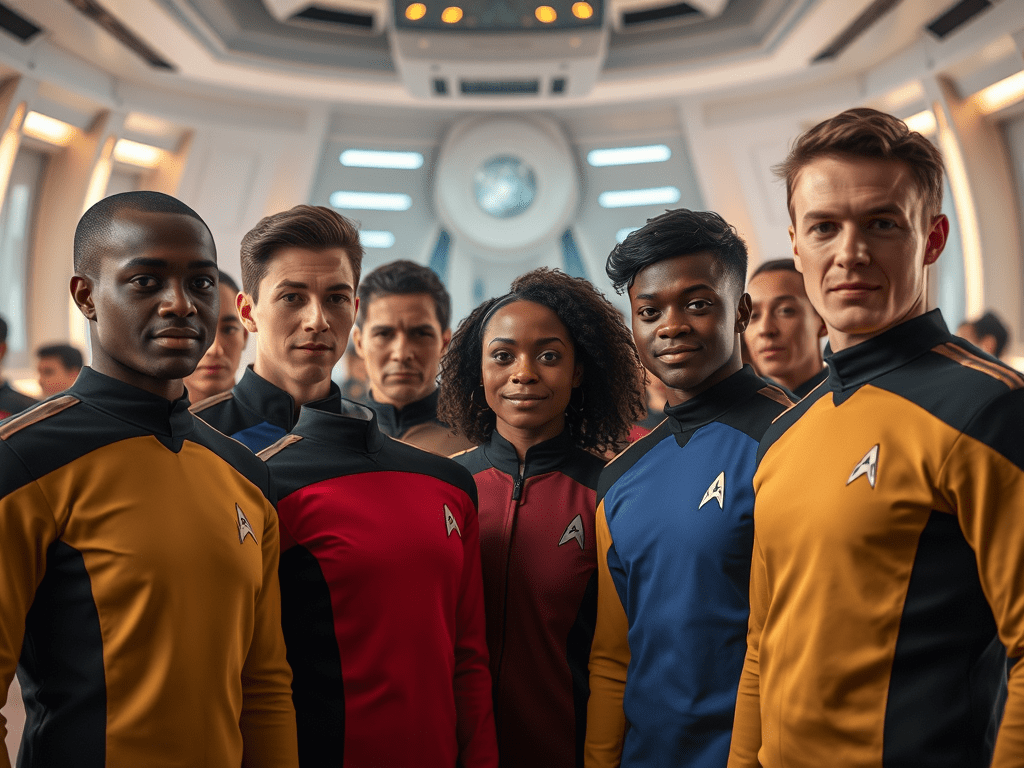
Sandro Rosta, Karim Diané, Kerrice Brooks, George Hawkins, and Bella Shepard portray Starfleet Academy cadets, starring alongside Holly Hunter and Zoë Steiner, as well as Tig Notaro and Oded Fehr, who are reprising their roles from Discovery, and Robert Picardo returning as the character of the Doctor from other previous series.

So far, I’ve only watched the first episode, and I think it will gain traction. From a kind, non-violent Klingon to the first holographic cadet, it could get very interesting. The ensemble cast is introduced with care, giving each character a clear emotional hook without overwhelming the audience. Their interactions feel lived-in and sincere, suggesting long arcs of growth rather than quick archetypes. Importantly, the episode allows vulnerability to coexist with ambition; these cadets are capable and driven, but also uncertain, impulsive, and still figuring out who they want to be. That balance makes their journey immediately compelling.

One of the episode’s greatest strengths is its focus on perspective. By centering the story on cadets at the very beginning of their Starfleet journey, the show reclaims a sense of awe that longtime fans may remember from earlier Trek, while also making that wonder feel fresh. The Academy isn’t just a school—it’s presented as a crucible where personal histories, cultural differences, and ethical ideals collide. The premiere smartly uses this setting to explore what Starfleet represents in a changing galaxy, and why those values still matter.

On a more negative note, I feel the show could do with some eye candy. Most are plain, there is no seven of nine vibes, which I think is a pity.

Overall, the premiere succeeds because it’s hopeful. In a television landscape often dominated by cynicism, Star Trek: Starfleet Academy leans into the idea that learning, empathy, and shared ideals can genuinely shape a better future.

So far, I give the show three stars out of five. I’m looking forward to watching more.

Any other Trekkies out there? Leave a comment.

And don’t forget to subscribe.

Skyfall (comedy)

Every now and then I decide to do something totally crazy, but this time I might have totally lost the plot.  I decided to cancel my Sky subscription, afterall I could still watch Netflix, have some of the free channels and the RTE player.  Sure, I’ll hardly notice I thought to myself.

That first night I was quite proud of myself thinking of all the suckers paying for their sky; I was now just better than the average person.  Admittedly I was somewhat surprised by how few stations I now had, but I was brave even if there was now no Rte.

Night 2 – A slight flaw in my cunning plans.  My “smart” tv, which in my mind is new is actually a few years old and is now incompatible with the internet, apart from netflix.  Even RTE is dodgey.

Night 5 – This might even be worse than when I tried to give up alcohol for a month.  That didn’t end well..  There are not even enough channels to mindlessly flick through. Aaaargh!

Week 2 – Oh how great it would be to see people being ripped apart on The Walking Dead once more, an interesting documentary on anything except food or even just hear the chimes before six one.  All those small pleasures have now been whittled away.

Week 3 – My “precious”.  Must get my “precious” back.

Week 4 – Note to oneself – Never attempt abstinence of anything again.  It’s just not me.  Now me and My Sky are back together for ever and ever.

I believe in better.