Zendaya Shines in Euphoria’s Electrifying Season Premiere

Broken mirror shards, spilled foundation, red lipstick, powders, brushes, and glitter on a wooden surface

Euphoria Season 3 Episode 1, titled “Ándale,” is an electrifying return to form that reminds us exactly why this show has captivated audiences for years. After a long wait, the series picks up with its signature raw intensity, delivering a premiere that feels both fresh and deeply rooted in the chaotic lives we’ve come to know.

The opening sequence is one of the best I’ve seen in years. Rue tries to literally drive over Trumps wall (a very large palisade fence) using long planks of wood. They are already in place. However, she gets stuck at the top as the back wheels are in the air when she needs thrust to go downwards. Then she tries to move her weight around to see if it makes a difference, it doesn’t. So, she has to get out of the car, walk down the plank and walk. A classic start.

Zendaya once again delivers a powerhouse performance as Rue, capturing the vulnerability, wit, and quiet desperation of her character with breathtaking nuance. The episode’s opening sequence is a masterclass in tension and visuals—cinematography that is nothing short of stunning, blending high-stakes action with the show’s trademark stylized beauty. It’s thrilling, visually immersive, and sets a gripping tone for the new chapter as the characters navigate life beyond high school.

What stands out most is the blend of dark humor and emotional honesty that permeates the hour. Moments of levity cut through the heavier themes in ways that feel authentic and surprisingly funny, while the character dynamics remain as messy, compelling, and addictive as ever. The direction keeps everything feeling intimate yet epic, and the absence of over-the-top explicit content in this episode allows the story and performances to shine even brighter.This premiere expertly reintroduces us to a world that’s evolved but still pulses with the same heart-wrenching energy. It’s bold, beautifully crafted, and leaves you eagerly counting down the days until the next episode. If this is any indication, Season 3 is going to be an unforgettable ride. Highly recommended—Euphoria is back. Four stars out of five from me.

Epic Review of 2012: A Disaster Movie Masterpiece

Skyscrapers collapsing into a fiery lava-filled chasm under a dark, stormy sky with lightning.

I watched this old blockbuster yesterday. Okay, I admit it. I only recalled watching it years ago, about halfway through.

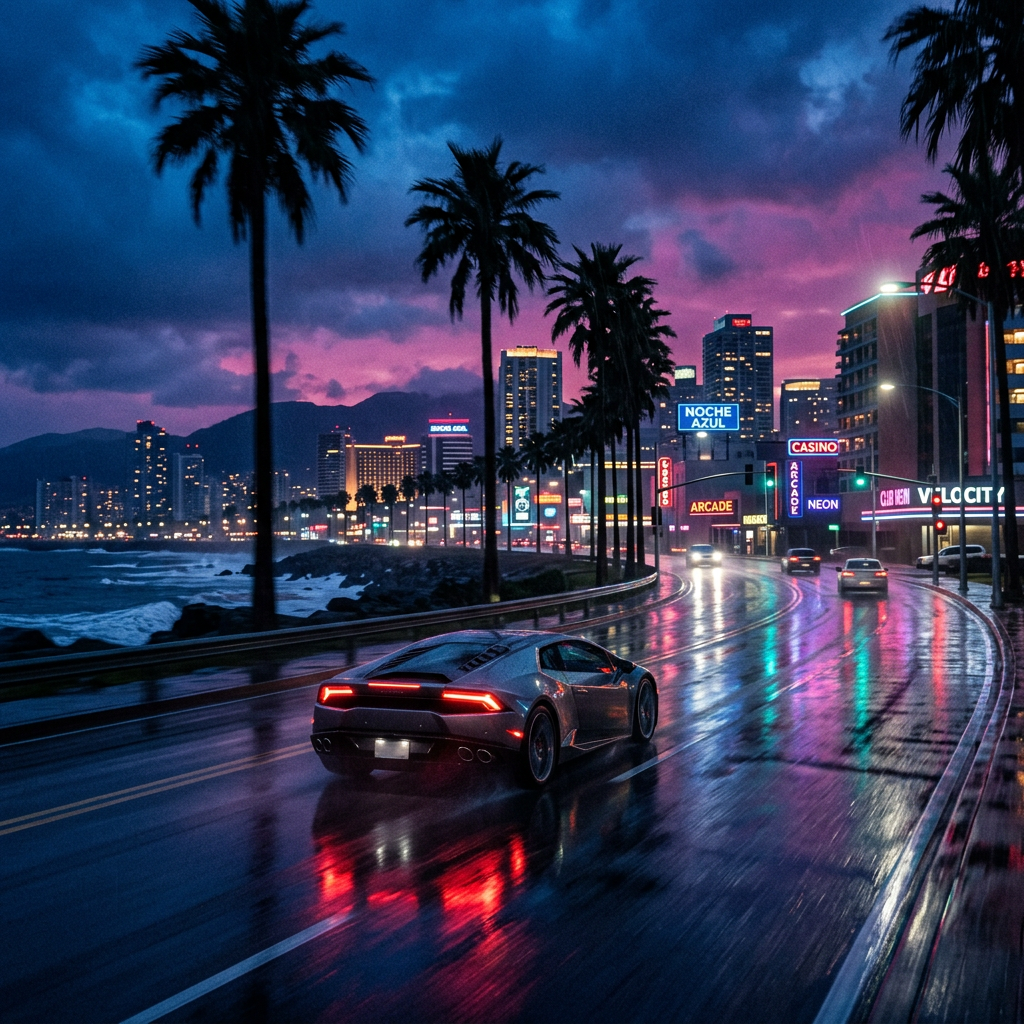
2012 (2009), directed by Roland Emmerich, stands as one of the most exhilarating and ambitious disaster films ever made—a true spectacle that delivers non-stop thrills, jaw-dropping visual effects, and an unapologetic celebration of human resilience in the face of apocalyptic chaos. If you’re looking for a movie that turns the end of the world into an edge-of-your-seat rollercoaster ride, this is it. Emmerich, the master behind classics like Independence Day and The Day After Tomorrow, outdoes himself here with a film that prioritizes pure cinematic excitement over subtlety, and it succeeds brilliantly on those terms. The car driving along while all the buildings collapsed on either side was particularly memorable.

At its core, 2012 follows a diverse group of characters as they race against time to survive a series of cataclysmic events triggered by massive solar flares that destabilize Earth’s crust. John Cusack stars as Jackson Curtis, a struggling writer and divorced dad who becomes an unlikely hero, desperately trying to save his family amid the unfolding global nightmare. Amanda Peet plays his ex-wife Kate, Chiwetel Ejiofor brings gravitas as a dedicated scientist working for the U.S. government, and Woody Harrelson adds memorable eccentricity as a conspiracy theorist who sees it all coming. The ensemble cast handles the mix of personal drama and high-stakes action with sincerity, making you genuinely care about their fates even as the planet crumbles around them.What truly elevates 2012 is its breathtaking scale and groundbreaking visual effects. This is Emmerich at his most extravagant: entire cities like Los Angeles are torn apart by massive earthquakes, with roads splitting open, buildings collapsing in domino fashion, and cars desperately navigating collapsing freeways in one of the most intense opening sequences in cinema history. Yellowstone erupts in a fiery cataclysm, mega-tsunamis swallow landmarks worldwide, and iconic sites—from the White House to the Vatican—meet spectacular ends.

The CGI, which was cutting-edge for its time and still holds up remarkably well, creates immersive, awe-inspiring destruction that feels both terrifying and exhilarating. Scenes like the family’s frantic escape through crumbling Los Angeles or the desperate boarding of massive “arks” designed to save humanity are pure adrenaline, blending practical stunts with seamless digital wizardry to deliver one jaw-dropping set piece after another.

Beyond the spectacle, the film taps into a universal theme of hope and survival. Despite the overwhelming odds, 2012 never descends into pure nihilism. It balances the chaos with moments of heart—family reconciliations, acts of selflessness, and a quiet optimism that humanity can endure even the worst.

The screenplay cleverly weaves in real-world inspirations from the Mayan calendar prophecy (popular at the time) while keeping the focus on character-driven stakes. At nearly 2 hours and 40 minutes, it gives ample time for both intimate emotional beats and globe-spanning devastation, ensuring the pacing rarely lets up once the disasters begin.Critics may sometimes dismiss it as over-the-top or cheesy, but that’s missing the point—2012 knows exactly what it is and embraces it wholeheartedly. It’s big, loud, and unpretentious fun that prioritizes entertainment value above all else.

The sound design amplifies every rumble and crash, pulling you deeper into the experience, while the score heightens the emotional and epic tones. For fans of disaster movies, it’s a standout: more intense and visually ambitious than many of its peers, with a sense of wonder amid the wreckage. In the end, 2012 is a triumphant blockbuster that reminds us why we go to the movies—to witness the impossible, feel the rush of adventure, and emerge with a renewed appreciation for the fragility (and strength) of life.

If you haven’t seen it, do yourself a favor and experience it on the biggest screen possible. It’s a wild, unforgettable ride that delivers pure cinematic joy through destruction. Highly recommended for anyone who loves epic scale, heartfelt moments, and the sheer thrill of watching the world (almost) end.

Five stars for sheer spectacle and entertainment value from me! I caught up with it on Disney+

The Swedish Connection: A Hidden WWII Hero

My dear readers, this is a Swedish film about a quiet, undeclared hero. The Swedish Connection (Swedish: Den svenska länken) is a World War II drama about Swedish foreign ministry bureaucrat Gösta Engzell, who develops and executes covert plans to rescue European Jewish refugees by using legal loopholes and paperwork. Released in 2026, the film stars Henrik Dorsin as Engzell and was directed by Thérèse Ahlbeck and Marcus Olsson.

It is a remarkable true story about what great things an ordinary person, not in the limelight, can achieve. It’s 1942, and neutral Germany is surrounded by Nazi Germany and its erstwhile ally Finland. A Swedish bureaucrat and his Department are doing everything they can, at times against the wishes of their government, to save as many Jews as possible by providing a connection to Sweden, and thus released.

Henrik Dorsin delivers a wonderfully nuanced performance as Engzell, portraying a man who starts the story mired in rules and paperwork but grows into an unexpected moral force. His journey, guided by humanity rather than headline-making heroics, is one of the film’s most rewarding elements — it reminds us that heroism doesn’t always wear a uniform or charge into battle; sometimes it quietly persists behind desks and in government halls. Sissela Benn as Rut Vogl brings warmth, intelligence, and emotional grounding, making her interactions with Engzell some of the most heartfelt moments onscreen.

The film’s tone is another notable achievement. While it doesn’t shy away from the horrors of the Holocaust backdrop, it also finds space for hope, humility, and even light touches of humor. The result is a heartfelt, uplifting experience that honours its real-life subjects without ever feeling exploitative or overly sentimental.

The provisional visa process pioneered by Engzell’s team are credited with rescuing 100,000 Jews during the war.

Unfortunately, the Irish Government did nothing similar, when perhaps thousands more could have been saved.

Five stars out of five for me.

Arnold Schwarzenegger: From Bodybuilder to Hollywood Icon

Arnold Schwarzenegger has built one of the most iconic and influential acting careers in modern cinema—transforming from a bodybuilding champion with a thick Austrian accent into one of Hollywood’s most bankable and recognizable stars. His journey is not just impressive; it’s genuinely inspiring.

The first time I saw him was in my granny’s house. It was The Terminator, and despite my protestations, I was brought off to bed. To have nightmares, as it turned out, even after only watching it for a few minutes. It set my imagination alight. What would I do if Terminators were sent back in time to kill me? I decided I’d just die. A few years later, I saw the whole film. I was still impressed, and a little less terrified.

Of course, this was his defining role. As the relentless cyborg assassin, Schwarzenegger delivered a performance that was both chilling and strangely magnetic. His mechanical precision, stoic intensity, and unforgettable line—“I’ll be back”—cemented him as a cinematic legend. What makes this performance so remarkable is how he transformed what could have been a simple villain role into a cultural icon.

But what truly distinguishes Schwarzenegger’s career is his versatility. He didn’t stay confined to action. In Terminator 2: Judgment Day, he added emotional depth and surprising warmth to the same character, proving his growth as a performer. Meanwhile, films like Predator showcased his ability to carry high-stakes ensemble action with intensity and leadership.

Then came comedy—an unexpected but brilliant turn. In Twins, Schwarzenegger displayed impeccable comic timing opposite Danny DeVito, revealing a self-awareness and willingness to parody his own image. He continued that charm in Kindergarten Cop, balancing toughness with heart in a way that broadened his audience and proved he was more than just muscles and catchphrases.

Another standout is Total Recall, where he navigated a complex sci-fi narrative with conviction and physical commitment. His performances often blend physical discipline with a subtle wink of humor—a combination that few action stars have mastered.

What makes Schwarzenegger’s acting career so positive and enduring is not just box-office success but cultural impact. His characters are instantly recognizable. His lines are quoted decades later. His films defined the action genre of the 1980s and 1990s. And through it all, he embraced his uniqueness rather than conforming.

It all started with Conan the Barbarian. Still, a great film if you haven’t seen it. He had the perfect physique for the role after his years of bodybuilding. I only saw this many years after seeing his other films. It still resonated.

Here’s to Arnold Shwarzeneggar.. what an actor.

The Outlaw King Review: A Gripping Tale of Scottish Independence

There’s something about medieval Scots fighting the English that warms the heart. “Freedom” sounds great, but any reason to fight the old enemy is good enough in truth. Well, from a film perspective. I love English people, really. So when I saw that this was available on Netflix, I pressed play.

The Outlaw King is an electrifying and emotionally resonant historical epic set in 1304 that brings Robert the Bruce’s story to life with striking authenticity and intensity. Directed by David Mackenzie and led by a commanding performance from Chris Pine, this film stands as a gripping portrayal of Scotland’s fight for independence — raw, human, and deeply inspiring.

From the very first frame, the film immerses viewers in the harsh, mud-soaked reality of medieval warfare. Unlike glossy historical dramas, The Outlaw King embraces realism. It also predates the CGI nonsense plaguing modern films. The battle sequences are visceral and unflinching, especially the climactic confrontation at the Battle of Loudoun Hill, which is staged with breathtaking choreography and tension. The long, chaotic tracking shots during combat create a sense of immediacy that makes you feel as if you’re right there on the battlefield.

Chris Pine delivers one of the strongest performances of his career. His portrayal of Robert the Bruce is layered and compelling — not a flawless hero, but a determined and conflicted leader who grows into his destiny. Pine captures the vulnerability, resolve, and quiet intensity of a man who risks everything for freedom. His Scottish accent is impressive, and his physical commitment to the role adds authenticity.

The supporting cast is equally strong, particularly Florence Pugh as Elizabeth de Burgh. Pugh brings intelligence and emotional weight to her role, portraying a woman whose strength matches the film’s epic scope. The chemistry between her and Pine adds heart to a story otherwise dominated by political tension and warfare.

Visually, the film is stunning. The rugged Scottish landscapes — sweeping highlands, mist-covered hills, and medieval castles — are captured with moody cinematography that enhances both the beauty and brutality of the setting. The natural lighting and muted color palette reinforce the grounded tone, making everything feel lived-in and historically authentic.

What truly sets The Outlaw King apart is its focus on resilience and leadership. Rather than romanticizing rebellion, the film shows the cost of resistance — betrayal, loss, hardship — and makes Robert’s eventual victories feel earned. It’s a story about persistence in the face of overwhelming odds, and it resonates far beyond its historical setting.

For fans of historical dramas, war epics, or character-driven storytelling, The Outlaw King is a must-watch. It’s bold, intense, and emotionally stirring — a film that honors its history while delivering cinematic excitement. A powerful reminder that freedom is rarely won without sacrifice.

The one drawback to the film, unlike the classic Braveheart, this feels like a war between nobles, the top tier in each country. It doesn’t feel to me, watching it, that this is a battle of your average Scot.

For that reason, it gets three stars out of five from me.

Unforgettable Performances: Jodie Foster’s Best Roles

My earliest memory of watching Jodie Foster was as Clarice Starling, an FBI trainee in one of my favorite films of all time – The Silence of the Lambs. Her acting, and that of Anthony Hopkins, was unforgettable. In particular, the conversations between Clarice and Dr. Hannibal Lecter.

For many years, I had thought that was her breakout role. But I was wrong.

Foster first stunned audiences with her haunting performance in Taxi Driver, directed by Martin Scorsese, as a child prostitute. At just 14 years old, she delivered a performance of extraordinary emotional intelligence and control, earning an Academy Award nomination. It was immediately clear she was not a typical child actor but a serious dramatic force. Set in a decaying New York City following the Vietnam War, it stars Robert De Niro as veteran Marine and taxi driver Travis Bickle, whose mental state deteriorates as he works nights in the city.

Jodie Foster has since built one of the most intelligent, fearless, and enduring careers in modern cinema. From child prodigy to two-time Academy Award winner to respected director, her body of work reflects an artist who consistently chooses depth over glamour and complexity over cliché.

Throughout the 1980s and 1990s, Foster solidified her reputation for portraying fiercely intelligent, resilient women. Her Oscar-winning role in The Accused showcased her extraordinary courage and vulnerability, anchoring a difficult, socially significant story with nuance and dignity. She followed that triumph with perhaps her most iconic performance as Clarice Starling in the previously mentioned The Silence of the Lambs.

What distinguishes Foster’s career is her commitment to intelligence—both her own and that of her audience. In films like Contact, directed by Robert Zemeckis, she brought emotional gravity to philosophical science fiction, grounding big ideas in human vulnerability. Even in high-concept thrillers such as Panic Room, she elevated genre material through subtle character work and psychological realism.

Beyond acting, Foster has also proven herself an accomplished director. With films like Little Man Tate and The Beaver, she demonstrated a thoughtful, character-driven approach behind the camera, often exploring themes of identity, intelligence, and emotional isolation—subjects that have consistently fascinated her throughout her career.

Another hallmark of Foster’s legacy is longevity. The most recent work I’ve seen her in was the fourth season of True Detective. It is set in the fictional town of Ennis, Alaska, north of the Arctic Circle, during polar night. It follows the investigation of the disappearance of eight men from a research station. The season stars Jodie Foster and Kali Reis as Detectives Liz Danvers and Evangeline Navarro.

Foster’s character is central to each episode. Despite her increasing age, the inner beauty shines through in a determined, eerie performance.

Lets hope she keeps going for another few decades.

M3GAN 2.0: Sequel Analysis and Performances

So, the other film I watched on a very busy Sunday was this gem, M3ghan 2.0. I have to be honest, I haven’t seen the original, but it looked like it would be worth watching. M3GAN 2.0 is a 2025 American science fiction action film written and directed by Gerard Johnstone from a story he co-wrote with Akela Cooper. A sequel to the 2022 film M3GAN and the second installment in the M3GAN franchise, the film stars Allison Williams, Violet McGraw, Ivanna Sakhno, and Jemaine Clement, with Amie Donald physically portraying M3GAN while Jenna Davis voices the character. Jason Blum and James Wan return as producers through their respective Blumhouse Productions and Atomic Monster.

What immediately stands out is how the film deals with its central ideas about artificial intelligence, control, and human dependence on technology. M3GAN is no longer just a creepy novelty; she’s a fully realized presence whose intelligence, adaptability, and unsettling logic drive the story forward. The screenplay smartly plays with shifting alliances and moral ambiguity, making the audience constantly reassess whether M3GAN is purely a villain—or something more complicated and unsettling than that.

U.S. Army colonel Sattler, head of a secret branch of the Pentagon specializing in new technologies, gives a demonstration of AMELIA,[a] an android designed for infiltration and assassination missions and built using technology copied from the original M3GAN. During her mission, however, AMELIA reveals to Sattler that she is self-aware and escapes from his control.

In a strange twist, M3ghan, who survived by making a backup in a smart home from the happenings of the first film. becomes the best hope of stopping her. This reminded me of the Terminator franchise and the idea that one could outgrow one’s original programming.

The performances remain a strong point. Allison Williams brings added emotional weight and maturity to her role, reflecting a character shaped by past trauma and hard-earned lessons. Violet McGraw continues to impress, grounding the story with genuine emotional stakes. And M3GAN herself—through a blend of physical performance, voice work, and effects—is sharper than ever: funny, menacing, and oddly charismatic in a way few horror icons manage.

Stylistically, M3GAN 2.0 is slick and energetic. The action sequences are confidently staged, the pacing rarely drags, and the film knows exactly when to lean into camp and when to pull back for tension. It embraces its identity unapologetically, delivering moments that are thrilling, darkly funny, and undeniably crowd-pleasing.

Four stars out of five from me.

Exploring Humanity in _The Great Flood_: A Film Review

One of the best things about Netflix is that you get to watch films and documentaries from all over the world. One such film is The Great Flood from South Korea. It was co-written and directed by Kim Byung-woo.

An-na, an AI researcher and recent widow, played by Kim-Da-mi, wakes in her apartment to find floodwater rising in the thirty-floor complex. With her six-year-old son Ja-in, she attempts to reach safety.

However, they are no ordinary mother and child. The child is a robot designed to experience emotion. This is critical to the whole film. An asteroid has hit, and human extinction is imminent. World governments knew what was going to happen and funded secret efforts to survive, including a space station and research into the creation of engineered human bodies and consciousness. An-na’s employer is also revealed to be involved in these projects, putting her and her child central to humanity’s future.

What stands out most is the film’s balance between scale and humanity. While the flood itself is rendered with striking visual power—ominous skies, rising waters, and carefully staged moments of chaos—the story never loses sight of the people caught within it. The narrative lingers on personal choices, moral dilemmas, and quiet acts of courage, allowing the disaster to feel not just catastrophic, but deeply personal. This focus gives the film an emotional weight that elevates it beyond a standard disaster movie.

The performances are uniformly strong, grounded, and convincing. Rather than leaning into melodrama, the actors bring restraint and authenticity, making fear, grief, and resilience feel earned. Small gestures and silences often speak louder than dialogue, and those understated moments are some of the film’s most powerful.

Technically, The Great Flood is impressively crafted. The cinematography captures both the beauty and menace of nature, using light, color, and movement to heighten tension. The sound design is particularly effective—the rush of water, distant alarms, and sudden quiet all work together to create a visceral experience that keeps the audience on edge. The pacing is deliberate, allowing suspense to build naturally while still delivering moments of urgency and release.

Ultimately, The Great Flood is a film about survival in the broadest sense: not just surviving a natural catastrophe, but preserving compassion, responsibility, and hope when everything familiar is threatened.

If nothing else, it is a great story. With AI coming to the forefront of our lives, I expect more films of this nature in the future. Four out of five stars from me.

Why You Need to Watch The Rip Right Now!

My dear readers, I have an urgent message for you. Stop whatever you are doing, subscribe to Netflix or a dodgy box, and watch The Rip. Quite simply, it is that good. An easy five stars out of five, and the best gangster type film I’ve seen in years.

The Rip is a 2026 American action thriller film written and directed by Joe Carnahan, who developed the story with Michael McGrale. The film stars Matt Damon and Ben Affleck as police officers within the narcotics unit of the Miami-Dade Police Department. They give stellar performances. It also stars Steven Yeun, Teyana Taylor, Sasha Calle, Catalina Sandino Moreno, Scott Adkins, and Kyle Chandler.

It is inspired by the true story of Miami-Dade County Sheriff Chris Casiano. This film tells the story of a group of police officers who, during a raid on a hidden cash operation, find their trust broken down as team members suspect each other of trying to steal a large sum of cash.

The Rip is a gripping, confidently made film that lingers long after the credits roll. From its opening moments, it establishes a tense, immersive atmosphere and never lets go, pulling the viewer into a story that feels both intimate and unsettling. The film’s greatest strength lies in how controlled and purposeful it is—every scene, every beat, feels intentional.

The performances are a standout across the board. The cast delivers raw, believable work that grounds the film’s more intense moments in genuine emotion. Rather than relying on exaggerated reactions, The Rip allows its characters to unravel in subtle, human ways, making their choices and consequences feel painfully real. This emotional restraint makes the film’s most powerful moments hit even harder.

Visually, The Rip is striking without being showy. The cinematography uses framing, lighting, and movement to reinforce the story’s themes, often communicating more through silence and composition than dialogue ever could. The film has a strong sense of place, and the environment itself becomes part of the storytelling, heightening tension and reinforcing the characters’ inner turmoil.

It is all brought to a well-thought-out and masterful conclusion. No need to thank me. Start Netflixing.

Nuremberg (2025): A Cinematic Exploration of Justice

Not for the faint-hearted, this film is currently being shown on Sky Movies. Nuremberg (2025) is a compelling and meticulously crafted film that succeeds both as a historical drama and as a deeply human exploration of justice, morality, and responsibility. From its opening moments to its final, reflective scenes, the film commands attention with quiet confidence and emotional weight.

One of the film’s greatest strengths is its restrained yet powerful storytelling. Rather than relying on spectacle or melodrama, Nuremberg allows tension to build through dialogue, performance, and ethical confrontation. The screenplay is intelligent and precise, presenting complex legal and moral questions in a way that feels accessible without ever being simplistic. The pacing is deliberate, giving viewers time to absorb the gravity of the events while remaining consistently engaging.

Nuremberg is a 2025 American psychological thriller historical drama film written, co-produced, and directed by James Vanderbilt. Based on the 2013 book The Nazi and the Psychiatrist by Jack El-Hai, the film follows U.S. Army psychiatrist Douglas Kelley (Rami Malek) seeking to carry out an assignment to investigate the personalities and monitor the mental status of Hermann Göring (Russell Crowe) and other high-ranking Nazis in preparation for and during the Nuremberg trials. Leo Woodall, John Slattery, Mark O’Brien, Colin Hanks, Wrenn Schmidt, Lydia Peckham, Richard E. Grant, and Michael Shannon have supporting roles in the film.

Russell Crowe, in particular, gives a breathtaking performance as Hermann Göring. The back and forth of his testimony is the central plank of the film.

Visually, Nuremberg (2025) is striking in its understatement. The cinematography favors muted tones and carefully composed frames, reinforcing the somber atmosphere without feeling oppressive. Production design is detailed and immersive, effectively transporting the audience to the post-war setting while maintaining a grounded, realistic feel. The score is used sparingly but effectively, enhancing emotional moments without overwhelming them.

What truly elevates the film is its thematic depth. Nuremberg does not simply recount historical events—it invites reflection on accountability, the rule of law, and the enduring consequences of moral choices. The film resonates strongly in a modern context, reminding viewers why truth, justice, and ethical responsibility remain essential values. Its relevance feels intentional and timely, adding an extra layer of significance to the viewing experience.

In the end, Nuremberg (2025) stands out as a thoughtful, mature, and deeply respectful film. It is not only an important historical portrayal but also a gripping cinematic experience that lingers long after the credits roll. Powerful without being preachy and emotional without being manipulative, it is a film that rewards careful attention and thoughtful reflection. Highly recommended for audiences seeking intelligent, meaningful cinema.

The film gets five stars out of five from me. Beware, there are some horrific images from the concentration camps in the film.

Have you seen it? Let me know in the comments.