Why Goodfellas is a Timeless Crime Classic

Vintage revolver, playing cards, poker chips, and vinyl records on a wooden table with city skyline at night

I was recently flicking through the TV when I came across this film. It’s up there with my favorite films of all time and I recommend you watch it if you have not already done so.

Goodfellas is a masterclass in filmmaking—a relentless, exhilarating, and brilliantly crafted immersion into the seductive, brutal world of organized crime that remains one of the greatest American movies ever made.Martin Scorsese’s 1990 adaptation of Nicholas Pileggi’s nonfiction book Wiseguy follows the rise and eventual unraveling of Henry Hill (Ray Liotta), a half-Irish, half-Sicilian kid from Brooklyn who grows up idolizing the local mobsters and eventually becomes one of them. From the opening freeze-frame and that iconic line—“As far back as I can remember, I always wanted to be a gangster”—the film announces its confidence and energy. It never lets up.

What elevates Goodfellas above almost every other crime film is Scorsese’s electrifying direction and the seamless collaboration with editor Thelma Schoonmaker. The camera is constantly alive: tracking shots that glide through the Copacabana in a single unbroken take, freeze-frames that punctuate Henry’s narration, and rapid-fire cuts that mirror the characters’ high-wire lifestyle. The famous long take through the back entrance of the nightclub is pure cinematic joy—glamour, status, and danger all distilled into one fluid movement. The film’s pacing is propulsive yet precise, shifting from exhilarating highs of easy money and loyalty to the paranoid freefall of the later years without ever losing the audience.

The performances are uniformly outstanding. Ray Liotta gives Henry Hill a magnetic everyman quality; you understand exactly why the life pulls him in even as you watch it corrode everything around him. Robert De Niro’s Jimmy Conway is cool, calculating, and quietly terrifying—a masterclass in restrained menace. Joe Pesci’s Tommy DeVito is unforgettable: volatile, hilarious, and explosively violent in equal measure. His “Funny how?” scene remains one of the most perfectly calibrated moments of tension and dark comedy in cinema. Lorraine Bracco brings real emotional weight as Karen Hill, grounding the story in the personal costs of this lifestyle, while Paul Sorvino’s Paulie Cicero radiates quiet authority and paternal menace.

The screenplay, co-written by Scorsese and Pileggi, is razor-sharp. The voice-over narration feels conversational and confessional rather than explanatory, pulling the viewer into Henry’s perspective so completely that the moral compromises register as almost inevitable. The dialogue crackles with authenticity—streetwise, funny, and often casually cruel. Scorsese never romanticizes the violence, but he also refuses to look away from the intoxicating pull of power, money, and belonging that the life offers.

The soundtrack is legendary. Scorsese’s needle-drops—ranging from Tony Bennett and Cream to the Rolling Stones and Sid Vicious—function almost as additional characters, underscoring mood, era, and emotional undercurrents with uncanny precision. Combined with Michael Ballhaus’s rich cinematography and the meticulous period detail, the film feels fully lived-in and alive.

Goodfellas is more than a crime story; it is a study of ambition, loyalty, betrayal, and the American Dream twisted into something dangerous and irresistible. It captures the intoxicating rush of the early days and the inevitable decay that follows with equal clarity and style. Three decades on, it still feels fresh, urgent, and unmatched in its energy and craftsmanship.

Five stars out of five.

A few years ago, there was a documentary about what happened to Nicholas Pilegg after the film ended. He ended up going back to the life while in witness protection. What a legend.
Gomorrah: The Origins – Captivating Storytelling in 1977 Naples

Wet cobblestone street with people holding umbrellas and lit shop signs in Italian town

This is a new Series on Sky that I recently started watching. It is a prequel to the much vaunted Gomorrah, a series that I absolutely loved and was hoping for more of the same.

Gomorrah: The Origins is a stylish, atmospheric, and compelling prequel that deepens the world of the original series while standing strongly on its own. Set in 1977 Naples, the six-episode series traces the early years of a young Pietro Savastano (Luca Lubrano), a street-smart kid from the impoverished Secondigliano neighborhood.

Alongside his friends, he navigates petty crime, cigarette smuggling, and the allure of local power while idolizing neighborhood figure Angelo “A Sirena” (Francesco Pellegrino). What begins as survival gradually pulls him deeper into the criminal underworld, exploring ambition, loyalty, first love, and the irreversible choices that shape a future boss.

The production captures the era with rich period detail—leather jackets, haircuts, cars, music, and the textured, poverty-stricken streets of a transforming Naples—creating a vivid, immersive atmosphere. There’s a freshness and even a surprising tenderness amid the grit that sets it apart from more formulaic crime dramas. The cinematography and direction (with Marco D’Amore helming early episodes) deliver tension, style, and emotional weight without overstaying their welcome across the tight six-episode run.

My favorite moment so far has been Angela outwitting his opponent at a party just as all appeared to be lost.

Performances are a major strength. Lubrano brings quiet intensity and complexity to young Pietro, making his transformation feel earned and human. The supporting cast, including Pellegrino and others portraying friends and emerging figures in the local hierarchy, adds authenticity and chemistry that echo the original series’ strengths while feeling distinctly of this earlier time.

As a prequel to the acclaimed Gomorrah saga (inspired by Roberto Saviano’s work), it rewards fans with meaningful backstory on key characters and the roots of the Camorra world, yet remains accessible and engaging for newcomers. It balances coming-of-age elements with the harsh realities of organized crime, delivering moments of real tension, friendship, and moral ambiguity. Overall, Gomorrah: The Origins is a worthy expansion of the franchise—gritty yet stylish, intimate yet epic in its implications. Four stars out of five from me.

Mortal Kombat II (2026) Review: A Nostalgic Action Sequel

Two samurai fighting with swords in ancient ruins with sparks flying at sunset

The Mortal Kombat franchise always brings warm memories to the fore of when I was much younger, It was too difficult for my hands to use the controller but my friends and brothers did. They all got so animated at times. So, there was a touch of nostalgia when I flicked onto the latest film in the franchise.

Mortal Kombat II (2026) is a gleefully brutal, crowd-pleasing sequel that delivers exactly what fans of the franchise want: spectacular fight choreography, over-the-top fatalities, self-aware humor, and deeper dives into the lore.

Directed once again by Simon McQuoid, this high-stakes martial arts fantasy picks up after the events of the 2021 reboot and throws the Earthrealm champions into an even more intense confrontation with Outworld’s forces under the tyrannical Shao Kahn.

The addition of Karl Urban as the cocky, washed-up action star Johnny Cage is a perfect fit—he brings charisma, comic timing, and genuine presence that elevates every scene he’s in. Returning favorites like Jessica McNamee, Josh Lawson, Ludi Lin, and others get expanded roles and memorable moments, while newcomers such as Adeline Rudolph as Kitana add fresh energy and emotional stakes.

The action is the clear highlight. The film leans hard into the game’s signature style with inventive one-on-one (and larger-scale) battles, creative special moves, and satisfyingly gory finishes that feel faithful without becoming pure spectacle for its own sake.

Arenas look fantastic, the choreography is kinetic and well-shot, and the movie embraces its silly, high-fantasy roots with confidence. Moments of levity balance the darker tone and higher body count, making it more consistently entertaining than its predecessor for many viewers

.While the narrative remains relatively straightforward (as expected from a video-game adaptation focused on the tournament and defending Earthrealm), the expanded cast, improved sense of scale, and stronger emphasis on fan-favorite elements make this the most roundly enjoyable entry in the live-action series so far. It knows exactly what it is—a self-aware slugfest that rewards longtime players who can tell their Fatalities from their Babalities—and executes that mission with energy and style.

Three stars out of five from me. Don’t expect anything too deep.

Is Ladies First Worth Watching? A Honest Review

Hand moving a black queen chess piece on a wooden chessboard with bookshelves in the background

As a fan of Sacha Baron Cohen, I thought I’d give this a watch. Ladies First is a 2026 American comedy film directed by Thea Sharrock. It is inspired by the 2018 French film I Am Not an Easy Man by Éléonore Pourriat. It stars Sacha Baron Cohen, Rosamund Pike, Charles Dance, Emily Mortimer, Tom Davis, Richard E. Grant, and Fiona Shaw.

It flips the script on a classic battle-of-the-sexes premise: an arrogant, chauvinistic ad exec wakes up in a parallel world where women hold all the power. It has some sharp moments and strong performances, but it often feels dated, heavy-handed, and stuck between wanting to be a silly comedy and a pointed social commentary.

Sacha Baron Cohen is reliably watchable as Damien Sachs, the swaggering ladies’ man who suddenly finds himself on the receiving end of casual sexism, catcalling, and workplace microaggressions. He leans into the physical comedy and bewildered reactions without over-relying on his usual outrageous personas, which keeps things relatively grounded. Rosamund Pike is excellent as Alex Fox, the formidable, no-nonsense counterpart who matches (and often exceeds) Damien’s former ruthlessness. Their chemistry crackles during the boardroom battles and awkward flirtations, and the supporting cast—including Charles Dance, Emily Mortimer, and Richard E. Grant—adds some British polish to the proceedings.

Unfortunately, the film can’t decide what it wants to be. It starts as broad farce, veers into rom-com territory, and ends with an earnest moral lecture that feels both preachy and toothless. The jokes are often painfully on-the-nose (the soundtrack choices alone scream “get it?”), and many of the gender-reversal gags feel like they were pulled from a 2000s self-help parody or an old SNL sketch. Critics are right to call it dated—it recycles ideas that felt fresh decades ago without adding much new insight.

The script (credited to Natalie Krinsky, Katie Silberman, and others) bludgeons its points rather than trusting the audience. By the time the inevitable romance subplot kicks in, the film loses whatever subversive edge it had.

Three stars from me, there are better ways to spend your time.

Apex (2026): A Must-Watch Survival Thriller on Netflix

Sunset over rocky desert terrain with scattered vegetation and distant mountain range under colorful sky

Hello readers, I was switching between streaming services last night when I came across this film. I thought it was going to be about a giant crocodile. Fortunately, I was wrong.

Apex (2026) is a thrilling, pulse-pounding survival adventure that delivers exactly what it promises—and then some. Directed by Baltasar Kormákur with a lean 95-minute runtime, this Netflix original stands out as one of the platform’s strongest recent action-thrillers, blending breathtaking cinematography, committed performances, and white-knuckle tension into a gripping cat-and-mouse tale set against the raw beauty (and brutality) of the Australian wilderness.

The film follows Sasha (Charlize Theron), an extreme sports enthusiast and adrenaline junkie grieving a personal loss, who embarks on a high-stakes adventure with her partner Tommy (Eric Bana). What begins as a daring climb on a sheer rock face quickly spirals into a nightmare when tragedy strikes and a psychotic predator—brilliantly played by Taron Egerton—enters the fray. The story smartly draws inspiration from classics like Deliverance, The River Wild, and Cliffhanger, while carving its own path with creative twists on the “hunter becomes hunted” trope.

Kormákur’s direction is masterful here. The opening sequence alone is a showstopper: a couple waking up in a tent literally affixed to a vertical cliff, with nothing but gravity and stunning vistas below. The film maintains this high-octane energy throughout, balancing visceral action with quieter moments of resilience and resourcefulness. It’s briskly paced, never overstaying its welcome, and feels like a “real movie” rather than typical streaming filler—slick, methodically gripping, and refreshingly focused on thrills over unnecessary exposition.

Charlize Theron gives a breathtaking performance. Her character displays just the right amount of weakness and strength at the right time.

The Australian landscapes are a character in their own right. Cinematography captures both the majestic allure and unforgiving danger of rugged peaks, raging rivers, and dense wilderness. Nature feels alive—beautiful yet deadly—and the practical stunts combined with convincing effects create immersive, teeth-grinding tension.

Five stars out of five from me. A must watch.

Zendaya Shines in Euphoria’s Electrifying Season Premiere

Broken mirror shards, spilled foundation, red lipstick, powders, brushes, and glitter on a wooden surface

Euphoria Season 3 Episode 1, titled “Ándale,” is an electrifying return to form that reminds us exactly why this show has captivated audiences for years. After a long wait, the series picks up with its signature raw intensity, delivering a premiere that feels both fresh and deeply rooted in the chaotic lives we’ve come to know.

The opening sequence is one of the best I’ve seen in years. Rue tries to literally drive over Trumps wall (a very large palisade fence) using long planks of wood. They are already in place. However, she gets stuck at the top as the back wheels are in the air when she needs thrust to go downwards. Then she tries to move her weight around to see if it makes a difference, it doesn’t. So, she has to get out of the car, walk down the plank and walk. A classic start.

Zendaya once again delivers a powerhouse performance as Rue, capturing the vulnerability, wit, and quiet desperation of her character with breathtaking nuance. The episode’s opening sequence is a masterclass in tension and visuals—cinematography that is nothing short of stunning, blending high-stakes action with the show’s trademark stylized beauty. It’s thrilling, visually immersive, and sets a gripping tone for the new chapter as the characters navigate life beyond high school.

What stands out most is the blend of dark humor and emotional honesty that permeates the hour. Moments of levity cut through the heavier themes in ways that feel authentic and surprisingly funny, while the character dynamics remain as messy, compelling, and addictive as ever. The direction keeps everything feeling intimate yet epic, and the absence of over-the-top explicit content in this episode allows the story and performances to shine even brighter.This premiere expertly reintroduces us to a world that’s evolved but still pulses with the same heart-wrenching energy. It’s bold, beautifully crafted, and leaves you eagerly counting down the days until the next episode. If this is any indication, Season 3 is going to be an unforgettable ride. Highly recommended—Euphoria is back. Four stars out of five from me.

Epic Review of 2012: A Disaster Movie Masterpiece

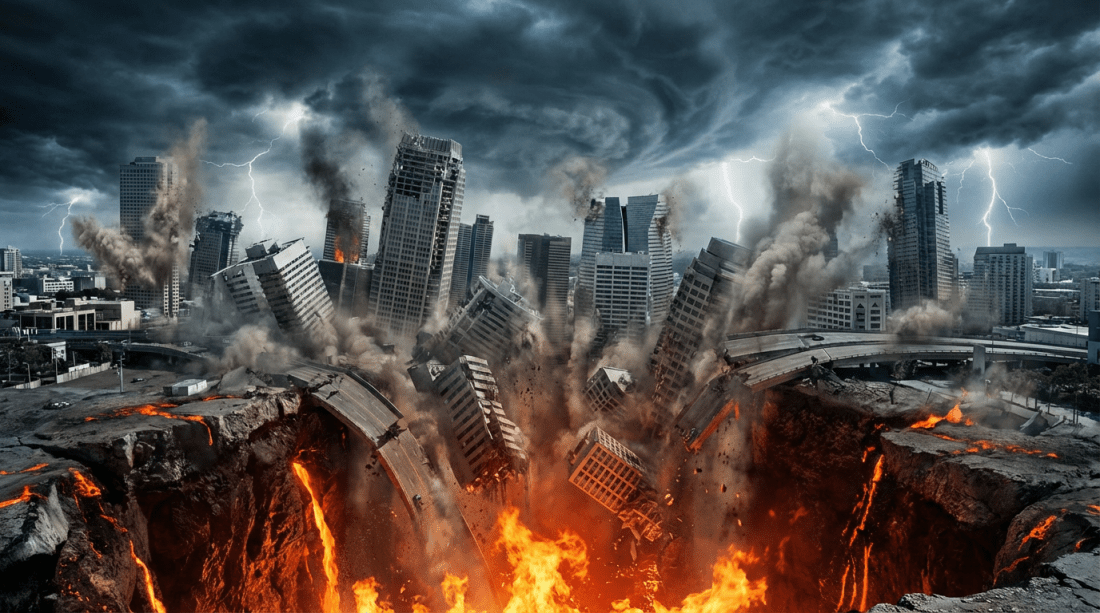
Skyscrapers collapsing into a fiery lava-filled chasm under a dark, stormy sky with lightning.

I watched this old blockbuster yesterday. Okay, I admit it. I only recalled watching it years ago, about halfway through.

2012 (2009), directed by Roland Emmerich, stands as one of the most exhilarating and ambitious disaster films ever made—a true spectacle that delivers non-stop thrills, jaw-dropping visual effects, and an unapologetic celebration of human resilience in the face of apocalyptic chaos. If you’re looking for a movie that turns the end of the world into an edge-of-your-seat rollercoaster ride, this is it. Emmerich, the master behind classics like Independence Day and The Day After Tomorrow, outdoes himself here with a film that prioritizes pure cinematic excitement over subtlety, and it succeeds brilliantly on those terms. The car driving along while all the buildings collapsed on either side was particularly memorable.

At its core, 2012 follows a diverse group of characters as they race against time to survive a series of cataclysmic events triggered by massive solar flares that destabilize Earth’s crust. John Cusack stars as Jackson Curtis, a struggling writer and divorced dad who becomes an unlikely hero, desperately trying to save his family amid the unfolding global nightmare. Amanda Peet plays his ex-wife Kate, Chiwetel Ejiofor brings gravitas as a dedicated scientist working for the U.S. government, and Woody Harrelson adds memorable eccentricity as a conspiracy theorist who sees it all coming. The ensemble cast handles the mix of personal drama and high-stakes action with sincerity, making you genuinely care about their fates even as the planet crumbles around them.What truly elevates 2012 is its breathtaking scale and groundbreaking visual effects. This is Emmerich at his most extravagant: entire cities like Los Angeles are torn apart by massive earthquakes, with roads splitting open, buildings collapsing in domino fashion, and cars desperately navigating collapsing freeways in one of the most intense opening sequences in cinema history. Yellowstone erupts in a fiery cataclysm, mega-tsunamis swallow landmarks worldwide, and iconic sites—from the White House to the Vatican—meet spectacular ends.

The CGI, which was cutting-edge for its time and still holds up remarkably well, creates immersive, awe-inspiring destruction that feels both terrifying and exhilarating. Scenes like the family’s frantic escape through crumbling Los Angeles or the desperate boarding of massive “arks” designed to save humanity are pure adrenaline, blending practical stunts with seamless digital wizardry to deliver one jaw-dropping set piece after another.

Beyond the spectacle, the film taps into a universal theme of hope and survival. Despite the overwhelming odds, 2012 never descends into pure nihilism. It balances the chaos with moments of heart—family reconciliations, acts of selflessness, and a quiet optimism that humanity can endure even the worst.

The screenplay cleverly weaves in real-world inspirations from the Mayan calendar prophecy (popular at the time) while keeping the focus on character-driven stakes. At nearly 2 hours and 40 minutes, it gives ample time for both intimate emotional beats and globe-spanning devastation, ensuring the pacing rarely lets up once the disasters begin.Critics may sometimes dismiss it as over-the-top or cheesy, but that’s missing the point—2012 knows exactly what it is and embraces it wholeheartedly. It’s big, loud, and unpretentious fun that prioritizes entertainment value above all else.

The sound design amplifies every rumble and crash, pulling you deeper into the experience, while the score heightens the emotional and epic tones. For fans of disaster movies, it’s a standout: more intense and visually ambitious than many of its peers, with a sense of wonder amid the wreckage. In the end, 2012 is a triumphant blockbuster that reminds us why we go to the movies—to witness the impossible, feel the rush of adventure, and emerge with a renewed appreciation for the fragility (and strength) of life.

If you haven’t seen it, do yourself a favor and experience it on the biggest screen possible. It’s a wild, unforgettable ride that delivers pure cinematic joy through destruction. Highly recommended for anyone who loves epic scale, heartfelt moments, and the sheer thrill of watching the world (almost) end.

Five stars for sheer spectacle and entertainment value from me! I caught up with it on Disney+

The Swedish Connection: A Hidden WWII Hero

My dear readers, this is a Swedish film about a quiet, undeclared hero. The Swedish Connection (Swedish: Den svenska länken) is a World War II drama about Swedish foreign ministry bureaucrat Gösta Engzell, who develops and executes covert plans to rescue European Jewish refugees by using legal loopholes and paperwork. Released in 2026, the film stars Henrik Dorsin as Engzell and was directed by Thérèse Ahlbeck and Marcus Olsson.

It is a remarkable true story about what great things an ordinary person, not in the limelight, can achieve. It’s 1942, and neutral Germany is surrounded by Nazi Germany and its erstwhile ally Finland. A Swedish bureaucrat and his Department are doing everything they can, at times against the wishes of their government, to save as many Jews as possible by providing a connection to Sweden, and thus released.

Henrik Dorsin delivers a wonderfully nuanced performance as Engzell, portraying a man who starts the story mired in rules and paperwork but grows into an unexpected moral force. His journey, guided by humanity rather than headline-making heroics, is one of the film’s most rewarding elements — it reminds us that heroism doesn’t always wear a uniform or charge into battle; sometimes it quietly persists behind desks and in government halls. Sissela Benn as Rut Vogl brings warmth, intelligence, and emotional grounding, making her interactions with Engzell some of the most heartfelt moments onscreen.

The film’s tone is another notable achievement. While it doesn’t shy away from the horrors of the Holocaust backdrop, it also finds space for hope, humility, and even light touches of humor. The result is a heartfelt, uplifting experience that honours its real-life subjects without ever feeling exploitative or overly sentimental.

The provisional visa process pioneered by Engzell’s team are credited with rescuing 100,000 Jews during the war.

Unfortunately, the Irish Government did nothing similar, when perhaps thousands more could have been saved.

Five stars out of five for me.

Arnold Schwarzenegger: From Bodybuilder to Hollywood Icon

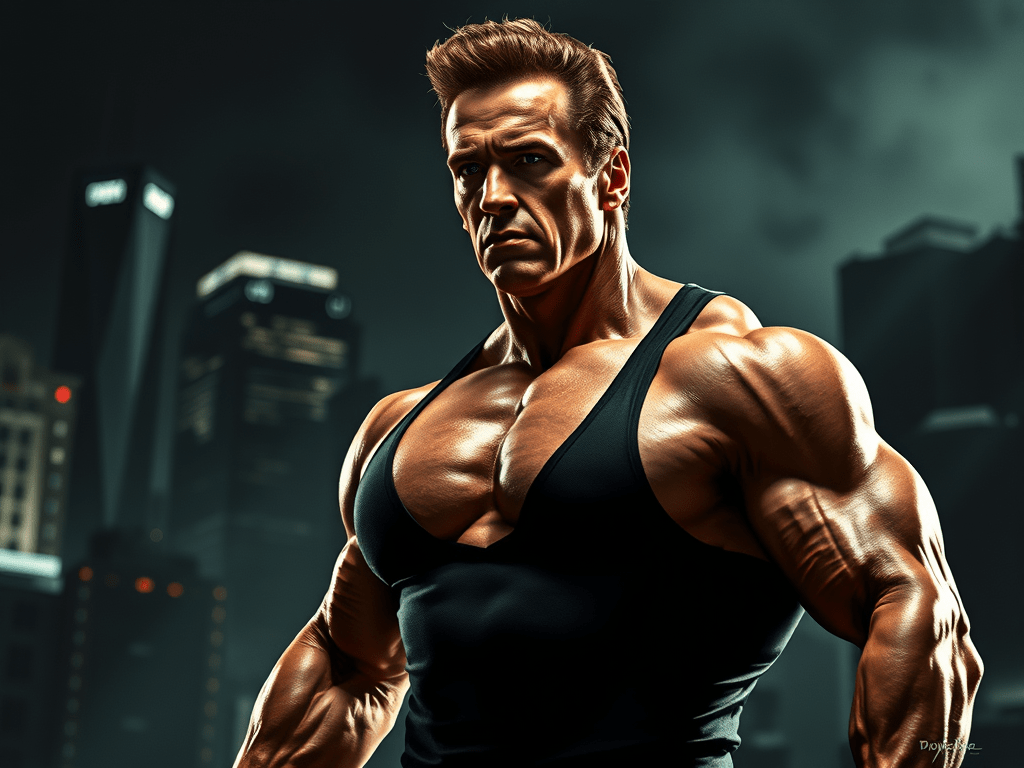
Arnold Schwarzenegger has built one of the most iconic and influential acting careers in modern cinema—transforming from a bodybuilding champion with a thick Austrian accent into one of Hollywood’s most bankable and recognizable stars. His journey is not just impressive; it’s genuinely inspiring.

The first time I saw him was in my granny’s house. It was The Terminator, and despite my protestations, I was brought off to bed. To have nightmares, as it turned out, even after only watching it for a few minutes. It set my imagination alight. What would I do if Terminators were sent back in time to kill me? I decided I’d just die. A few years later, I saw the whole film. I was still impressed, and a little less terrified.

Of course, this was his defining role. As the relentless cyborg assassin, Schwarzenegger delivered a performance that was both chilling and strangely magnetic. His mechanical precision, stoic intensity, and unforgettable line—“I’ll be back”—cemented him as a cinematic legend. What makes this performance so remarkable is how he transformed what could have been a simple villain role into a cultural icon.

But what truly distinguishes Schwarzenegger’s career is his versatility. He didn’t stay confined to action. In Terminator 2: Judgment Day, he added emotional depth and surprising warmth to the same character, proving his growth as a performer. Meanwhile, films like Predator showcased his ability to carry high-stakes ensemble action with intensity and leadership.

Then came comedy—an unexpected but brilliant turn. In Twins, Schwarzenegger displayed impeccable comic timing opposite Danny DeVito, revealing a self-awareness and willingness to parody his own image. He continued that charm in Kindergarten Cop, balancing toughness with heart in a way that broadened his audience and proved he was more than just muscles and catchphrases.

Another standout is Total Recall, where he navigated a complex sci-fi narrative with conviction and physical commitment. His performances often blend physical discipline with a subtle wink of humor—a combination that few action stars have mastered.

What makes Schwarzenegger’s acting career so positive and enduring is not just box-office success but cultural impact. His characters are instantly recognizable. His lines are quoted decades later. His films defined the action genre of the 1980s and 1990s. And through it all, he embraced his uniqueness rather than conforming.

It all started with Conan the Barbarian. Still, a great film if you haven’t seen it. He had the perfect physique for the role after his years of bodybuilding. I only saw this many years after seeing his other films. It still resonated.

Here’s to Arnold Shwarzeneggar.. what an actor.

The Outlaw King Review: A Gripping Tale of Scottish Independence

There’s something about medieval Scots fighting the English that warms the heart. “Freedom” sounds great, but any reason to fight the old enemy is good enough in truth. Well, from a film perspective. I love English people, really. So when I saw that this was available on Netflix, I pressed play.

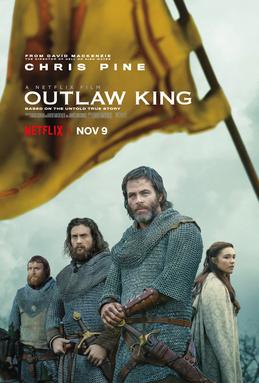
The Outlaw King is an electrifying and emotionally resonant historical epic set in 1304 that brings Robert the Bruce’s story to life with striking authenticity and intensity. Directed by David Mackenzie and led by a commanding performance from Chris Pine, this film stands as a gripping portrayal of Scotland’s fight for independence — raw, human, and deeply inspiring.

From the very first frame, the film immerses viewers in the harsh, mud-soaked reality of medieval warfare. Unlike glossy historical dramas, The Outlaw King embraces realism. It also predates the CGI nonsense plaguing modern films. The battle sequences are visceral and unflinching, especially the climactic confrontation at the Battle of Loudoun Hill, which is staged with breathtaking choreography and tension. The long, chaotic tracking shots during combat create a sense of immediacy that makes you feel as if you’re right there on the battlefield.

Chris Pine delivers one of the strongest performances of his career. His portrayal of Robert the Bruce is layered and compelling — not a flawless hero, but a determined and conflicted leader who grows into his destiny. Pine captures the vulnerability, resolve, and quiet intensity of a man who risks everything for freedom. His Scottish accent is impressive, and his physical commitment to the role adds authenticity.

The supporting cast is equally strong, particularly Florence Pugh as Elizabeth de Burgh. Pugh brings intelligence and emotional weight to her role, portraying a woman whose strength matches the film’s epic scope. The chemistry between her and Pine adds heart to a story otherwise dominated by political tension and warfare.

Visually, the film is stunning. The rugged Scottish landscapes — sweeping highlands, mist-covered hills, and medieval castles — are captured with moody cinematography that enhances both the beauty and brutality of the setting. The natural lighting and muted color palette reinforce the grounded tone, making everything feel lived-in and historically authentic.

What truly sets The Outlaw King apart is its focus on resilience and leadership. Rather than romanticizing rebellion, the film shows the cost of resistance — betrayal, loss, hardship — and makes Robert’s eventual victories feel earned. It’s a story about persistence in the face of overwhelming odds, and it resonates far beyond its historical setting.

For fans of historical dramas, war epics, or character-driven storytelling, The Outlaw King is a must-watch. It’s bold, intense, and emotionally stirring — a film that honors its history while delivering cinematic excitement. A powerful reminder that freedom is rarely won without sacrifice.

The one drawback to the film, unlike the classic Braveheart, this feels like a war between nobles, the top tier in each country. It doesn’t feel to me, watching it, that this is a battle of your average Scot.

For that reason, it gets three stars out of five from me.