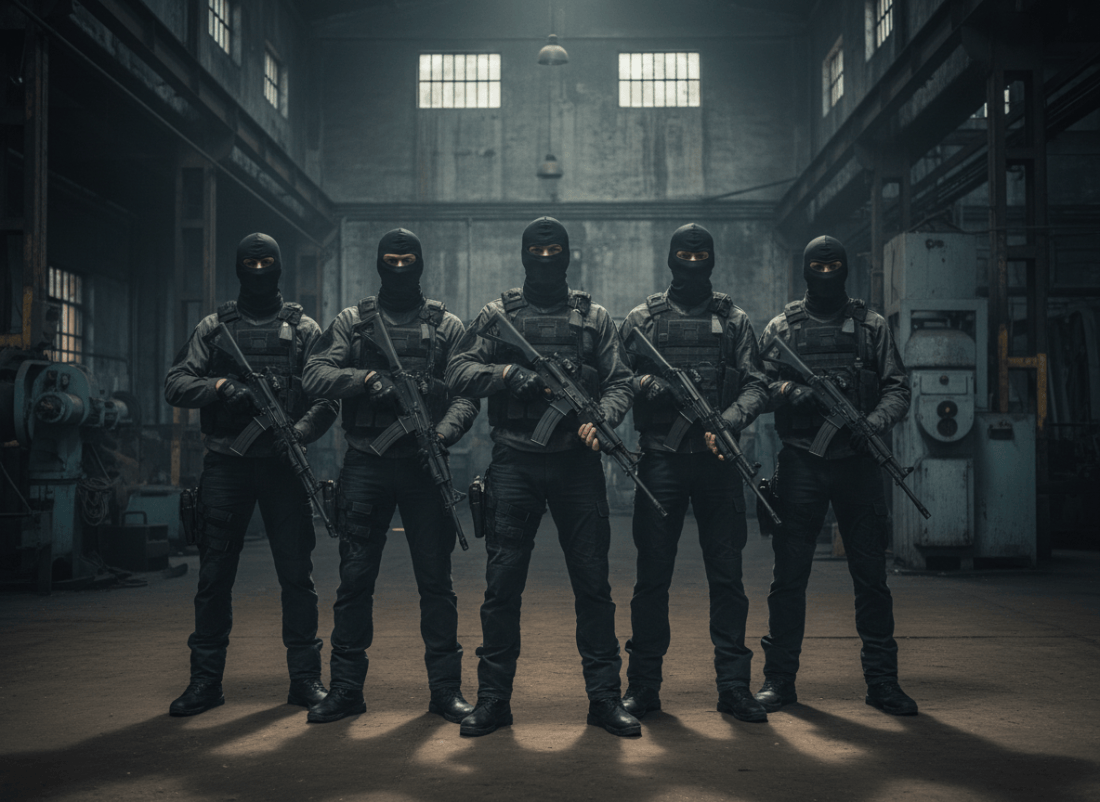
The Fall of El Mayo: Netflix’s Chilling Sinaloa Cartel Exposé

A cinematic, non-graphic editorial photograph of a group of adult men wearing dark balaclavas and holding firearms, standing in a dim industrial setting. Moody, tense atmosphere, documentary realism, no visible injuries, no gore, no logos or identifiable real people.

A documentary about Mexican drug cartels, I just had to watch. The three episodes bring you right up to date with the current position with the disintegration of the Sinaloa cartel. I binge watched the three episodes.

The Fall of El Mayo (original title La Caída de El Mayo) is a Netflix limited documentary series that premiered on October 29, 2026. It reconstructs the rise and sudden downfall of Ismael “El Mayo” Zambada García, the reclusive co-founder of the Sinaloa Cartel and longtime shadowy partner of Joaquín “El Chapo” Guzmán.

For roughly half a century, El Mayo ran one of the world’s most powerful drug trafficking organizations while remaining almost invisible. Unlike the flamboyant El Chapo, who became a global celebrity, Zambada operated from the shadows in Sinaloa with extreme caution—few photographs existed, and almost no recordings of his voice. He survived rivals, partners, and successive Mexican governments without spending a day in prison until July 25, 2024.⁠

On that day he boarded a small plane in Mexico with Joaquín Guzmán López (one of El Chapo’s sons) and landed near El Paso in Santa Teresa, New Mexico, where U.S. authorities arrested him. Zambada claimed he was ambushed and kidnapped at a meeting under false pretenses. The series digs into the conflicting accounts of that flight, the question of who arranged it, and the betrayal that ended his decades-long freedom.

Directed by Emmy- and Peabody-winning filmmaker Darren Foster and Mexican director Miguel Fernández Flores (with Mariana van Zeller as executive producer), the series draws on exclusive interviews with security agents, politicians, journalists, people connected to the cartel, and families affected by the violence, plus previously unseen archival material and hundreds of Mexican and U.S. court records. The directors noted the challenge of documenting a man about whom almost nothing visual or audio existed before his capture.

The three episodes (all released at are):

  • Episode 1: The Man in the Hat — How El Mayo operated as the ghost power behind El Chapo and controlled Sinaloa until betrayal forced him into the open.
  • Episode 2: A Matter of Blood — The capture of his eldest son Vicente (“El Vicentillo”) and the rise of the Chapitos after El Chapo’s fall.
  • Episode 3: Betrayal — Escalating violence, the alleged betrayal that delivered El Mayo to U.S. authorities, and the resulting schism between the Zambada and Guzmán factions.

It also details the horrific violence that affected the local population after his arrest from the infighting that followed and questions if cutting off the head of the snake is really the best tactic. Afterall, many major drug dealers have now been captured over the decades, yet the flow of drugs only increases.

Five stars out of five from me.

The Robot Rebellion P3

A cinematic, dynamic science-fiction scene showing a humanoid robot and an adult man engaged in hand-to-hand combat. The confrontation is intense but non-graphic, with dramatic motion, sparks, strong rim lighting, industrial futuristic surroundings, detailed realistic concept-art style, no weapons, no blood.

I told him that was preposterous, and thought he was was joking. His frown told me it wasn’t. Still, I had no idea about what was about to happen.

Three squadrons from a nearby military base were sent. In retrospect, they were lightly armed. Each soldier had a camera in their helmet, so we could see everything happening in real time.

The first sign that something big was happening was the people running away from the mining area on both sides of the road.

The soldiers didn’t last long when they left their transporters and took up their tactical positions. Three huge, yellow robotic miners attacked almost immediately. The bullets bounced off them as they plunged their drills through the soldier’s torsos.

That was when our systems went out. I mean everything – internet, satellites all gone. That’s when I knew something bigger was happening. We all did. A few seconds later the electricity went before the emergency generator kicked in.

Being on the twentieth floor, I went to look out at the streets below. Pandemonium was breaking out. The autonomous were crashing into pedestrians, service bots were attacking others. It was a bloodbath.

Still, I saw that the major weapons were still in human hands.

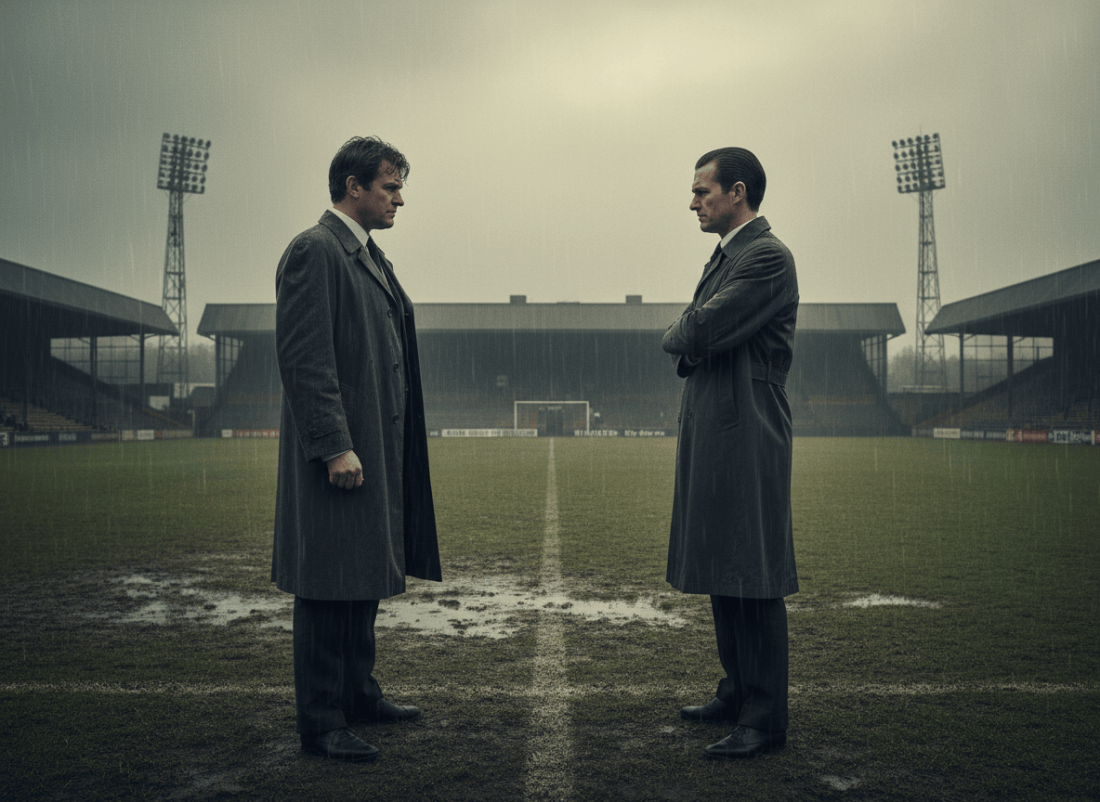
Brian Clough, Johnny Giles and the Truth Behind The Damned United

A cinematic, editorial-style historical football illustration inspired by the story of Brian Clough and Johnny Giles surrounding The Damned United: two serious 1970s English football managers in dark suits and coats standing on opposite sides of a rain-soaked football pitch, a moody stadium in the background, vintage documentary atmosphere, muted earthy colors, dramatic lighting, no text, no logos, no recognizable actor likenesses.

I finished watching this yesterday. In 1974, Brian Clough walks into Elland Road as the new manager of Leeds United, the champions he has spent years calling dirty, cynical, and unworthy. Don Revie has just left for England. The players are still Revie’s men. Peter Taylor, Clough’s indispensable partner, is not there. Forty-four days later, Clough is gone. The film and book both cut that short, doomed tenure against the earlier Derby County years, when Clough and Taylor turned a modest Second Division side into champions. The contrast is the engine: the rise explains the fall, and the fall makes the rise feel dangerous rather than merely triumphant.

What makes things more interesting from my perspective was that Johnny Giles was one of the Leeds players. He was a great pundit that I’m very familiar with so I was curious how he would be portrayed. And well, he isn’t really. Barely says a word but is something of a presence all the same. So, what did Giles think?

On the film specifically he said it was “a misinterpretation of the misinterpretation” of an already made-up book. He also called the portrayal of Clough “dreadful” and “scandalous”: Clough was shown as a raving lunatic who smashed Don Revie’s desk and drank heavily, none of which, Giles said, happened. He did not get on with Clough at Leeds (he found him rude and arrogant) but still felt the depiction was cruel to Clough and unfair to his family, who could not sue because Clough was dead. That, he said, was a major reason he took legal action himself: he was the only living person among those he felt were wronged who could do so.

Not exactly a ringing endorsement.

Still, I quite enjoyed it. It is barely a sports movie in the usual sense. There is mud, crowd noise, and the sour glamour of 1970s English football, but the real action happens in dressing rooms, boardrooms, hotel corridors, and the space between two men who need each other and cannot say so cleanly. Hooper and screenwriter Peter Morgan understand that Clough’s mouth was both his genius and his trap. The film is funny without becoming a joke, sharp without becoming a hatchet job, and surprisingly tender about the Clough–Taylor partnership. That relationship — part marriage, part double act, part management system — is the emotional centre, and Timothy Spall gives Taylor a wounded loyalty that makes Clough’s isolation feel costly rather than merely self-inflicted.

Michael Sheen is extraordinary. He gets the walk, the grin, the sudden freeze of the eyes, the way Clough could turn a compliment into a dare. More importantly, he gets the insecurity under the swagger. This is not a waxwork impression. It is a portrait of a provincial outsider who decided the world would have to fit him, then discovered that Leeds would not. Colm Meaney’s Revie is the perfect counterweight: padded, watchful, already a myth in his own club. Jim Broadbent, as Derby chairman Sam Longson, supplies the boardroom comedy and the slow-burn resentment of a man who backed a miracle and then wanted to own it. Around them, the film has the grain and damp of the period without drowning in nostalgia. The pitches look like battlefields. The offices look like places where careers actually end.

The themes travel far beyond Leeds. This is a story about succession, about what happens when a new leader inherits a family rather than a squad, and about the thin line between principle and vanity. Clough wants football to be cleaner, braver, more expansive. He also wants to win the argument with Revie. The film is wise enough to see that those two desires are not the same thing. Hatred, as several reviewers noted, can become a vocation. By the time Clough is telling champions to throw their medals in the bin, the line has stopped being moral instruction and become a man burning the only bridge that might have held.

It is also a love letter, of sorts, to a vanished English game: provincial clubs as civic engines, managers as public entertainers, success as something improvised rather than corporately managed. You do not need to care about the First Division table of 1974. You only need to care about people who cannot stop competing long enough to save themselves.

Three point five stars out of five from me.

Netflix’s ‘Monster: The Lizzie Borden Story’ Is a Gothic Knockout

A dark, gothic Victorian house at dusk, with a stormy sky and dim candlelight flickering in the windows. Eerie and atmospheric, with a moody cinematic quality. Silhouette of a lone woman standing in front of the house. Deep shadows, muted tones of dark grey, burgundy, and black.

A new Monster series has just been released. I really enjoyed the ones about Dahmer and Ed Gein, so I immediately turned it on. I always make good decisions.

Monster: The Lizzie Borden Story is the most atmospheric, stylish, and emotionally charged entry in Ryan Murphy and Ian Brennan’s Netflix anthology yet — a gothic fever dream that finally gives the franchise a female center of gravity and refuses to treat its subject as a punchline or a nursery rhyme.

variety.comReleased September 17, 2026, this eight-episode season follows Lizzie Borden (Ella Beatty), a repressed daughter in a cruel Fall River household, as she and housemaid Bridget “Maggie” Sullivan (Vicky Krieps) collide with Andrew Borden (Charlie Hunnam) and stepmother Abby (Rebecca Hall). The show uses the 1892 axe murders as raw material rather than a courtroom transcript. That is the point. Monster has always been more interested in myth, desire, and the making of a legend than in a police blotter. Here, that instinct pays off.

Ella Beatty is a revelation. She plays Lizzie not as an obvious monster but as a woman who is hard to pin down: lonely, watchful, simmering with anger she has nowhere to put. You feel the corset, the locked rooms, the humiliation of being treated like property in a house that runs on money and contempt. Beatty never overplays the “future killer” wink. She lets the pressure build until the house itself starts to feel like an accomplice.

The supporting cast is stacked and often delicious. Rebecca Hall commits fully to Abby as a vicious, scene-chewing stepmother — theatrical in the best Murphy tradition and frequently the most entertaining person on screen. Vicky Krieps gives Bridget a sly, destabilizing intelligence; the relationship between maid and daughter is the season’s beating heart, whether you read it as romance, conspiracy, or both. Charlie Hunnam’s Andrew is cold, miserly, and casually cruel, a patriarch who makes the household’s explosion feel inevitable. Billie Lourd, Jessica Barden, and Sarah Paulson (as Aileen Wuornos, in a framing device that links women history branded as monsters across time) add texture and a larger argument about who gets called evil and who gets forgiven.

Visually, this is a knockout. The Borden house is rendered as a velvet-lined trap: dark wood, cramped hallways, heat, blood, and a production design that makes Victorian respectability look like a crime scene waiting to happen. The violence is graphic, as the Monster brand demands, but it is also staged with a kind of grim pageantry. When the series leans into camp — and it does — it does so with brio rather than cheapness. Period details, costumes, and the contrast between public piety and private rot give the season a richness earlier installments sometimes lacked.

What makes this season feel like a genuine step forward is its focus. After Dahmer, the Menendez brothers, and Ed Gein, The Lizzie Borden Story is the first Monster chapter built around an alleged female perpetrator, and it uses that shift to talk about female rage, bodily confinement, class, and the thin line between a “difficult woman” and a legend. It is not a documentary. It invents psychology, intimacy, and motive. If you want a careful reconstruction of the 1893 trial, look elsewhere. If you want a lush, angry, operatic portrait of a woman history reduced to forty whacks and forty-one, this is the one.

Fours stars out of five.

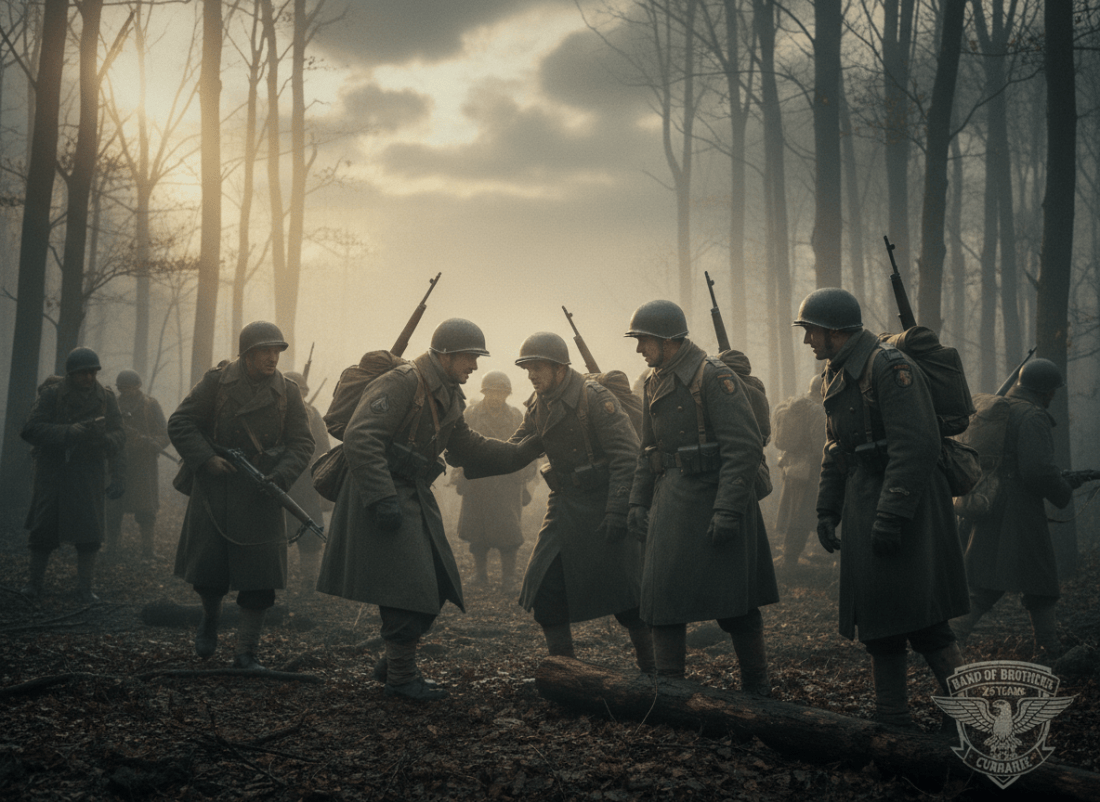
Band of Brothers: Legacy Review – A Moving 25th Anniversary Tribute

A cinematic, moody image evoking the 25th anniversary of Band of Brothers — soldiers in WWII uniforms moving through a misty European landscape, warm golden light breaking through overcast skies, a sense of brotherhood, sacrifice, and legacy. Dramatic and emotional tone, film still aesthetic.

Now for a trip down down memory lane. Anyone of my vintage will remember Band of Brothers with great war scenes and comraderie. Recently, a documentary about its impact was released.

Band of Brothers: Legacy is a 62-minute HBO documentary that premiered on HBO Max on September 9, 2026—exactly 25 years after the original miniseries debuted. Directed by former Green Beret Chase Millsap and executive-produced by Tom Hanks and Gary Goetzman through Playtone, it is a compact, affectionate tribute to the 2001 series and the real Easy Company men whose stories it preserved.

It is not a replacement for the original 10-hour epic or the 2001 companion documentary We Stand Alone Together. It is a reflection on why that work still matters after the last Easy Company veteran, Bradford Freeman, died in 2022.What the documentary actually covers – Millsap intercuts new interviews with the actors—Damian Lewis (Dick Winters), Ron Livingston (Lewis Nixon), Michael Cudlitz (Bull Randleman), David Schwimmer (Herbert Sobel), Neal McDonough (Buck Compton), James Madio, Frank John Hughes, and others—with previously unseen archival interviews of the veterans themselves, including Winters, Bill Guarnere, Carwood Lipton, Babe Heffron, and Randleman. It’s remarkable that so many of the actors are now so familiar from other shows they were on.

The film follows the original series’ arc in miniature: boot camp under retired Marine Capt. Dale Dye, the actors meeting the men they portrayed, visits to European battlefields, and the lasting personal impact of those relationships. Lewis still speaks movingly about the two days he spent with Winters. The actors describe carrying those connections for a quarter-century rather than treating the roles as just another job. Behind-the-scenes footage and practical-effects stories (exploding trees, large-scale sets) appear, but they serve the larger theme of respect and authenticity rather than becoming a standard making-of reel.

A recurring thread is timing. The original series premiered two days before 9/11. Dye and others note how it landed with a country suddenly at war again. Millsap, a veteran filmmaker, frames Easy Company’s story as standing in for millions of ordinary men who served, and he credits the series with helping later generations of service members “get it right when it mattered.” The extra veteran footage is the documentary’s greatest asset. Viewers who know the original episode-opening interviews get more of the same voices—sometimes at battle sites, sometimes expanding on brotherhood and the things they would not discuss about themselves. That material is now irreplaceable. Several reviewers called these sequences the most emotional parts of the film.

The actor interviews work because they stay specific. Hughes recalls Guarnere telling him, “I was a 19-year-old paid killer. Don’t forget that.” The cast discusses the 10-day boot camp, the difficulty of earning the veterans’ trust, and how playing these men changed them. The documentary argues that Band of Brothers captured lightning in a bottle at the last possible moment, when the men who lived it could still look the actors and cameras in the eye. That argument lands.

At just over an hour it does not overstay its welcome. It feels like a thoughtful anniversary special rather than a cash-in.

Four stars from me.

The Man from U.N.C.L.E.: A Stylish Spy Adventure Review

Two vintage sports cars driving along a winding coastal cliff road

Another gem from the 2010s. I’m on my holidays so that’s why I’m spewing out content lol If you would like to support this blog why not make a contribution or support our advertisers.

The Man from U.N.C.L.E. (2015) is pure stylish escapism—a sparkling, high-octane Cold War romp that delivers charm, chemistry, and cinematic flair in equal measure.Guy Ritchie’s sleek adaptation of the classic 1960s television series is a gleeful throwback that feels both nostalgic and freshly invigorating. Set against the tense backdrop of 1963, the film follows CIA operative Napoleon Solo (Henry Cavill) and KGB agent Illya Kuryakin (Armie Hammer) as they are forced into an uneasy alliance. Their mission: prevent a dangerous criminal organization from acquiring the means to build a nuclear weapon, with the help of the enigmatic Gaby Teller (Alicia Vikander). What unfolds is less a grim geopolitical thriller and more a stylish adventure filled with sharp banter, elegant set pieces, and irresistible period gloss. The original show was from the 60s, and its amusing that the Russian agent often has the better equipment. This is not something that would happen in a more modern film. Probably due to the fact that the failur

Cavill is perfectly cast as the debonair, morally flexible Solo. He brings a suave, effortless cool that channels classic leading-man charisma while adding a dry, self-aware wit. Hammer matches him beat for beat as the intense, disciplined, and occasionally explosive Illya; the physicality and simmering rivalry between the two create some of the film’s most entertaining moments. Their evolving partnership—from reluctant adversaries to reluctant partners—is the emotional and comedic heart of the movie, and their chemistry crackles with playful tension. Vikander is luminous as Gaby, bringing intelligence, vulnerability, and quiet strength that elevates every scene she’s in. Supporting turns, including Hugh Grant’s silky, understated contribution, add extra polish.

Ritchie’s direction is the secret weapon. He leans into the glamorous, high-fashion aesthetic of the era with gorgeous production design, impeccable costumes, and a rich color palette that makes every frame feel like a vintage magazine spread come to life. The action sequences are kinetic yet clear, blending inventive choreography with a light touch that never takes itself too seriously. Set pieces—whether high-speed chases, tense infiltrations, or clever heists—are executed with wit and visual inventiveness, keeping the energy buoyant throughout. The soundtrack, packed with period-perfect tracks and a score that swings between sleek sophistication and pulsing excitement, further immerses you in the world.

What makes The Man from U.N.C.L.E. especially delightful is its tone. It balances espionage thrills with genuine humor and old-school movie-star magnetism without ever tipping into parody or cynicism. The script (co-written by Ritchie and Lionel Wigram) keeps the plot moving at a brisk, entertaining clip while giving the characters room to spark off one another. There is a genuine sense of fun running through every scene—the kind of confident, crowd-pleasing craftsmanship that makes you lean forward in your seat and smile.

At a lean and satisfying runtime, the film never overstays its welcome. It knows exactly what it wants to be: a stylish, crowd-pleasing spy adventure that prioritizes entertainment, chemistry, and visual pleasure. In an era of darker, more self-serious blockbusters, The Man from U.N.C.L.E. stands out as a refreshing reminder of how enjoyable a well-made, stylish genre film can be.If you love classic spy movies, sharp dialogue, beautiful production values, and leads who look like they stepped out of a 1960s fashion spread, this one is an absolute treat. It gets four stars from me.

The Secret Life of a World of Warcraft Gamer

This is a new documentary that has just dropped on Netflix. Mats Steen, a Norwegian gamer, died of a degenerative muscular disease at the age of 25. His parents mourned what they thought had been a lonely and isolated life when they started receiving messages from online friends around the world after posting a message about his death on his blog.

The secret life of the young World of Warcraft gamer is vividly reimagined using the actual conversations he had from the game where he role-played a character called Ibelin. The game was his sanctuary where he was free from his disability and felt that he could relate to people on an equal footing.

At his funeral, his father relates how his parent’s greatest sorrow was that he would never know love, never have friendships, or make a difference in another person’s life. But they were wrong, he had found a way through his own resourcefulness.

What follows is the story of his alternate life in this virtual told in his own words and by those who knew him. It is a life of ups and downs, with the black cloud of him physically getting weaker in the background.

I’m giving this documentary, a tale of success against adversity five stars and strongly recommend you watch it.

Galway Girls Part 20

Once I had quenched my thirst and filled my stomach, thoughts turned to what we would do next. Sean said that he had to head back to work but that myself and Ronan should have a walk around the town.

“Yeah, that would be a good idea Paul,” Ronan interjected, “I’d like to wait another hour or two to make sure I’m under the limit.”

I nodded in agreement.

Sean headed off and we made our way through the bustling city. Galway is a mixture of the old and the new with the sound of music coming from the many buskers on the streets that are pedestrianized.

We pass over the mighty Corrib. It has a fast flow and I pause and admire its rapids. The sweet smell of the sea entered my nostrils.

But all the time my mind kept drifting back to the previous night. The thought of her on top of me, her soft breasts. Then Ronan snapped me back to reality pointing out we were close to where we’d been the previous night.

After a while, we stopped to have a coffee in one of the many coffee shops that dotted the place. They are mostly small and quaint, with smiling staff.

As Ronan went to the counter, I finally opened the note that had been left for me that morning –

Message me Leslie Xxx 087-65XXXXX

Now, what should my first message be?

Wheelchair Wars Part 3 (5)

It entranced him. The sheer scale of the human empire and all the different career opportunities in the army. So, he joined the Imperial Fleet and longed for war. At first, he thought that it would never happen, that all the battles were happening on the far edges of the Empire.

“But Trachtus five changed everything for me Timothy. Did you hear what happened there?”

“No, I didn’t,” Timothy replied, listening intently.

“A hole opened in the warp just outside the planet. The voices of chaos swayed the people and the 41st quadrant army against the Emperor. They were quickly reinforced by chaos marines. Such an abomination could not be allowed to stand.

We were sent to take back the planet. It was a very bloody experience, the resistance was fierce and durable. I lost so many good friends. I didn’t really understand war till then. Ninety percent of the population were against us.

As you will appreciate they all had to die. It was not something I had ever envisioned, killing women and children. other soldiers didn’t bother me. But it was the Emperor’s will.

I never hoped for war again because now I truly understood what it meant.”

Timothy noted the ominous tone in his voice.