House of the Dragon Season 3 Review: A Spectacle of Fire and Blood

Dragon breathing fire on burning medieval castle under siege at sunset

This is a series that has been brewing very nicely without reaching the mass appeal of Game of Thrones. Probably just as well considering what a mess it ended up.

House of the Dragon Season 3 is a thrilling, reinvigorated triumph that finally delivers the full fire-and-blood spectacle and emotional intensity fans have been waiting for.After the deliberate, sometimes deliberate-to-a-fault setup of the first two seasons, Season 3 explodes out of the gate with urgency, scale, and purpose. The long-simmering Dance of the Dragons erupts into open, devastating conflict across sea, land, and sky. One thing though I’d recommend getting a rehash of what previously happened. I found it quite hard to remember!

Showrunner Ryan Condal and the creative team lean hard into the chaos and cost of civil war while never losing sight of the human (and dragon) drama at its core. The result feels like the series hitting its stride and matching—or in places surpassing—the peak spectacle and bleak grandeur of its Game of Thrones predecessor.

The season opens with one of the most ambitious and visceral sequences in the franchise’s history: the Battle of the Gullet. This naval clash is a masterclass in large-scale filmmaking—ships, dragons, fire, and desperation colliding in a sequence that is both breathtaking and heartbreaking. It sets a tone of high stakes and irreversible consequences that carries through the eight episodes. Subsequent set pieces, including major land engagements and dragon confrontations, maintain that elevated visual and visceral standard. The CGI and practical effects for the dragons feel more integrated and impressive than ever, turning these creatures into true forces of nature rather than mere plot devices.

What elevates Season 3 beyond pure spectacle is how effectively it balances the epic with the intimate. Emma D’Arcy continues to deliver a powerhouse performance as Rhaenyra, charting a complex evolution as she navigates the burdens of claim, loss, legitimacy, and power. Their work is layered, fierce, and often heartbreaking.

Matt Smith’s Daemon remains magnetic—charismatic, dangerous, and increasingly nuanced. Olivia Cooke’s Alicent brings quiet intensity and moral complexity to every scene. Supporting players shine as well, with strong contributions from the returning ensemble and notable new additions (James Norton’s Ormund Hightower stands out as a commanding, multifaceted presence on the Green side).

The writing gives characters sharper agency and more earned complications, allowing political maneuvering, personal betrayals, and the grinding realities of war (including institutional and human costs) to feel consequential rather than static

.Pacing is a clear improvement. Where earlier seasons sometimes lingered in preparation, Season 3 moves with purpose—major developments arrive, alliances shift, and the story advances meaningfully toward the larger Dance. There are still quieter, character-driven hours that dig into the psychological and logistical burdens of rule, and these moments of relative intimacy often rank among the season’s strongest. The show remembers that the most memorable Westerosi storytelling has always mixed dragonfire with human frailty, ambition, grief, and moral compromise. Themes of legitimacy, the price of power, the unpredictability of dragons as weapons, and the way war warps everyone involved land with greater clarity and force.

Production values remain top-tier: cinematography, score, costumes, and production design continue to make King’s Landing, Dragonstone, and the wider Seven Kingdoms feel lived-in and mythic. The season benefits from the groundwork of Seasons 1 and 2; earlier character work and political setup now pay off in satisfying (and frequently devastating) ways.

Season 3 is not without the franchise’s characteristic darkness and occasional messiness—this is still a story of civil war that makes monsters and fools of its participants—but it channels that bleakness productively. It is more action-packed, more emotionally resonant, and more confidently told than what came before.

For longtime fans of the world George R.R. Martin created and for anyone who stuck with the slower build of the earlier seasons, Season 3 rewards that investment handsomely. It is lavish, knotty, spectacular, and frequently gut-wrenching television that captures the tragic grandeur of the Dance of the Dragons. If the first two seasons were the fuse, this is the explosion—and it is well worth the wait.

Four stars out of five from me.
Star Trek: Strange New Worlds Season 4 Review

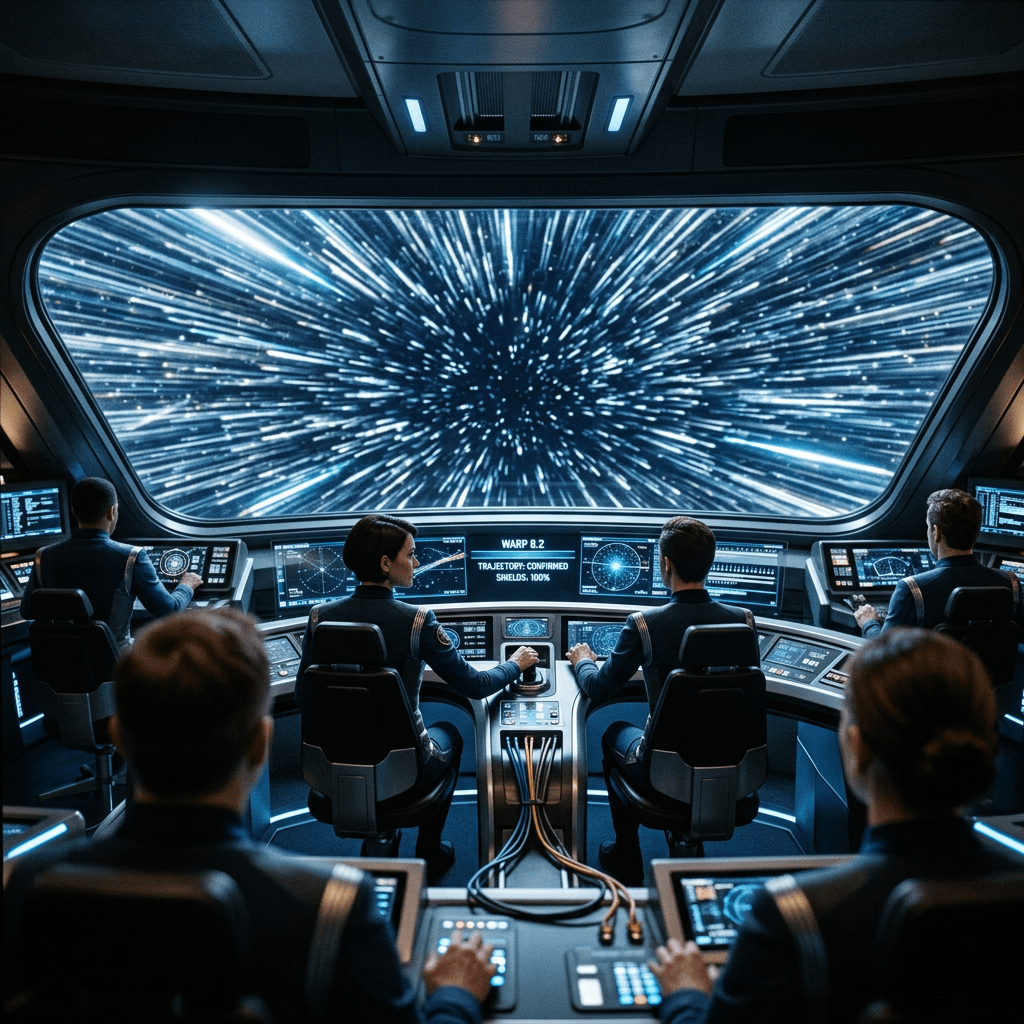
Starship bridge crew operating controls during warp speed travel

My regular readers will know how much I love Star Trek. And my favorite series is the Strange New Worlds one.

So, I was ecstatic to see that Season 4 is now available on Paramount+. Happy days. So far, the first three episodes have dropped.

Star Trek: Strange New Worlds Season 4 is a vibrant, inventive, and deeply satisfying return that captures the spirit of classic Trek while delivering bold genre swings, strong character work, and pure adventure. Premiering on Paramount+ on July 23, 2026, the 10-episode season (releasing weekly through a September 24 finale) picks up with Captain Christopher Pike and the USS Enterprise crew continuing their exploratory missions in the years before The Original Series. Showrunners Akiva Goldsman and Henry Alonso Myers double down on the series’ episodic strengths—each outing offering a distinct tone and style—while deepening the ensemble and leaning into hope, ethics, friendship, and wonder. Early critical reception has been strong (including an initial perfect Rotten Tomatoes score that settled into Certified Fresh territory), with many calling it reinvigorated and among the show’s best work.

The season opens with “Valles Marineris,” a thrilling time-travel adventure that flings the Enterprise 65 million years into the past amid a stellar storm. What follows mixes dinosaurs (with impressive effects and practical elements), first-contact diplomacy with a warrior culture, moral dilemmas about interfering with history, and Pike confronting his own path and predetermined future. Anson Mount anchors it with quiet intensity and moral clarity, while guest star Saffron Burrows delivers a memorable counterpart. It’s ambitious, bittersweet, philosophically rich in classic Trek fashion (echoing themes from episodes like “The City on the Edge of Forever”), and a fun, high-concept kickoff that balances action, wonder, and character.

“The Griffin Incident,” shifts hard into psychological horror and body horror as Spock, La’an, and a returning young James T. Kirk (Paul Wesley) investigate a derelict Federation ship. It’s tense, visually striking, and unflinching, using the isolated setting and escalating hallucinations to probe the characters’ deepest fears and conflicts (including Spock’s dual nature and Kirk’s emerging sense of responsibility). Christina Chong, Ethan Peck, and Wesley shine in the high-stakes intensity, delivering one of the franchise’s more visceral standalone tales while advancing relationships. This is one of the best episodes of Star Trek every, right up there with Picard’s interactions with the Borg.

“Human Best Friend” provides welcome levity as a shore-leave comedy (with clear nods to TOS “Shore Leave” and hangover-style antics). The crew’s overworked bridge officers hit a pleasure planet whose atmosphere has intoxicating effects, leading to chaotic, character-revealing hijinks. It centers a delightful buddy dynamic between Erica Ortegas (Melissa Navia) and Montgomery Scott (Martin Quinn), turning prior friction into mutual respect and growth, while giving Spock and Kirk further bonding moments. Silly by design yet grounded in friendship, teamwork, and the crew’s need to blow off steam, it’s pure Strange New Worlds charm.

What elevates Season 4 is the consistent excellence of the cast and the freedom to experiment. Mount’s Pike remains a standout—reflective, principled, and human—while Rebecca Romijn’s Number One, Peck’s Spock, Jess Bush’s Chapel, Celia Rose Gooding’s Uhura, Babs Olusanmokun’s M’Benga, and the rest of the ensemble get meaningful moments and pairings. Wesley’s Kirk continues to integrate naturally, and returning guests like Carol Kane’s Pelia add texture. The showrunners emphasize pure episodic storytelling without a single overarching “big bad,” allowing for cowboys, black holes, dinosaurs, haunted ships, comedy, and more (including a planned Jim Henson’s Creature Shop puppet episode). Production values remain high, the writing mixes sincerity with playful genre pastiche, and the hopeful, exploratory ethos feels reenergized.

It ranks among the more lively and memorable runs, giving every performer room to shine across adventure, horror, drama, and comedy. Minor notes about tonal shifts or underdeveloped threads in a highly episodic structure don’t overshadow the overall joy and quality.

As the penultimate season (with a shortened final Season 5 already ordered to bridge toward TOS), Season 4 feels like a celebration of what makes Strange New Worlds special: a crew worth spending time with, strange new worlds and ideas, ethical questions, and the enduring optimism of Starfleet. It’s peak modern Trek—entertaining, thoughtful, and endlessly rewatchable.

Five stars out of five from me.

Big Chicken: A Fast Food Conspiracy Review

Interior of a poultry farm with rows of white chickens and yellow feeders

I watched an interesting documentary yesterday. Beware, though; it might put you off your chicken for good.

Big Chicken: A Fast Food Conspiracy is an engaging, thought-provoking, and highly watchable Netflix documentary that smartly blends personal experiment, cultural insight, and industry investigation. Released in 2026 and directed by Liana Stewart (produced by Mindhouse), the film follows British comedian and BAFTA winner Mo Gilligan as he embarks on a bold 28-day challenge: eating nothing but fast-food fried chicken for breakfast, lunch, and dinner—84 meals in total—while traveling from South London to key spots across the United States. What begins as a playful, self-aware love letter to his favorite comfort food evolves into a compelling examination of the historical roots of fried chicken, the massive industrial forces behind its global popularity, and the real impacts on health, communities, the environment, and culture.

Gilligan is an inspired and charismatic host. His warmth, humor, and genuine curiosity make the material accessible and relatable rather than preachy. As a Black British comedian with a clear personal connection to chicken-shop culture, he brings authenticity and emotional honesty—openly sharing both his enthusiasm at the start and the physical and mental toll the experiment takes (weight gain, sluggishness, mood changes, and digestive issues). You can see him physically deteriorate on camera over the course of the show. This personal stake grounds the bigger themes and helps the film speak effectively to a broad audience, including younger viewers who might not otherwise seek out food-industry documentaries. It feels like a fresh, Gen-Z-friendly update to the Super Size Me formula, infused with Gilligan’s likable energy and comic timing.

The documentary covers substantial ground effectively. It traces fried chicken’s origins and cultural significance (including confronting racist stereotypes and examining marketing and appropriation), explores how modern industrial breeding prioritizes rapid growth over flavor and welfare, highlights the role of ultra-processed foods and additives, and looks at broader societal effects such as food deserts, targeted marketing in lower-income communities, labor conditions in processing, and environmental consequences of large-scale poultry farming. Journeys through places like Houston, New Orleans, Chicago, and Arkansas, along with conversations with experts, activists, and others, keep the pacing dynamic and the revelations impactful without overwhelming the narrative.

At roughly 96 minutes, the film is tightly assembled and slickly produced. It balances the gonzo personal experiment with travelogue elements and investigative threads, using Gilligan’s reactions and vulnerability to humanize statistics and systemic issues. It successfully sparks curiosity about food origins and encourages more informed choices without demanding absolute purity or lecturing viewers. Many will leave thinking differently about their next takeaway order while still appreciating the cultural joy and social role the food holds for many people. Overall, Big Chicken: A Fast Food Conspiracy succeeds as entertaining, enlightening viewing. Gilligan’s charm carries the personal story, the scope of the investigation is ambitious and relevant, and the result is a documentary that informs, challenges assumptions, and remains enjoyable throughout.

Four stars out of five from me. Not to be watched before dinner.
Distant Love (Part 89)

Glowing digital neuron structure emitting blue and orange energy in a server room

Maeve waves for Derek to follow her into the ship and then to the bridge. It is much cooler inside.

She holds his hand. “Are you sure about this?” She rubs his face. “You are risking so much for me, for the cause.”

Derek gazes into her eyes. “Anything for you, my love.” He takes her hand. “We can do this.”

She nods. “Do we need to go over the plan again?”

“No, everything is okay. The computer virus has already begun its infection. We will attack from the air while they plant the explosives.”

She flicks her hair. “I wish I could share your optimism.”

“Trust me, I got you out of jail, didn’t I?”

“You did.” They kissed. For

“Actually, I’m looking forward to trying out some of these new weapons on the ship,” Derek says with a smile.”They should do a lot of damage.”

They hear a loud clanging.

A few moments Aaron enters, sweat dripping from his brow. “That’s everything sorted now. Try to rest. Save your energy for later.” A wide grin appears on his face.

Maeve slams his back. “None of your business what we get up to, isn’t it, Derek?

“Definitely, Maeve.” A burst of laughter breaks out.

Kevin Hart Shines in 72 Hours Comedy

People dancing and celebrating at a rooftop party with city skyline and sunset in the background

Netflix recommended this film after the Kevin Hart. I was in the mood for a laugh so happy days!

72 Hours is a high-energy, laugh-out-loud ride that perfectly captures the chaos of generational culture clash while delivering pure escapist fun. Directed by Tim Story and led by Kevin Hart as Joe, a 40-year-old advertising executive whose career is on the ropes, the film starts with a brilliantly simple and relatable premise: Joe is accidentally added to a group chat of twenty-somethings planning a wild Miami bachelor party.

Seeing a golden opportunity to reconnect with youth culture (and save his job with a vodka campaign pitch), he impulsively joins the strangers for 72 hours of pure mayhem.What follows is a nonstop whirlwind of parties, misunderstandings, escalating stakes, and genuine heart.

Hart is in peak form—energetic, self-deprecating, and endlessly watchable as the older guy desperately trying to keep up with the younger crew. His physical comedy and rapid-fire delivery shine, especially in the escalating situations that force him way outside his comfort zone.

The younger cast, including Marcello Hernández, Mason Gooding, Kam Patterson, and Ben Marshall, bring fresh, sharp energy and excellent chemistry. Their interactions with Hart crackle with authentic generational friction that’s played for both big laughs and surprising warmth.

The Miami setting is vibrant and sun-soaked, full of colorful locations, yacht parties, nightlife, and the kind of larger-than-life set pieces that make this feel like a modern hangover-style adventure with its own distinct personality. The script (from writers including Jon Hurwitz and Hayden Schlossberg) balances broad, raunchy comedy with moments of real insight about ambition, relationships, commitment, and what it means to stay relevant without losing yourself.

Supporting turns from Teyana Taylor and others ground the story emotionally, while cameos and side characters add extra layers of hilarity.Story keeps the pacing tight and the tone breezy. Even when the plot piles on complications (gangsters, mistaken identities, and wild party hijinks), it never loses the sense of fun or the central character journey. Joe’s arc feels earned—his desperate attempts to “get” Gen Z ultimately force him to confront his own life choices, and the payoff is both satisfying and genuinely funny.

At its best, 72 Hours is pure crowd-pleasing entertainment: loud, colorful, frequently hilarious, and surprisingly touching. It’s the kind of movie you watch with friends, quote afterward, and immediately want to rewatch for the best bits. Kevin Hart and the ensemble make the most of every chaotic second, delivering a feel-good comedy that understands both the absurdity of midlife panic and the joy of letting loose.

If you’re looking for a breezy, high-spirited Netflix comedy that celebrates the messiness of life across generations, this one delivers in spades. Highly recommended for anyone who wants to laugh, escape, and maybe reflect a little while having a great time. Four stars from me.

The Ultimate Roast: Kevin Hart’s Unforgettable Netflix Comedy Special

Comedian performing on stage with microphone in front of audience

There was a time when I thought Americans were unnaturally courteous and would never slag one another. This is obviously long before Donald Trump. When I watched my first roast, I got a real shock.

They were so mean to each other!

So when I saw who was being roasted this time, I knew I had to watch.

The Roast of Kevin Hart is a chaotic, star-studded, no-holds-barred comedy spectacle that delivers nonstop laughs, surprise appearances, and pure entertainment value as a live Netflix event.

Streamed live on May 10, 2026, from the Kia Forum in Los Angeles as the closing night of Netflix Is a Joke Fest, this nearly three-hour special puts comedy powerhouse Kevin Hart squarely in the hot seat.

Hosted by Shane Gillis with the reliable presence of Roastmaster General Jeff Ross, it assembles a stacked dais of comedians, athletes, actors, and musicians who unload relentlessly on Hart’s height, movie career, personal life, endorsements, and more—while turning the heat on each other just as fiercely.

The result is loud, wildly offensive in the classic roast tradition, and frequently hilarious.What elevates the night is the pure energy and unpredictability. Tom Brady opens by getting his revenge for Hart’s earlier roasting of him, presenting a tiny “newborn-size” Knicks jersey and landing sharp barbs about Hart’s filmography and past.

Usher performs a customized, roasting take on “Let It Burn.” The roster includes Chelsea Handler, Lizzo, Pete Davidson, Draymond Green, Big Jay Oakerson, Tony Hinchcliffe, Regina Hall, and others, with crowd-pleasing surprise turns from Teyana Taylor, Venus and Serena Williams, Katt Williams, and especially Dwayne “The Rock” Johnson.Standout moments abound.

It is definitely not for the easily offended. Even I found some comments about Chelses Handler and abortions, somewhat distasteful to say the least. Nothing is held back.

Sheryl Underwood delivers one of the night’s strongest sets—raunchy, unfiltered, and packed with sharp crowd work and comebacks that earn a genuine standing ovation and reset the room’s energy. Tony Hinchcliffe and Pete Davidson also land hard with strong material. The Rock’s entrance is pure spectacle: lasers, pyrotechnics, “We Will Rock You,” and the booming declaration “Finally… daddy’s home,” followed by a committed, raunchy set that fully embraces the chaos.

Katt Williams’ appearance adds extra electricity; the long-running tension gets addressed onstage in a way that feels like a genuine (if still jab-filled) moment of reconciliation amid the insults.Hart himself is the perfect roastee. He takes the barrage with energy, laughter, feigned outrage, and resilience, leaning into the self-aware humor that has defined his career.

By the end he fires back effectively, celebrates the night, and even brings out Meek Mill for a high-energy performance, turning the event into both a brutal takedown and a larger-than-life celebration of his status in comedy and entertainment.The production feels big and live: a packed house (with notable audience faces), strong pacing once it hits its stride, and the kind of crossfire between political and personal jabs that keeps the room (and viewers) engaged.

While some jokes recycle familiar targets and the runtime is generous, the highlights—the surprise guests, Underwood’s dominance, the Rock’s arrival, the best punchlines, and the overall celebrity pile-on—make it one of Netflix’s most entertaining live comedy events. It’s raw, ruthless, and frequently very funny, exactly what a modern roast should be when done with this much star power and commitment.

If you enjoy the classic roast format, big celebrity chaos, and unapologetic comedy, The Roast of Kevin Hart is a highly entertaining watch.

Four stars out of five from me.
Distant Love (Part 88)

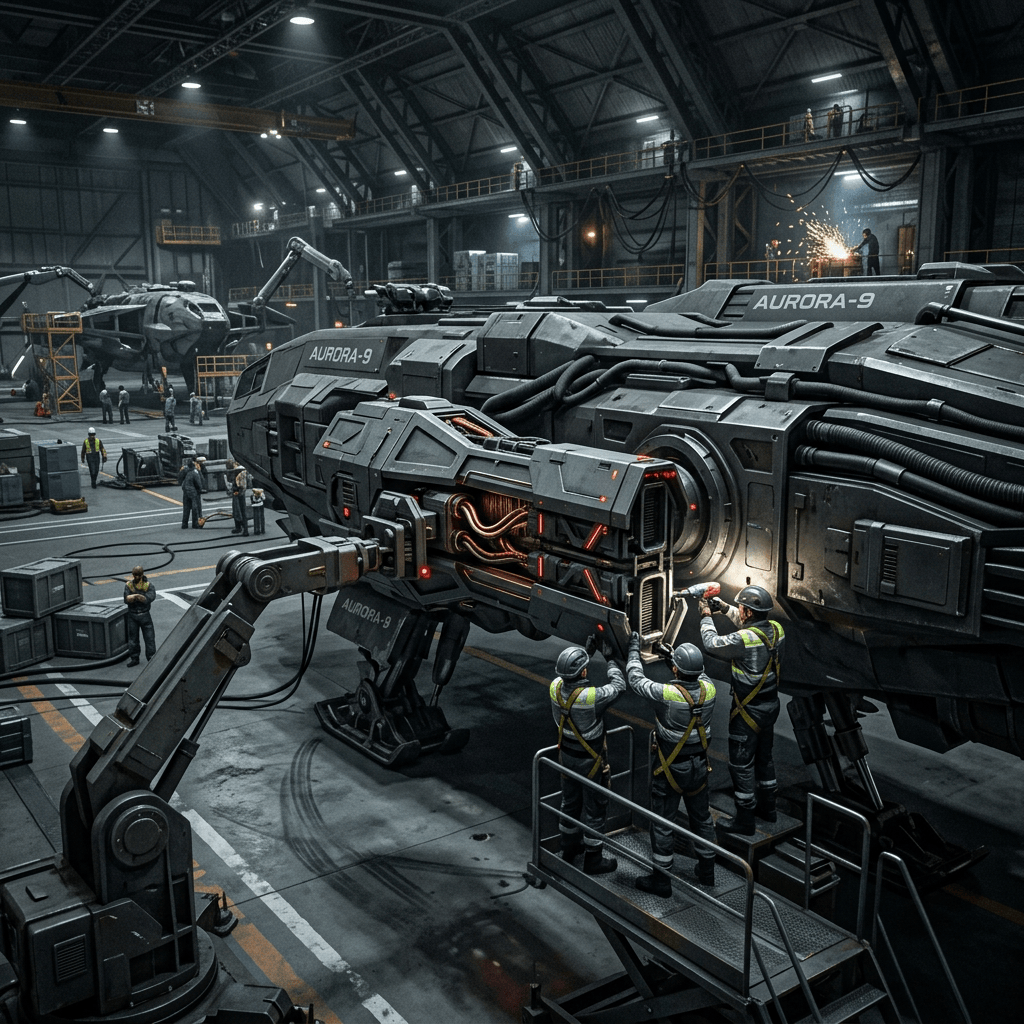
Technicians working on a large futuristic spaceship named Aurora-9 inside an industrial hangar

The next day all the plans had been put in place. Derek shakes at the thought of what he is about to be involved in. He had thought that his role in the plot would be at an end after he had hacked into the system, but now they wanted more.

A trickle of sweat rolled down the side of his face as the suns rays belted down on him. The other men are busy adding weaponry to his ship. Two, large powerful laser guns are being put on the front, and smaller ones on both sides. Derek and Maeve would be providing the air support in just under three hours from now.

Maeve wraps her arms around him from. “You okay, love?”

Derek leans his head back. “As alright as I’m going to be. A bit worried.”

“We’ll get through this.” She kisses his cheek.

“Get a room,” Mick shouts to laughter from James and Aaron.

“You’re just jealous,” Derek retorts.

“Of course,” Mick replies. “That’s even more reason to get one.”

Maeve smiles. “I’d be nice Mick especially if you want to live and see another day. It would be a shame if we decided to fly away. Now, that would be funny.

Fukushima: Heroic Stories from the Nuclear Disaster

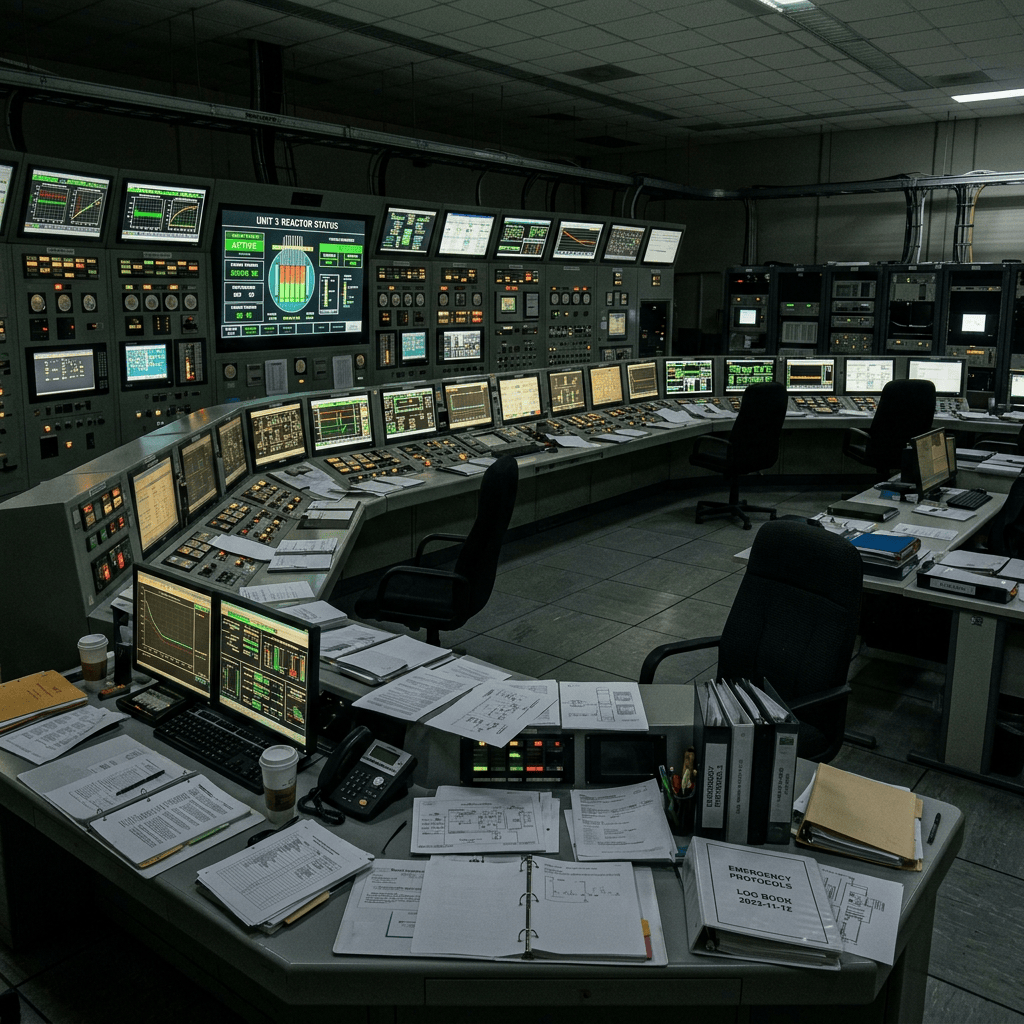
Control room with numerous monitors and panels showing nuclear reactor status and data

My dear readers, if you are someone who suffers from anxiety, then best to give this a miss. On the other hand if you love learning about disasters, then this is a show for you.

Fukushima: A Nuclear Nightmare is a gripping, meticulously crafted HBO documentary that stands as one of the most compelling and human accounts of the 2011 triple disaster in Japan.

Directed by James Jones (known for Chernobyl: The Lost Tapes) and co-directed by Megumi Inman, this 90-minute film reconstructs the nine harrowing days after the March 11, 2011 magnitude-9.0 earthquake and tsunami disabled the cooling systems at the Fukushima Daiichi nuclear power plant.

It centers the extraordinary courage of the plant workers—later known as the “Fukushima 50” (there were more than 50) — who stayed behind on what many understood could be a suicide mission to prevent a total meltdown that threatened to force the evacuation of Tokyo and potentially endanger the entire country. There was a fear that half the country would be rendered uninhabitable at one point.

What makes the documentary exceptional is its forensic, real-time approach. It weaves powerful archival footage of the earthquake’s chaos, the towering tsunami that erased coastal towns, and the subsequent hydrogen explosions at the plant with candid, first-hand testimonies from control-room engineers, government advisors, TEPCO officials, emergency workers, consultants, and journalists. It is shocking to see the huge waves crashing into the coast causing utter devastation. These interviews convey the mounting pressure, isolation, fear, and resolve inside the darkened, radiation-filled facility.

Viewers feel the tension as systems failed one after another and leaders confronted the unthinkable. The personal accounts—especially from mid-level engineers and the workers who entered the reactors—lend an intimacy and emotional weight that elevate the film far beyond a standard disaster recap.

The filmmaking is taut and respectful. Jones and Inman avoid sensationalism while never soft-pedaling the scale of the crisis or the very real possibility of catastrophe. The editing keeps the narrative propulsive, the archival material is used with precision, and the focus on ordinary people rising to extraordinary circumstances gives the story its heart.

Moments of quiet reflection from the participants underscore both the human cost and the quiet heroism that averted an even greater tragedy.Fifteen years after the events, Fukushima: A Nuclear Nightmare feels urgent and necessary.

It honors the resilience and sacrifice of those who stayed when others could not, while offering a clear-eyed reminder of both the power of nature and the critical importance of preparedness and human resolve. It is essential viewing—tense, moving, and ultimately inspiring. Five stars out of five from me.

Review of Special Ops: Lioness

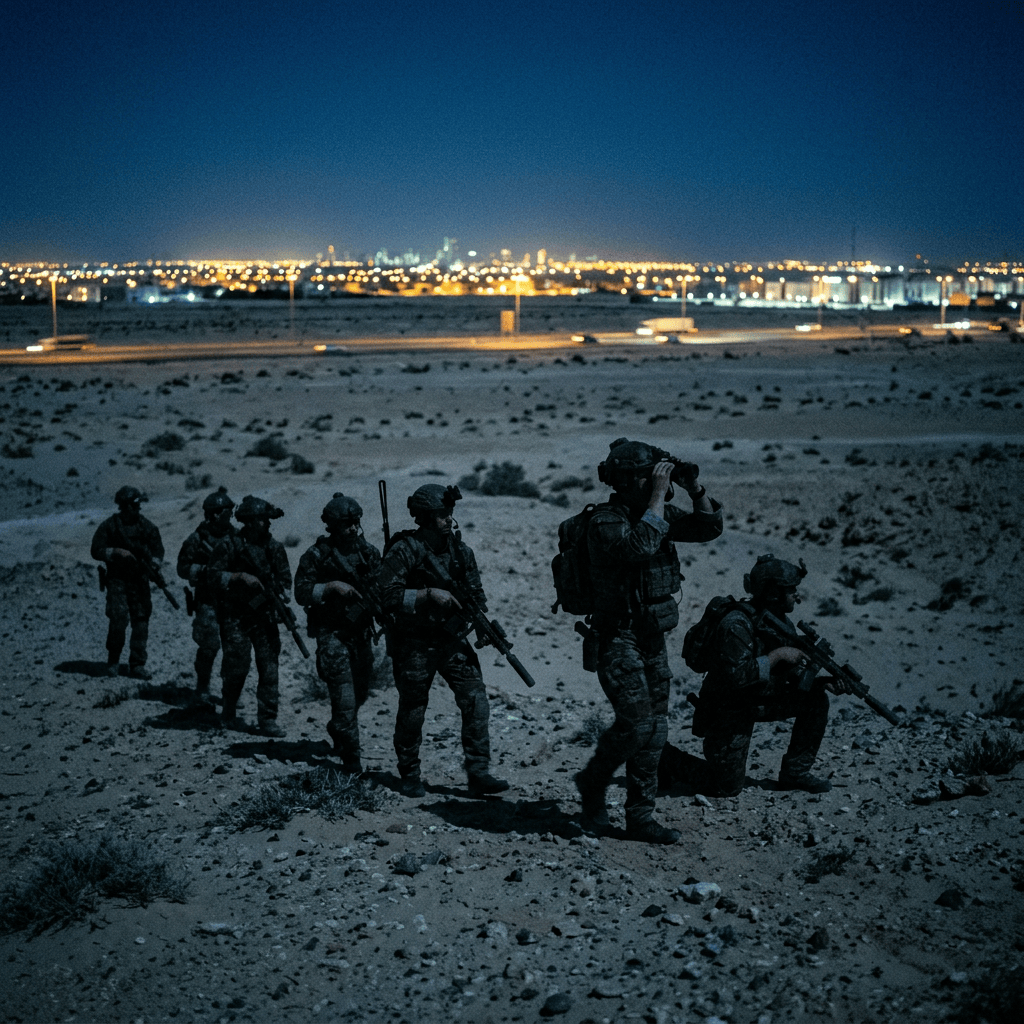
Group of armed soldiers in night gear patrolling desert terrain near city lights

My dear readers, I do hope you are well. Wondering what to watch next? I think I have found a gem. In truth, I had forgotten I had access to Paramount at my parents house. Silly me, I knew my life was missing something.

Special Ops: Lioness on Paramount+ is a gripping, high-stakes thriller that delivers intense action, sharp writing, and powerhouse performances in equal measure.

Zoe Saldaña (talk about a beauty)anchors the series with a commanding, layered portrayal of Joe, a tough CIA operative running a covert program that recruits and deploys female assets into the world’s most dangerous environments.

The supporting cast—Nicole Kidman (enough said), Morgan Freeman, Laysla De Oliveira, and others—brings real weight and chemistry, making every mission and interpersonal tension feel authentic and high-stakes.Taylor

Sheridan’s signature style shines through: lean, muscular storytelling that balances brutal realism with emotional depth. The action sequences are visceral and well-executed without feeling excessive, while the quieter character moments explore loyalty, sacrifice, and the personal cost of the job. The series keeps you locked in episode after episode, blending geopolitical intrigue with intimate human drama in a way few modern thrillers manage.

Production values are excellent—cinematography, locations, and score all contribute to a polished, cinematic feel that elevates it above standard television fare. It’s smart, thrilling, and surprisingly moving, offering both pulse-pounding set pieces and thoughtful exploration of the women who operate in the shadows.

The start of the third season has a battle set in Donetsk, Ukraine that involves drones. It is truly epic – World War 1 meets Stars as one of the characters says.

If you enjoy taut espionage drama with strong female leads and no-nonsense storytelling, Lioness is an absolute must-watch.

Five stars out of five from me.

My Grandfather: Charles Manson Hits the Spot

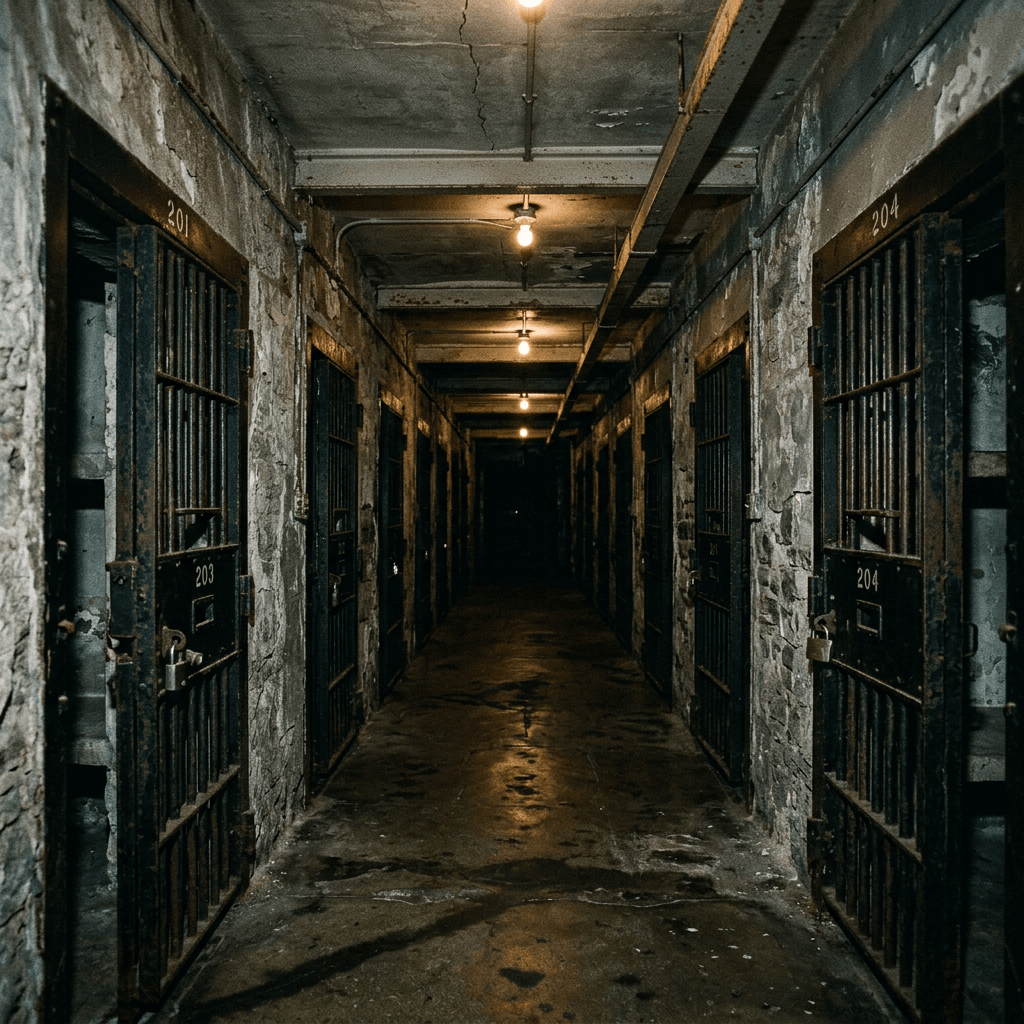
Corridor with numbered rusty barred prison cell doors and peeling walls

It was my pleasure to watch this documentary on Netflix, about a week. It is definitely not for the faint-hearted.

My Grandfather Charles Manson is a raw, intimate, and unexpectedly compelling documentary that turns a shocking personal discovery into a thoughtful exploration of identity, family, and the weight of inherited history.

Directed by Sophia Maddox, the film follows her journey after a genealogy test reveals that her unknown grandfather was Charles Manson. Rather than sensationalizing the connection, the documentary stays grounded in the human cost: the emotional upheaval it causes for Sophia and her father, the quiet reckoning with resemblance and legacy, and the difficult process of separating one’s own life from a notorious name.

The result is a personal story that feels honest and unguarded. What stands out is the film’s emotional authenticity. Maddox does not shy away from vulnerability; her on-camera reflections and conversations with her father capture the confusion, grief, and determination that come with such a revelation.

An important question she poses is whether some of the evil has been passed onto her. That it is in her nature. Here, we learn more about Manson’s life and his horrendous time in an industrial school where he was regularly beaten and raped. There can be no doubt that this would have affected his personality for the worse. She also has her personality traits compared with Manson by a psychologist.

The relationship between father and daughter becomes the heart of the piece—strained at times, yet ultimately marked by a desire to understand each other better. Their interactions give the documentary a lived-in quality that elevates it beyond typical true-crime fare.

Visually and structurally, the film is understated and effective. Home footage, family photos, and carefully chosen archival material are woven together without excess. The pacing allows space for reflection, and the focus remains on the present-day impact rather than rehashing well-known historical events.

This restraint strengthens the documentary’s po

wer: it trusts the audience to bring their own knowledge while centering the very real people living with the aftermath. By the end, My Grandfather Charles Manson leaves a lasting impression as a study of resilience and self-definition. It shows how one person chooses to confront an uncomfortable truth, process it openly, and still claim agency over her own story.

Four stars out of five from me.