Pegasus (Part 92)

Futuristic spacecraft escaping a rocky explosion above an alien desert

Sunlight could finally be seen in front of the ship.

Derek gripped the controls. “We’re almost there”

Flashing red light appears in the cavern. “What the hell?” Derek asked.

Maeve clattered through the options in front of her. “It’s an emergency message. They are shutting down the base?”

Derek turns his head to face her. “Are they looking for us.

A pale Maeve replies, “I don’t know, maybe?”

Derek knows what he has to do. He fires the thrusters, accelerating the ship.

The opening begins to close. Maeve yells, “We’re not going to make it!”

With shaking hands, he accelerates the ship. Flashbacks of all that has happened whiz through his mind.

The gap is small now, and he steers the ship to its side. A second later, and the ship out. Back to freedom, and the dream for some more.

Cries of “Yay” come from Derek and Maeve. Large smiles impossible to contain.

The ship rose up above the clouds. “Where now?” Derek asks.

“Let’s keep to the plan. Back to Liverpool and the others.” Maeves taps away and brings up a holographic display of their current position, and their destination.

“Let’s rock,” Timothy roars, a mix of fear and excitement about what lies ahead.

Wheelchair Wars

Sealed parchment decree before a throne surrounded by robed officials

So, readers, to create the Wheelchair Wars Universe in people’s minds, I’m planning on writing preambles at the beginning of each chapter. My intention is for them to sound somewhat biblical. Readers of the novel Dune will be familiar with what I’m trying to do.

For chapter 1.

A Communiqué from the Emperor’s Central Command to the Governor of Uisneach – Year 387673 AD Number 156

The Emperor has considered your request for the authorisation of new warrior games to be called Wheelchair Wars in the city of Xenos. The request has been authorised.

It will prove useful in keeping the masses content and away from any thoughts that may lead to Chaos. That is the primary ground for its approval.

A risk, as with all gladiatorial contests, is that a leader of the people may emerge. This would be most unfortunate. Therefore, none of the warriors should survive more than a few contests. If any do reach an exalted status, they should be transferred to the Emperor’s forces.

The weapons to be authorised for these contests will remain at the Governor’s discretion. However, attention must be paid to previous guidelines. At no point should any faction have access to weaponry capable of disrupting the Emperor’s authority.

Approval is also granted for the construction of a mid-sized stadium to cater for the contests. The necessary budget should come from the city’s own resources. A new tax may be in order.

The shortfall in the tribute to the Empire has been noted and is unacceptable. The people must not be allowed to grow soft. The lives of those on Uisneach, as throughout the Empire is a gift from the Emperor that must be repaid.

If you are not prepared to take the necessary measures, then I will find someone who will.

The Man from U.N.C.L.E.: A Stylish Spy Adventure Review

Two vintage sports cars driving along a winding coastal cliff road

Another gem from the 2010s. I’m on my holidays so that’s why I’m spewing out content lol If you would like to support this blog why not make a contribution or support our advertisers.

The Man from U.N.C.L.E. (2015) is pure stylish escapism—a sparkling, high-octane Cold War romp that delivers charm, chemistry, and cinematic flair in equal measure.Guy Ritchie’s sleek adaptation of the classic 1960s television series is a gleeful throwback that feels both nostalgic and freshly invigorating. Set against the tense backdrop of 1963, the film follows CIA operative Napoleon Solo (Henry Cavill) and KGB agent Illya Kuryakin (Armie Hammer) as they are forced into an uneasy alliance. Their mission: prevent a dangerous criminal organization from acquiring the means to build a nuclear weapon, with the help of the enigmatic Gaby Teller (Alicia Vikander). What unfolds is less a grim geopolitical thriller and more a stylish adventure filled with sharp banter, elegant set pieces, and irresistible period gloss. The original show was from the 60s, and its amusing that the Russian agent often has the better equipment. This is not something that would happen in a more modern film. Probably due to the fact that the failur

Cavill is perfectly cast as the debonair, morally flexible Solo. He brings a suave, effortless cool that channels classic leading-man charisma while adding a dry, self-aware wit. Hammer matches him beat for beat as the intense, disciplined, and occasionally explosive Illya; the physicality and simmering rivalry between the two create some of the film’s most entertaining moments. Their evolving partnership—from reluctant adversaries to reluctant partners—is the emotional and comedic heart of the movie, and their chemistry crackles with playful tension. Vikander is luminous as Gaby, bringing intelligence, vulnerability, and quiet strength that elevates every scene she’s in. Supporting turns, including Hugh Grant’s silky, understated contribution, add extra polish.

Ritchie’s direction is the secret weapon. He leans into the glamorous, high-fashion aesthetic of the era with gorgeous production design, impeccable costumes, and a rich color palette that makes every frame feel like a vintage magazine spread come to life. The action sequences are kinetic yet clear, blending inventive choreography with a light touch that never takes itself too seriously. Set pieces—whether high-speed chases, tense infiltrations, or clever heists—are executed with wit and visual inventiveness, keeping the energy buoyant throughout. The soundtrack, packed with period-perfect tracks and a score that swings between sleek sophistication and pulsing excitement, further immerses you in the world.

What makes The Man from U.N.C.L.E. especially delightful is its tone. It balances espionage thrills with genuine humor and old-school movie-star magnetism without ever tipping into parody or cynicism. The script (co-written by Ritchie and Lionel Wigram) keeps the plot moving at a brisk, entertaining clip while giving the characters room to spark off one another. There is a genuine sense of fun running through every scene—the kind of confident, crowd-pleasing craftsmanship that makes you lean forward in your seat and smile.

At a lean and satisfying runtime, the film never overstays its welcome. It knows exactly what it wants to be: a stylish, crowd-pleasing spy adventure that prioritizes entertainment, chemistry, and visual pleasure. In an era of darker, more self-serious blockbusters, The Man from U.N.C.L.E. stands out as a refreshing reminder of how enjoyable a well-made, stylish genre film can be.If you love classic spy movies, sharp dialogue, beautiful production values, and leads who look like they stepped out of a 1960s fashion spread, this one is an absolute treat. It gets four stars from me.

The Gambler (2014): A Masterclass in Character-Driven Drama

Man holding playing cards at a poker table in a luxurious casino

I came across this gem yesterday. A class film that relies on great writing and acting, no CGI or other special effects. It was made back in 2014, a golden age of cinema.

The Gambler (2014) is a stylish, tense, and highly watchable character study that delivers gripping drama, sharp dialogue, and standout performances.

Directed by Rupert Wyatt and written by William Monahan (The Departed), this remake of the 1974 James Caan classic follows Jim Bennett (Mark Wahlberg), a privileged literature profess

or and failed novelist whose self-destructive gambling addiction has landed him deep in debt to dangerous people. With only a week to settle what he owes, often just making things worse.

Bennett navigates a high-stakes spiral involving family, crime figures, and a budding connection with one of his students (Brie Larson).

What elevates the film is its commitment to atmosphere and character over conventional thriller tropes. Wyatt’s direction is sleek and controlled, with a cool, desaturated visual style that captures a moody Los Angeles underbelly. Card games and roulette spins carry real weight—the tension is palpable without relying on frantic editing or cheap shocks.

The score and carefully chosen tracks (including effective use of M83) heighten the sense of a man careening toward the edge while still seeking some form of meaning or reset. Mark Wahlberg delivers one of his strongest and most committed performances.

He fully inhabits Bennett’s mix of intellectual arrogance, self-loathing, and reckless compulsion. The monologues in the classroom—especially those about genius, mediocrity, and the unfair distribution of talent—crackle with intensity. Wahlberg makes the character’s contradictions compelling: a man who claims he isn’t really a gambler yet repeatedly courts ruin, who comes from wealth yet seems determined to strip everything away.

It’s a portrait of someone chasing the pure, existential charge of risk.The supporting cast is excellent. Jessica Lange brings fierce, wounded complexity as Bennett’s mother. John Goodman is magnetic and menacing as the loan shark Frank, delivering some of the film’s most memorable scenes with a mix of humor and threat. Michael Kenneth Williams and others add sharp texture to the criminal side of the story, while Brie Larson provides a grounded, intelligent counterpoint as the student who sees through Bennett’s defenses.

Monahan’s screenplay crackles with distinctive, literary-flavored dialogue that gives the film a distinctive voice. It explores themes of privilege, failure, addiction, and the seductive pull of the void without becoming preachy. The narrative maintains momentum and keeps the stakes personal and escalating, culminating in sequences that feel both inevitable and thrilling.

The Gambler isn’t a feel-good movie, nor is it trying to be. It’s a confident, adult drama about a man testing how far he can fall and whether anything of value remains at the bottom. Stylish, well-acted, and consistently engaging, it gets four stars out of five.

The Charles Manson Tapes: Manipulation and Control in True Crime

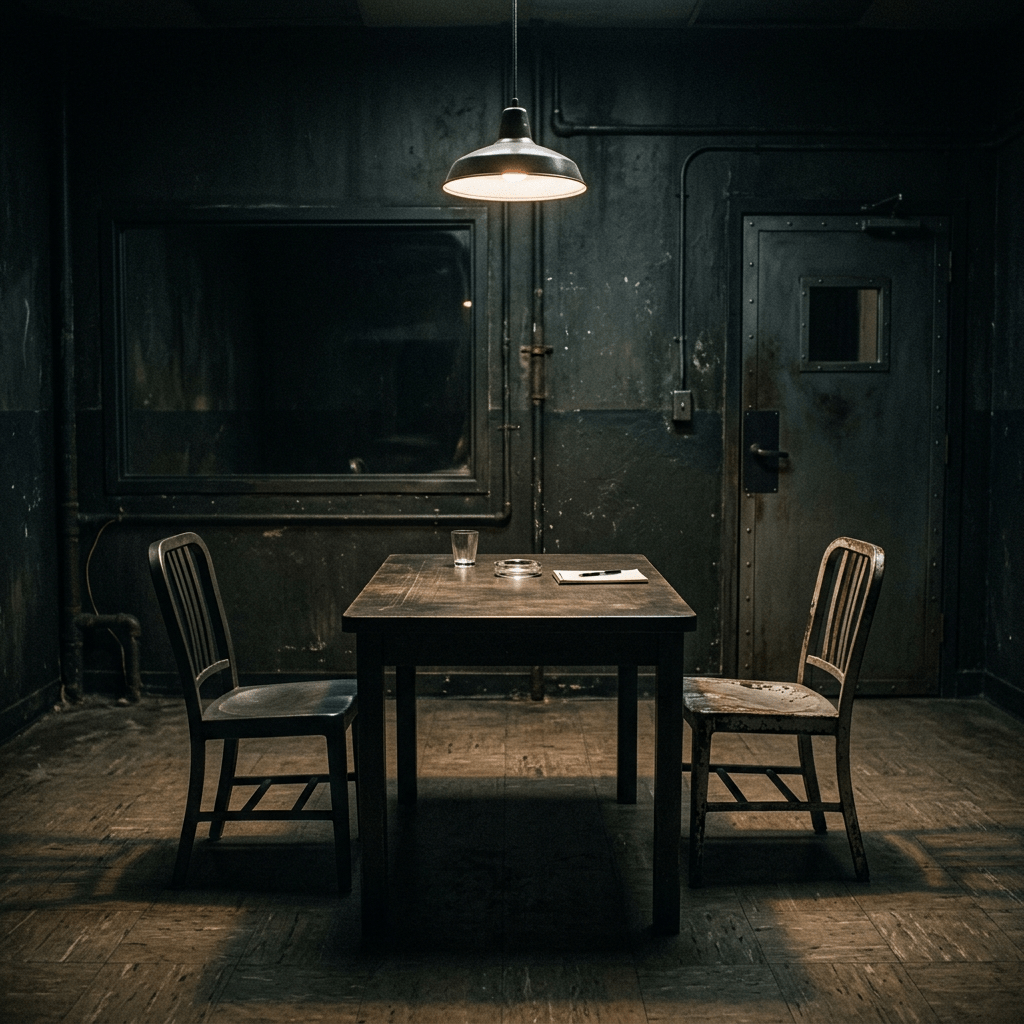
Empty table with two chairs in a dim industrial room

My dear readers, this is obviously not for the faint-hearted. So, I just had to watch.

Conversations with a Killer: The Charles Manson Tapes (often referred to simply as The Manson Tapes) is a gripping, meticulously crafted three-part Netflix docuseries that stands as a strong and fitting finale to Joe Berlinger’s long-running true-crime anthology. Released in August 2026, it draws on previously unreleased prison phone calls made by Charles Manson in his later years, combined with archival footage, contemporary interviews with former Manson Family members and law enforcement, and carefully selected period material to deliver a chilling yet insightful examination of one of the 20th century’s most infamous cases.

What elevates this entry is its focus on the systems of manipulation and control Manson built rather than simply recycling the well-worn mythology. The unreleased recordings give viewers direct access to Manson’s voice and personality in a way that feels immediate and unsettling—his chameleon-like ability to shift personas, his self-justifications, and the lingering charisma that once drew in followers come through without heavy-handed narration. It also briefly deals with how he learned some of his techniques. For instance, the book “How to make friends and Influence People is referenced. Hearing those calls alongside accounts from people who lived through the era creates a layered portrait of how a small-time criminal leveraged the disillusionment of the late-1960s counterculture to assemble a devoted group.

The three episodes are tightly structured and effectively paced. The first traces Manson’s background and the formation of the Family at the height of the hippie movement, showing how promises of love, acceptance, and freedom became tools of psychological dominance. The second examines the escalation to the 1969 Tate-LaBianca murders, exploring the delusions and dynamics that turned followers into killers while providing context that challenges some of the more sensationalized popular narratives. What really comes across is how much Manson was a tool of his own destruction. The third covers the trial and its media circus, illustrating how Manson and the Family turned the courtroom into a grotesque spectacle that cemented their place in cultural memory. Archival voice recordings of key figures such as Tex Watson, Susan Atkins, and Leslie Van Houten, paired with reflections from survivors of that world, add emotional weight and human detail.

Berlinger’s direction maintains the series’ signature strengths: a restrained use of reenactments where needed, strong visual storytelling through archival material, and an emphasis on letting the subjects’ own words drive the narrative. The result is both riveting and ominous—true crime at its most inquisitive. It doesn’t shy away from the horror of the crimes or the media frenzy that followed, yet it succeeds in examining the mechanisms of influence and the cultural moment that allowed them to take root. Viewers familiar with the case will appreciate the fresh audio and the effort to center those who experienced the events firsthand; newcomers will find a clear, compelling introduction that avoids pure sensationalism.

As the concluding chapter in the Conversations with a Killer lineup (following the Bundy, Gacy, Dahmer, and Son of Sam installments), The Charles Manson Tapes feels purposeful. It uses newly available material to dig into themes of control, myth-making, and the enduring fascination with this particular chapter of American crime history. The series is TV-MA for good reason—its content is dark and disturbing—but for fans of thoughtful true-crime documentaries, it offers a substantial, well-produced watch that rewards attention across its roughly three hours. If you’re looking for a detailed, tape-driven exploration of Manson’s rise, the murders, and their aftermath, this is a strong recommendation and a memorable close to Berlinger’s anthology. Four stars out of five from me.

The Last House: A Thrilling Sci-Fi Survival Story

Narrow worn hallway with carpet and several open wooden doors

I do love my sci-fi so the Netflix algorithm suggested I watch this. And who am I to argue on a Saturday afternoon?

The Last House is a gripping, emotionally resonant sci-fi survival thriller that turns an ordinary suburban home into the ultimate pressure cooker of human resilience, ingenuity, and love.I wonder will anything so exciting ever happen in my own life.

Directed by Louis Leterrier with a sharp screenplay by Matthew Robinson, the film follows the Delgado family—engineer Jason (Wagner Moura), his wife Ann (Greta Lee), and their two children—as a sudden, unnatural storm seals them inside their Seattle house with no way out. A new phenomenon for preppers everywhere to worry about.

What begins as a baffling lockdown quickly evolves into a multi-year ordeal of dwindling resources, mounting isolation, and an enigmatic external threat. The premise is simple yet potent, and the movie executes it with escalating tension that feels both intimate and apocalyptic.

Greta Lee and Wagner Moura deliver outstanding, grounded performances that anchor every scene. Moura brings quiet intensity and resourceful determination as a father who channels his engineering skills into creative survival tactics, while Lee radiates strength, maternal protectiveness, and quiet vulnerability as the family’s emotional center. Their chemistry feels authentic and lived-in; watching them navigate fear, frustration, and fierce protectiveness makes the stakes feel deeply personal. The young actors portraying the children are equally impressive across the time jumps, conveying growth, adaptation, and the pure bond of family under extreme pressure. These performances elevate the material into something genuinely affecting rather than purely conceptual.

Leterrier crafts a masterfully claustrophobic atmosphere. The house itself becomes a character—initially a sanctuary, then a prison, and eventually a hard-won fortress of improvisation. Practical ingenuity (ingenious trapping methods, indoor cultivation, water collection) provides satisfying problem-solving moments that reward the characters’ resourcefulness without feeling like empty spectacle. The sound design and cinematography amplify the sense of dread and confinement: relentless rain, shadows moving outside, and the gradual transformation of familiar domestic spaces into something alien and hard-won. When the story expands in scope later, the visual effects and world-building feel purposeful and thematically rich rather than overwhelming.

Beyond the thrills, The Last House explores meaningful themes of family unity, adaptation, mercy, and humanity’s place in a changing world. It balances suspense with quieter, human moments of connection, play, and perseverance that make the characters’ endurance feel earned and hopeful. The film’s environmental and existential undertones add depth without becoming preachy, leaving viewers with a lingering sense of wonder and reflection.

At roughly 1 hour 50 minutes, the pacing sustains engagement through escalating challenges and emotional payoffs. It succeeds as both a tense chamber piece and a larger-scale speculative adventure, offering the kind of smart, character-driven entertainment that stands out on Netflix. Strong direction, exceptional lead performances, inventive survival details, and a premise that sticks with you long after the credits make The Last House a highly rewarding watch—one that celebrates the extraordinary strength found in ordinary people when the world outside changes forever. Highly recommended for fans of thoughtful sci-fi thrillers and powerful family dramas. Four stars out of five from me.

Distant Love (Part 91)

Large futuristic hangar with multiple spacecraft being assembled and serviced by workers and robots.

“They are getting closer, Derek.” her voice trembling.

“Almost there,”

The ship shudders. The control panel indicates a hit, but no permanent damage.

Warning messages that Derek ignores are being received.

The landscape begins to change. Plains are becoming hills and mountain. Only seconds away now.

The ship does a deep dive. “We’re here!”

They fly into an opening on the side of a green mountain.

“Welcome to the Merican ship construction facility, Aidrey”

She gasped, “And just in time too.”

Radar indicates they are no longer being pursued. Everything, is going as planned. This place

On either side row after row of spaceships hung from large metallic hangers.

“So, Maeve. How do we get out of here?”

Maeve moves her hands back and forth. “Hold on, I’ll bring up the schematics.”

She pressed different buttons. “Dead ahead for two kilometers. Take the passageway on the right. There’s an exit after a further three kilometers.”

Below ships of various shapes and sizes were being constructed on a multitude of assembly lines.

“Aaron had this part very well worked out. I hope that the rest of the plan went as well.,” Derek says.

“Yes, let’s hope so. I’m worried about just getting us back safely at the moment.”

Mourinho: The Rise of Football’s ‘Special One’ Unveiled

Soccer tactical plan clipboard with a ball, whistle, and stopwatch on a bench in a locker room

The best thing about Mourinho as far as I’m concerned was the role he played in crushing the Manchester Utd, Arsenal duopoly in the Premier League. For that reason, he will always be “The Special One.” It was with some nostalgia that I watched this series last night.

Mourinho is a thoroughly engaging, high-production three-part Netflix documentary series that delivers an intimate, trophy-laden portrait of one of football’s most charismatic, polarizing, and successful managers. Released globally on 11 August 2026 and directed by BAFTA- and Emmy-nominated Joe Pearlman (known for work on Robbie Williams and Lewis Capaldi: How I’m Feeling Now), with production from double Academy Award-winner John Battsek (of the acclaimed Beckham series), it benefits from two years of exclusive access to José Mourinho himself.

The series charts the arc of “The Special One” with energy and style, beginning with his breakthrough at Porto—capped by the stunning 2004 Champions League triumph—and moving through his transformative first spell at Chelsea, the historic treble-winning campaign at Inter Milan, the intense Real Madrid years, and key later chapters. It captures the essence of a manager who won league titles in four different countries and lifted the Champions League twice, revolutionizing what it meant to lead elite clubs while generating endless headlines and contradictions.

What elevates Mourinho is the exceptional roster of interviewees who bring the story to life with candid reflections. Sir Alex Ferguson, Didier Drogba, Frank Lampard, John Terry, Zlatan Ibrahimović, Samuel Eto’o, Iker Casillas, Marcelo, Javier Zanetti, Petr Čech, Eden Hazard, and many others offer firsthand accounts of Mourinho’s methods, motivational genius, and larger-than-life presence. These voices illuminate why players would “run through walls” for him and how he commanded dressing rooms across Europe. Mourinho’s own interviews form the emotional core—charismatic, self-assured, and occasionally revealing—including the notable confession about nearly succeeding Ferguson at Manchester United in 2013 before choosing to return to Chelsea for a sense of belonging and love after his Madrid experience.

The production values shine throughout. Archival footage of iconic matches and celebrations pairs seamlessly with contemporary reflections, creating a dynamic, fast-paced narrative that feels both celebratory and insightful. Mourinho’s personality leaps off the screen: the competitive fire, the tactical obsession, the theatrical flair, and the unapologetic drive that turned him into a global icon. Moments of vulnerability—such as reflections involving family—add human depth without diluting the larger-than-life mythos. As Mourinho himself notes in spirit, you don’t make a documentary about someone who wins nothing; this series earns its subject by focusing on two decades of sustained excellence and the force-of-nature persona that made him essential viewing.

For football fans, Mourinho is pure box office. It celebrates the wins, the rivalries, the mind games, and the pure drama of a career that redefined modern management. Even as it portrays football’s ultimate contradiction—the winner the game can’t live without and sometimes struggles to live with—it leaves you admiring the relentless ambition and the special quality that made José Mourinho a legend.

Still, I felt that some of the conflict was glossed over. There was ittle mention of the Champions League semi final with Barcelona that almost totally boiled over

Three stars out of five from me.

Distant Love (Part 90)

Spaceships firing weapons at a futuristic city shielded by a blue energy dome.

An hour later, the thrusters of the ship ignite it into the air.

“This is it,” Maeve says.

Derek surveys the city. Large towering skyscrapers towards its center gradually reducing on either side. Timing is of the essence.

Pushing the joystick forwards, the ships hurtles forward swerving in and out to avoid buildings

“Two minutes from the destination,” said Maeve as the city flattens.

Its blue shield appears before them. Then it flickers.

Smiling, Derek shouts out, “The virus is doing its job.”

The shield disappears leaving the antenna defenceless.

Derek opened fire at the antennas as workers flee like ants below.

“Five ships incoming fast,” Maeve advises.

So far, all good.

“Time for us to leave. Over to the boys now.”

The ship shakes. “What was that?” Her tone of dread evident.

“Something first from below!”

Timothy accelerated below. One of the thrusters was undergoing rapid self repair but the other ships are gaining now.

“We are almost within their rage. They are about to fire. Most are only lightly armed but this thing won’t take much.”

“I know, I know,” Derek replies, “We are near to the Scottish Highlands. Let’s keep to the plan.

A volley of shots is fired on the ship and miss setting fires on the landscape below.

Quarterback Season 3: A Must-Watch NFL Documentary

Silhouette of football player wearing jersey number 12 walking from tunnel to field

I’m not a huge fan of the NFL. The games are so long but I appreciate a good game. And things can get exciting in the 4th quarter. So I decided to give this show a try.

It’s actually more enjoyable than watching a real game.

Quarterback Season 3 (often referred to as Quaterback Series 3) is an outstanding, deeply engaging Netflix documentary series that delivers one of the most intimate and compelling looks yet at life as an NFL quarterback.

Released on July 14, 2026, this third installment follows four signal-callers at distinctly different stages of their careers through the full 2025 NFL season: Washington Commanders dual-threat star Jayden Daniels (building on his impressive rookie year), Tampa Bay Buccaneers veteran Baker Mayfield (with his signature fire and resilience), Tennessee Titans No. 1 overall pick Cam Ward (navigating the intense pressures of a rookie campaign), and Super Bowl MVP Joe Flacco (embarking on a surprising midseason trade and new chapter with the Cincinnati Bengals).

Produced by Peyton Manning’s Omaha Productions, NFL Films, and Patrick Mahomes’ 2PM Productions, the series continues the franchise’s high standard of exclusive, fly-on-the-wall access.

What elevates Season 3 is its thoughtful casting and storytelling balance. Rather than focusing solely on championship contenders, it captures a rich cross-section of the quarterback experience—the soaring expectations and growing pains of youth, the mid-career battles for consistency and relevance, the veteran’s wisdom mixed with uncertainty, and the raw physical and mental toll of the position.

Viewers get unprecedented behind-the-scenes moments: pre-snap reads and audibles, locker-room reactions after wins and losses, film-study sessions, recovery from injuries, family life, and the personal sacrifices required to perform at this level. Daniels’ journey (including the role of his mother, an NFLPA-certified agent), Mayfield’s competitive edge and family milestones, Ward’s early professional adjustments and character-revealing moments, and Flacco’s unique midseason transition all feel authentic and layered.

The production quality shines throughout. NFL Films’ signature cinematic style, sharp editing that interweaves the four narratives effectively within episodes, and strong mic’d-up audio create an immersive experience.

The series highlights both the glory and the grit—spectacular plays and leadership moments alongside the grind of injuries, pressure, and the fragility of an NFL career—without feeling exploitative. Family dynamics, personal growth, and the human side of these athletes add emotional depth that appeals beyond hardcore football fans, while the football-specific details (play calls, defensive reads, weekly preparation) fully satisfy dedicated viewers.

Season 3 builds successfully on the strengths of prior seasons, refining the format into a reliable showcase of the most demanding position in sports. It underscores leadership, resilience, toughness, and the pursuit of greatness in a way that feels both educational and entertaining. The all-at-once release format makes it perfect for binge-watching, and the seven-episode structure maintains excellent pacing across the season’s arc.

In short, Quarterback Season 3 is a must-watch for NFL enthusiasts and sports documentary fans alike. Four stars out of five from me.