The Outlaw King Review: A Gripping Tale of Scottish Independence

There’s something about medieval Scots fighting the English that warms the heart. “Freedom” sounds great, but any reason to fight the old enemy is good enough in truth. Well, from a film perspective. I love English people, really. So when I saw that this was available on Netflix, I pressed play.

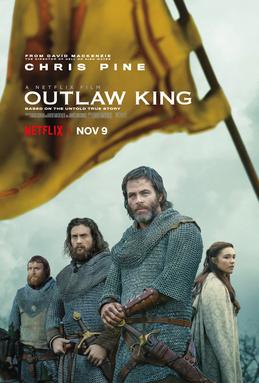
The Outlaw King is an electrifying and emotionally resonant historical epic set in 1304 that brings Robert the Bruce’s story to life with striking authenticity and intensity. Directed by David Mackenzie and led by a commanding performance from Chris Pine, this film stands as a gripping portrayal of Scotland’s fight for independence — raw, human, and deeply inspiring.

From the very first frame, the film immerses viewers in the harsh, mud-soaked reality of medieval warfare. Unlike glossy historical dramas, The Outlaw King embraces realism. It also predates the CGI nonsense plaguing modern films. The battle sequences are visceral and unflinching, especially the climactic confrontation at the Battle of Loudoun Hill, which is staged with breathtaking choreography and tension. The long, chaotic tracking shots during combat create a sense of immediacy that makes you feel as if you’re right there on the battlefield.

Chris Pine delivers one of the strongest performances of his career. His portrayal of Robert the Bruce is layered and compelling — not a flawless hero, but a determined and conflicted leader who grows into his destiny. Pine captures the vulnerability, resolve, and quiet intensity of a man who risks everything for freedom. His Scottish accent is impressive, and his physical commitment to the role adds authenticity.

The supporting cast is equally strong, particularly Florence Pugh as Elizabeth de Burgh. Pugh brings intelligence and emotional weight to her role, portraying a woman whose strength matches the film’s epic scope. The chemistry between her and Pine adds heart to a story otherwise dominated by political tension and warfare.

Visually, the film is stunning. The rugged Scottish landscapes — sweeping highlands, mist-covered hills, and medieval castles — are captured with moody cinematography that enhances both the beauty and brutality of the setting. The natural lighting and muted color palette reinforce the grounded tone, making everything feel lived-in and historically authentic.

What truly sets The Outlaw King apart is its focus on resilience and leadership. Rather than romanticizing rebellion, the film shows the cost of resistance — betrayal, loss, hardship — and makes Robert’s eventual victories feel earned. It’s a story about persistence in the face of overwhelming odds, and it resonates far beyond its historical setting.

For fans of historical dramas, war epics, or character-driven storytelling, The Outlaw King is a must-watch. It’s bold, intense, and emotionally stirring — a film that honors its history while delivering cinematic excitement. A powerful reminder that freedom is rarely won without sacrifice.

The one drawback to the film, unlike the classic Braveheart, this feels like a war between nobles, the top tier in each country. It doesn’t feel to me, watching it, that this is a battle of your average Scot.

For that reason, it gets three stars out of five from me.
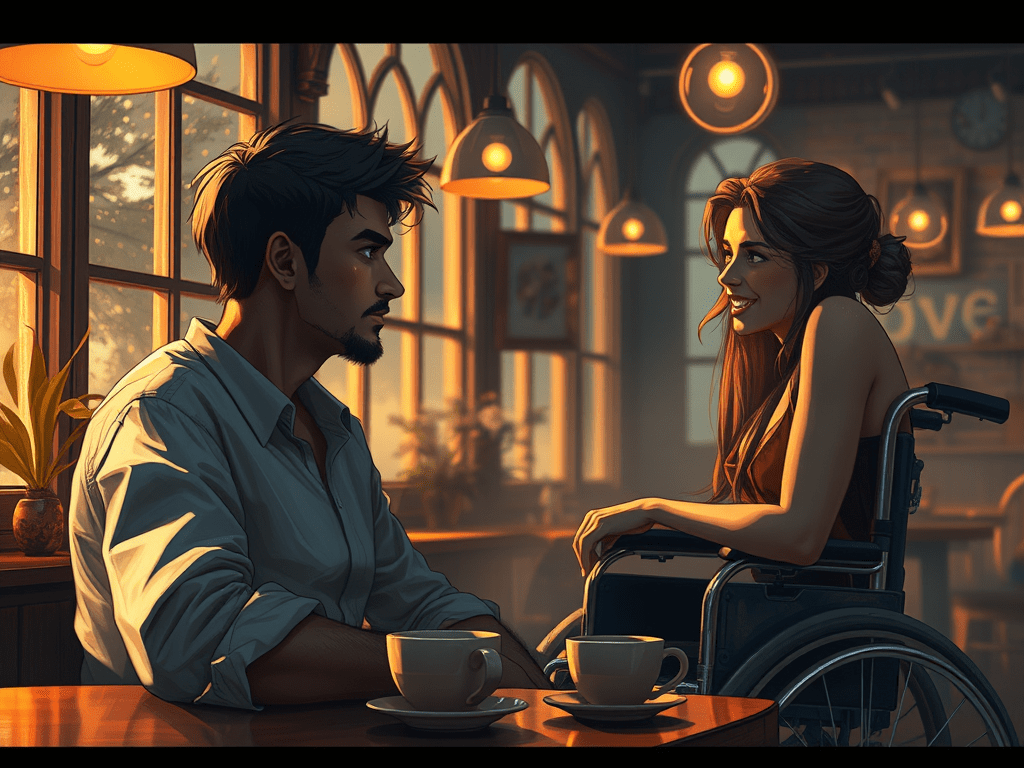
Distant love (Part 63)

Derek struggles to concentrate on his return. His hand is shaking, and he feels sick to the pit of his stomach.

What was she talking about? That I might see Maeve soon? It sounds ominous.

**************************************

Weeks pass. Derek continues his normal routine.

“What is wrong with you? Like seriously?” Nathalia shook him from his reverie. “You’ve been like this for weeks.”

They are halfway through what has been a quiet work schedule.

Derek shuffles from side to side.

“Well, like say something,” she continues. There is a momentary silence. “Oh, don’t bother so.”

Derek looks over at her. “Just quite a lot on my mind. That’s all.”

“You can tell me you know. I’d tell you.” Their eyes meet.

Nobody can get me out of this mess.

“I’m taking my break. Need to clear the head.” Nathalia nods back.

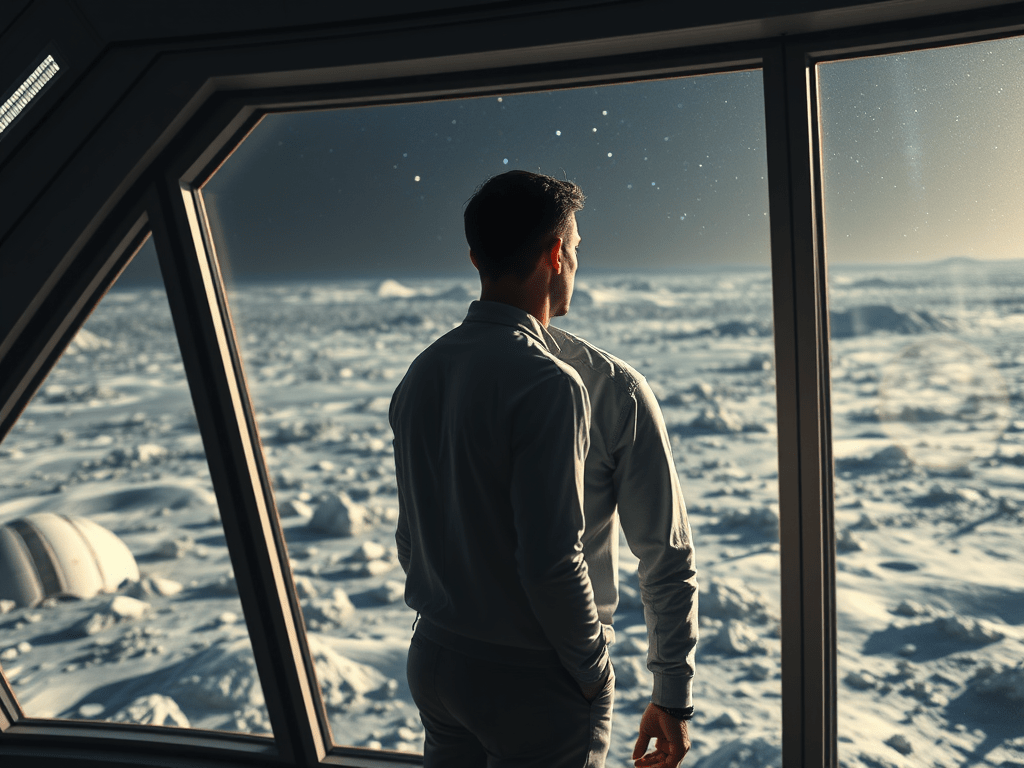
The door automatically swishes open, and he goes to a lower level to look out at the lunar surface.

He stops at his favorite viewpoint. The station is in constant rotation, so one viewpoint is as good as the next, but this one has a slightly larger window. He looks out for all the different pieces of rock that he has viewed since he was young. The lunar surface never changes.

The Speed Cubers: A Documentary of Resilience and Friendship

Sometimes you come across a show that is a little bit different. It sticks in the noggin. That is the case with The Speed Cubers.

It is a 2020 documentary on the lives of speedcubing champions Max Park and Feliks Zemdegs directed by Sue Kim. Remember Rubik Cubes. There was a time when they were the thing. Like everybody had them. However, the game serves more of a backdrop to something far more interesting.

At its heart, the documentary is a touching portrait of mutual respect and support. Rather than portraying rivals locked in fierce competition, it highlights how Max and Feliks encourage one another and celebrate each other’s successes. Their bond demonstrates how competition can coexist with kindness, humility, and empathy.

One of the film’s most powerful aspects is its portrayal of Max Park, who is on the autism spectrum. The documentary sensitively shows how cubing helped him develop motor skills, confidence, and social connections. His journey provides a hopeful and respectful look at neurodiversity, emphasizing ability and resilience rather than limitations.

The Speed Cubers ultimately succeeds as more than a sports documentary — it’s a heartfelt story about human connection, resilience, and the joy of pursuing excellence together.

Five stars out of five from me.

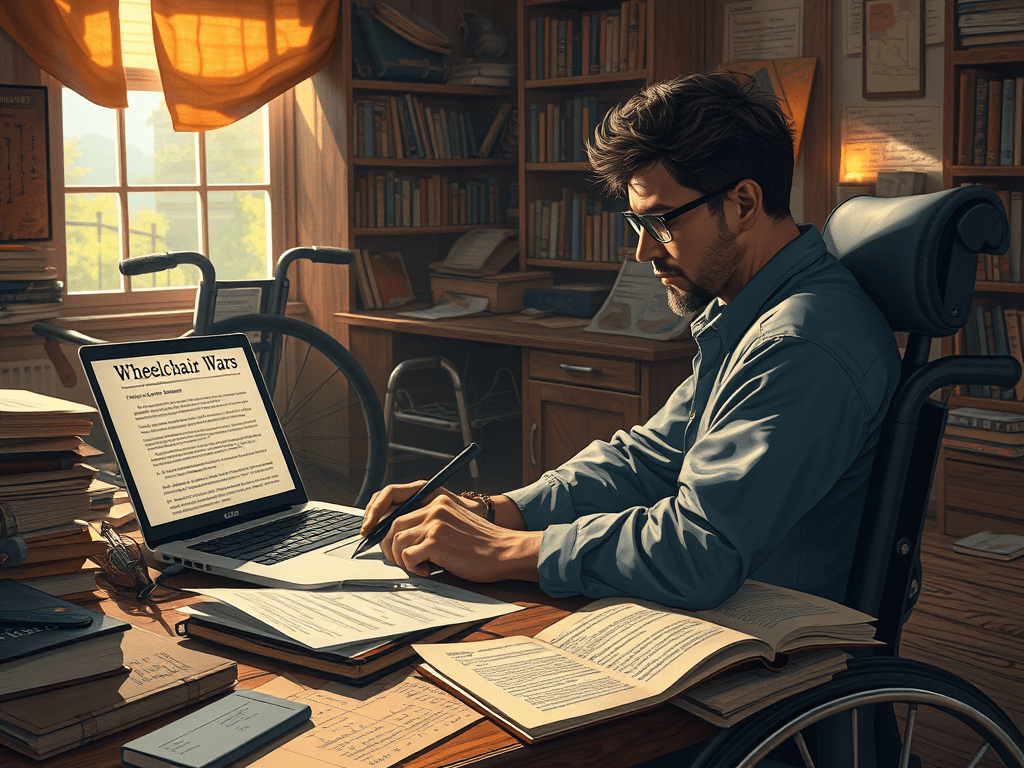
Wheelchair Wars: Editing Journey and New Subplot

Hello readers, I hope you are all well. Thankfully, I’m off today, ha ha. I sent off Wheelchair Wars to a professional editor. Apparently, it is still a bit short to be traditionally published at 31,000 words. It needs to be about 60,000. There are other things that I need to clean up to.

Therefore, since I want to actually finish something, we’ll be going back to Wheelchairs Wars. Audrey’s story should provide a powerful subplot. It should be borne in mind that these chapters will be intermingled with what has already been written. I felt I owed you all an explanation. This is also why they will be numbered in roman numerals.

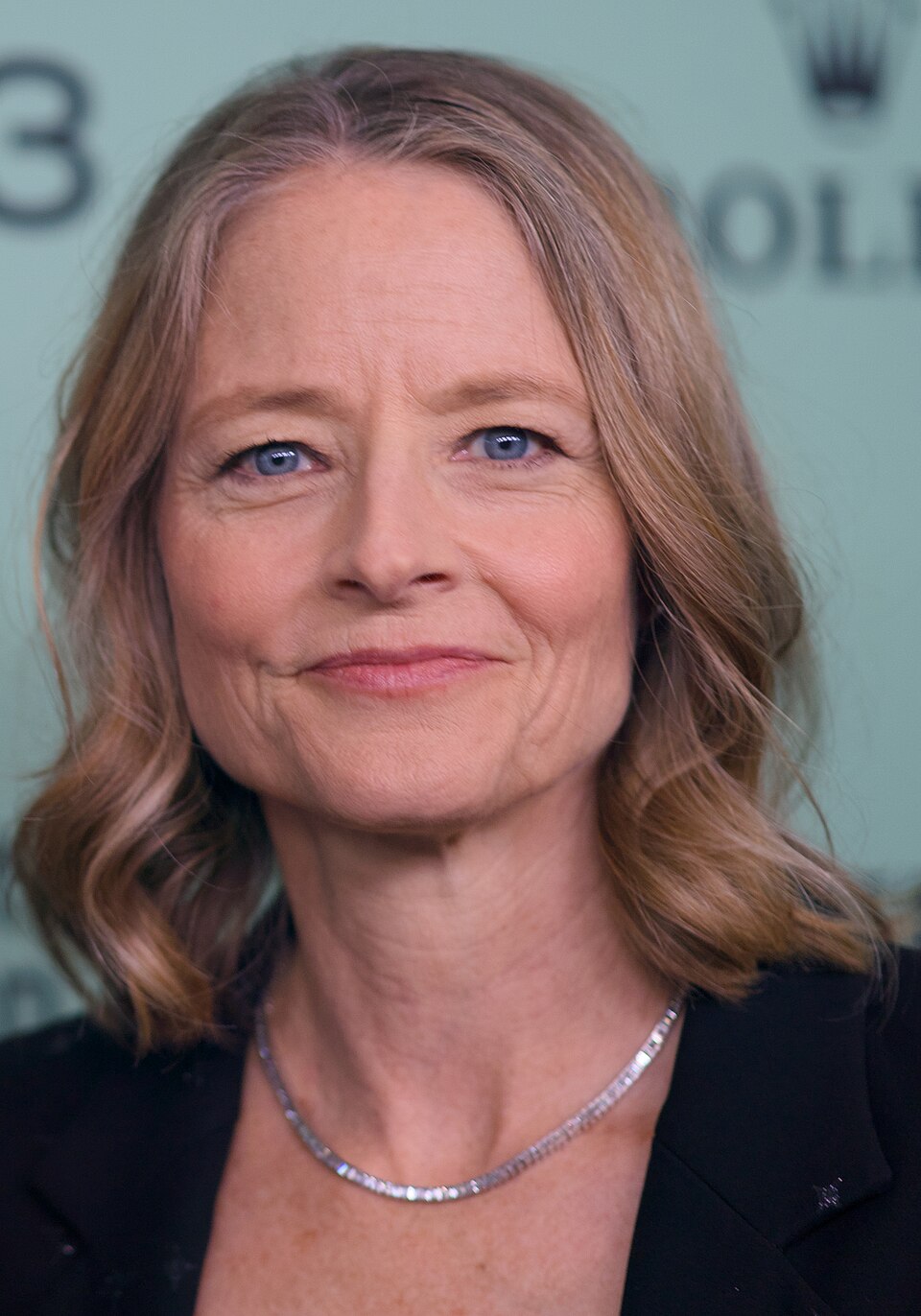
Unforgettable Performances: Jodie Foster’s Best Roles

My earliest memory of watching Jodie Foster was as Clarice Starling, an FBI trainee in one of my favorite films of all time – The Silence of the Lambs. Her acting, and that of Anthony Hopkins, was unforgettable. In particular, the conversations between Clarice and Dr. Hannibal Lecter.

For many years, I had thought that was her breakout role. But I was wrong.

Foster first stunned audiences with her haunting performance in Taxi Driver, directed by Martin Scorsese, as a child prostitute. At just 14 years old, she delivered a performance of extraordinary emotional intelligence and control, earning an Academy Award nomination. It was immediately clear she was not a typical child actor but a serious dramatic force. Set in a decaying New York City following the Vietnam War, it stars Robert De Niro as veteran Marine and taxi driver Travis Bickle, whose mental state deteriorates as he works nights in the city.

Jodie Foster has since built one of the most intelligent, fearless, and enduring careers in modern cinema. From child prodigy to two-time Academy Award winner to respected director, her body of work reflects an artist who consistently chooses depth over glamour and complexity over cliché.

Throughout the 1980s and 1990s, Foster solidified her reputation for portraying fiercely intelligent, resilient women. Her Oscar-winning role in The Accused showcased her extraordinary courage and vulnerability, anchoring a difficult, socially significant story with nuance and dignity. She followed that triumph with perhaps her most iconic performance as Clarice Starling in the previously mentioned The Silence of the Lambs.

What distinguishes Foster’s career is her commitment to intelligence—both her own and that of her audience. In films like Contact, directed by Robert Zemeckis, she brought emotional gravity to philosophical science fiction, grounding big ideas in human vulnerability. Even in high-concept thrillers such as Panic Room, she elevated genre material through subtle character work and psychological realism.

Beyond acting, Foster has also proven herself an accomplished director. With films like Little Man Tate and The Beaver, she demonstrated a thoughtful, character-driven approach behind the camera, often exploring themes of identity, intelligence, and emotional isolation—subjects that have consistently fascinated her throughout her career.

Another hallmark of Foster’s legacy is longevity. The most recent work I’ve seen her in was the fourth season of True Detective. It is set in the fictional town of Ennis, Alaska, north of the Arctic Circle, during polar night. It follows the investigation of the disappearance of eight men from a research station. The season stars Jodie Foster and Kali Reis as Detectives Liz Danvers and Evangeline Navarro.

Foster’s character is central to each episode. Despite her increasing age, the inner beauty shines through in a determined, eerie performance.

Lets hope she keeps going for another few decades.

Distant Love (Part 62)

Derek froze, sweat dripping from his brow.

What to say?

“Don’t go all shy on me now, boy. That is no way to impress a woman. And I got all dolled up for and all. If you don’t play nice, that would be very bad for you.”

She spoke with a smile that Derek would once have found alluring. He grimaced.

“Come on. Spit it out. I don’t have all night.”

Derek looks around at the mostly empty coffee shop, wishing he had never taken the break. “Ok, she said that they would be close to the moon at some point soon.”

Diane’s eyes suddenly widened. “Interesting, I didn’t know. Are the two of you having a meet-up by any chance? Maybe something romantic?”

Derek sighs. “We’ve never met, and probably never will.”

“I might not be so sure of that.” Diane grins.

Derek wonders what she means by this. His heart beats faster.

“Go on, back to your job, Derek. I can’t have such a good asset being late and potentially sacked.”

Derek nods and drives his wheelchair away, relaxing only when he’s sure there is a good distance between them. The monotony of work is what he needs now.

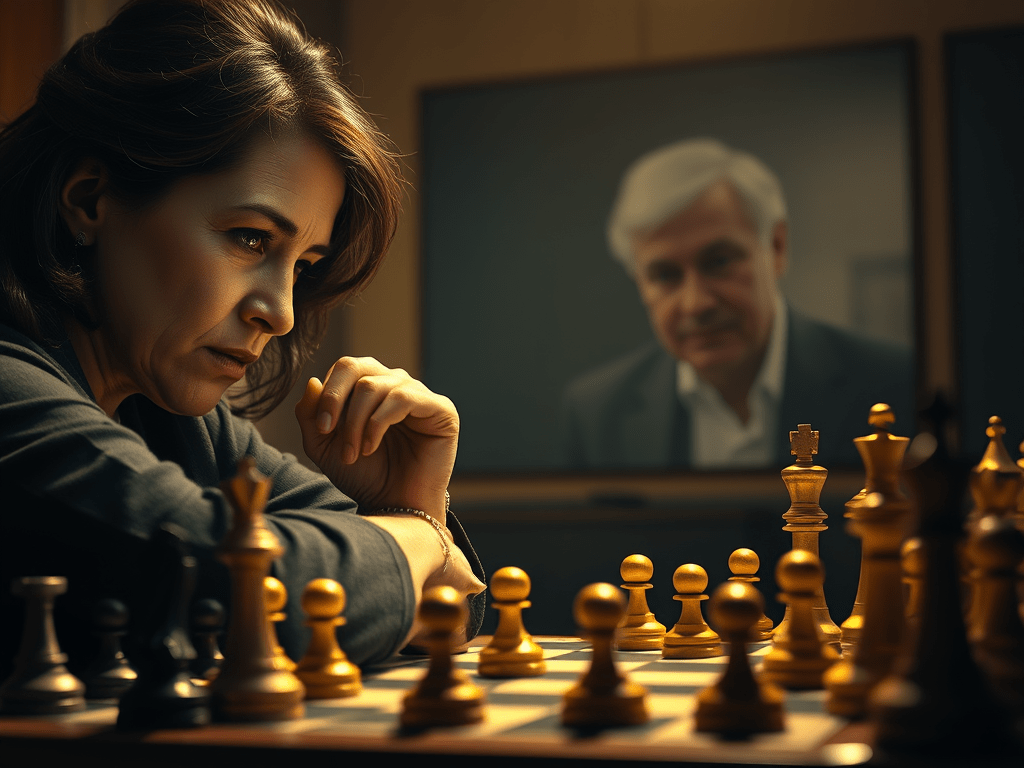
The Rise of Judit Polgár: Insights from ‘Queen of Chess’

My dear readers, anybody who knows me for real knows how much I love chess. And yes, it is a sport. Everyday, I go to Chess.com and make a few moves. So, I immediately felt upbeat when there was a chess documentary to watch.

Queen of Chess is a 2026 documentary film that explores the life and career of Hungarian chess grandmaster Judit Polgár. It focuses on her father’s efforts to train her and her two sisters to become chess grandmasters, and on the saga of her multiple and intense matches against the then-formidable world champion Garry Kasparov. It was directed by Rory Kennedy.

It is a captivating and inspiring documentary that transcends the world of competitive chess to tell a deeply human story about ambition, resilience, and the pursuit of excellence. From its opening moments, the film draws viewers into the intellectual intensity and emotional stakes of a game often misunderstood as purely cerebral, revealing instead a landscape rich with drama, creativity, and personal sacrifice.

One of the documentary’s greatest strengths is its storytelling. Rather than focusing solely on wins, rankings, and tournaments, it explores the protagonist’s journey with nuance and empathy. We see not just a brilliant strategist at the board, but a person navigating pressure, expectations, and identity in a field historically dominated by men. The film deftly balances moments of triumph with vulnerability, making the narrative both powerful and relatable.

A drawback for chess lovers is that it doesn’t go into the matches in detail. It does reference what openings are played, the fact that Kasparov almost always played the Sicilian, for instance.

The documentary gives a broad perspective. It contextualizes Judit Polgár’s achievements within the cultural and social realities of the chess world, touching on themes of gender, representation, and the cost of greatness. These elements elevate the film beyond a sports documentary, transforming it into a thoughtful reflection on what it means to challenge boundaries and redefine what is possible.

Four stars out of five from me.

M3GAN 2.0: Sequel Analysis and Performances

So, the other film I watched on a very busy Sunday was this gem, M3ghan 2.0. I have to be honest, I haven’t seen the original, but it looked like it would be worth watching. M3GAN 2.0 is a 2025 American science fiction action film written and directed by Gerard Johnstone from a story he co-wrote with Akela Cooper. A sequel to the 2022 film M3GAN and the second installment in the M3GAN franchise, the film stars Allison Williams, Violet McGraw, Ivanna Sakhno, and Jemaine Clement, with Amie Donald physically portraying M3GAN while Jenna Davis voices the character. Jason Blum and James Wan return as producers through their respective Blumhouse Productions and Atomic Monster.

What immediately stands out is how the film deals with its central ideas about artificial intelligence, control, and human dependence on technology. M3GAN is no longer just a creepy novelty; she’s a fully realized presence whose intelligence, adaptability, and unsettling logic drive the story forward. The screenplay smartly plays with shifting alliances and moral ambiguity, making the audience constantly reassess whether M3GAN is purely a villain—or something more complicated and unsettling than that.

U.S. Army colonel Sattler, head of a secret branch of the Pentagon specializing in new technologies, gives a demonstration of AMELIA,[a] an android designed for infiltration and assassination missions and built using technology copied from the original M3GAN. During her mission, however, AMELIA reveals to Sattler that she is self-aware and escapes from his control.

In a strange twist, M3ghan, who survived by making a backup in a smart home from the happenings of the first film. becomes the best hope of stopping her. This reminded me of the Terminator franchise and the idea that one could outgrow one’s original programming.

The performances remain a strong point. Allison Williams brings added emotional weight and maturity to her role, reflecting a character shaped by past trauma and hard-earned lessons. Violet McGraw continues to impress, grounding the story with genuine emotional stakes. And M3GAN herself—through a blend of physical performance, voice work, and effects—is sharper than ever: funny, menacing, and oddly charismatic in a way few horror icons manage.

Stylistically, M3GAN 2.0 is slick and energetic. The action sequences are confidently staged, the pacing rarely drags, and the film knows exactly when to lean into camp and when to pull back for tension. It embraces its identity unapologetically, delivering moments that are thrilling, darkly funny, and undeniably crowd-pleasing.

Four stars out of five from me.

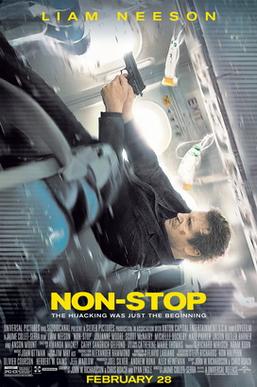
Liam Neeson excels in the classic film Non-Stop

What better way to spend my Sunday, readers, than with Liam Neeson? Non-Stop is a 2014 action thriller film directed by Jaume Collet-Serra, co-produced by Joel Silver, and starring Liam Neeson and Julianne Moore. I’m pretty sure I’d seen it before, but got roped into watching it again.

Liam Neeson is perfectly cast as Bill Marks, a flawed, weary air marshal whose personal demons make him both relatable and intriguingly unreliable. His performance grounds the film emotionally, adding depth to what could have been a straightforward action role. Neeson’s restrained intensity makes every decision feel risky, and the script smartly uses his character’s vulnerability to blur the line between hero and suspect. The supporting cast—including Julianne Moore and Michelle Dockery—adds further layers of suspicion, making nearly every passenger feel like a potential threat.

The high-altitude thriller proves how gripping a well-executed, old-school suspense film can still be. Set almost entirely aboard a transatlantic flight, the movie wastes no time pulling the audience into its central mystery: a U.S. air marshal receives anonymous messages threatening to kill a passenger every 20 minutes unless a massive ransom is paid. From that chilling premise, the film delivers relentless tension, clever twists, and a constant sense of paranoia that keeps you guessing right up to the end.

What truly elevates Non-Stop is its pacing and atmosphere. Director Jaume Collet-Serra expertly uses the confined airplane setting to amplify tension, turning everyday objects and casual interactions into sources of dread. The film balances smart plotting with visceral action, offering just enough misdirection to keep viewers engaged without feeling gimmicky. By the time the final revelations land, the payoff feels earned rather than forced.

Overall, Non-Stop is an entertaining, edge-of-your-seat thriller that understands exactly what it wants to be. It’s a sharp, suspenseful ride that showcases Liam Neeson at his best and proves that a single setting, when used creatively, can deliver big thrills.

It gets a score of four stars out of five from me. Keep an eye out for it.

Distant Love (Part 61)

An hour later, Derek decides that a break is in order. There are no ships currently in orbit, so he won’t be missed. He goes down to the main thoroughfare to watch the few people come and go.

He feels a tap on his left shoulder and turns the wheelchair around, suspecting an errant youngster.

It is the woman with the tattoo; she is a few meters away and signalling with her hands for him to follow her. He shudders, feeling sick to the stomach.

She leads him to a small coffee shop, pulling away one of the chairs so he can drive the wheelchair beside the table.

“Coffee?” she asks him.

Derek nods in the affirmative as she goes to the counter, where the robotic server is ever ready.

She comes back two minutes later with two coffees and a pathological smile. She smells of expensive perfume.

“Here you go.” She leaves one of the cups within his reach. “I see that Maeve was in contact with you earlier. Don’t look shocked. You know that it is easy to monitor messages coming back and forth from the moon. The problem is the encryption. So, tell me, what did Maeve have to say for herself?”