
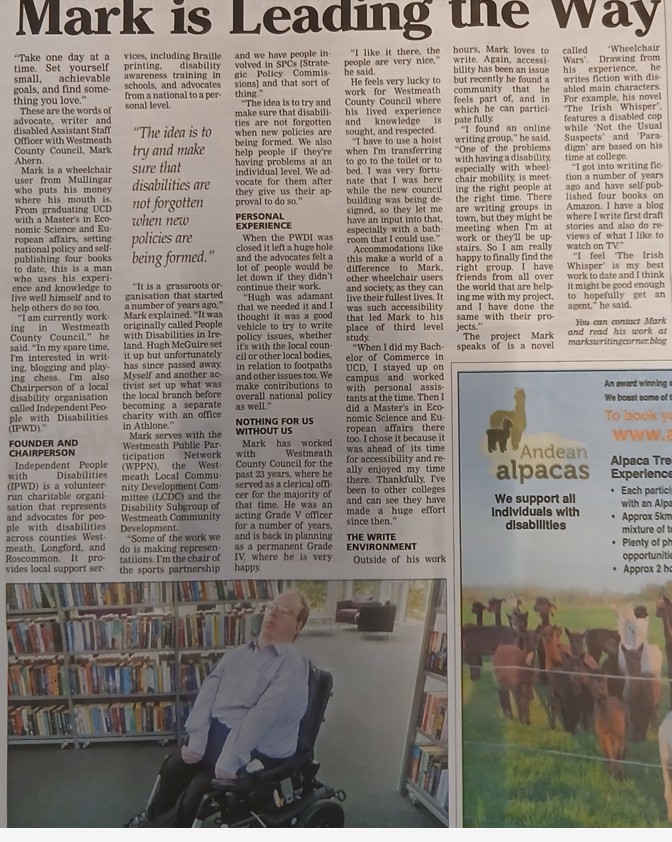
I made the Papers!
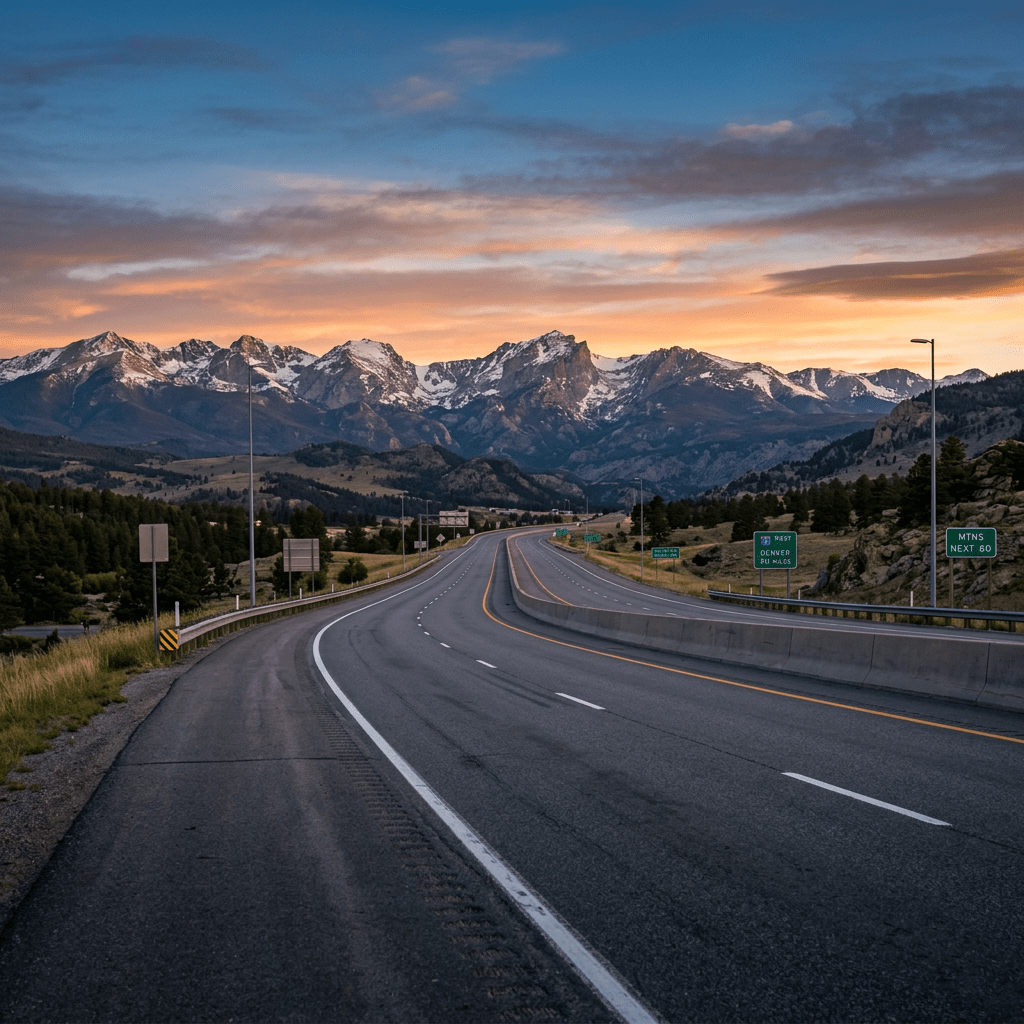
This film is currently being shown on Paramount+. I decided that I’d give it a try.
One Mile: Chapter One (2026) is a taut, gripping, and emotionally grounded survival thriller that delivers high-stakes action while never losing sight of its heart: a father’s fierce determination to protect and reconnect with his daughter. That’s the first thing that’s different about this film. It’s the first one in quite some I’ve watched with this father, daughter dynamic.
Ryan Phillippe stars as Danny Beckett, a recently retired U.S. Army Special Forces operative struggling to bridge the gap with his teenage daughter Alex (Amélie Hoeferle) after years of absence due to his military service.
What begins as an earnest college road-trip detours into nightmare territory when the pair encounters a secretive, violent off-the-grid community in the wilderness. Alex is taken, and Danny must rely on every hard-earned skill he possesses to track the kidnappers, outmaneuver them, and bring her home—alone and outnumbered.Phillippe delivers a compelling, grounded performance.
He plays Danny not as an invincible action machine but as a capable yet weary, emotionally frayed father whose protective instincts and tactical expertise feel authentic and hard-won. The early scenes establishing the strained father-daughter dynamic give the subsequent violence real weight; you root for Danny because his mission is as much about redemption and reconnection as pure survival.
Hoeferle is excellent as Alex—intelligent, resilient, and fully realized rather than a passive victim—creating genuine chemistry and tension with Phillippe that elevates the material. C. Thomas Howell brings layered intensity as Stanley Dixon, the community’s leader, portraying a man driven by his own twisted sense of protecting his people rather than cartoonish villainy.
Director Adam Davidson (known for strong television work on shows like Bosch and Deadwood) keeps the pacing lean and purposeful across the roughly 90-minute runtime. The film builds atmosphere effectively through its remote, isolating wilderness setting (shot on Vancouver Island), then shifts into sharp, practical action sequences that emphasize resourcefulness and high tension over excess spectacle. The sense of isolation and danger feels palpable, and the story balances pulse-pounding set pieces with quieter character moments that make the stakes personal.
As the first half of a two-chapter story released simultaneously, Chapter One works strongly on its own: it establishes the characters, ratchets up the conflict, and leaves you eager for the resolution without feeling incomplete or padded. It’s a satisfying, no-frills thriller in the vein of efficient modern survival-rescue films, distinguished by solid performances, a clear emotional core, and efficient storytelling.
Spoiler!
Still, the film’s ending doesn’t make much sense. He rescues her but they forget to do anything about the compound or the other women. Like even telling the police.
Four stars from me.

So, readers, to create the Wheelchair Wars Universe in people’s minds, I’m planning on writing preambles at the beginning of each chapter. My intention is for them to sound somewhat biblical. Readers of the novel Dune will be familiar with what I’m trying to do.
For chapter 1.
A Communiqué from the Emperor’s Central Command to the Governor of Uisneach – Year 387673 AD Number 156
The Emperor has considered your request for the authorisation of new warrior games to be called Wheelchair Wars in the city of Xenos. The request has been authorised.
It will prove useful in keeping the masses content and away from any thoughts that may lead to Chaos. That is the primary ground for its approval.
A risk, as with all gladiatorial contests, is that a leader of the people may emerge. This would be most unfortunate. Therefore, none of the warriors should survive more than a few contests. If any do reach an exalted status, they should be transferred to the Emperor’s forces.
The weapons to be authorised for these contests will remain at the Governor’s discretion. However, attention must be paid to previous guidelines. At no point should any faction have access to weaponry capable of disrupting the Emperor’s authority.
Approval is also granted for the construction of a mid-sized stadium to cater for the contests. The necessary budget should come from the city’s own resources. A new tax may be in order.
The shortfall in the tribute to the Empire has been noted and is unacceptable. The people must not be allowed to grow soft. The lives of those on Uisneach, as throughout the Empire is a gift from the Emperor that must be repaid.
If you are not prepared to take the necessary measures, then I will find someone who will.
My dear readers, this is obviously not for the faint-hearted. So, I just had to watch.
Conversations with a Killer: The Charles Manson Tapes (often referred to simply as The Manson Tapes) is a gripping, meticulously crafted three-part Netflix docuseries that stands as a strong and fitting finale to Joe Berlinger’s long-running true-crime anthology. Released in August 2026, it draws on previously unreleased prison phone calls made by Charles Manson in his later years, combined with archival footage, contemporary interviews with former Manson Family members and law enforcement, and carefully selected period material to deliver a chilling yet insightful examination of one of the 20th century’s most infamous cases.
What elevates this entry is its focus on the systems of manipulation and control Manson built rather than simply recycling the well-worn mythology. The unreleased recordings give viewers direct access to Manson’s voice and personality in a way that feels immediate and unsettling—his chameleon-like ability to shift personas, his self-justifications, and the lingering charisma that once drew in followers come through without heavy-handed narration. It also briefly deals with how he learned some of his techniques. For instance, the book “How to make friends and Influence People is referenced. Hearing those calls alongside accounts from people who lived through the era creates a layered portrait of how a small-time criminal leveraged the disillusionment of the late-1960s counterculture to assemble a devoted group.
The three episodes are tightly structured and effectively paced. The first traces Manson’s background and the formation of the Family at the height of the hippie movement, showing how promises of love, acceptance, and freedom became tools of psychological dominance. The second examines the escalation to the 1969 Tate-LaBianca murders, exploring the delusions and dynamics that turned followers into killers while providing context that challenges some of the more sensationalized popular narratives. What really comes across is how much Manson was a tool of his own destruction. The third covers the trial and its media circus, illustrating how Manson and the Family turned the courtroom into a grotesque spectacle that cemented their place in cultural memory. Archival voice recordings of key figures such as Tex Watson, Susan Atkins, and Leslie Van Houten, paired with reflections from survivors of that world, add emotional weight and human detail.
Berlinger’s direction maintains the series’ signature strengths: a restrained use of reenactments where needed, strong visual storytelling through archival material, and an emphasis on letting the subjects’ own words drive the narrative. The result is both riveting and ominous—true crime at its most inquisitive. It doesn’t shy away from the horror of the crimes or the media frenzy that followed, yet it succeeds in examining the mechanisms of influence and the cultural moment that allowed them to take root. Viewers familiar with the case will appreciate the fresh audio and the effort to center those who experienced the events firsthand; newcomers will find a clear, compelling introduction that avoids pure sensationalism.
As the concluding chapter in the Conversations with a Killer lineup (following the Bundy, Gacy, Dahmer, and Son of Sam installments), The Charles Manson Tapes feels purposeful. It uses newly available material to dig into themes of control, myth-making, and the enduring fascination with this particular chapter of American crime history. The series is TV-MA for good reason—its content is dark and disturbing—but for fans of thoughtful true-crime documentaries, it offers a substantial, well-produced watch that rewards attention across its roughly three hours. If you’re looking for a detailed, tape-driven exploration of Manson’s rise, the murders, and their aftermath, this is a strong recommendation and a memorable close to Berlinger’s anthology. Four stars out of five from me.

I do love my sci-fi so the Netflix algorithm suggested I watch this. And who am I to argue on a Saturday afternoon?
The Last House is a gripping, emotionally resonant sci-fi survival thriller that turns an ordinary suburban home into the ultimate pressure cooker of human resilience, ingenuity, and love.I wonder will anything so exciting ever happen in my own life.
Directed by Louis Leterrier with a sharp screenplay by Matthew Robinson, the film follows the Delgado family—engineer Jason (Wagner Moura), his wife Ann (Greta Lee), and their two children—as a sudden, unnatural storm seals them inside their Seattle house with no way out. A new phenomenon for preppers everywhere to worry about.
What begins as a baffling lockdown quickly evolves into a multi-year ordeal of dwindling resources, mounting isolation, and an enigmatic external threat. The premise is simple yet potent, and the movie executes it with escalating tension that feels both intimate and apocalyptic.
Greta Lee and Wagner Moura deliver outstanding, grounded performances that anchor every scene. Moura brings quiet intensity and resourceful determination as a father who channels his engineering skills into creative survival tactics, while Lee radiates strength, maternal protectiveness, and quiet vulnerability as the family’s emotional center. Their chemistry feels authentic and lived-in; watching them navigate fear, frustration, and fierce protectiveness makes the stakes feel deeply personal. The young actors portraying the children are equally impressive across the time jumps, conveying growth, adaptation, and the pure bond of family under extreme pressure. These performances elevate the material into something genuinely affecting rather than purely conceptual.
Leterrier crafts a masterfully claustrophobic atmosphere. The house itself becomes a character—initially a sanctuary, then a prison, and eventually a hard-won fortress of improvisation. Practical ingenuity (ingenious trapping methods, indoor cultivation, water collection) provides satisfying problem-solving moments that reward the characters’ resourcefulness without feeling like empty spectacle. The sound design and cinematography amplify the sense of dread and confinement: relentless rain, shadows moving outside, and the gradual transformation of familiar domestic spaces into something alien and hard-won. When the story expands in scope later, the visual effects and world-building feel purposeful and thematically rich rather than overwhelming.
Beyond the thrills, The Last House explores meaningful themes of family unity, adaptation, mercy, and humanity’s place in a changing world. It balances suspense with quieter, human moments of connection, play, and perseverance that make the characters’ endurance feel earned and hopeful. The film’s environmental and existential undertones add depth without becoming preachy, leaving viewers with a lingering sense of wonder and reflection.
At roughly 1 hour 50 minutes, the pacing sustains engagement through escalating challenges and emotional payoffs. It succeeds as both a tense chamber piece and a larger-scale speculative adventure, offering the kind of smart, character-driven entertainment that stands out on Netflix. Strong direction, exceptional lead performances, inventive survival details, and a premise that sticks with you long after the credits make The Last House a highly rewarding watch—one that celebrates the extraordinary strength found in ordinary people when the world outside changes forever. Highly recommended for fans of thoughtful sci-fi thrillers and powerful family dramas. Four stars out of five from me.
“They are getting closer, Derek.” her voice trembling.
“Almost there,”
The ship shudders. The control panel indicates a hit, but no permanent damage.
Warning messages that Derek ignores are being received.
The landscape begins to change. Plains are becoming hills and mountain. Only seconds away now.
The ship does a deep dive. “We’re here!”
They fly into an opening on the side of a green mountain.
“Welcome to the Merican ship construction facility, Aidrey”
She gasped, “And just in time too.”
Radar indicates they are no longer being pursued. Everything, is going as planned. This place
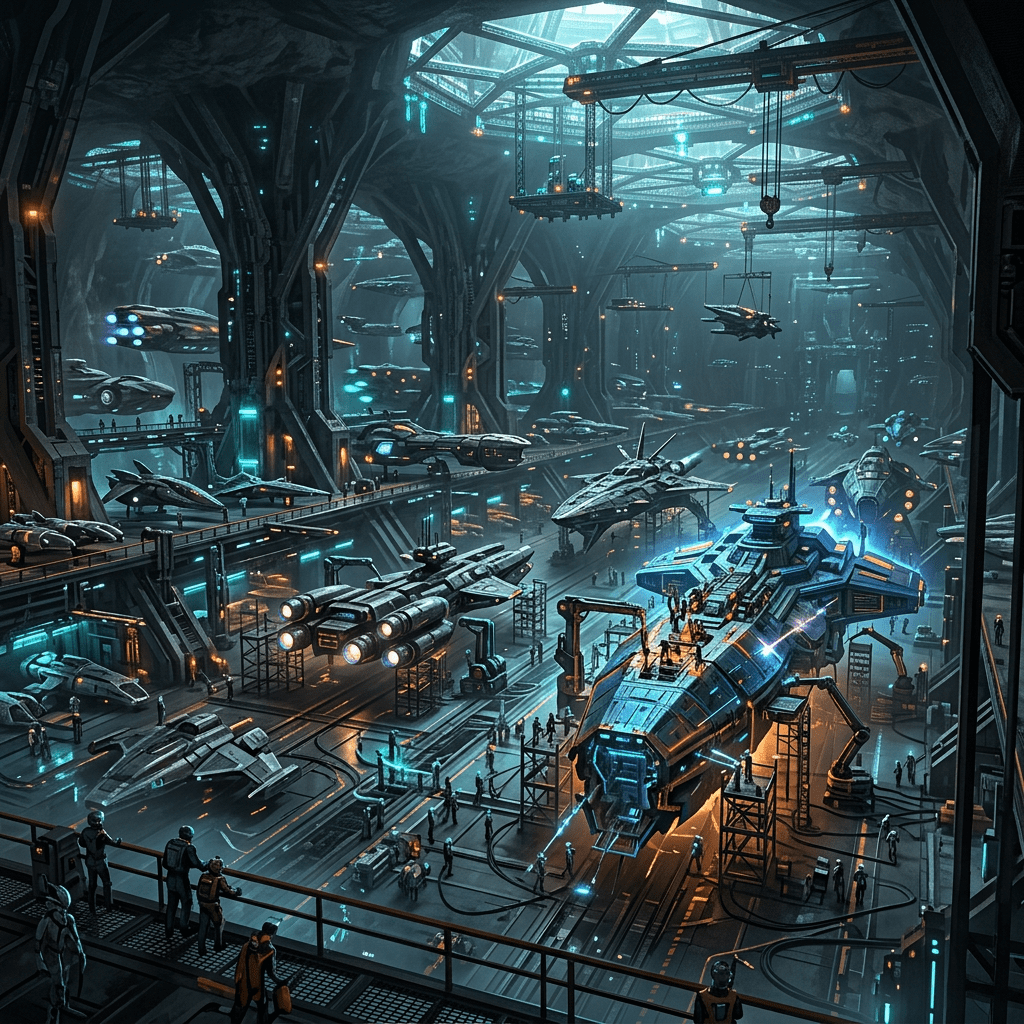
On either side row after row of spaceships hung from large metallic hangers.
“So, Maeve. How do we get out of here?”
Maeve moves her hands back and forth. “Hold on, I’ll bring up the schematics.”
She pressed different buttons. “Dead ahead for two kilometers. Take the passageway on the right. There’s an exit after a further three kilometers.”
Below ships of various shapes and sizes were being constructed on a multitude of assembly lines.
“Aaron had this part very well worked out. I hope that the rest of the plan went as well.,” Derek says.
“Yes, let’s hope so. I’m worried about just getting us back safely at the moment.”

Maeve waves for Derek to follow her into the ship and then to the bridge. It is much cooler inside.
She holds his hand. “Are you sure about this?” She rubs his face. “You are risking so much for me, for the cause.”
Derek gazes into her eyes. “Anything for you, my love.” He takes her hand. “We can do this.”
She nods. “Do we need to go over the plan again?”
“No, everything is okay. The computer virus has already begun its infection. We will attack from the air while they plant the explosives.”
She flicks her hair. “I wish I could share your optimism.”
“Trust me, I got you out of jail, didn’t I?”
“You did.” They kissed. For
“Actually, I’m looking forward to trying out some of these new weapons on the ship,” Derek says with a smile.”They should do a lot of damage.”
They hear a loud clanging.
A few moments Aaron enters, sweat dripping from his brow. “That’s everything sorted now. Try to rest. Save your energy for later.” A wide grin appears on his face.
Maeve slams his back. “None of your business what we get up to, isn’t it, Derek?
“Definitely, Maeve.” A burst of laughter breaks out.
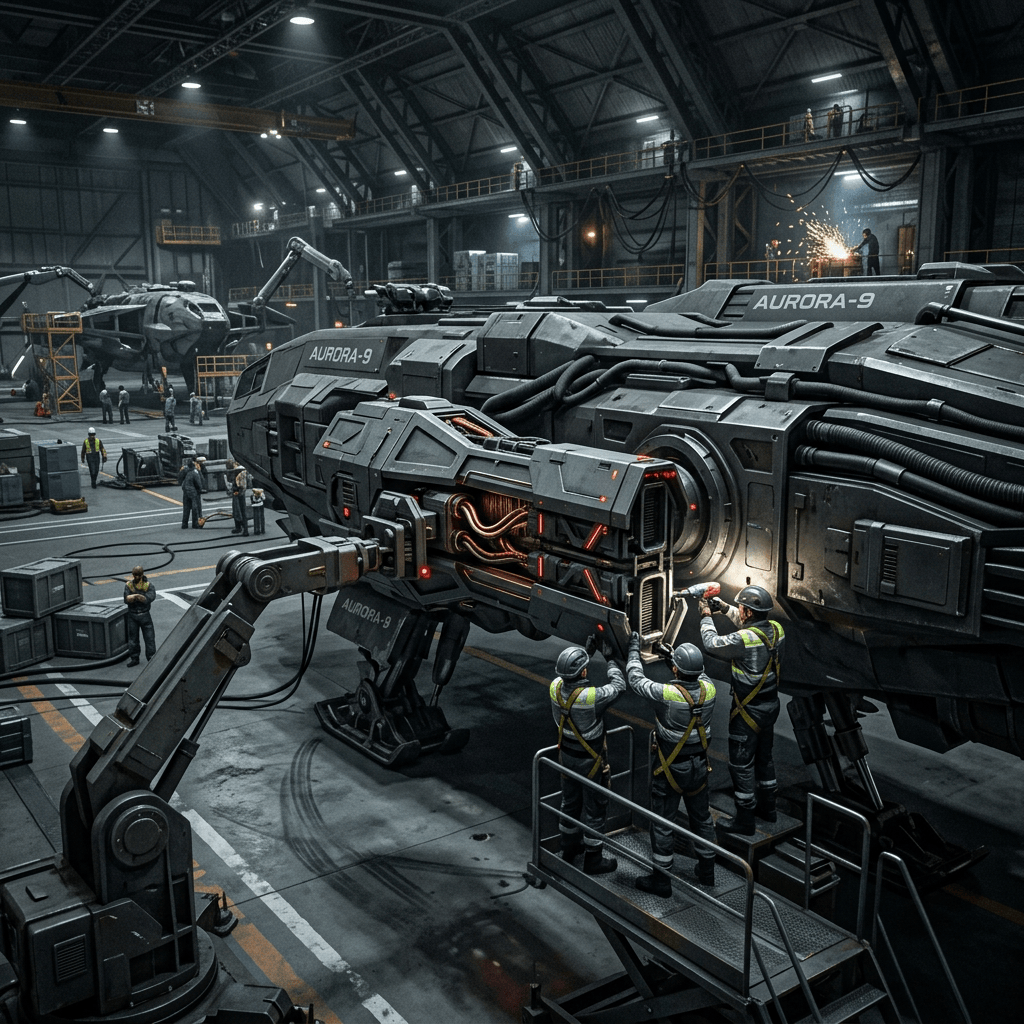
The next day all the plans had been put in place. Derek shakes at the thought of what he is about to be involved in. He had thought that his role in the plot would be at an end after he had hacked into the system, but now they wanted more.
A trickle of sweat rolled down the side of his face as the suns rays belted down on him. The other men are busy adding weaponry to his ship. Two, large powerful laser guns are being put on the front, and smaller ones on both sides. Derek and Maeve would be providing the air support in just under three hours from now.
Maeve wraps her arms around him from. “You okay, love?”
Derek leans his head back. “As alright as I’m going to be. A bit worried.”
“We’ll get through this.” She kisses his cheek.
“Get a room,” Mick shouts to laughter from James and Aaron.
“You’re just jealous,” Derek retorts.
“Of course,” Mick replies. “That’s even more reason to get one.”
Maeve smiles. “I’d be nice Mick especially if you want to live and see another day. It would be a shame if we decided to fly away. Now, that would be funny.
My dear readers, if you are someone who suffers from anxiety, then best to give this a miss. On the other hand if you love learning about disasters, then this is a show for you.
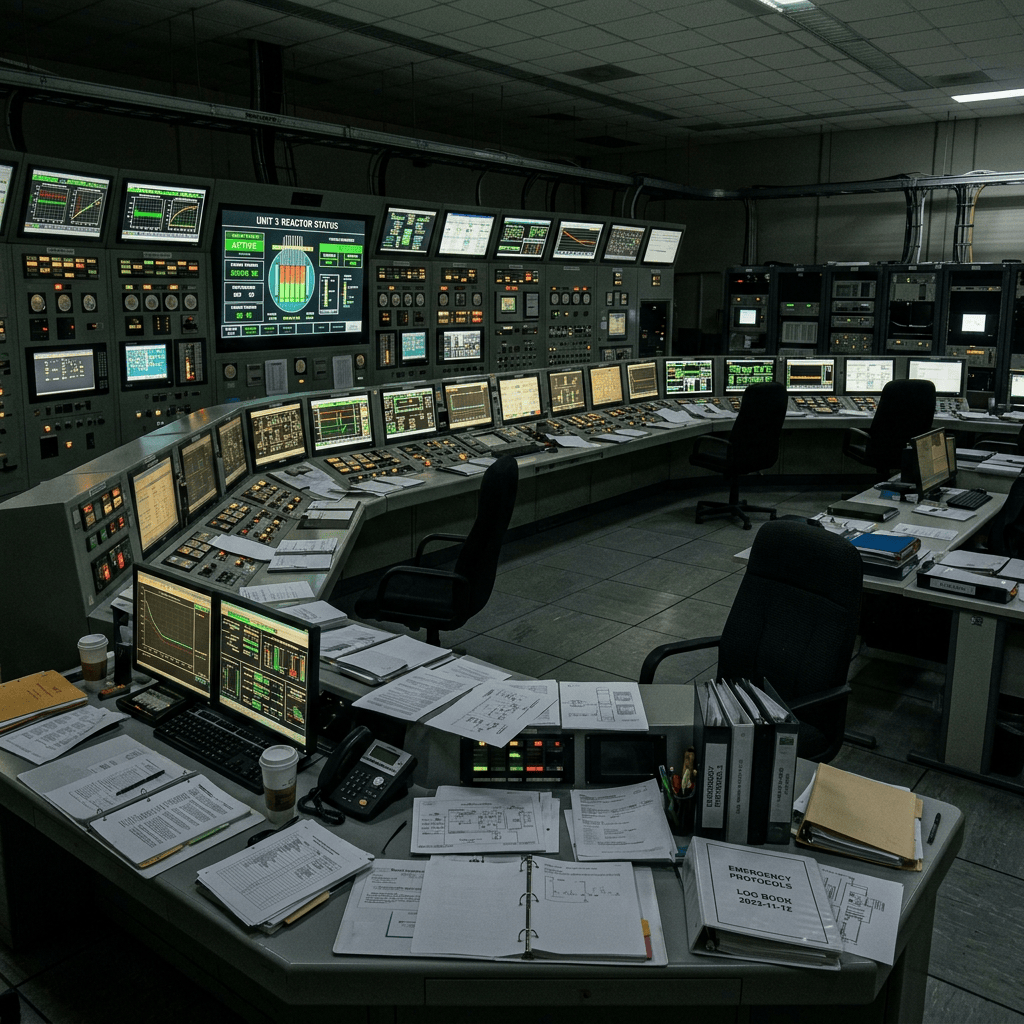
Fukushima: A Nuclear Nightmare is a gripping, meticulously crafted HBO documentary that stands as one of the most compelling and human accounts of the 2011 triple disaster in Japan.
Directed by James Jones (known for Chernobyl: The Lost Tapes) and co-directed by Megumi Inman, this 90-minute film reconstructs the nine harrowing days after the March 11, 2011 magnitude-9.0 earthquake and tsunami disabled the cooling systems at the Fukushima Daiichi nuclear power plant.
It centers the extraordinary courage of the plant workers—later known as the “Fukushima 50” (there were more than 50) — who stayed behind on what many understood could be a suicide mission to prevent a total meltdown that threatened to force the evacuation of Tokyo and potentially endanger the entire country. There was a fear that half the country would be rendered uninhabitable at one point.
What makes the documentary exceptional is its forensic, real-time approach. It weaves powerful archival footage of the earthquake’s chaos, the towering tsunami that erased coastal towns, and the subsequent hydrogen explosions at the plant with candid, first-hand testimonies from control-room engineers, government advisors, TEPCO officials, emergency workers, consultants, and journalists. It is shocking to see the huge waves crashing into the coast causing utter devastation. These interviews convey the mounting pressure, isolation, fear, and resolve inside the darkened, radiation-filled facility.
Viewers feel the tension as systems failed one after another and leaders confronted the unthinkable. The personal accounts—especially from mid-level engineers and the workers who entered the reactors—lend an intimacy and emotional weight that elevate the film far beyond a standard disaster recap.
The filmmaking is taut and respectful. Jones and Inman avoid sensationalism while never soft-pedaling the scale of the crisis or the very real possibility of catastrophe. The editing keeps the narrative propulsive, the archival material is used with precision, and the focus on ordinary people rising to extraordinary circumstances gives the story its heart.
Moments of quiet reflection from the participants underscore both the human cost and the quiet heroism that averted an even greater tragedy.Fifteen years after the events, Fukushima: A Nuclear Nightmare feels urgent and necessary.
It honors the resilience and sacrifice of those who stayed when others could not, while offering a clear-eyed reminder of both the power of nature and the critical importance of preparedness and human resolve. It is essential viewing—tense, moving, and ultimately inspiring. Five stars out of five from me.

 Mark's Writing Corner