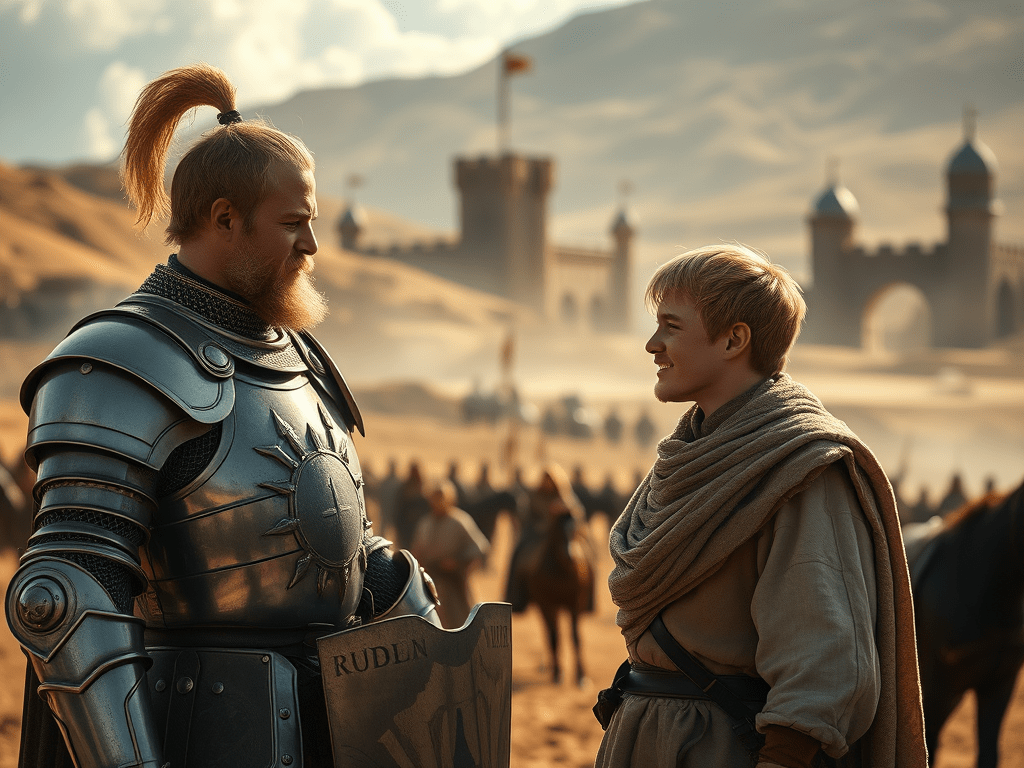
Wheelchair Wars (i)

Oh my Emperor, please let me suffer and die in your name – A nun’s prayer from The Order of Deliverance

The Emperor is our God; may we suffer greatly for our salvation – A nun from the Order of Retribution

Our Emperor, who doth rule from Earth,

Hallow be thy name,

Thy Empire conquer all,

What is done on Earth pervades the Universe

Give us your spirit and courage,

Forgive us any trespass

And deliver us to your Service

The chanting reverberated through Audrey’s body. Her two surviving roommates were on their knees on each side of her, and her wheelchair. In front of them, holding a wooden triangle, in her habit was Sister Nora. A tall woman with an aquine face, she towered over them. Her face is stern. The chanting has been going on for nearly half an hour in the small prayer room.

“That’s enough now, girls. You can go back to your room.” Sister Nora spoke in an authoritative tone, devoid of any love or intimacy.

The two girls on either side of Audrey rose, their faces twisted in pain from their stiff knees.

Audrey struggled to reverse and turn her manual wheelchair in the small space between two aisles of pews. One of the girls begins to push her and whispers into her ear. “I’ll let you take it easy, since it’s your last night with us. Ya lucky bitch.” Audrey looked back at her friend, Grainne, with a small smile. The other girl was Mary.

The few minutes it took to reach the dormitory down narrow, dark corridors were spent in silence.

Their dormitory was large with enough space for thirty girls. But there were only the three of them, and they clustered near the door. A pang shot through Audrey when she thought of all those that were missing. Disease had taken many, batterings from the sisters took some more. The others were sold to slave in the brothels.

Audrey’s movements were slower than those of others. It took longer for her to remove her purple uniform. That, and she couldn’t walk.

After lifting up her footplates and parking beside the bed, she used her hands to propel herself onto it.

This was a time to sleep, and the lights would switch off in a few minutes. But that rarely happened. The darkness was the only time they had when they could be sure they were not being watched.

Grainne was the first to speak. “Going to miss you Audrey.”

“Yeah, me too,” Mary whispered.

Tears rolled down Audrey’s face. “Yeah, me too. And I hate the thought of leaving you here.”

“I doubt we’ll be here much longer,” Grainne replied. “One of the sisters told we’re being sold to Richies in a few days. I hate the thought of having to please all those old, smelly men. I’d rather have an opportunity like you, even if it risked death.”

“I don’t know if I could be as brave as Audrey,” Mary murmured, “You have already had so many great victories. And now tomorrow, you get to leave this place. The Na Fianna compound has to be better. At least one of us has a chance.”

Then there was silence.

When Audrey woke in the morning, they were gone. Instead, Sister Ita stood at the side of the bed. A round woman with piercing brown eyes. “Come on, get dressed. I’m to bring you to the Na Fianna compound. Give me a shout when you are ready.” With that, she turned and went to wait outside.

Audrey grimaced. Sister Ita was the last person she wanted to spend her day with. She was renowned for her vicious nature and taste for some of the younger girls. She tried to put such thoughts in the back of her mind.

As they left the convent, they paused in front of the large metallic triangle hanging from the ceiling. “To the eternal power of the Emperor,” they said in unison.

Outside the central door, they were immediately hit with the smell. A foul mixture of sweat and excrement. The thoroughfare was crowded with children in rags. “Why doesn’t the Emperor just annihilate this scum?” Audrey knew that the Sister wasn’t expecting a response.

The thoroughfare was a large area with a high ceiling. But the rest of the journey was down narrow passageways with poor lighting. Some of the living spaces they passed didn’t even have front doors. Audrey could see into the little hut rooms that passed as their abodes.

It took two hours to reach the Na Fianna compound. Audrey smiled with glee every time the Sister moaned about having to push her creaky wheelchair and her meagre belongings.

Serves the bitch right after all she has done.

Oreus was waiting for them as they entered the bright and clean compound. The Sister gasped at the limbless man in the powerful, armed wheelchair. Audey had met him previously and said a warm hello.

Oreus ignored the Sister as if she were not there. He ordered one of his men to lift Audrey into an electric wheelchair.

“Now, you can come and go as you please, Audrey. Never again will you have to rely on a walker for movement,” Oreus voice boomed, “now follow me.”

Audrey looked around to see that the hated Sister was gone before pushing the joystick to follow Oreus. There were others there with all different manners of shapes, sizes, and malformations. She hoped to get to know many of them better in time.

“This is your quarters. Battle practice in an hour or so. See you again then.You should take every moment here very seriously. Your life depends on it.”

The room was more spacious than she had anticipated. There was a single bed with white sheets and a pillow. There were no stains like back at the convent. There was even a drawer for her clothes. There were some blotches on the green wall, but that wouldn’t bother her.

An hour later, she had unpacked and gone to the great hall for training.

The Rise of Judit Polgár: Insights from ‘Queen of Chess’

My dear readers, anybody who knows me for real knows how much I love chess. And yes, it is a sport. Everyday, I go to Chess.com and make a few moves. So, I immediately felt upbeat when there was a chess documentary to watch.

Queen of Chess is a 2026 documentary film that explores the life and career of Hungarian chess grandmaster Judit Polgár. It focuses on her father’s efforts to train her and her two sisters to become chess grandmasters, and on the saga of her multiple and intense matches against the then-formidable world champion Garry Kasparov. It was directed by Rory Kennedy.

It is a captivating and inspiring documentary that transcends the world of competitive chess to tell a deeply human story about ambition, resilience, and the pursuit of excellence. From its opening moments, the film draws viewers into the intellectual intensity and emotional stakes of a game often misunderstood as purely cerebral, revealing instead a landscape rich with drama, creativity, and personal sacrifice.

One of the documentary’s greatest strengths is its storytelling. Rather than focusing solely on wins, rankings, and tournaments, it explores the protagonist’s journey with nuance and empathy. We see not just a brilliant strategist at the board, but a person navigating pressure, expectations, and identity in a field historically dominated by men. The film deftly balances moments of triumph with vulnerability, making the narrative both powerful and relatable.

A drawback for chess lovers is that it doesn’t go into the matches in detail. It does reference what openings are played, the fact that Kasparov almost always played the Sicilian, for instance.

The documentary gives a broad perspective. It contextualizes Judit Polgár’s achievements within the cultural and social realities of the chess world, touching on themes of gender, representation, and the cost of greatness. These elements elevate the film beyond a sports documentary, transforming it into a thoughtful reflection on what it means to challenge boundaries and redefine what is possible.

Four stars out of five from me.

A Knight of the Seven Kingdoms: Stunning Visuals and Storytelling

My dear readers, I have currently watched the first three episodes of A Knight of the Seven Kingdoms. It’s a slow burner but it’s growing on me. It is a captivating return to the world of Westeros, offering a refreshing, character-driven story that proves the Game of Thrones universe (it is set one hundred years prior to the last series) still has rich tales left to tell. Rather than relying on massive battles and political spectacle alone, the series shines through its intimacy, emotional depth, and timeless sense of adventure.

Created by Ira Parker and George RR Martin, it is the third television series in Martin’s A Song of Ice and Fire franchise and is an adaptation of the Tales of Dunk and Egg series of novellas, beginning with The Hedge Knight. It stars Peter Claffey as Ser Duncan “Dunk” the Tall, the titular hedge knight, and Dexter Sol Ansell as his squire Aegon “Egg” Targaryen.

At the heart of the story is the unlikely duo of Ser Duncan the Tall and his sharp-witted squire, Egg. Their relationship is the soul of the series—warm, humorous, and deeply human. Duncan’s sincerity and moral compass contrast beautifully with Egg’s intelligence and hidden nobility, creating a dynamic that feels both authentic and endearing. Watching their bond grow across each episode is as rewarding as any grand plot twist.

Visually, A Knight of the Seven Kingdoms is stunning. The cinematography captures the beauty and brutality of the medieval-inspired landscapes with remarkable detail. From dusty tournament fields to quiet country roads and imposing castles, every setting feels alive and immersive. The production design and costumes further enhance the authenticity of the era, grounding the fantasy in a tangible, believable world. Of particular note, the scenery is from Northern Ireland.

So far, I give it four stars out of five and was happy to hear its getting a second series. I just hope that the ending is better than Game of Thrones.

Exploring Humanity in _The Great Flood_: A Film Review

One of the best things about Netflix is that you get to watch films and documentaries from all over the world. One such film is The Great Flood from South Korea. It was co-written and directed by Kim Byung-woo.

An-na, an AI researcher and recent widow, played by Kim-Da-mi, wakes in her apartment to find floodwater rising in the thirty-floor complex. With her six-year-old son Ja-in, she attempts to reach safety.

However, they are no ordinary mother and child. The child is a robot designed to experience emotion. This is critical to the whole film. An asteroid has hit, and human extinction is imminent. World governments knew what was going to happen and funded secret efforts to survive, including a space station and research into the creation of engineered human bodies and consciousness. An-na’s employer is also revealed to be involved in these projects, putting her and her child central to humanity’s future.

What stands out most is the film’s balance between scale and humanity. While the flood itself is rendered with striking visual power—ominous skies, rising waters, and carefully staged moments of chaos—the story never loses sight of the people caught within it. The narrative lingers on personal choices, moral dilemmas, and quiet acts of courage, allowing the disaster to feel not just catastrophic, but deeply personal. This focus gives the film an emotional weight that elevates it beyond a standard disaster movie.

The performances are uniformly strong, grounded, and convincing. Rather than leaning into melodrama, the actors bring restraint and authenticity, making fear, grief, and resilience feel earned. Small gestures and silences often speak louder than dialogue, and those understated moments are some of the film’s most powerful.

Technically, The Great Flood is impressively crafted. The cinematography captures both the beauty and menace of nature, using light, color, and movement to heighten tension. The sound design is particularly effective—the rush of water, distant alarms, and sudden quiet all work together to create a visceral experience that keeps the audience on edge. The pacing is deliberate, allowing suspense to build naturally while still delivering moments of urgency and release.

Ultimately, The Great Flood is a film about survival in the broadest sense: not just surviving a natural catastrophe, but preserving compassion, responsibility, and hope when everything familiar is threatened.

If nothing else, it is a great story. With AI coming to the forefront of our lives, I expect more films of this nature in the future. Four out of five stars from me.

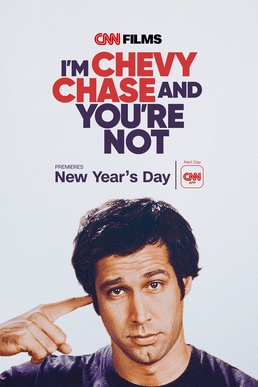
Documentary Review: I’m Chevy Chase and You’re Not

Those of my readers around in the eighties will probably remember Chevy Chase. I remembered him from comedic films from the time period, but it had been many years since I even thought of him.

So, I said I’d give this documentary film a try. Its name is “I’m Chevy Chase and You’re Not.” From the start, it becomes clear that his bad reputation as a coworker will be a big focus, as well as his past drug abuse.

The film does an excellent job of reminding you just how seismic Chase’s impact on comedy really was. Saturday Night Live doesn’t just get a nod—it gets a victory lap. Watching early clips of Gerald Ford tumbling down stairs and Chase anchoring Weekend Update is like seeing comedy history being invented in real time, mostly held together with duct tape and confidence. The documentary smartly lets these moments breathe, trusting the material to remind you why Chase was, for a time, the funniest man in America.

Then come the movies, and oh, what a parade it is. Caddyshack, Fletch, National Lampoon’s Vacation—the documentary rolls through them like a greatest-hits album where every track is either iconic or inexplicably quotable. There’s a genuine joy in revisiting how Chase perfected the art of the smug, clueless, yet weirdly lovable leading man. His comic persona—equal parts charm and chaos—gets the credit it deserves as a blueprint for generations of comedians who followed.

But then there are the drugs. And he did a lot. And he could be mean. The drug abuse, his comedy, and this meanness all likely have one source – an abusive mother. He developed it as a coping mechanism. It is one he still uses as he makes jokes to deflect difficult or awkward moments, even in his eighties. Still, even his meanness comes off as him being a bit of a rascal.

When the stories get messy. You come away with the sense that Chase’s imperfections didn’t cancel out his contributions—they complicated them, humanized them, and, strangely, made his successes even more impressive.

By the end, the documentary feels less like a verdict and more like a well-earned, slightly crooked standing ovation. It celebrates a man who made millions of people laugh, sometimes by falling down, sometimes by being the joke, and sometimes by being in on it all along.

It gets four out of five stars from me.

If you’ve seen it, what did you think?

Exploring _The Salt Path Scandal_: A Review

Well, readers, I watched this gem on Sky earlier. The first few minutes revisit what had been a best-selling book, later turned into a starring Gillian Anderson.

The show lulls you into a tranquil daze. There are drone shots of cliffs that look like they’ve been photoshopped by the concept of serenity itself. Gentle strings hum. Someone says something earnest about “healing.” You exhale. It’s about a 650-mile walk you can do in the South West of England as told by Raynor Winn. She had just lost her house, and her husband was diagnosed with a terminal illness. The walk was transformative.

And then—record scratch—a talking head appears to ask a question so sharp it could open tinned beans: “But did that actually happen?” From there, The Salt Path Scandal becomes less a journey and more a brisk hike through footnotes.

The documentary’s true star is its tone, which can best be described as polite British skepticism wearing a fleece. Nobody yells. Nobody lunges. Instead, the filmmakers deploy the deadliest weapon in the national arsenal: calm, persistent follow-ups. “Just to clarify,” a narrator says, with the menace of a librarian about to revoke privileges. Every “just to clarify” lands like a small pebble in your shoe—annoying, impossible to ignore, and increasingly painful over time.

You see, the book claimed to be a memoir. Like, it was supposed to be true. But once, a journalist, Hadjimatheou, probed a bit. Well, there were reasons to be skeptical.

Structurally, the series is a masterclass in pacing. Each episode introduces a claim, lets it bask in sunlight, then quietly rotates it to reveal a price tag, a date discrepancy, or a witness who remembers things… differently. It’s less gotcha journalism and more hmm, interesting journalism,

By the finale, you’re left amused, mildly scandalized, and deeply suspicious of any memoir. The truth is out there somewhere.

It gets four stars out of five from me.

Have you seen it? Let me know what you think.

Exploring Football’s Greatest Con: King of Lies Episode 1

Hello, my dear readers. Took an annual leave today and decided that it was important for it not to be wasted. So, I watched TV and the above documentary, in particular.

Episode 1 of King of Lies: Football’s Greatest Con launches the series with an enticing blend of mystery and tension, but it’s not without its stumbles. The premiere does a solid job establishing the central scandal, which revolves around the sale of Notts County Football Club (the oldest professional football club in the world), teasing just enough information to pique curiosity without revealing too much too soon. The opening sequences are atmospheric and stylish, setting a tone that’s equal parts investigative thriller and sports documentary.

The documentary’s greatest strength is its interviews. I was stunned to see Sven-Göran Eriksson pop into the story. The interview is from the depths of sickness shortly before he died. Unfortunately, he gets caught up in it all and quite bizarrely ends up in North Korea at one point!

However, the pacing is noticeably uneven. Some sections feel stretched out, lingering on details that don’t yet carry emotional or narrative weight. The editing sometimes jumps abruptly between timelines or perspectives, which can make the episode feel scattered,

Russell King is the conman leaving ruin wherever he goes. It’s quite a complex con, almost masterful. But it’s impossible to see his out. He needed the con or new cons to keep being successful, to not get caught.

An interesting documentary. I learned that you can’t get people to do what they don’t want to. The art of persuasion is giving them a reason to do what they want.

Yes, so, not sure if that’s a positive, but what the hell.

It gets three stars out of five from me.

Have you seen it? What do you think?

Episode 1 of King of Lies: Football’s Greatest Con is currently available on Sky Documentaries.

A Review of Netflix’s ‘Being Eddie’: Insights and Reflections

Anybody within seven or eight years of my age (I’m forty-six) would have fond memories of Eddie Murphy. I still remember seeing Beverly Hills Cop for the first time. A great film that would never have made it without him. It was the first time I saw on-screen a black character who was clearly more intelligent than the white people around him. All the curses stuck out as well.

But what happened to him recently? I haven’t heard his name in an age. I was also interested in what other aspects of his life were like.

That’s why I watched the documentary “Being Eddie” on Netflix a couple of nights ago.

If you are looking for something visceral, raw, then this is not it. Some critics think it’s more like a prelude to him returning to stand-up more than anything else. It retreats from anything awkward/contentious. He comes across as a family man and reminisces about voicing the donkey in Shrek. There is nothing about the paternity suit with Mel B, for example. He has ten children. Musk would be proud.

The best part is when it just lets him speak. I found his tendency towards OCD intriguing. Great minds appear to have a likelihood for such things, and I doubt it’s a coincidence.

He also brings up that he has never won an Oscar, despite his great performances and sometimes playing multiple characters in the same film. I wouldn’t worry about it if I were him; their value has greatly diminished over the years.

The interviews with other comedy legends, Dave Chappelle, Chris Rock, Jerry Seinfeld, Kevin Hart, and more, show what a powerful influence he was on the industry. They all say nice things. What a pity!

I give it three stars out of five. It’ll make you feel warm. Just don’t expect anything beyond the bland, though.

Have you seen it? Let me know what you think.

Heaven’s River: A Review of the Latest Bobiverse Adventure

Hello, dear readers, I finished reading this novel by Dennis E. Taylor last night. It is the fourth book in the Bobiverse series. I have reviewed the others previously and given them strong reviews. But what of this one?

Well, dear readers, to fully appreciate each novel, I recommend reading them in order. It’s a big Universe after all, and so many stories to be told.

The Bobs are copies of the digitally stored personality of a dead human (“Bob”), carried in self-replicating Von Neumann probes. The original mission to explore new worlds was originally tied to saving humanity.

With each replication, there is a drift from the original personality. At this stage, some bobs are the thirtieth generation or more. This has led to factions forming within the Bobiverve, such as Star Trek and the Skippies.

Starfleet believes that the Bobiverse should cease its interaction with biologicals, especially those that don’t engage in space travel, calling it the Prime Directive.

The Skippies want to build a superintelligent AI from scratch.

Each new Bob replicant has an individual name. One of them, Bender, hasn’t been heard from in a very long time. More than a hundred years ago, Bender set out for the stars and was never heard from again. There has been no trace of him despite numerous searches by his clone-mates. Now Bob is determined to organize an expedition to learn Bender’s fate—whatever the cost.

Bob (more or less the original) goes on the same journey where he picks up an alien signal. He deduces that Bender would have followed it. It leads to the discovery of a giant megastructure – rivers that encircle a star. Inside, live a pre-steam civilization, the Quinlans.

The discovery creates a stir throughout the Bobiverse. Starfleet believes that the Quinlans should be left alone, citing the Prime Directive, but Bob would never stop his search for Bender.

It leads to war in the Bobiverse and an epic journey through a truly new world.

I give “Heaven’s River” five stars out of five. Although long, it engages from start to finish. You meet interesting new characters and catch up on old ones. It is very immersive, allowing you to fully engage with the new Quinlan civilization. It has the necessary reveals and plot twists to keep the reader going.

Have you read this novel?

Let me know what you thought in the comments.

A Deep Dive into Arthur C Clarke’s Childhood’s End

Well, readers, I have a treat for you today after I completed the above novel that was written in nineteen fifty-seven by what is considered to be one of the best science fiction writers of all time. This is considered by most to be his greatest work.

First, a description from Wikipedia (in italics) that I’ve read and agree with.

In the late 20th century, the United States and the Soviet Union are competing to launch the first spacecraft into orbit when alien spaceships suddenly position themselves above Earth’s principal cities. After one week, the aliens announce they are assuming supervision of international affairs, to prevent humanity’s extinction. They become known as the Overlords. In general, they let humans go on conducting their affairs in their own way, although some humans are suspicious of the Overlords’ benign intent, as they never allow themselves to be seen.

Yeah, remember the Soviet Union? They were a big deal back then.

The Overlord Karellen, the “Supervisor for Earth”, periodically meets with Rikki Stormgren, the Secretary-General of the United Nations. Karellen tells Stormgren that the Overlords will reveal themselves in 50 years, when humanity will have become used to their presence. When the Overlords finally reveal their appearance, they resemble the traditional Christian folk images of demons, with cloven hooves, leathery wings, horns, and barbed tails. Humankind enters a golden age of prosperity at the expense of creativity.

The Overlords are interested in psychic research, which humans suppose is part of their anthropological study. Rupert Boyce, a prolific book collector on the subject, allows one Overlord, Rashaverak, to study these books at his home. To impress his friends with Rashaverak’s presence, Boyce holds a party, during which he makes use of a Ouija board. Jan Rodricks, an astrophysicist and Rupert’s brother-in-law, asks the identity of the Overlords’ home star. The Ouija board reveals a number which Jan recognizes as a star-catalogue number and learns that it is consistent with the direction in which Overlord supply ships appear and disappear. Jan stows away on an Overlord supply ship and travels 40 light years to their home planet.

The story then continues to reveal that humans are about to make a psychic leap, which will elevate humanity to a new level of existence, allowing it to join the Overmind, but also lead to the end of humans as an independent race.

So what did I think? Well, it was interesting what the author conceived a future alien species would be like. There is no advanced robotics, and only a brief mention of computers that can do wondrous things. Although they are still described as mostly mathematical tools.

Credence is given to the supernatural. This is something that the author quasi-believed at the time but later disavowed. Still, it helps the story come along.

The character development and writing are of the highest quality, and it is refreshing to read something from a nineteen-fifties perspective. You should give it a read.

On a more negative level, the passing of time shows. So, you have to put things we know now out of your mind and use some imagination.

Overall, I’d give it four stars out of five.

Remember to subscribe if you like my content, and chat with you all again soon.