Band of Brothers: Legacy Review – A Moving 25th Anniversary Tribute

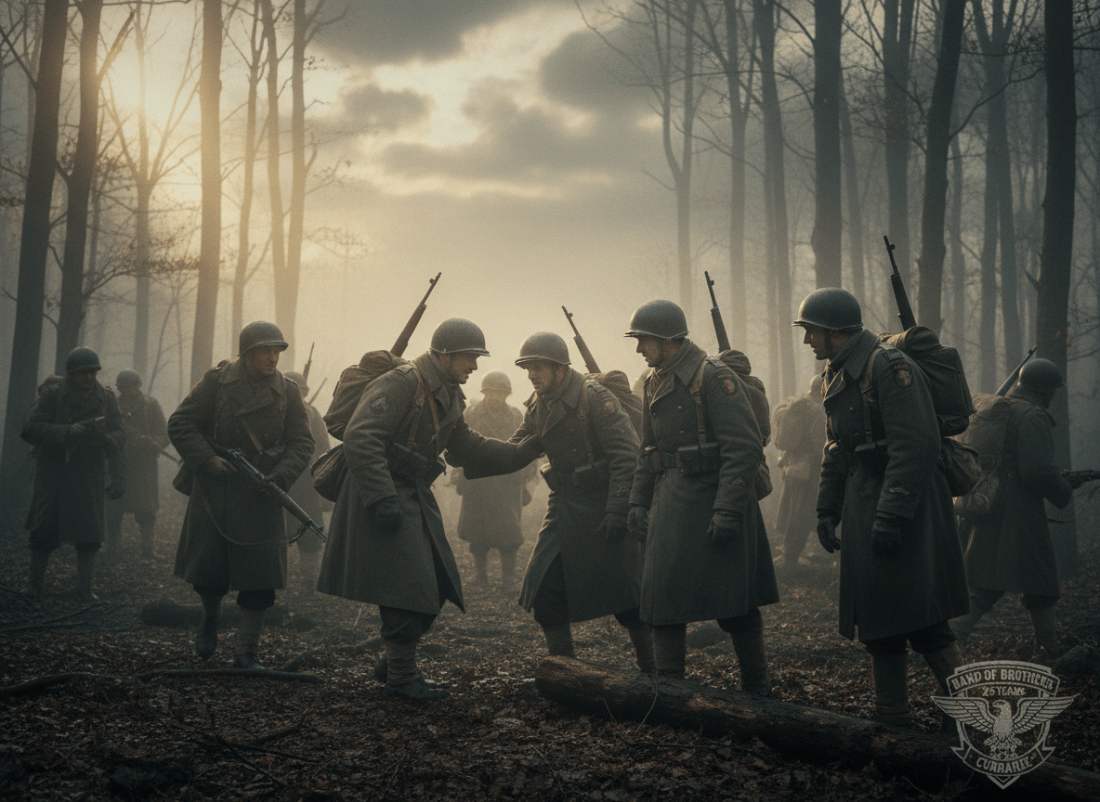
A cinematic, moody image evoking the 25th anniversary of Band of Brothers — soldiers in WWII uniforms moving through a misty European landscape, warm golden light breaking through overcast skies, a sense of brotherhood, sacrifice, and legacy. Dramatic and emotional tone, film still aesthetic.

Now for a trip down down memory lane. Anyone of my vintage will remember Band of Brothers with great war scenes and comraderie. Recently, a documentary about its impact was released.

Band of Brothers: Legacy is a 62-minute HBO documentary that premiered on HBO Max on September 9, 2026—exactly 25 years after the original miniseries debuted. Directed by former Green Beret Chase Millsap and executive-produced by Tom Hanks and Gary Goetzman through Playtone, it is a compact, affectionate tribute to the 2001 series and the real Easy Company men whose stories it preserved.

It is not a replacement for the original 10-hour epic or the 2001 companion documentary We Stand Alone Together. It is a reflection on why that work still matters after the last Easy Company veteran, Bradford Freeman, died in 2022.What the documentary actually covers – Millsap intercuts new interviews with the actors—Damian Lewis (Dick Winters), Ron Livingston (Lewis Nixon), Michael Cudlitz (Bull Randleman), David Schwimmer (Herbert Sobel), Neal McDonough (Buck Compton), James Madio, Frank John Hughes, and others—with previously unseen archival interviews of the veterans themselves, including Winters, Bill Guarnere, Carwood Lipton, Babe Heffron, and Randleman. It’s remarkable that so many of the actors are now so familiar from other shows they were on.

The film follows the original series’ arc in miniature: boot camp under retired Marine Capt. Dale Dye, the actors meeting the men they portrayed, visits to European battlefields, and the lasting personal impact of those relationships. Lewis still speaks movingly about the two days he spent with Winters. The actors describe carrying those connections for a quarter-century rather than treating the roles as just another job. Behind-the-scenes footage and practical-effects stories (exploding trees, large-scale sets) appear, but they serve the larger theme of respect and authenticity rather than becoming a standard making-of reel.

A recurring thread is timing. The original series premiered two days before 9/11. Dye and others note how it landed with a country suddenly at war again. Millsap, a veteran filmmaker, frames Easy Company’s story as standing in for millions of ordinary men who served, and he credits the series with helping later generations of service members “get it right when it mattered.” The extra veteran footage is the documentary’s greatest asset. Viewers who know the original episode-opening interviews get more of the same voices—sometimes at battle sites, sometimes expanding on brotherhood and the things they would not discuss about themselves. That material is now irreplaceable. Several reviewers called these sequences the most emotional parts of the film.

The actor interviews work because they stay specific. Hughes recalls Guarnere telling him, “I was a 19-year-old paid killer. Don’t forget that.” The cast discusses the 10-day boot camp, the difficulty of earning the veterans’ trust, and how playing these men changed them. The documentary argues that Band of Brothers captured lightning in a bottle at the last possible moment, when the men who lived it could still look the actors and cameras in the eye. That argument lands.

At just over an hour it does not overstay its welcome. It feels like a thoughtful anniversary special rather than a cash-in.

Four stars from me.
Instadocs: The Decoy Plane Review

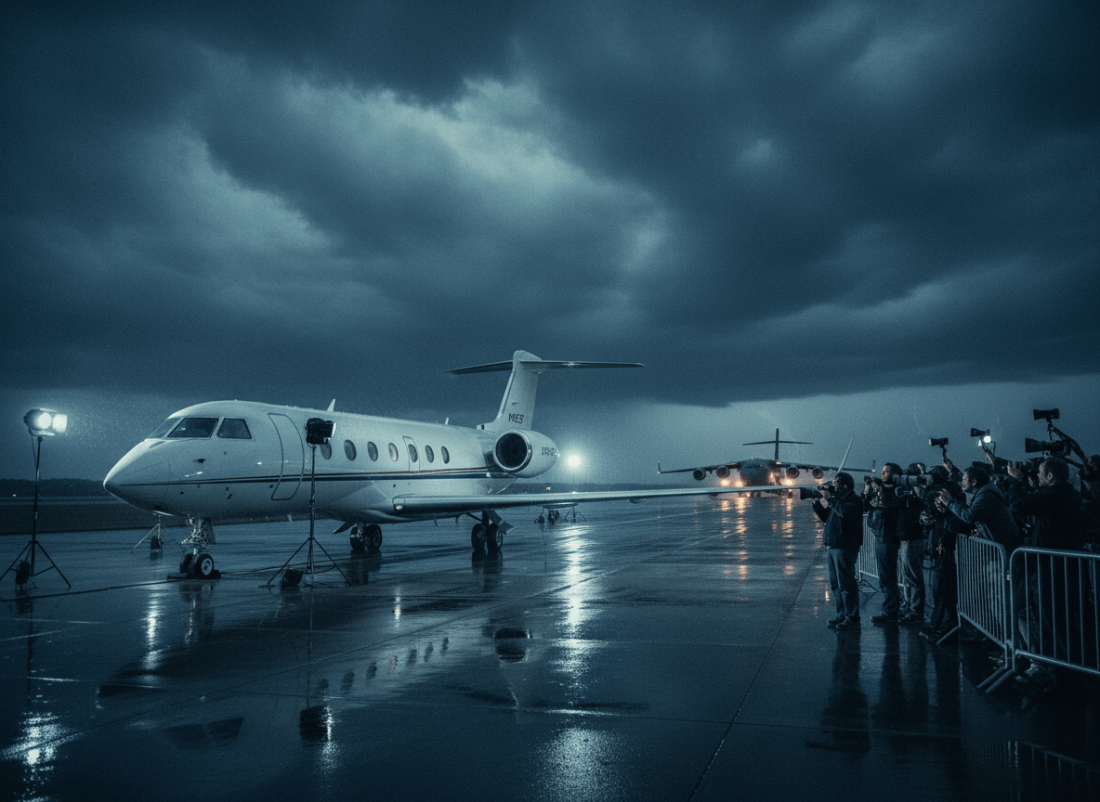
A dramatic, cinematic scene of a tarmac at night with two planes — one in the foreground bathed in spotlights (the decoy), one departing in the background under a dark stormy sky. The atmosphere is tense and shadowy, with a documentary film aesthetic. Moody blue and grey tones, slightly grainy texture evoking real-world footage. A cluster of journalists with cameras and microphones stand on the tarmac looking confused, watching the wrong plane. Political thriller documentary style.

Sometimes truth is stranger than fiction. This is a short documentary about a recent bizarre incident, where Trump abandoned journalists to their fate while he took a decoy plane to potentially save his bacon.. Instadocs: The Decoy Plane is a sharp, tightly constructed 28-minute documentary that turns a real-world security operation into a gripping reconstruction. It does exactly what the best short-form docs should: it takes a story that first broke as a Washington Post scoop and lets the people who lived it walk you through what actually happened on the tarmac in Ankara.

nThe film is strongest when it stays close to the firsthand voices. Reporters and photographers who boarded the older Air Force One and were told to pull the window shades describe the oddness in the moment and the later realization that they had been flying on a decoy. Dan Lamothe, who helped break the original story, provides useful context without turning the piece into a lecture. Former Secret Service and Air Force One crew perspectives add operational texture that most news coverage skipped. The result feels like a well-paced briefing rather than a partisan recap.

Production-wise it is clean and economical. The runtime never drags. Archival footage, tarmac video, and simple graphics make the sequence of events easy to follow: public boarding of the 747, the catering-truck transfer out of view, the C-32A departure, and the later switch-back that preserved the public appearance. It treats the Iranian threat and the Secret Service decision as the driving facts rather than editorializing them into a morality play. If you want a concise, well-sourced look at how presidential movement actually works when the threat picture changes, this Instadoc delivers. It is short, specific, and unusually good at letting the participants tell the story themselves. Worth the half hour.

And remember: The Secret Service are only there to protect the President lol.

The Beauty of Rewilding: Ireland’s Atlantic Rainforest

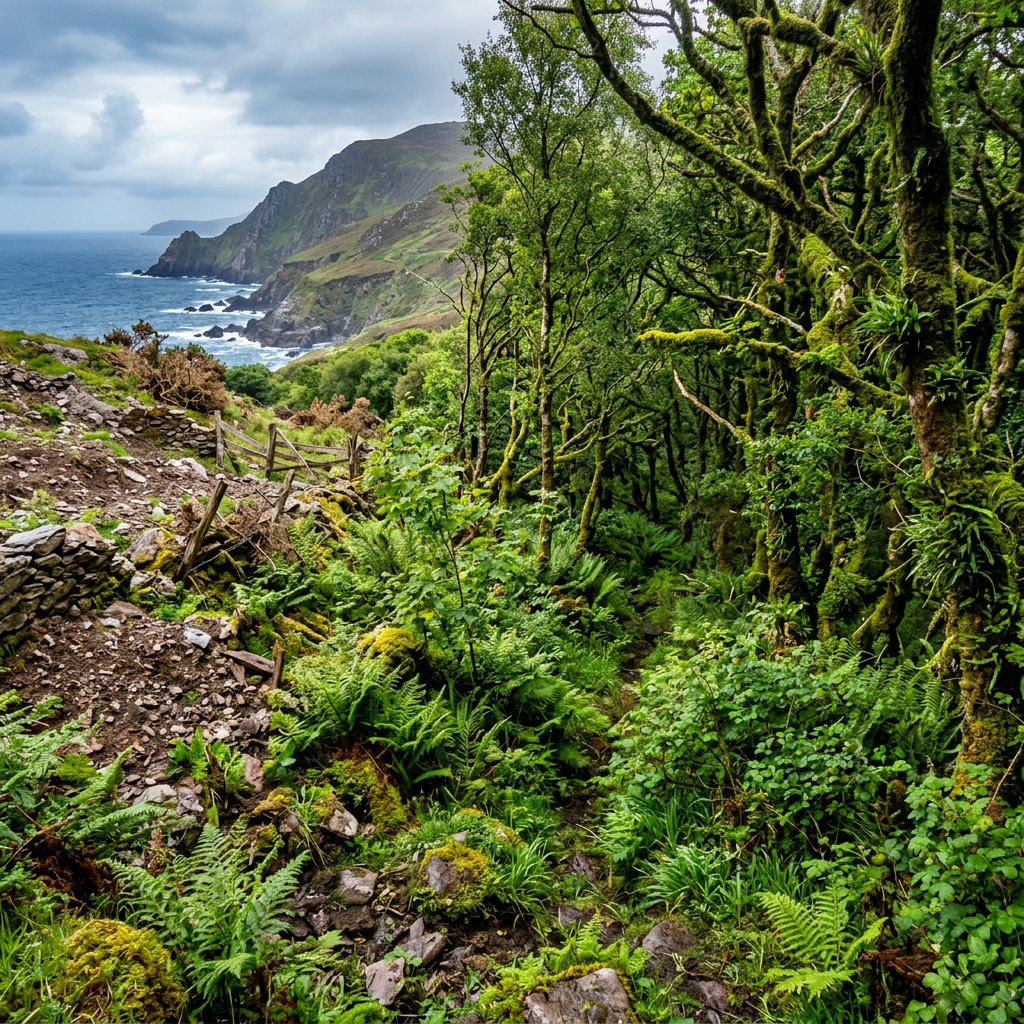
Mossy woodland trail overlooking rugged coastal cliffs and ocean

This is an interesting documentary about my home country of Ireland. A bit of background information – almost all of Ireland’s natural forests were cut down by the British. About 12% of the island of Ireland is currently forested, it was only 1% in the early 1900s. However, true native woodland only comprises 2%, and most of this is managed.

n Irish Atlantic Rainforest (directed by Gary Lennon, 2026) is a strikingly beautiful and quietly powerful environmental documentary that transforms a small corner of Ireland into something that feels almost otherworldly.The film centres on Eoghan Daltun, a Dublin-born sculptor, author, and rewilder who in 2009 bought a 73-acre farm on the Beara Peninsula in West Cork.

The land was ecologically damaged—overgrazed by deer and goats and choked with invasive species, particularly rhododendron. His approach was deliberately minimal: he fenced out the grazers, cleared the non-native plants, and then largely stepped back to let nature recover on its own.

The result is the spontaneous return of a temperate Atlantic (or Celtic) rainforest, one of Europe’s rarest and most threatened habitats, complete with moss-draped trees, dense epiphytes, ferns, fungi, and returning wildlife.Lennon’s film is at its strongest visually. Cinematographers Ross Bartley and Brian O’Leary get remarkably close to the forest floor and the living surfaces of trees and rocks. Macro shots of flapped fungi, green-eyed insects, snails, and intricate plant life make the familiar Irish woodland look exotic and alien—lush, intricate, and teeming in a way that invites comparison with more celebrated tropical forests. The seasonal changes and the sheer density of life that emerges once pressure is removed are captured with genuine wonder. These sequences are the film’s greatest asset and frequently feel transcendent.

Daltun himself is an intense, articulate presence. The documentary interweaves his personal backstory—growing up in Dublin, studying sculpture in Italy, restoring a cottage, and eventually choosing radical simplicity on the edge of the Atlantic—with his ecological observations and arguments. He makes a clear, passionate case for passive rewilding and the recovery of native woodland as both an ecological necessity and a source of joy and meaning. Brief contrasts with other landscapes (including sequences elsewhere) underline how distinctive and fragile these Irish temperate rainforests are.

At around 90 minutes, the film sustains its focus without overreaching into heavy-handed advocacy. It is more observational and immersive than didactic, allowing the recovery of the land and Daltun’s lived experience to carry the message. Viewers come away with a vivid sense of what Ireland’s lost woodlands can still become when given space, and with admiration for the patience and restraint required to achieve it.Not every viewer will envy the isolation or the deliberate rejection of modern urban comforts that Daltun has chosen, but few will fail to be impressed by the results or moved by the beauty on screen. The documentary stands as both a celebration of one successful act of ecological restoration and a gentle, hopeful invitation to reimagine our relationship with the Irish landscape.

Five stars out of five for those interested in nature.

Big Chicken: A Fast Food Conspiracy Review

Interior of a poultry farm with rows of white chickens and yellow feeders

I watched an interesting documentary yesterday. Beware, though; it might put you off your chicken for good.

Big Chicken: A Fast Food Conspiracy is an engaging, thought-provoking, and highly watchable Netflix documentary that smartly blends personal experiment, cultural insight, and industry investigation. Released in 2026 and directed by Liana Stewart (produced by Mindhouse), the film follows British comedian and BAFTA winner Mo Gilligan as he embarks on a bold 28-day challenge: eating nothing but fast-food fried chicken for breakfast, lunch, and dinner—84 meals in total—while traveling from South London to key spots across the United States. What begins as a playful, self-aware love letter to his favorite comfort food evolves into a compelling examination of the historical roots of fried chicken, the massive industrial forces behind its global popularity, and the real impacts on health, communities, the environment, and culture.

Gilligan is an inspired and charismatic host. His warmth, humor, and genuine curiosity make the material accessible and relatable rather than preachy. As a Black British comedian with a clear personal connection to chicken-shop culture, he brings authenticity and emotional honesty—openly sharing both his enthusiasm at the start and the physical and mental toll the experiment takes (weight gain, sluggishness, mood changes, and digestive issues). You can see him physically deteriorate on camera over the course of the show. This personal stake grounds the bigger themes and helps the film speak effectively to a broad audience, including younger viewers who might not otherwise seek out food-industry documentaries. It feels like a fresh, Gen-Z-friendly update to the Super Size Me formula, infused with Gilligan’s likable energy and comic timing.

The documentary covers substantial ground effectively. It traces fried chicken’s origins and cultural significance (including confronting racist stereotypes and examining marketing and appropriation), explores how modern industrial breeding prioritizes rapid growth over flavor and welfare, highlights the role of ultra-processed foods and additives, and looks at broader societal effects such as food deserts, targeted marketing in lower-income communities, labor conditions in processing, and environmental consequences of large-scale poultry farming. Journeys through places like Houston, New Orleans, Chicago, and Arkansas, along with conversations with experts, activists, and others, keep the pacing dynamic and the revelations impactful without overwhelming the narrative.

At roughly 96 minutes, the film is tightly assembled and slickly produced. It balances the gonzo personal experiment with travelogue elements and investigative threads, using Gilligan’s reactions and vulnerability to humanize statistics and systemic issues. It successfully sparks curiosity about food origins and encourages more informed choices without demanding absolute purity or lecturing viewers. Many will leave thinking differently about their next takeaway order while still appreciating the cultural joy and social role the food holds for many people. Overall, Big Chicken: A Fast Food Conspiracy succeeds as entertaining, enlightening viewing. Gilligan’s charm carries the personal story, the scope of the investigation is ambitious and relevant, and the result is a documentary that informs, challenges assumptions, and remains enjoyable throughout.

Four stars out of five from me. Not to be watched before dinner.

The Bus: Exploring France’s Football Scandal Documentary

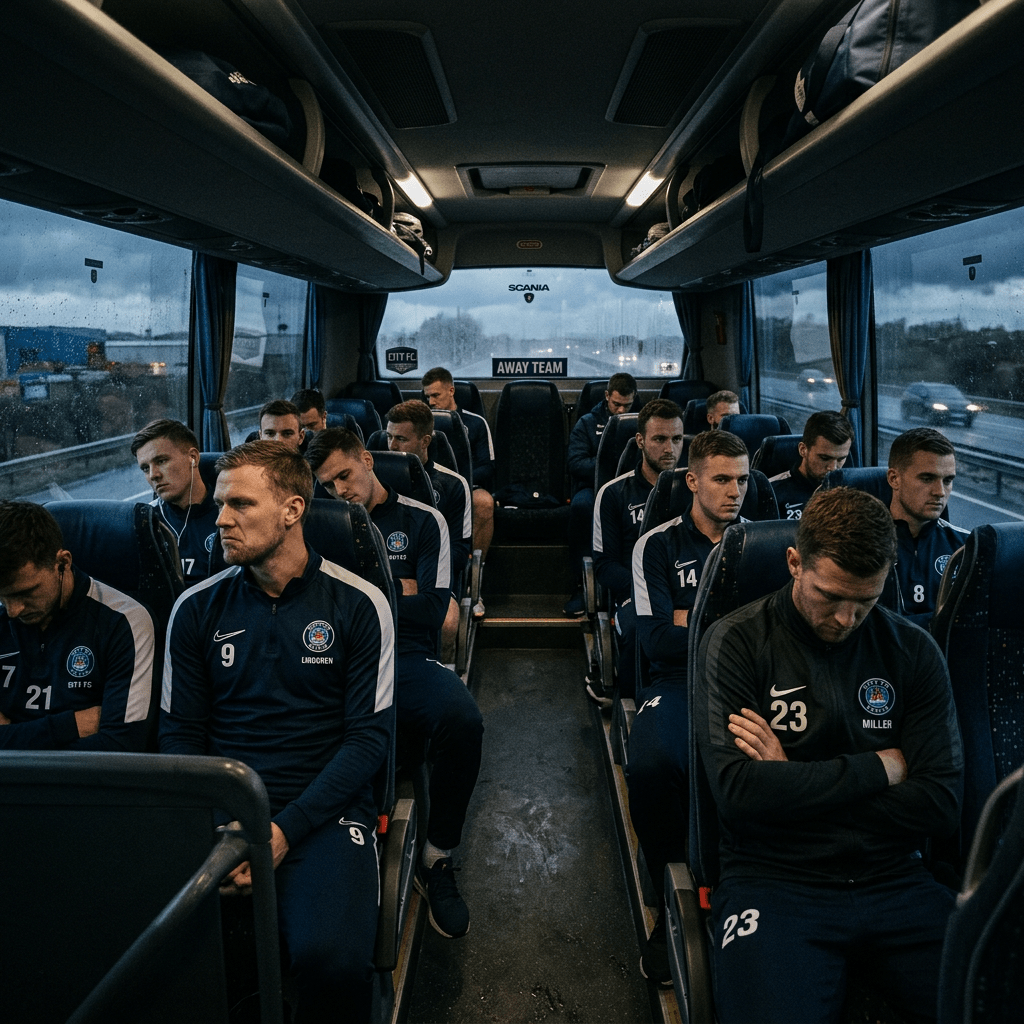
Football players in navy training gear seated on a bus marked 'Away Team' on a rainy day.

I still remember this with glee. You see France had knocked out my country, The Republic of Ireland with a very dubious Thierry Henri handball. So, feeling somewhat nostalgic, I decided to give this Netflix documentary a try.

The Bus: A French Football Mutiny is an outstanding, riveting documentary that transforms one of the most infamous scandals in modern sports history into a compelling, nuanced, and deeply human story. Released on Netflix in May 2026 and directed by Christophe Astruc and Jérôme Fritel, this 81-minute film revisits the 2010 FIFA World Cup debacle involving the French national team (Les Bleus) with fresh interviews, sharp editing, and a refreshing willingness to let participants speak for themselves.

The 2010 tournament in South Africa became a nightmare for France. After a lackluster group stage performance, tensions boiled over following a halftime clash between coach Raymond Domenech and striker Nicolas Anelka. What followed was extraordinary: players refused to train, staged a strike, and famously holed up on their team bus—refusing to leave while the world watched in disbelief. France exited early, the squad was vilified back home, and the incident exposed deep fractures I if you like slow carn team dynamics, media relations, leadership, and broader societal issues.

What makes The Bus exceptional is its structure. The directors craft it like a mystery with subtle Citizen Kane echoes—piecing together perspectives from players, coaches, officials, and journalists without forcing a single narrative. This approach feels fair and inquisitive, allowing viewers to weigh the accounts themselves.

The French Manager Domenech comes across poorly. Overly self-absorbed, there were multiple opportunities he lost to rectify matters.

The players, particularly Patrice Evra, deliver the most powerful testimony. Evra’s reflections on racism, classism, the pressure of representing a nation, and how football offered an escape are moving and insightful. William Gallas and Bacary Sagna also provide valuable context. These voices humanize a group long portrayed as overpaid prima donnas.

A must watch if you like slow burn car crashes.

Three stars out of five from me.

A Westmeath Man (Comedy)

A wooden rowing boat moored at a stone jetty on a calm, misty lake.

My dear readers, I was given the most terrible insult the other day, that I wasn’t a proper Westmeath man. Why, you may wonder? Well, I didn’t watch the Westmeath v Wexford match on TV about two weeks ago. Apparently, if I had then, maybe I could have willed Westmeath to victory with my special powers.

We’ll forget for now that I was born in Dublin, my parents grew up in Offaly, and a grandparent from Cork. Important facts when one of those counties is in with a chance of an All-Ireland.

And this grave insult came from my friend, who is known by the moniker BobDTraitor. Only on my phone, mind you. I’m not evil. How did he get such a name? Well, ladies and gentlemen, think back to that glorious day in 2004, when Westmeath won Leinster for the first and only time. Surely, you would want to celebrate with your people, not off at some random party with Dublin people. Poor life decisions, I’d say. And treachery.

What is it about Westmeath I love so much? Is it the people? The people from Kinnegad with their funny accents, those squinting windows in Delvin, or even people from Athlone, who lack souls according to the good people of Mullingar.

This is about pride of place, I reckon. I’ll be friends with people from all over the world, even from far-off places like Nigeria, Meath, Poland, and Monaghan. We’re all humans.

So maybe it’s the great wilderness in the County, you know, out there by Castlepollard. Or what we call the Great Lakes, midlands, and Irish style.

Maybe to be a Westmeath man, you have to be just like me.

And to the Westmeath football and hurling teams – I’ll try better next time.

(If you enjoyed this piece, please consider subscribing)

We are Legion (We are Bob) by Dennis E. Taylor

Hello readers, I do hope you are all in good form. The cold weather is really settling now, at least in Ireland. Let’s hope it doesn’t last too long for the sake of my sanity. On much more positive notice, I have just finished reading We are Legion (We are Bob) by Dennis E. Taylor.

This is the best sci-fi novel I’ve read in quite some time. Thoroughly original and engaging throughout, it was impossible to stop reading.

Bob is the main character or is that characters? In the current time, Bob has come to riches through the sale of his software company. One of the first things he does with his newfound wealth is sign up for a life extension company. He is an atheist, so he wants to live as long as possible. Upon his death, his head will be removed from his body in the hope that in the future with advancements in technology, he can be brought back to life.

Of course, he thinks this is something that is the far future.

But it’s not.

He dies in a car crash.

The next thing he is awakened over a hundred years from now. But, not all is as he would have hoped. He quickly realizes he no longer has a body but is now computer code. Due, to political changes, he has also lost all of his wealth and his body has been incinerated. He is now private property, belonging to the Ministry of Truth, and is what is called a replicant.

Most replicants quickly have psychotic breaks and don’t make it even with their mood qualifiers. But, Bob sees it as a chance at immortality and realizes he is in the running for an important task.

That task is integral to a Von Neumann probe seeking new habitable worlds for humans. A self-replicating probe to cover the galaxy will necessitate more copies of Bob being created. But, other probes are being sent by other political entities, and some will be armed.

Bob just about manages to take off before missiles strike. This ultimately leads to a nuclear conflict on Earth.

What follows is a tale of exploration, kinship, and what it means to be human.

This gets five stars out of five for me. Highly recommended.

Have you read this novel? What did you think? Let me know in the comments.

Don’t forget to subscribe!

Galway Girls Part 20

Once I had quenched my thirst and filled my stomach, thoughts turned to what we would do next. Sean said that he had to head back to work but that myself and Ronan should have a walk around the town.

“Yeah, that would be a good idea Paul,” Ronan interjected, “I’d like to wait another hour or two to make sure I’m under the limit.”

I nodded in agreement.

Sean headed off and we made our way through the bustling city. Galway is a mixture of the old and the new with the sound of music coming from the many buskers on the streets that are pedestrianized.

We pass over the mighty Corrib. It has a fast flow and I pause and admire its rapids. The sweet smell of the sea entered my nostrils.

But all the time my mind kept drifting back to the previous night. The thought of her on top of me, her soft breasts. Then Ronan snapped me back to reality pointing out we were close to where we’d been the previous night.

After a while, we stopped to have a coffee in one of the many coffee shops that dotted the place. They are mostly small and quaint, with smiling staff.

As Ronan went to the counter, I finally opened the note that had been left for me that morning –

Message me Leslie Xxx 087-65XXXXX

Now, what should my first message be?

Galway Girls (Part 4)

The first part of the night was to go and meet Sean in a pub called Roisin Dubh (Dark Little Rose) where we will see a comedian. It’s a ten-minute walk from the hotel, mostly along pedestrian-only streets. Buskers line the streets giving the busy streets a vibrant sense of festivities.

We’ve been to Roisin Dubh before. I want to use my brain to see if I remember the route but Ronan has much more confidence in his phone. And let’s face it, when it came to the crunch there was always going to be one winner.

The Corrib was in full majestic flow as we crossed over it. It wouldn’t want to rise any higher or it might take the bridge with it. We were getting close now and it wasn’t long till we reached the pub. There was a step up into it, so the barmen went to get a wooden ramp. Still, the footpath was narrow and it took some exquisite driving to get on the ramp to get up the step. But there was no way I would fail with the taste of vodka now so close.

There was no sign yet of Sean inside. The bar area is very small so there was nowhere for him to hide.

Galway Girls (Part 3)

The traffic grew as we approached our destination. Galway is full of quaint, narrow streets. They give it a sense of place and improve walkability. But, they can get gridlocked during busier times.

It’s now that we start looking out for a parking spot, preferably a wheelchair spot but we’ll take what we can get. We’ve done this journey a few times previously so we know where to look. Incredibly, the rain stops and a parking space is free just as we approach the hotel. I hope this is a good omen for the night.

We are staying in the Imperial Hotel, its location is ideal for someone with limited mobility, with everything of importance close by. It is also the only hotel in a central location with a lift where wheelchair users can stay. The reception area is rather plain and dull, with just non-descript chairs for people who wish to sit. We are met by a smiling receptionist who says, that she hopes we will enjoy our stay in a strong Galway accent.

We head up to our room, which is very spacious but clammy. I tell Ronan that I call dibs on the double bed. Part of me wants to lie down for a while but Ronan is anxious because we running late for the comedy gig so it’s just a quick trip to the toilet and spruce up for me.