One Mile: Chapter One Review – A Gripping Survival Thriller

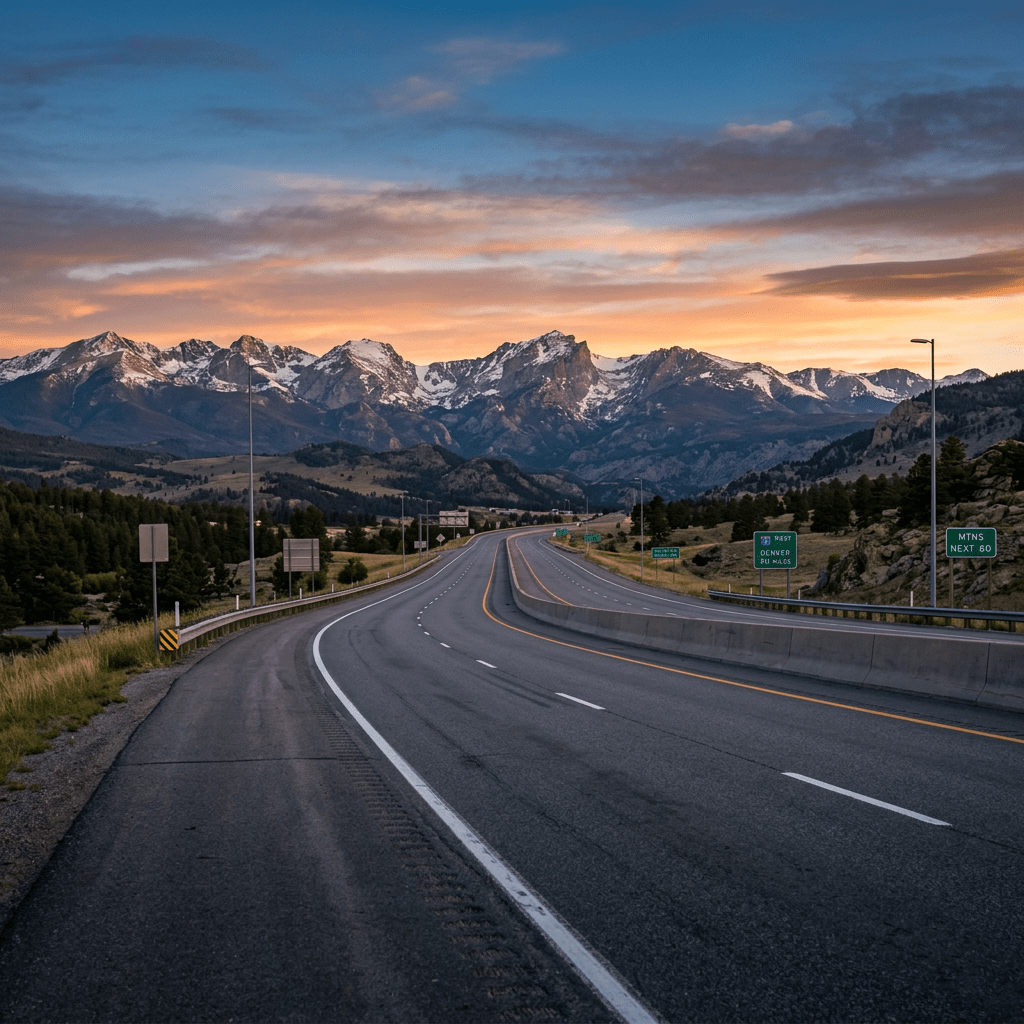
Highway winding toward snow-capped mountains at sunset

This film is currently being shown on Paramount+. I decided that I’d give it a try.

One Mile: Chapter One (2026) is a taut, gripping, and emotionally grounded survival thriller that delivers high-stakes action while never losing sight of its heart: a father’s fierce determination to protect and reconnect with his daughter. That’s the first thing that’s different about this film. It’s the first one in quite some I’ve watched with this father, daughter dynamic.

Ryan Phillippe stars as Danny Beckett, a recently retired U.S. Army Special Forces operative struggling to bridge the gap with his teenage daughter Alex (Amélie Hoeferle) after years of absence due to his military service.

What begins as an earnest college road-trip detours into nightmare territory when the pair encounters a secretive, violent off-the-grid community in the wilderness. Alex is taken, and Danny must rely on every hard-earned skill he possesses to track the kidnappers, outmaneuver them, and bring her home—alone and outnumbered.Phillippe delivers a compelling, grounded performance.

He plays Danny not as an invincible action machine but as a capable yet weary, emotionally frayed father whose protective instincts and tactical expertise feel authentic and hard-won. The early scenes establishing the strained father-daughter dynamic give the subsequent violence real weight; you root for Danny because his mission is as much about redemption and reconnection as pure survival.

Hoeferle is excellent as Alex—intelligent, resilient, and fully realized rather than a passive victim—creating genuine chemistry and tension with Phillippe that elevates the material. C. Thomas Howell brings layered intensity as Stanley Dixon, the community’s leader, portraying a man driven by his own twisted sense of protecting his people rather than cartoonish villainy.

Director Adam Davidson (known for strong television work on shows like Bosch and Deadwood) keeps the pacing lean and purposeful across the roughly 90-minute runtime. The film builds atmosphere effectively through its remote, isolating wilderness setting (shot on Vancouver Island), then shifts into sharp, practical action sequences that emphasize resourcefulness and high tension over excess spectacle. The sense of isolation and danger feels palpable, and the story balances pulse-pounding set pieces with quieter character moments that make the stakes personal.

As the first half of a two-chapter story released simultaneously, Chapter One works strongly on its own: it establishes the characters, ratchets up the conflict, and leaves you eager for the resolution without feeling incomplete or padded. It’s a satisfying, no-frills thriller in the vein of efficient modern survival-rescue films, distinguished by solid performances, a clear emotional core, and efficient storytelling.

Spoiler!

Still, the film’s ending doesn’t make much sense. He rescues her but they forget to do anything about the compound or the other women. Like even telling the police.

Four stars from me.
The Last House: A Thrilling Sci-Fi Survival Story

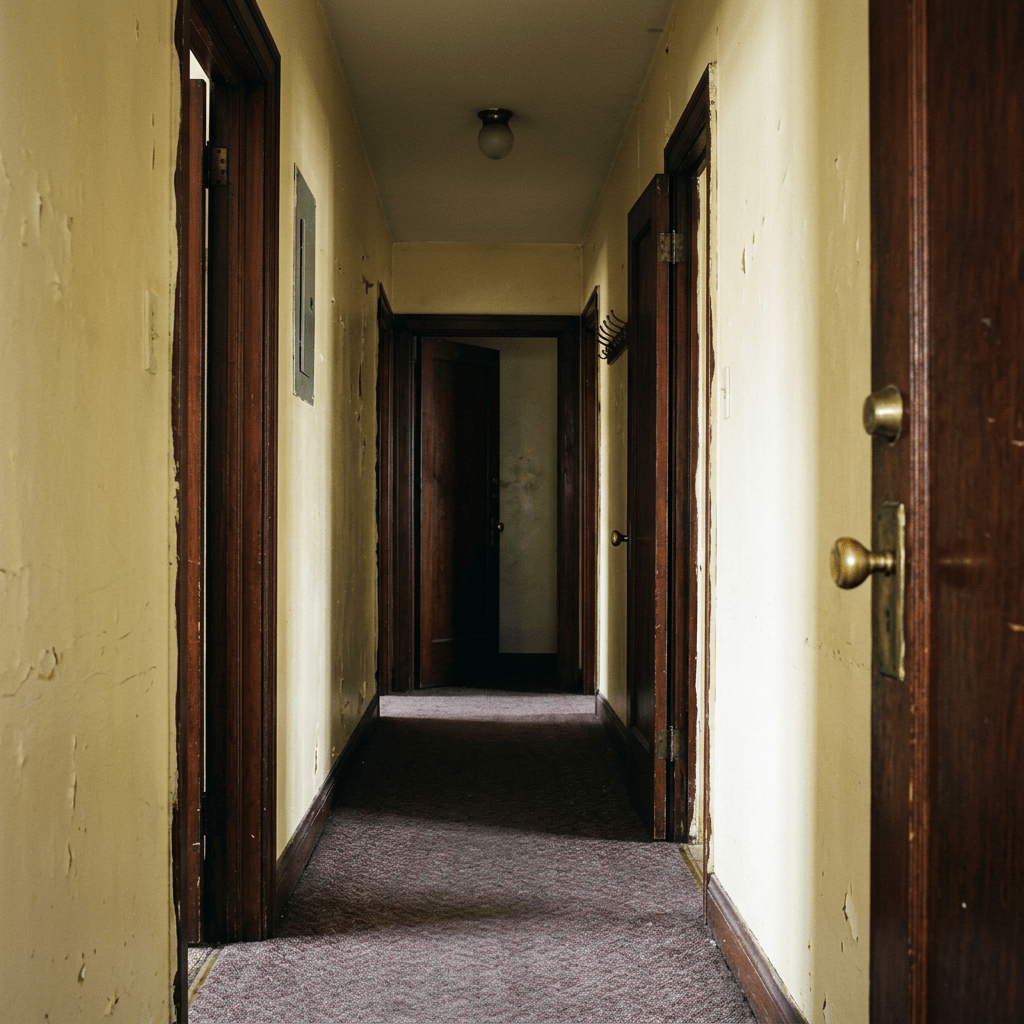
Narrow worn hallway with carpet and several open wooden doors

I do love my sci-fi so the Netflix algorithm suggested I watch this. And who am I to argue on a Saturday afternoon?

The Last House is a gripping, emotionally resonant sci-fi survival thriller that turns an ordinary suburban home into the ultimate pressure cooker of human resilience, ingenuity, and love.I wonder will anything so exciting ever happen in my own life.

Directed by Louis Leterrier with a sharp screenplay by Matthew Robinson, the film follows the Delgado family—engineer Jason (Wagner Moura), his wife Ann (Greta Lee), and their two children—as a sudden, unnatural storm seals them inside their Seattle house with no way out. A new phenomenon for preppers everywhere to worry about.

What begins as a baffling lockdown quickly evolves into a multi-year ordeal of dwindling resources, mounting isolation, and an enigmatic external threat. The premise is simple yet potent, and the movie executes it with escalating tension that feels both intimate and apocalyptic.

Greta Lee and Wagner Moura deliver outstanding, grounded performances that anchor every scene. Moura brings quiet intensity and resourceful determination as a father who channels his engineering skills into creative survival tactics, while Lee radiates strength, maternal protectiveness, and quiet vulnerability as the family’s emotional center. Their chemistry feels authentic and lived-in; watching them navigate fear, frustration, and fierce protectiveness makes the stakes feel deeply personal. The young actors portraying the children are equally impressive across the time jumps, conveying growth, adaptation, and the pure bond of family under extreme pressure. These performances elevate the material into something genuinely affecting rather than purely conceptual.

Leterrier crafts a masterfully claustrophobic atmosphere. The house itself becomes a character—initially a sanctuary, then a prison, and eventually a hard-won fortress of improvisation. Practical ingenuity (ingenious trapping methods, indoor cultivation, water collection) provides satisfying problem-solving moments that reward the characters’ resourcefulness without feeling like empty spectacle. The sound design and cinematography amplify the sense of dread and confinement: relentless rain, shadows moving outside, and the gradual transformation of familiar domestic spaces into something alien and hard-won. When the story expands in scope later, the visual effects and world-building feel purposeful and thematically rich rather than overwhelming.

Beyond the thrills, The Last House explores meaningful themes of family unity, adaptation, mercy, and humanity’s place in a changing world. It balances suspense with quieter, human moments of connection, play, and perseverance that make the characters’ endurance feel earned and hopeful. The film’s environmental and existential undertones add depth without becoming preachy, leaving viewers with a lingering sense of wonder and reflection.

At roughly 1 hour 50 minutes, the pacing sustains engagement through escalating challenges and emotional payoffs. It succeeds as both a tense chamber piece and a larger-scale speculative adventure, offering the kind of smart, character-driven entertainment that stands out on Netflix. Strong direction, exceptional lead performances, inventive survival details, and a premise that sticks with you long after the credits make The Last House a highly rewarding watch—one that celebrates the extraordinary strength found in ordinary people when the world outside changes forever. Highly recommended for fans of thoughtful sci-fi thrillers and powerful family dramas. Four stars out of five from me.

Apex (2026): A Must-Watch Survival Thriller on Netflix

Sunset over rocky desert terrain with scattered vegetation and distant mountain range under colorful sky

Hello readers, I was switching between streaming services last night when I came across this film. I thought it was going to be about a giant crocodile. Fortunately, I was wrong.

Apex (2026) is a thrilling, pulse-pounding survival adventure that delivers exactly what it promises—and then some. Directed by Baltasar Kormákur with a lean 95-minute runtime, this Netflix original stands out as one of the platform’s strongest recent action-thrillers, blending breathtaking cinematography, committed performances, and white-knuckle tension into a gripping cat-and-mouse tale set against the raw beauty (and brutality) of the Australian wilderness.

The film follows Sasha (Charlize Theron), an extreme sports enthusiast and adrenaline junkie grieving a personal loss, who embarks on a high-stakes adventure with her partner Tommy (Eric Bana). What begins as a daring climb on a sheer rock face quickly spirals into a nightmare when tragedy strikes and a psychotic predator—brilliantly played by Taron Egerton—enters the fray. The story smartly draws inspiration from classics like Deliverance, The River Wild, and Cliffhanger, while carving its own path with creative twists on the “hunter becomes hunted” trope.

Kormákur’s direction is masterful here. The opening sequence alone is a showstopper: a couple waking up in a tent literally affixed to a vertical cliff, with nothing but gravity and stunning vistas below. The film maintains this high-octane energy throughout, balancing visceral action with quieter moments of resilience and resourcefulness. It’s briskly paced, never overstaying its welcome, and feels like a “real movie” rather than typical streaming filler—slick, methodically gripping, and refreshingly focused on thrills over unnecessary exposition.

Charlize Theron gives a breathtaking performance. Her character displays just the right amount of weakness and strength at the right time.

The Australian landscapes are a character in their own right. Cinematography captures both the majestic allure and unforgiving danger of rugged peaks, raging rivers, and dense wilderness. Nature feels alive—beautiful yet deadly—and the practical stunts combined with convincing effects create immersive, teeth-grinding tension.

Five stars out of five from me. A must watch.