The Magic of Brazil’s 1994 World Cup Team

Soccer match at night with players in red and blue jerseys, illuminated by stadium lights

There was a time when you felt excitement and wonder as a Brazilian team took to the field. They played with flair and imagination that other countries could rarely match.

This 1h 26m Netflix documentary, called USA 94: Brazil’s Return to Glory and directed by Luís Ara, brilliantly captures Brazil’s dramatic journey to their fourth World Cup title in 1994—the moment A Seleção ended a 24-year drought and reclaimed their place among football’s elite.

I remember from the time that this Brazil team was viewed as much more defensive than those of the past. However, they still had that extra bit of magic up front to set them apart.

What sets this film apart is its intimate, insider perspective. Rather than recycling familiar match highlights, Ara weaves in never-before-seen handheld camcorder footage shot by goalkeeper Gilmar Rinaldi and right-back Jorginho during the tournament. These raw, unfiltered clips—showing bus rides, locker-room banter, hotel corridors, and quiet moments of young stars like Romário, Bebeto, Dunga, Branco, Raí, Zinho, and Viola—feel like stepping back in time. You see the players not as legends, but as determined men carrying enormous weight on their shoulders.

The present-day interviews are gold. Captain Dunga’s leadership shines through with quiet intensity, while Romário and Bebeto’s chemistry and reflections add warmth and humor. The film doesn’t shy away from the struggles: the skepticism from fans and media after a poor 1990 World Cup, a tense qualification campaign, and the heavy national grief following the deaths of rising star Dener and national hero Ayrton Senna earlier that year. The dedication of the victory to Senna provides some of the documentary’s most emotional, lump-in-the-throat moments.

The on-pitch drama builds beautifully. From the gritty Round of 16 clash against the USA on Independence Day (which players still call one of their toughest tests), through the knockout stages, to the tense, goalless final against Italy decided by penalties at the Rose Bowl. Italian perspectives from Gianluca Pagliuca and Demetrio Albertini add balance and respect, highlighting the mutual admiration between the sides. The penalty shootout sequence, with Baggio’s missed kick, is edited with genuine suspense.

sually and narratively, the film pulses with energy. The mix of archival footage, player-shot videos, and crisp modern interviews creates an engaging rhythm that feels fresh and personal. It celebrates not just sporting glory but cultural redemption—a nation in mourning finding joy and unity through football.

Well worth a watch. Four stars from me.

Liverpool’s Istanbul: A Miracle Documentary Review

Atletico Madrid players celebrating with fans after 3-3 draw vs Liverpool

Untold UK: Liverpool’s Miracle of Istanbul is not just another documentary about that legendary 2005 Champions League final—it’s the one fans have been waiting for. Streaming on Netflix, this 78-minute film captures the drama, emotion, and sheer improbability of Liverpool’s comeback from 3-0 down at half-time against AC Milan with a freshness and intimacy that makes it feel brand new, even two decades later.

I still remember the night unfolding as a Liverpool supporter. The horror, then the very unexpected elation. I was the only person in the house so I could shout as loud as I wanted.

From the opening minutes, director Matt Rudge sets the stage perfectly. The 2004/05 season was turbulent: a new manager in Rafael Benítez, key departures (including the looming exit of Michael Owen), squad uncertainty, and a rocky path through the competition.

Jamie Carragher gives an intriguing insight into what is happening. He is at an England and newly appointed Benitez arrives to have a meeting with his three star Liverpool players – Owen, Gerrard and Owens. Carragher expects him to give them a warm embrace and his plans for the future of the team. Instead, he concentrates on where they need to improve as individuals – Owen leaves the club. Gerrard thinks about it. It takes time for them to warm to Benitez, but things gradually click.

The film doesn’t rush to the final. It builds the context beautifully—Liverpool’s struggles, the tactical masterclass that got them to Istanbul, and the underdog spirit that defined the club. Archive footage is crisp, evocative, and plentiful, blending seamlessly with modern interviews that feel raw and reflective.

The real magic lies in the voices. Steven Gerrard, Jamie Carragher, Xabi Alonso, and Rafa Benítez (among others) speak with the hindsight of champions but the passion of men who still can’t quite believe what happened. Gerrard’s leadership and that iconic half-time team talk, Carragher’s never-say-die attitude, Alonso’s cool penalty, and Benítez’s tactical tweaks come alive in ways that go beyond the highlights we’ve all seen a thousand times. You feel the tension in the dressing room, the roar of the Liverpool fans in the stands, and the disbelief as goals from Gerrard, Šmicer, and Alonso turned the game on its head before the dramatic penalty shootout.

Five stars out of five from me. A must watch for all Liverpool supporters, or people who love the beautiful game.

Untold UK: Liverpool’s Epic Champions League Comeback

Soccer player in red jersey with number 7 walking on a wet, muddy soccer field at night in the rain

As an ardent Liverpool supporter, this day will live long in my memory. I remember waiting for the game to start. Little did I realize what I was about to witness.

Untold UK: Liverpool’s Miracle of Istanbul is an outstanding, emotionally charged documentary that captures one of the greatest nights in football history with passion, depth, and authenticity. Released in 2026 as part of Netflix’s Untold UK series, this film is a must-watch for any football fan—especially Liverpool supporters—but its appeal stretches far beyond Anfield.

The documentary masterfully revisits the entire 2004/05 season, culminating in the unforgettable UEFA Champions League final against AC Milan in Istanbul. At half-time, Liverpool trailed 3-0 against a star-studded Milan side widely regarded as one of the best club teams ever assembled. What followed remains nothing short of miraculous: a second-half comeback for the ages, capped by a dramatic penalty shootout victory.

Director Matt Rudge does a brilliant job balancing the big moments with intimate, personal stories. The film doesn’t just replay the goals (though the archive footage is superbly edited and will have you on the edge of your seat all over again). It digs into the context: a transitional squad, a new manager in Rafael Benítez, a departing striker, and a club fighting to re-establish itself on the European stag

Standout Elements

  • The Interviews: Steven Gerrard, Jamie Carragher, Rafael Benítez, Xabi Alonso, and other key figures speak with honesty and emotion. Their reflections, now delivered with the wisdom of experience two decades later, add incredible weight. Gerrard’s leadership, Carragher’s raw passion, and Benítez’s tactical genius come through vividly. You feel their nerves, belief, and eventual euphoria.
  • Atmosphere and Pacing: The build-up to the final is gripping. The half-time team talk, the dressing room tension, and the Anfield roar in the stands are recreated so effectively that even non-fans will be swept up in the drama.
  • Themes of Resilience and Belief: This isn’t just a football documentary—it’s a story about never giving up. The “You’ll Never Walk Alone” spirit shines through every frame, making it genuinely inspiring.

My favorite part is Gerrard recounting how the players came back onto the field at half time and heard “You’ll Never Walk Alone” coming from the fans. It drove them on, and showed what’s special about the club.

Five stars out of five from me.

Come on Liverpool!

The Bus: Exploring France’s Football Scandal Documentary

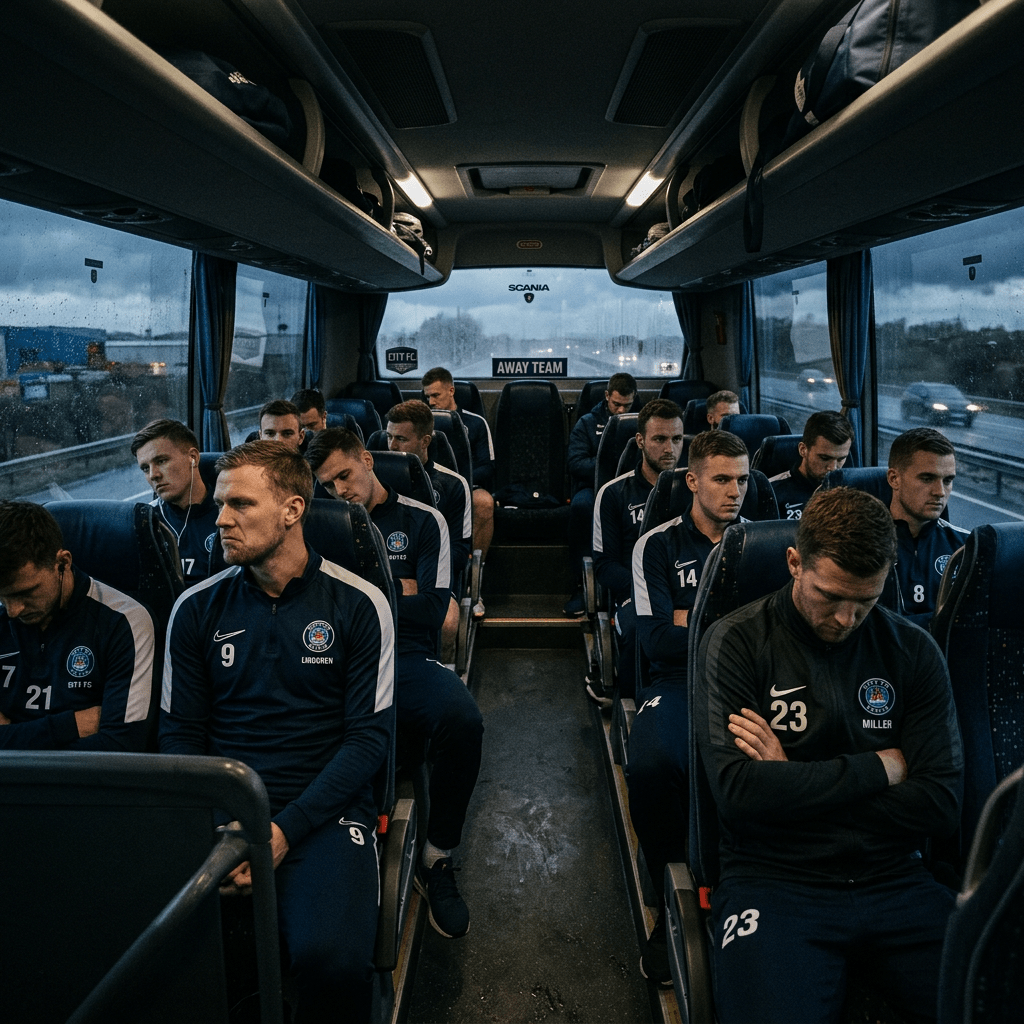
Football players in navy training gear seated on a bus marked 'Away Team' on a rainy day.

I still remember this with glee. You see France had knocked out my country, The Republic of Ireland with a very dubious Thierry Henri handball. So, feeling somewhat nostalgic, I decided to give this Netflix documentary a try.

The Bus: A French Football Mutiny is an outstanding, riveting documentary that transforms one of the most infamous scandals in modern sports history into a compelling, nuanced, and deeply human story. Released on Netflix in May 2026 and directed by Christophe Astruc and Jérôme Fritel, this 81-minute film revisits the 2010 FIFA World Cup debacle involving the French national team (Les Bleus) with fresh interviews, sharp editing, and a refreshing willingness to let participants speak for themselves.

The 2010 tournament in South Africa became a nightmare for France. After a lackluster group stage performance, tensions boiled over following a halftime clash between coach Raymond Domenech and striker Nicolas Anelka. What followed was extraordinary: players refused to train, staged a strike, and famously holed up on their team bus—refusing to leave while the world watched in disbelief. France exited early, the squad was vilified back home, and the incident exposed deep fractures I if you like slow carn team dynamics, media relations, leadership, and broader societal issues.

What makes The Bus exceptional is its structure. The directors craft it like a mystery with subtle Citizen Kane echoes—piecing together perspectives from players, coaches, officials, and journalists without forcing a single narrative. This approach feels fair and inquisitive, allowing viewers to weigh the accounts themselves.

The French Manager Domenech comes across poorly. Overly self-absorbed, there were multiple opportunities he lost to rectify matters.

The players, particularly Patrice Evra, deliver the most powerful testimony. Evra’s reflections on racism, classism, the pressure of representing a nation, and how football offered an escape are moving and insightful. William Gallas and Bacary Sagna also provide valuable context. These voices humanize a group long portrayed as overpaid prima donnas.

A must watch if you like slow burn car crashes.

Three stars out of five from me.

Magnus Carlsen’s Dramatic Face-off: A Netflix Review

Chess pieces on a board with a tornado and lightning storm in the background

My dear readers, as you may all have gathered by now, I love Chess. So when I saw Chess Mates on Netflix, I immediately watched.

It revolves around Magnus Carlsen, the undisputed greatest chess player of his generation, facing off against Hans Niemann, a brash young American talent who rose through online chess during the pandemic boom. What starts as a dramatic over-the-board victory quickly spirals into one of the most bizarre and talked-about controversies in modern sports history.

Magnus Carlson is convinced that the young Hans cheated. The first question that arises is how. They search for devices before each match.

It deals with the Carlsen-Niemann scandal with such intelligence, balance, and cinematic flair that it feels more like a high-stakes thriller than a standard sports doc. From the very first minutes, the film hooks you. It masterfully sets the stage:

The production quality is outstanding. Netflix spared no expense with crisp archival footage, sharp interviews, and smooth pacing that keeps the nearly 75-minute runtime flying by.

The directors weave together player interviews, expert analysis from grandmasters, journalists, and even some of the wild online speculation (yes, including the infamous “anal beads” rumors) without ever feeling exploitative. They let the story breathe while providing real context about the pressures of elite chess, the explosion of online play, and the challenges of proving (or disproving) cheating in a game where engines are stronger than any human.

I was particularly impressed by how even-handed the documentary feels. It gives both sides a voice — Carlsen’s deep frustration and skepticism, Niemann’s defiant personality and claims, and the broader chess community’s divided reactions. No cheap villain-making here; instead, it explores the human elements: ego, genius, paranoia, ambition, and the blurry line between intuition and suspicion at the highest levels.

The talking heads are excellent — thoughtful, articulate, and sometimes refreshingly candid. The way the film builds tension around key games, analyzes critical moments without drowning non-chess players in notation, and examines the aftermath (including the lawsuit and lingering bad blood) is superb. Even if you only have a passing interest in chess, the universal themes of rivalry, trust, and scandal make it incredibly accessible and entertaining.

Overall, I was more inclined to agree with Niemann. Carlson comes across as very smug to me. The fact that Niemann cheated online when he was 16, 17 hardly proves much. Lots of people cheat at that age I’m sure. At leasr he wasn’t on drugs, right.

This gets four out of five stars from me.

The Rise of Judit Polgár: Insights from ‘Queen of Chess’

My dear readers, anybody who knows me for real knows how much I love chess. And yes, it is a sport. Everyday, I go to Chess.com and make a few moves. So, I immediately felt upbeat when there was a chess documentary to watch.

Queen of Chess is a 2026 documentary film that explores the life and career of Hungarian chess grandmaster Judit Polgár. It focuses on her father’s efforts to train her and her two sisters to become chess grandmasters, and on the saga of her multiple and intense matches against the then-formidable world champion Garry Kasparov. It was directed by Rory Kennedy.

It is a captivating and inspiring documentary that transcends the world of competitive chess to tell a deeply human story about ambition, resilience, and the pursuit of excellence. From its opening moments, the film draws viewers into the intellectual intensity and emotional stakes of a game often misunderstood as purely cerebral, revealing instead a landscape rich with drama, creativity, and personal sacrifice.

One of the documentary’s greatest strengths is its storytelling. Rather than focusing solely on wins, rankings, and tournaments, it explores the protagonist’s journey with nuance and empathy. We see not just a brilliant strategist at the board, but a person navigating pressure, expectations, and identity in a field historically dominated by men. The film deftly balances moments of triumph with vulnerability, making the narrative both powerful and relatable.

A drawback for chess lovers is that it doesn’t go into the matches in detail. It does reference what openings are played, the fact that Kasparov almost always played the Sicilian, for instance.

The documentary gives a broad perspective. It contextualizes Judit Polgár’s achievements within the cultural and social realities of the chess world, touching on themes of gender, representation, and the cost of greatness. These elements elevate the film beyond a sports documentary, transforming it into a thoughtful reflection on what it means to challenge boundaries and redefine what is possible.

Four stars out of five from me.