Distant Love (Part 65)

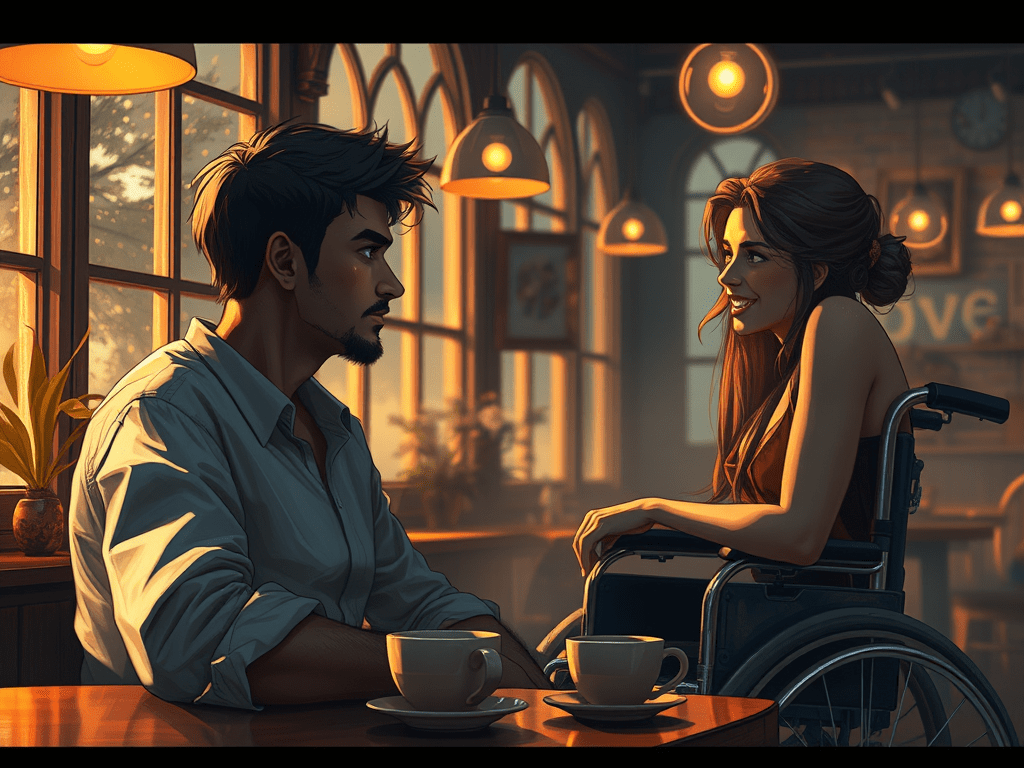
Derek’s muscles clench. He looks around the quaint coffee shop to make sure nobody is watching him. “What in the lunar happened. Like seriously, this couldn’t possibly have been part of the plan?”

For the first time, Derek sees that Diane is nervous. Her hands shake as she struggles to lift a coffee, her eyes averting his.

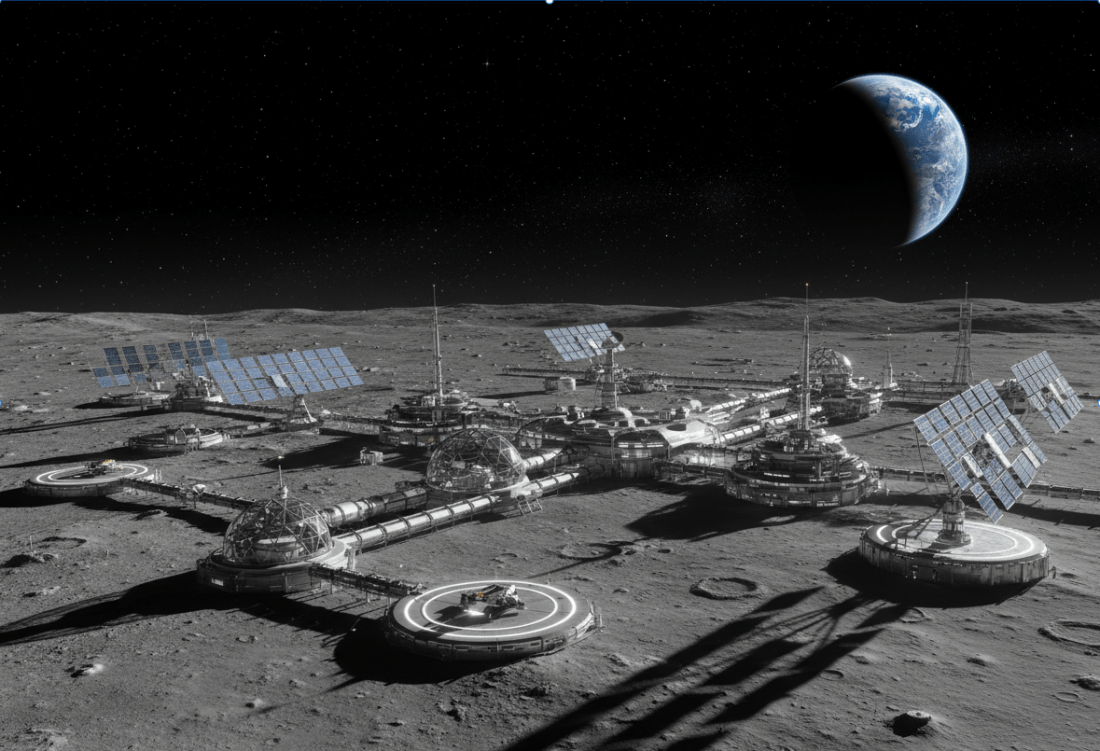
They had arranged to meet just over an hour ago. Maeve had been arrested hours earlier after the crash on the lunar surface.

“It wasn’t supposed to happen like that. We didn’t think that the flare would damage the ship to that extent; it should have been retired decades ago, obviously.”

Derek’s face was becoming a deep red. “You could have killed them all.”

They both quieten as a robotic server passes.

Derek scratches his hand. “This is such a mess up. It really is. And what now? What happens to Maeve?”

For the first time, their eyes meet before Diane continues. “She is not being forthcoming, claiming that she knows nothing. Her mother will flinch to save her, but we need more.”

“Perhaps, she doesn’t know anything? Have your people thought of that?”

“Of course she does. Don’t be an idiot. I don’t think she’ll be forthcoming here, though. That’s where you come in.”

Jurassic World Rebirth: Stunning Visuals and Engaging Characters

My dear readers, I have something quite painful to admit. I’m old enough to remember seeing the original Jurassic World, way back in 1993. It was different from anything I’ve seen before, and the memory stayed with me. So, when I saw the latest Jurassic film was out, I immediately recorded it to watch today.

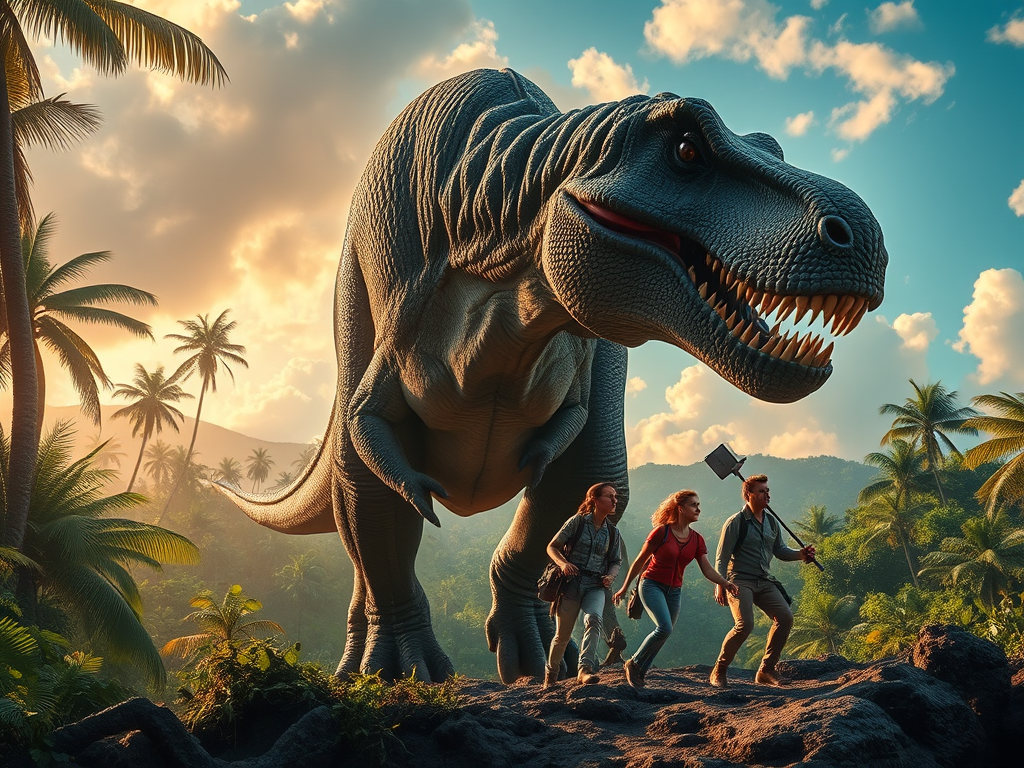
Jurassic World Rebirth is a 2025 American science fiction action film directed by Gareth Edwards and written by David Koepp. It is the fourth Jurassic World film, as well as the seventh installment overall in the Jurassic Park franchise. The film features Scarlett Johansson, Mahershala Ali, Jonathan Bailey, Rupert Friend, Manuel Garcia-Rulfo, and Ed Skrein.

In Jurassic World Rebirth, the world’s de-extinct dinosaurs live around the equator, which provides the last viable climate for them to survive. The reasons given for this is modern diseases, needing a warm climate, and there being more oxygen to survive. All of which is pseudoscience, to create the world they want for the film. Any disease wiping them out would have to be across completely different species, very unlikely. There is not appreciable more oxygen at the equator, and even there, the temperature would be cooler than the Jurassic. But I digress.

A team travels to a former island research facility where three specific gigantic species of dinosaurs reside, to extract samples that are vital for a heart disease treatment. The team also rescues a shipwrecked family, and both groups struggle to survive after becoming stranded on the island.

Visually, the film is nothing short of spectacular. The cinematography captures both the majesty and terror of these prehistoric giants with stunning clarity. Lush landscapes, sweeping aerial shots, and intimate ground-level chases create a dynamic sense of scale. The dinosaurs themselves have never looked better — each creature is rendered with remarkable detail and personality. Whether it’s a tense standoff in a dense forest or a pulse-pounding urban pursuit, every action sequence is crafted with precision and restraint, making the danger feel real and immediate.

What truly elevates Jurassic World Rebirth above previous iterations is its character work. The ensemble cast delivers grounded, emotionally engaging performances that give weight to the spectacle. The protagonists feel layered and human, grappling with responsibility, fear, and hope in ways that resonate beyond the screen. Their arcs intertwine seamlessly with the film’s larger themes about scientific ambition, ecological balance, and second chances.

The cast is a major upgrade. Scarlett Johansson brings sharp intelligence and physicality to Zora, making her a compelling, resourceful lead who carries the action without ever feeling like a Pratt stand-in. Mahershala Ali as Duncan Kincaid provides gravitas and quiet strength—his chemistry with Johansson grounds the team dynamic beautifully. Jonathan Bailey (fresh off Wicked and Bridgerton) shines as paleontologist Dr. Henry Loomis, injecting warmth, wit, and nerdy enthusiasm that reminds us why we fell in love with these stories in the first place. The supporting players, including Rupert Friend as a slick Big Pharma rep and Manuel Garcia-Rulfo as a shipwrecked civilian dad, add layers of conflict and humanity without ever slowing the pace.

The film gets five stars out of five. Relive your childhood.

Wheelchair Wars (ii)

There were men and women in wheelchairs, whichever way she looked. Their wheelchairs were armed, though with all manners of swords, hammers, and knives.

“Audrey” reverberated through the hall. It was Oreus, sitting imperiously in a battlechair, with two muscle-bound men at each side. She goes towards him, her heart throbbing.

“Yes, ssirr.”

He looked at her with contempt. “You must speak with conviction if you want to be a warrior. Demand respect.”

“Yes, sir,” she replied, her tone raised.

“Better.” He looked her up and down. “You have good control of your chair. Spatial awareness is as important as savagery. Without either, there is little hope of you lasting long.”

He scrunched his face. “Your next opponent is going to be formidable. I watched as his last opponent pleaded for his life. The crowd laughed.”

Oreus stared at Audrey, but she didn’t flinch.

She has the fire.

“Follow me.”

Oreus drives his chair to a narrow side tunnel, then down a long, downward ramp, using his jaw, with his goons and Audrey following closely behind. The din of chatter dissipates behind them.

They enter a large, cool chamber filled with rows of battlechairs of various makes, shapes, and sizes. Oreus led them to the back of the room. “This is the Falcon X.”

Audrey’s face lit up. “Is it as good as they say?”

Oreus smiled. “That’s what I want you to tell me.”

Wheelchair Wars (i)

Oh my Emperor, please let me suffer and die in your name – A nun’s prayer from The Order of Deliverance

The Emperor is our God; may we suffer greatly for our salvation – A nun from the Order of Retribution

Our Emperor, who doth rule from Earth,

Hallow be thy name,

Thy Empire conquer all,

What is done on Earth pervades the Universe

Give us your spirit and courage,

Forgive us any trespass

And deliver us to your Service

The chanting reverberated through Audrey’s body. Her two surviving roommates were on their knees on each side of her, and her wheelchair. In front of them, holding a wooden triangle, in her habit was Sister Nora. A tall woman with an aquine face, she towered over them. Her face is stern. The chanting has been going on for nearly half an hour in the small prayer room.

“That’s enough now, girls. You can go back to your room.” Sister Nora spoke in an authoritative tone, devoid of any love or intimacy.

The two girls on either side of Audrey rose, their faces twisted in pain from their stiff knees.

Audrey struggled to reverse and turn her manual wheelchair in the small space between two aisles of pews. One of the girls begins to push her and whispers into her ear. “I’ll let you take it easy, since it’s your last night with us. Ya lucky bitch.” Audrey looked back at her friend, Grainne, with a small smile. The other girl was Mary.

The few minutes it took to reach the dormitory down narrow, dark corridors were spent in silence.

Their dormitory was large with enough space for thirty girls. But there were only the three of them, and they clustered near the door. A pang shot through Audrey when she thought of all those that were missing. Disease had taken many, batterings from the sisters took some more. The others were sold to slave in the brothels.

Audrey’s movements were slower than those of others. It took longer for her to remove her purple uniform. That, and she couldn’t walk.

After lifting up her footplates and parking beside the bed, she used her hands to propel herself onto it.

This was a time to sleep, and the lights would switch off in a few minutes. But that rarely happened. The darkness was the only time they had when they could be sure they were not being watched.

Grainne was the first to speak. “Going to miss you Audrey.”

“Yeah, me too,” Mary whispered.

Tears rolled down Audrey’s face. “Yeah, me too. And I hate the thought of leaving you here.”

“I doubt we’ll be here much longer,” Grainne replied. “One of the sisters told we’re being sold to Richies in a few days. I hate the thought of having to please all those old, smelly men. I’d rather have an opportunity like you, even if it risked death.”

“I don’t know if I could be as brave as Audrey,” Mary murmured, “You have already had so many great victories. And now tomorrow, you get to leave this place. The Na Fianna compound has to be better. At least one of us has a chance.”

Then there was silence.

When Audrey woke in the morning, they were gone. Instead, Sister Ita stood at the side of the bed. A round woman with piercing brown eyes. “Come on, get dressed. I’m to bring you to the Na Fianna compound. Give me a shout when you are ready.” With that, she turned and went to wait outside.

Audrey grimaced. Sister Ita was the last person she wanted to spend her day with. She was renowned for her vicious nature and taste for some of the younger girls. She tried to put such thoughts in the back of her mind.

As they left the convent, they paused in front of the large metallic triangle hanging from the ceiling. “To the eternal power of the Emperor,” they said in unison.

Outside the central door, they were immediately hit with the smell. A foul mixture of sweat and excrement. The thoroughfare was crowded with children in rags. “Why doesn’t the Emperor just annihilate this scum?” Audrey knew that the Sister wasn’t expecting a response.

The thoroughfare was a large area with a high ceiling. But the rest of the journey was down narrow passageways with poor lighting. Some of the living spaces they passed didn’t even have front doors. Audrey could see into the little hut rooms that passed as their abodes.

It took two hours to reach the Na Fianna compound. Audrey smiled with glee every time the Sister moaned about having to push her creaky wheelchair and her meagre belongings.

Serves the bitch right after all she has done.

Oreus was waiting for them as they entered the bright and clean compound. The Sister gasped at the limbless man in the powerful, armed wheelchair. Audey had met him previously and said a warm hello.

Oreus ignored the Sister as if she were not there. He ordered one of his men to lift Audrey into an electric wheelchair.

“Now, you can come and go as you please, Audrey. Never again will you have to rely on a walker for movement,” Oreus voice boomed, “now follow me.”

Audrey looked around to see that the hated Sister was gone before pushing the joystick to follow Oreus. There were others there with all different manners of shapes, sizes, and malformations. She hoped to get to know many of them better in time.

“This is your quarters. Battle practice in an hour or so. See you again then.You should take every moment here very seriously. Your life depends on it.”

The room was more spacious than she had anticipated. There was a single bed with white sheets and a pillow. There were no stains like back at the convent. There was even a drawer for her clothes. There were some blotches on the green wall, but that wouldn’t bother her.

An hour later, she had unpacked and gone to the great hall for training.

Arnold Schwarzenegger: From Bodybuilder to Hollywood Icon

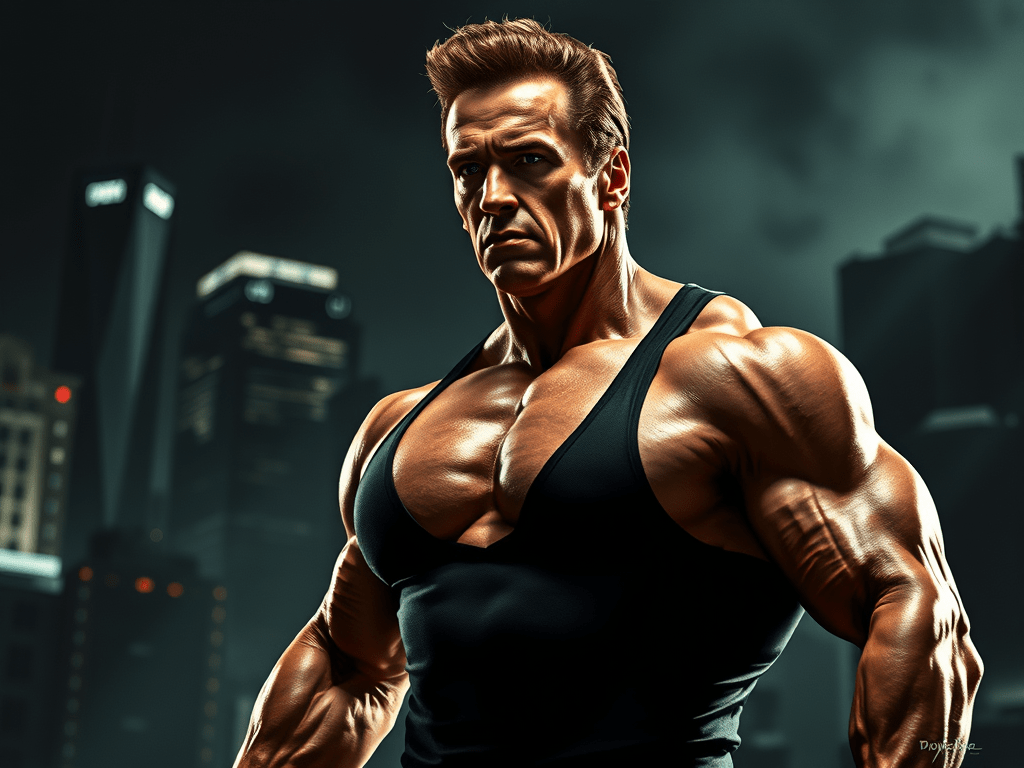
Arnold Schwarzenegger has built one of the most iconic and influential acting careers in modern cinema—transforming from a bodybuilding champion with a thick Austrian accent into one of Hollywood’s most bankable and recognizable stars. His journey is not just impressive; it’s genuinely inspiring.

The first time I saw him was in my granny’s house. It was The Terminator, and despite my protestations, I was brought off to bed. To have nightmares, as it turned out, even after only watching it for a few minutes. It set my imagination alight. What would I do if Terminators were sent back in time to kill me? I decided I’d just die. A few years later, I saw the whole film. I was still impressed, and a little less terrified.

Of course, this was his defining role. As the relentless cyborg assassin, Schwarzenegger delivered a performance that was both chilling and strangely magnetic. His mechanical precision, stoic intensity, and unforgettable line—“I’ll be back”—cemented him as a cinematic legend. What makes this performance so remarkable is how he transformed what could have been a simple villain role into a cultural icon.

But what truly distinguishes Schwarzenegger’s career is his versatility. He didn’t stay confined to action. In Terminator 2: Judgment Day, he added emotional depth and surprising warmth to the same character, proving his growth as a performer. Meanwhile, films like Predator showcased his ability to carry high-stakes ensemble action with intensity and leadership.

Then came comedy—an unexpected but brilliant turn. In Twins, Schwarzenegger displayed impeccable comic timing opposite Danny DeVito, revealing a self-awareness and willingness to parody his own image. He continued that charm in Kindergarten Cop, balancing toughness with heart in a way that broadened his audience and proved he was more than just muscles and catchphrases.

Another standout is Total Recall, where he navigated a complex sci-fi narrative with conviction and physical commitment. His performances often blend physical discipline with a subtle wink of humor—a combination that few action stars have mastered.

What makes Schwarzenegger’s acting career so positive and enduring is not just box-office success but cultural impact. His characters are instantly recognizable. His lines are quoted decades later. His films defined the action genre of the 1980s and 1990s. And through it all, he embraced his uniqueness rather than conforming.

It all started with Conan the Barbarian. Still, a great film if you haven’t seen it. He had the perfect physique for the role after his years of bodybuilding. I only saw this many years after seeing his other films. It still resonated.

Here’s to Arnold Shwarzeneggar.. what an actor.

Distant Love (Part 64)

Derek feels a woman’s hand on his shoulder, and then a familiar, if unwanted, voice. His heart begins to throb.

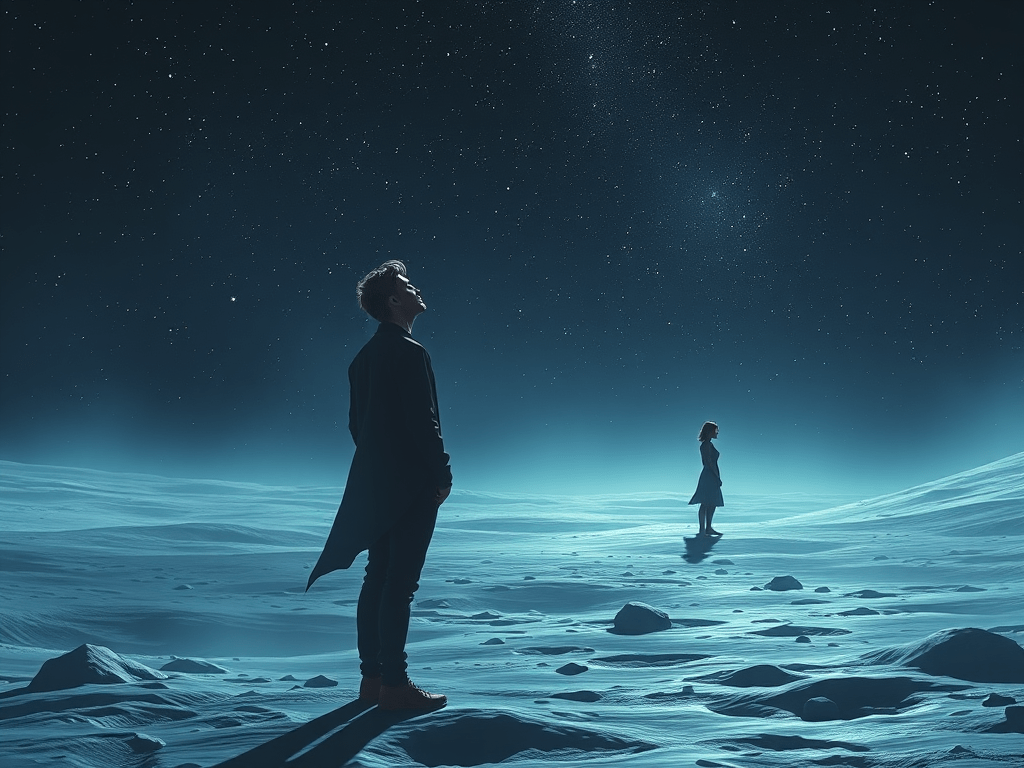
“Don’t turn around. We’re just two nobodies looking out at the vast lunar surface, wishing we were somewhere else.” It is Diane.

“What do you want?” Derek says with disgust.

“Now, now. That’s no way to address an old friend,” she replies as if hurt. “I’m here to tell you that you are finally going to get an opportunity to meet that girlfriend of yours.”

“How?”

Do I even want to know?

“Ah, thanks for asking. In an Earth week, when your sweetie is forecast to be in this region of space, there will be a solar storm. Nothing too serious. Just enough for her to come into orbit. That’s when you’ll invite her down for a visit. You can let me take it from there.”

With that, he hears the patter of steps and knows that she is gone.

Looking up at the stars, he feels all alone. And yet, he wishes that he were somewhere even more remote, somewhere his troubles would never find him.

What will be, will be. But if Diane makes even the smallest of mistakes, she’s finished.

Distant Love (Part 62)

Derek froze, sweat dripping from his brow.

What to say?

“Don’t go all shy on me now, boy. That is no way to impress a woman. And I got all dolled up for and all. If you don’t play nice, that would be very bad for you.”

She spoke with a smile that Derek would once have found alluring. He grimaced.

“Come on. Spit it out. I don’t have all night.”

Derek looks around at the mostly empty coffee shop, wishing he had never taken the break. “Ok, she said that they would be close to the moon at some point soon.”

Diane’s eyes suddenly widened. “Interesting, I didn’t know. Are the two of you having a meet-up by any chance? Maybe something romantic?”

Derek sighs. “We’ve never met, and probably never will.”

“I might not be so sure of that.” Diane grins.

Derek wonders what she means by this. His heart beats faster.

“Go on, back to your job, Derek. I can’t have such a good asset being late and potentially sacked.”

Derek nods and drives his wheelchair away, relaxing only when he’s sure there is a good distance between them. The monotony of work is what he needs now.

Distant Love (Part 61)

An hour later, Derek decides that a break is in order. There are no ships currently in orbit, so he won’t be missed. He goes down to the main thoroughfare to watch the few people come and go.

He feels a tap on his left shoulder and turns the wheelchair around, suspecting an errant youngster.

It is the woman with the tattoo; she is a few meters away and signalling with her hands for him to follow her. He shudders, feeling sick to the stomach.

She leads him to a small coffee shop, pulling away one of the chairs so he can drive the wheelchair beside the table.

“Coffee?” she asks him.

Derek nods in the affirmative as she goes to the counter, where the robotic server is ever ready.

She comes back two minutes later with two coffees and a pathological smile. She smells of expensive perfume.

“Here you go.” She leaves one of the cups within his reach. “I see that Maeve was in contact with you earlier. Don’t look shocked. You know that it is easy to monitor messages coming back and forth from the moon. The problem is the encryption. So, tell me, what did Maeve have to say for herself?”

Star Trek: Starfleet Academy Review – A New Era of Cadets

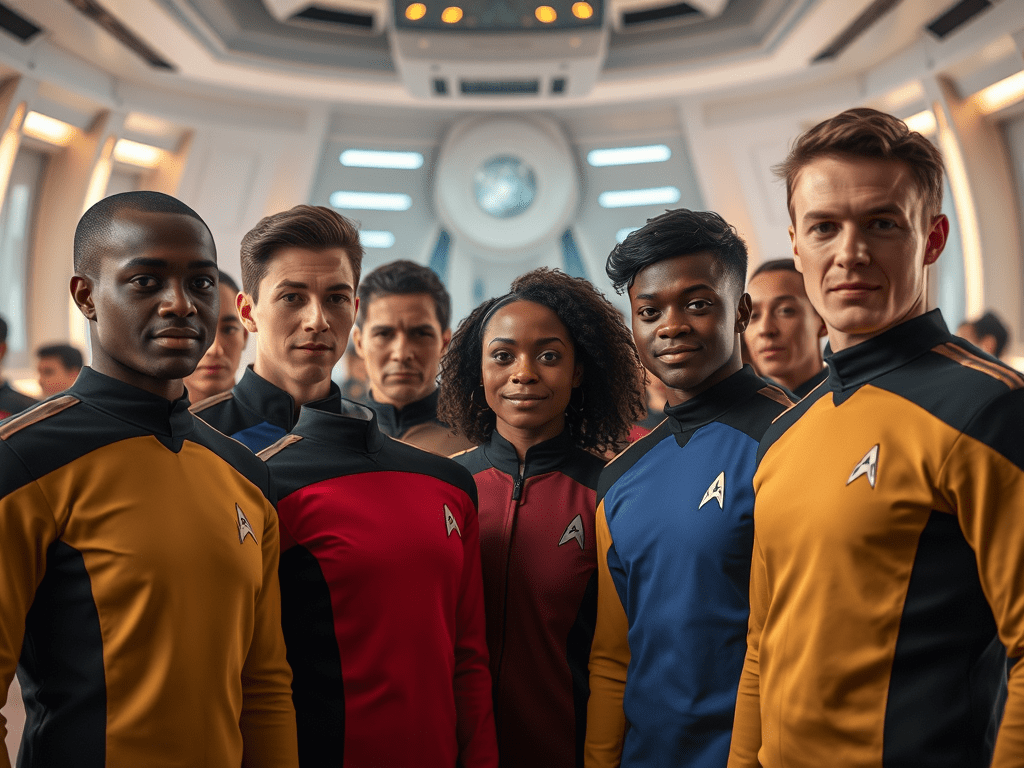
My dear readers, a new Star Trek series is here! Star Trek: Starfleet Academy is the 12th Star Trek series and part of executive producer Alex Kurtzman’s expanded Star Trek Universe. Set in the 32nd century, the far-future time period that was introduced in the later seasons of the series Star Trek: Discovery (2017–2024), Starfleet Academy follows the first new class of Starfleet cadets in over a century as they come of age and train to be officers. This is the period after “The Burn” that almost totally destroyed the Federation

Sandro Rosta, Karim Diané, Kerrice Brooks, George Hawkins, and Bella Shepard portray Starfleet Academy cadets, starring alongside Holly Hunter and Zoë Steiner, as well as Tig Notaro and Oded Fehr, who are reprising their roles from Discovery, and Robert Picardo returning as the character of the Doctor from other previous series.

So far, I’ve only watched the first episode, and I think it will gain traction. From a kind, non-violent Klingon to the first holographic cadet, it could get very interesting. The ensemble cast is introduced with care, giving each character a clear emotional hook without overwhelming the audience. Their interactions feel lived-in and sincere, suggesting long arcs of growth rather than quick archetypes. Importantly, the episode allows vulnerability to coexist with ambition; these cadets are capable and driven, but also uncertain, impulsive, and still figuring out who they want to be. That balance makes their journey immediately compelling.

One of the episode’s greatest strengths is its focus on perspective. By centering the story on cadets at the very beginning of their Starfleet journey, the show reclaims a sense of awe that longtime fans may remember from earlier Trek, while also making that wonder feel fresh. The Academy isn’t just a school—it’s presented as a crucible where personal histories, cultural differences, and ethical ideals collide. The premiere smartly uses this setting to explore what Starfleet represents in a changing galaxy, and why those values still matter.

On a more negative note, I feel the show could do with some eye candy. Most are plain, there is no seven of nine vibes, which I think is a pity.

Overall, the premiere succeeds because it’s hopeful. In a television landscape often dominated by cynicism, Star Trek: Starfleet Academy leans into the idea that learning, empathy, and shared ideals can genuinely shape a better future.

So far, I give the show three stars out of five. I’m looking forward to watching more.

Any other Trekkies out there? Leave a comment.

And don’t forget to subscribe.

Exploring Humanity in _The Great Flood_: A Film Review

One of the best things about Netflix is that you get to watch films and documentaries from all over the world. One such film is The Great Flood from South Korea. It was co-written and directed by Kim Byung-woo.

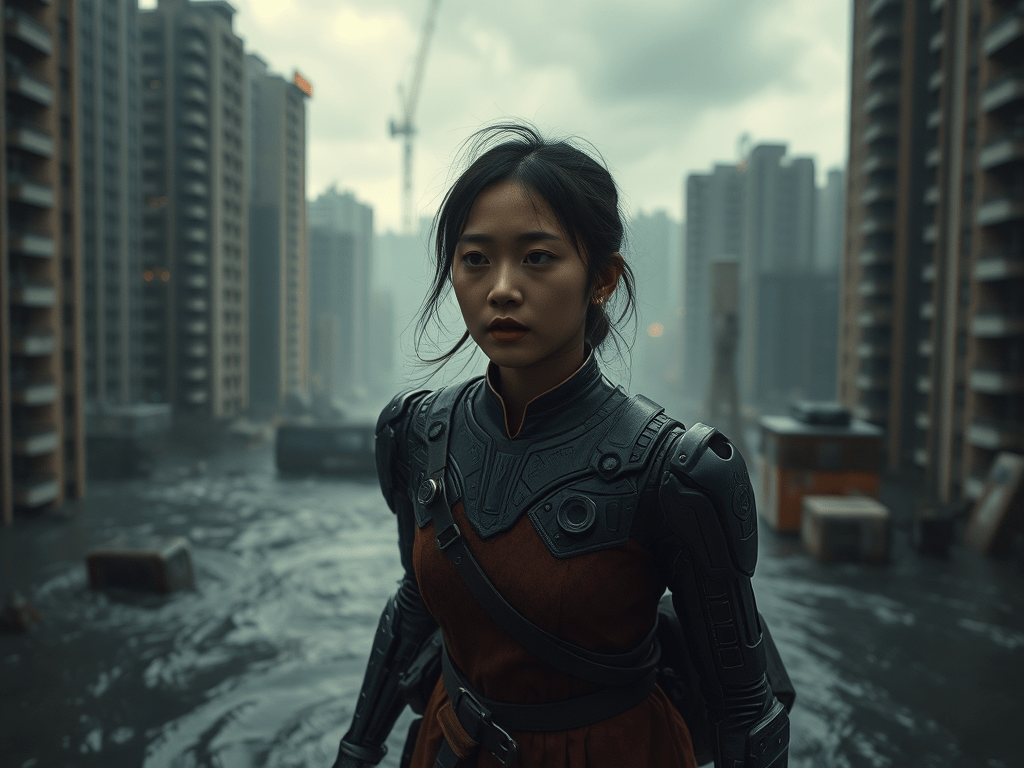
An-na, an AI researcher and recent widow, played by Kim-Da-mi, wakes in her apartment to find floodwater rising in the thirty-floor complex. With her six-year-old son Ja-in, she attempts to reach safety.

However, they are no ordinary mother and child. The child is a robot designed to experience emotion. This is critical to the whole film. An asteroid has hit, and human extinction is imminent. World governments knew what was going to happen and funded secret efforts to survive, including a space station and research into the creation of engineered human bodies and consciousness. An-na’s employer is also revealed to be involved in these projects, putting her and her child central to humanity’s future.

What stands out most is the film’s balance between scale and humanity. While the flood itself is rendered with striking visual power—ominous skies, rising waters, and carefully staged moments of chaos—the story never loses sight of the people caught within it. The narrative lingers on personal choices, moral dilemmas, and quiet acts of courage, allowing the disaster to feel not just catastrophic, but deeply personal. This focus gives the film an emotional weight that elevates it beyond a standard disaster movie.

The performances are uniformly strong, grounded, and convincing. Rather than leaning into melodrama, the actors bring restraint and authenticity, making fear, grief, and resilience feel earned. Small gestures and silences often speak louder than dialogue, and those understated moments are some of the film’s most powerful.

Technically, The Great Flood is impressively crafted. The cinematography captures both the beauty and menace of nature, using light, color, and movement to heighten tension. The sound design is particularly effective—the rush of water, distant alarms, and sudden quiet all work together to create a visceral experience that keeps the audience on edge. The pacing is deliberate, allowing suspense to build naturally while still delivering moments of urgency and release.

Ultimately, The Great Flood is a film about survival in the broadest sense: not just surviving a natural catastrophe, but preserving compassion, responsibility, and hope when everything familiar is threatened.

If nothing else, it is a great story. With AI coming to the forefront of our lives, I expect more films of this nature in the future. Four out of five stars from me.