Uncovering the Truths of Slavery in History

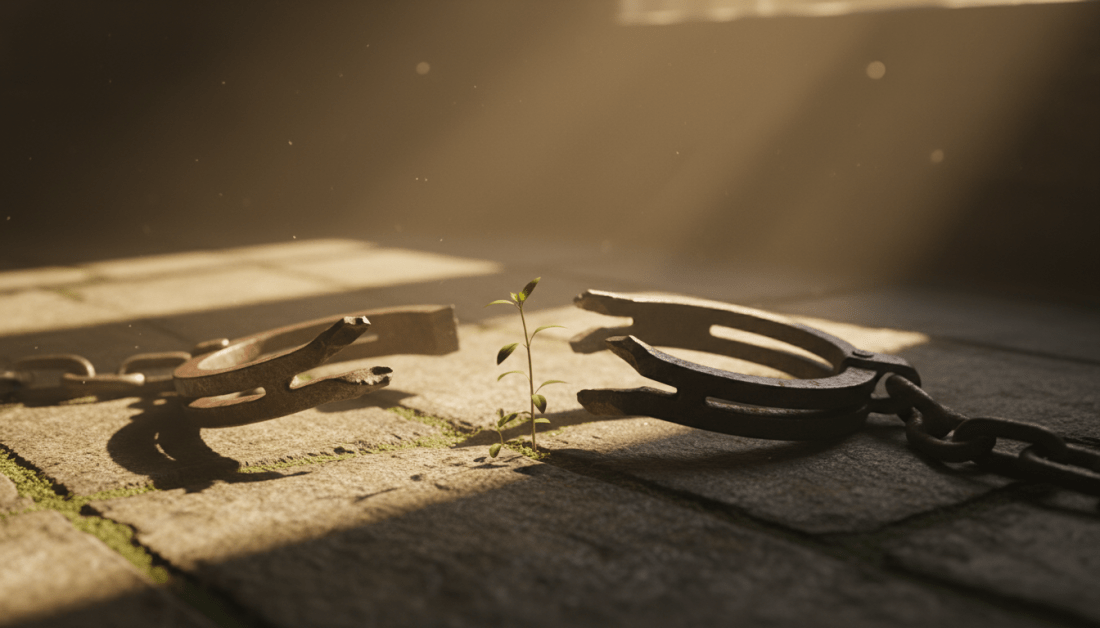
Small green sprout growing between broken rusty iron shackles on a stone floor.

I liked the show about Native Americans so much that I decided to give this one a shot. His promotion included that you won’t have learned this in school. Which is true, but personally, I have learned a lot of it over the years.

Matt Walsh’s A Real History of Slavery is a compelling, no-nonsense documentary that cuts through the one-sided narratives too often presented in modern education and media.

Rather than treating American chattel slavery as an isolated, uniquely evil invention of the West, Walsh provides essential historical context that reveals slavery as a near-universal human institution stretching back thousands of years across virtually every culture and continent.

What stands out most is the film’s willingness to highlight uncomfortable but well-documented truths: African kingdoms actively participated in capturing and selling millions into slavery long before Europeans arrived; the Arab and Islamic slave trades were massive and often far more brutal, including the enslavement of Europeans by Barbary pirates; and the transatlantic trade, while horrific, was dwarfed in scale and duration by other systems, including the East African trade. Walsh doesn’t shy away from these facts—he embraces them to show that slavery was the norm throughout history, not an aberration unique to America or white Europeans.

He draws a parallel between white slavery and indentured servants, pointing out that half died before they were eligible for freedom. However, he skips over the institutionalization of the process for blacks, where if your mother was a slave, you were. This may have happened to some whites, but it was rarer.

The production is crisp, engaging, and accessible, making complex historical realities easy to follow without dumbing them down. Walsh’s straightforward narration avoids sensationalism while delivering a clear message: the story of slavery isn’t simply one of Western guilt, but one of human nature, power, conquest, and—crucially—abolition. The West, particularly Britain and the United States, played a leading role in ending the global slave trade, a moral achievement that deserves far more recognition than it typically receives today.

I give it four stars out of five.

Have you seen it? Let me know in the comments.

If you enjoyed this article, please don’t forget to subscribe.

Challenging Myths: The Real History of Native Americans

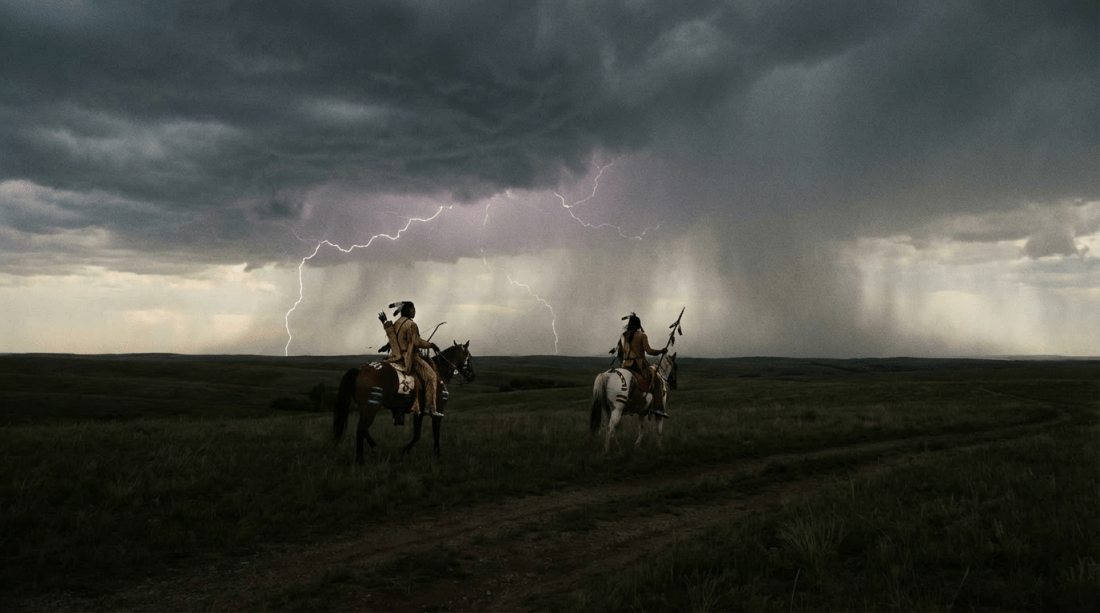
Two cowboys on horseback silhouetted against a dramatic lightning storm on the open plains.

Many of my readers may not be familiar with Matt Walsh. He is a popular right-wing YouTuber from the United States. He is as reviled as he is loved, becoming famous for his opposition to trans ideology, and especially child transitioning, describing it as child abuse.

Here, in an over one-hour-long documentary, he delves into a different contentious topic. Note that I watched it on YouTube. Also available on DailyWire+.

Matt Walsh’s “The Real History of the American Indians” is a bold, refreshing, and much-needed documentary that cuts through decades of romanticized myths and perhaps ideological propaganda. In this episode of his Real History series, Walsh delivers a clear-eyed examination of Native American history that challenges the dominant narrative taught in schools and pushed by Hollywood.

He dismantles the fairytale of universally peaceful, noble “Indians” living in perfect harmony with nature, only to be mercilessly victimized by evil European settlers. Instead, Walsh presents a more complex and historically grounded picture: one where tribes frequently engaged in brutal warfare, conquest, and slavery among themselves long before European arrival, where concepts of land ownership differed sharply from Western traditions, and where conflicts with settlers involved aggression on multiple sides rather than one-sided genocide.

He points out that pre-Civilization violence was horrific and worse on a pro rata basis than modern warfare. No prisoners were taken – everyone apart from pre-adolescents but not babies faced extermination if a battle was lost.

Although not mentioned in the series, this is one of the reasons the African populations boomed after colonization, also. Free from constant war, farmers could grow crops. Similarly, the population of Ireland grew after the arrival of the Vikings, who brought trade and settlements, reducing overall conflict.

What makes this documentary stand out is Walsh’s signature style: sharp, unapologetic, and deeply researched. He doesn’t shy away from uncomfortable truths on any side, but his core strength is exposing how selective storytelling has been weaponized to instill guilt and self-loathing in modern Americans.

Myths like the “smallpox blankets” as deliberate genocide or the idea that the entire continent was “stolen land” with no legitimate settlement are taken apart with logic, primary sources, and straightforward reasoning. The result feels liberating rather than divisive—it’s history as it actually happened, not as activists wish it had.

Visually and structurally, the film is engaging and accessible. Walsh combines narration, historical context, and pointed takedowns of mainstream shibboleths without descending into dry lecturing. Viewers come away better informed about the realities of pre-Columbian societies, intertribal conflicts, the challenges of assimilation and reservation systems, and the genuine progress that Western civilization brought to the continent. It’s a strong antidote to the guilt-tripping versions of American history that dominate today. If you’re tired of sanitized, agenda-driven accounts that treat Native Americans as cartoonish victims or infallible environmental saints, this documentary is essential viewing. Walsh does what great historians should: he tells the raw, unfiltered truth that sets the record straight and helps us understand our shared past without the self-flagellation.

Four stars out of five from me.

Have you seen it? What did you think? Let me know in the comments.

Also, don’t forget to subscribe.

Netflix’s The Last Czars: Drama, History, and Flawed Royals

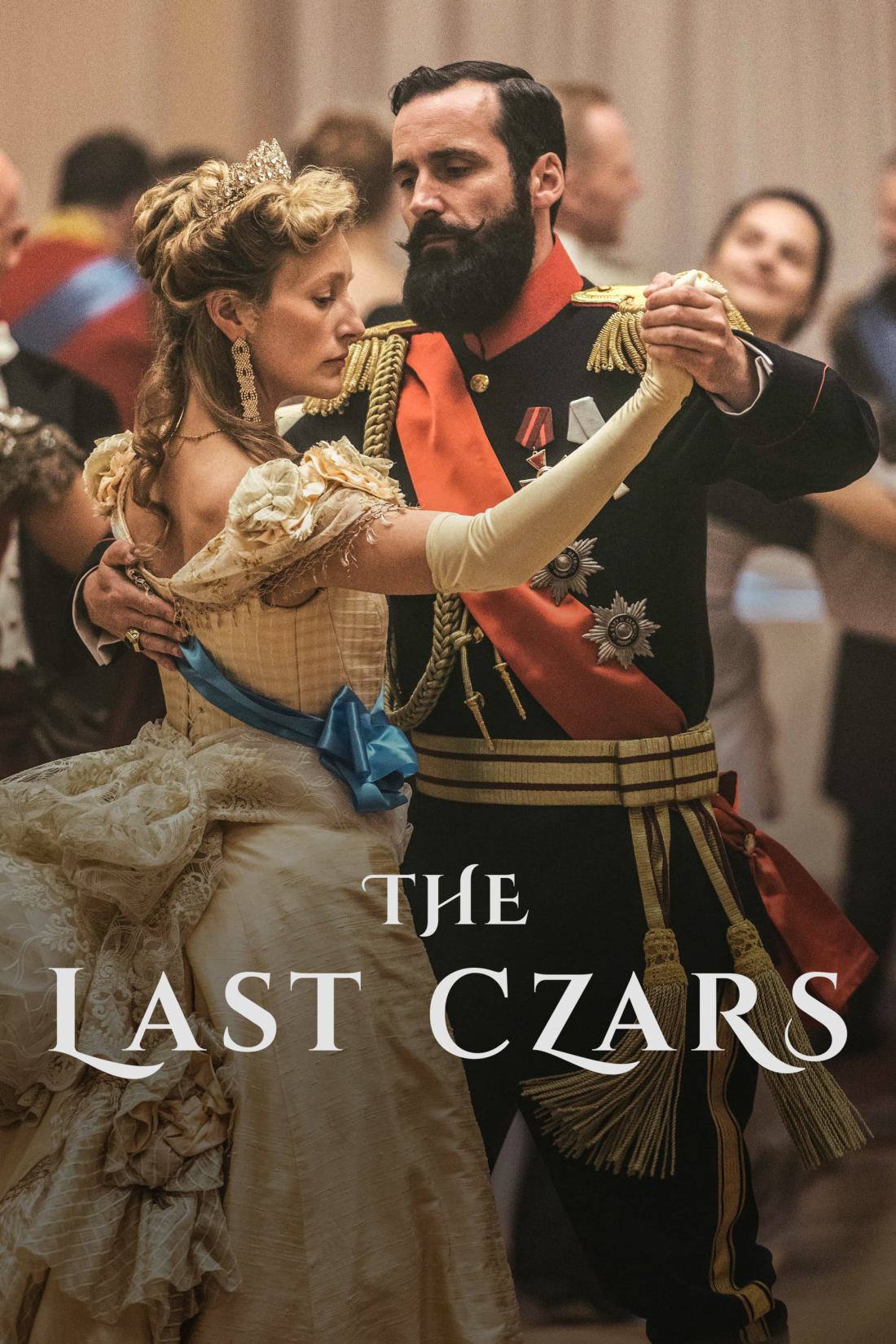
Well, let’s face it. Russia is fairly topical at the moment. But how did we get here? Well, any story about Russia has to include the Romanovs, who ruled for 300 years. The Last Czars is an ambitious attempt by Netflix to blend historical documentary with dramatized storytelling, chronicling their downfall —and the rise of the Bolsheviks. The result is an intriguing, visually lavish production that succeeds in moments but often struggles to find its identity.

The lavish costumes, ornate set designs, and snowy Russian landscapes evoke the grandeur—and isolation—of the Romanov dynasty. The performances, especially Robert Jack as Tsar Nicholas II and Susanna Herbert as Alexandra, bring depth to historical figures often seen as symbols rather than people. And rather flawed people they turn out to be.

At times, I felt sympathetic to their plight as their Empire collapsed around them. Other times, not so much as they make one poor decision after another. The Bolsheviks shouldn’t have shot the children, but Nicholas II and Alexandra cared little for the ordinary Russian. It reminds me of someone, I can’t quite put my finger on it.

The most interesting character is, of course, Rasputin. He is someone I have always been interested in. A religious man. God saves sinners; therefore, it is important to sin. Only then can you ask for forgiveness. He tries his best to drink and to make love to as many women as possible. God bless, he loves his God. The Romanovs fall under his spell, a sick son creating a wedge between them and their people (well, she’s German, it’s complicated).

The inclusion of documentary-style narration and expert interviews gives the viewer valuable historical grounding. However, this same hybrid format is also the show’s greatest weakness. The constant switching between drama and documentary can feel jarring, breaking immersion and undercutting any attachment to what is happening.

Personally, I found it a bit of a struggle to keep watching. Three stars out of five for me. If you’re committed to hours of TV every day, give it a try. If time is precious, there is much better out there.

But let me know what you think? Have you seen it?

Speech at Disability and Older Persons Event in Bloomfield 27/5/24

Due to the death of my grandmother, my fellow Director Demot Hope read out the following speech on my behalf earlier today –

Ladies and Gentlemen, thank you for your attendance here today. Many of you already know me but for those that don’t my name is Mark Ahern, and I am a Director with Independent People with Disabilities. We are one of the sponsors of this event, which has been a marvellous success down through the years. The address of our office is 96 Sean Costello Street, Athlone and we have a stand here, today. If you are running into a disability related issue, please contact us and we will endeavour to do our best for you.

At the heart of my work and the work of Independent People with Disabilities is a profound commitment to ensuring that every individual, regardless of their abilities, has equal access to opportunities and resources. It is our fundamental belief that no one should be left behind, and we are dedicated to breaking down the barriers that stand in the way of a just and inclusive society.

This has been another very busy year for Independent People with Disabilities.  We continue to represent our members on various committees such as the Disability subgroup of Westmeath Community Development and the Westmeath Sports Partnership. One of our achievements this year, will be mixed ability outdoor gym equipment going into Mullingar Town Park. This should happen by the end of the summer.

This year I would like to take some time to discuss how senior people and people with disabilities are natural allies. We face many but not all the same issues.

I had an interesting conversation about this a few weeks ago with a user of a scooter. He wants ramps up and down smooth footpaths just as much as I do.  We both want good healthcare, housing without steep stairs and a peaceful place in which to live.

I would ask that, those of you here today who are involved in groups for older people to consider if alliance with disability groups could be of mutual benefit.

Through leveraging our greater numbers more can be achieved.

I would like to thank all the Directors of Independent People with Disabilities for all their hard work during the year. People like Dermot Hope and Noel Mulvihill who give so much to the cause.

Finally, I’d like to put my ppn hat for a moment as I’m the current Resource Worker which has a stand her today. If you’re community or voluntary group is not members you should consider doing so. Not only does it let your group play a role in developing policy it also gives you information about funding and training that can be sought.

Thank you for your attention.