
I watched this old blockbuster yesterday. Okay, I admit it. I only recalled watching it years ago, about halfway through.
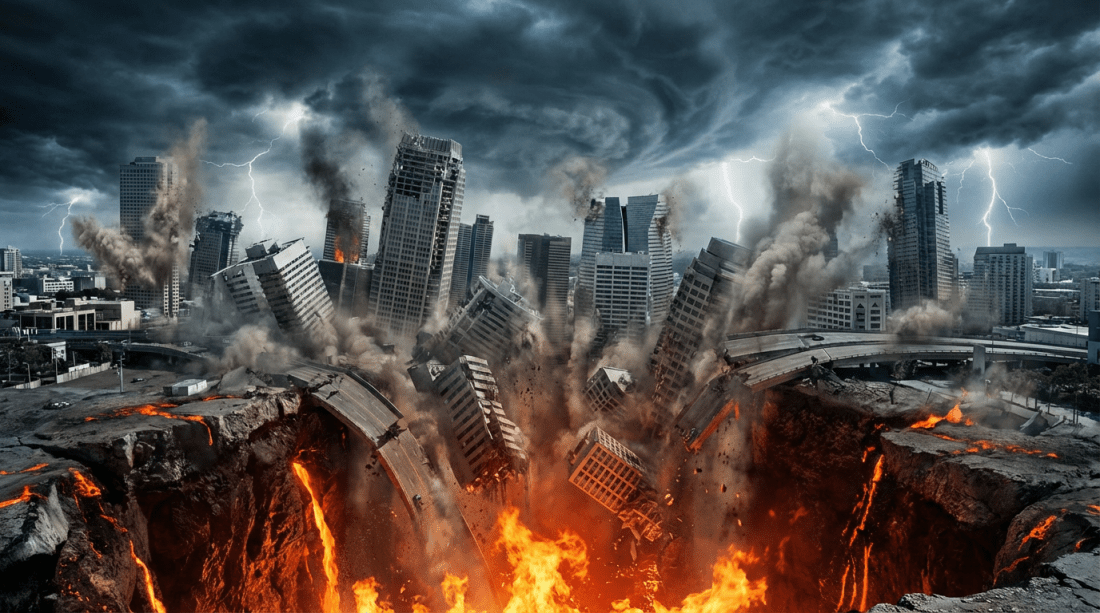
2012 (2009), directed by Roland Emmerich, stands as one of the most exhilarating and ambitious disaster films ever made—a true spectacle that delivers non-stop thrills, jaw-dropping visual effects, and an unapologetic celebration of human resilience in the face of apocalyptic chaos. If you’re looking for a movie that turns the end of the world into an edge-of-your-seat rollercoaster ride, this is it. Emmerich, the master behind classics like Independence Day and The Day After Tomorrow, outdoes himself here with a film that prioritizes pure cinematic excitement over subtlety, and it succeeds brilliantly on those terms. The car driving along while all the buildings collapsed on either side was particularly memorable.
At its core, 2012 follows a diverse group of characters as they race against time to survive a series of cataclysmic events triggered by massive solar flares that destabilize Earth’s crust. John Cusack stars as Jackson Curtis, a struggling writer and divorced dad who becomes an unlikely hero, desperately trying to save his family amid the unfolding global nightmare. Amanda Peet plays his ex-wife Kate, Chiwetel Ejiofor brings gravitas as a dedicated scientist working for the U.S. government, and Woody Harrelson adds memorable eccentricity as a conspiracy theorist who sees it all coming. The ensemble cast handles the mix of personal drama and high-stakes action with sincerity, making you genuinely care about their fates even as the planet crumbles around them.What truly elevates 2012 is its breathtaking scale and groundbreaking visual effects. This is Emmerich at his most extravagant: entire cities like Los Angeles are torn apart by massive earthquakes, with roads splitting open, buildings collapsing in domino fashion, and cars desperately navigating collapsing freeways in one of the most intense opening sequences in cinema history. Yellowstone erupts in a fiery cataclysm, mega-tsunamis swallow landmarks worldwide, and iconic sites—from the White House to the Vatican—meet spectacular ends.
The CGI, which was cutting-edge for its time and still holds up remarkably well, creates immersive, awe-inspiring destruction that feels both terrifying and exhilarating. Scenes like the family’s frantic escape through crumbling Los Angeles or the desperate boarding of massive “arks” designed to save humanity are pure adrenaline, blending practical stunts with seamless digital wizardry to deliver one jaw-dropping set piece after another.
Beyond the spectacle, the film taps into a universal theme of hope and survival. Despite the overwhelming odds, 2012 never descends into pure nihilism. It balances the chaos with moments of heart—family reconciliations, acts of selflessness, and a quiet optimism that humanity can endure even the worst.
The screenplay cleverly weaves in real-world inspirations from the Mayan calendar prophecy (popular at the time) while keeping the focus on character-driven stakes. At nearly 2 hours and 40 minutes, it gives ample time for both intimate emotional beats and globe-spanning devastation, ensuring the pacing rarely lets up once the disasters begin.Critics may sometimes dismiss it as over-the-top or cheesy, but that’s missing the point—2012 knows exactly what it is and embraces it wholeheartedly. It’s big, loud, and unpretentious fun that prioritizes entertainment value above all else.
The sound design amplifies every rumble and crash, pulling you deeper into the experience, while the score heightens the emotional and epic tones. For fans of disaster movies, it’s a standout: more intense and visually ambitious than many of its peers, with a sense of wonder amid the wreckage. In the end, 2012 is a triumphant blockbuster that reminds us why we go to the movies—to witness the impossible, feel the rush of adventure, and emerge with a renewed appreciation for the fragility (and strength) of life.
If you haven’t seen it, do yourself a favor and experience it on the biggest screen possible. It’s a wild, unforgettable ride that delivers pure cinematic joy through destruction. Highly recommended for anyone who loves epic scale, heartfelt moments, and the sheer thrill of watching the world (almost) end.
Five stars for sheer spectacle and entertainment value from me! I caught up with it on Disney+
 Mark's Writing Corner