Dear Killer Nannies – Must Watch Series

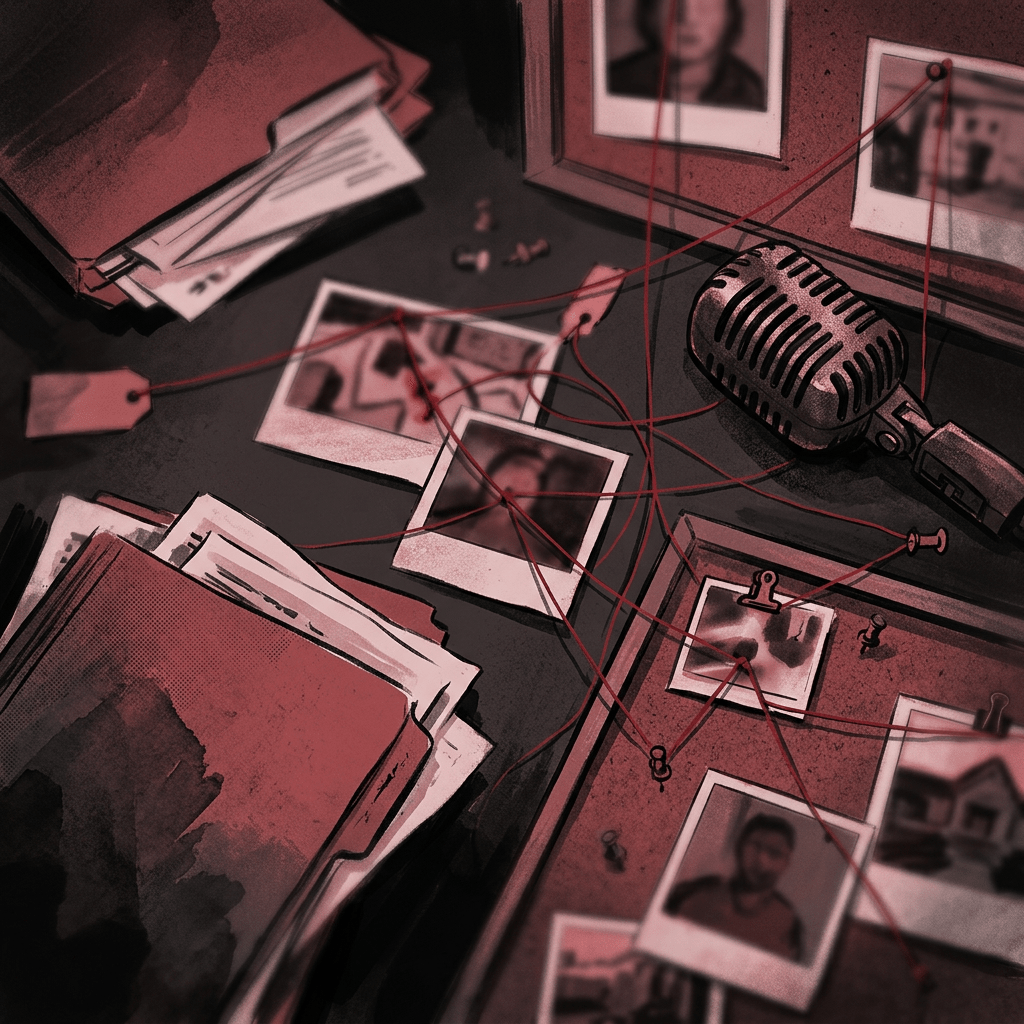
Vintage microphone, photographs, and red threads arranged on a detective evidence board

Okay, everyone I think everyone agrees that Pablo Escobar has been done to death. But this series comes from a new vantage point – that of his son.

Dear Killer Nannies is one of the most distinctive and emotionally resonant crime dramas of recent years — a coming-of-age story told from inside one of history’s most infamous households rather than another retread of Pablo Escobar’s empire.

Co-created by Juan Pablo Escobar (Sebastián Marroquín) himself, the eight-episode Hulu/Disney+ miniseries follows young Juampi as he grows up in luxury in 1980s Medellín, surrounded by bodyguards he treats as playmates and nannies. He sees his father as a generous benefactor. The devastating revelation that those caregivers are hired killers, and that his father is the world’s most wanted drug trafficker, is handled with unusual restraint and psychological honesty.

What sets the series apart is its focus on the quieter devastation of a child losing his innocence. The obligatory shootouts and car crashes exist, but the real impact comes from bloodless moments: a boy finishing off an injured animal because the men around him treat it as normal, the slow collapse of his idealized image of his father, and the weight of a surname that turns his life into a flight from death. The time jumps between childhood, adolescence, and later years feel purposeful rather than gimmicky, building a portrait of inherited trauma and the struggle to choose a different path.

The performances elevate the material. John Leguizamo brings unexpected warmth and complexity to Pablo, portraying a loving father whose affection is constantly at war with his criminal life. The young actors playing Juampi at different ages — especially Miguel Tamayo as the seven-year-old — capture both wide-eyed belief and the first cracks of understanding with remarkable naturalism. The ensemble of “nannies” (Juanita Molina, Danharry Colorado, Rafael Zea, and others) makes the surreal domestic arrangement feel lived-in and strangely intimate: hardened killers who are also dysfunctional uncles and protectors. Laura Rodríguez grounds the family as Victoria, a mother desperately trying to shield her children while knowing the truth.

The first-person narration by the real Juan Pablo adds a layer of intimacy and moral ambiguity that most cartel stories lack. The show never excuses the violence or the empire, but it humanizes the boy caught in its crossfire and the men assigned to keep him alive. Production values, period atmosphere, and the mix of Spanish-language authenticity with accessible storytelling make it bingeable in its half-hour episodes without sacrificing weight.

This is not just another Pablo Escobar show. It is a surprisingly literate examination of adultification, masculinity, loyalty, and the long shadow of a last name. For anyone who thinks the subject has been exhausted, Dear Killer Nannies proves there was still a deeply personal story left to tell — and it tells it with heart, craft, and unexpected tenderness.

Make sure to give it a watch. Four stars from me.

The Charles Manson Tapes: Manipulation and Control in True Crime

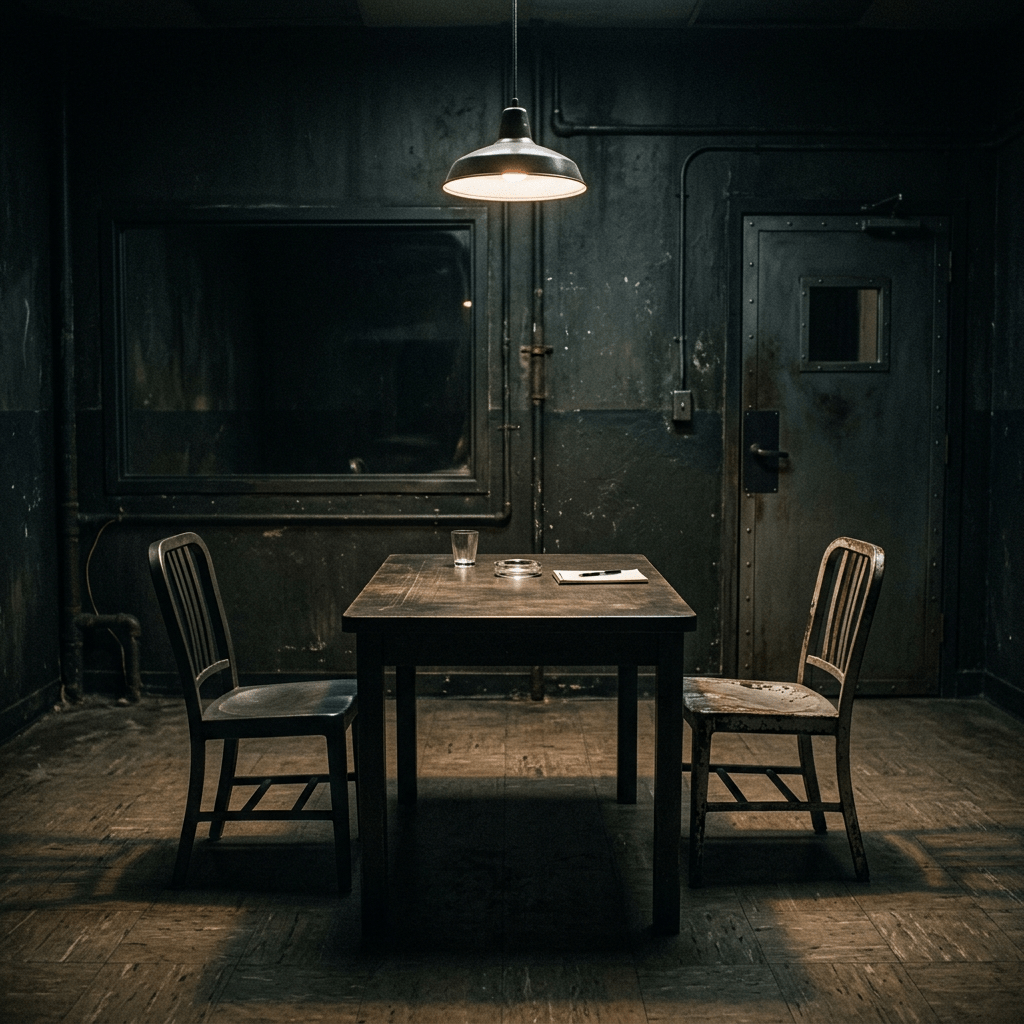
Empty table with two chairs in a dim industrial room

My dear readers, this is obviously not for the faint-hearted. So, I just had to watch.

Conversations with a Killer: The Charles Manson Tapes (often referred to simply as The Manson Tapes) is a gripping, meticulously crafted three-part Netflix docuseries that stands as a strong and fitting finale to Joe Berlinger’s long-running true-crime anthology. Released in August 2026, it draws on previously unreleased prison phone calls made by Charles Manson in his later years, combined with archival footage, contemporary interviews with former Manson Family members and law enforcement, and carefully selected period material to deliver a chilling yet insightful examination of one of the 20th century’s most infamous cases.

What elevates this entry is its focus on the systems of manipulation and control Manson built rather than simply recycling the well-worn mythology. The unreleased recordings give viewers direct access to Manson’s voice and personality in a way that feels immediate and unsettling—his chameleon-like ability to shift personas, his self-justifications, and the lingering charisma that once drew in followers come through without heavy-handed narration. It also briefly deals with how he learned some of his techniques. For instance, the book “How to make friends and Influence People is referenced. Hearing those calls alongside accounts from people who lived through the era creates a layered portrait of how a small-time criminal leveraged the disillusionment of the late-1960s counterculture to assemble a devoted group.

The three episodes are tightly structured and effectively paced. The first traces Manson’s background and the formation of the Family at the height of the hippie movement, showing how promises of love, acceptance, and freedom became tools of psychological dominance. The second examines the escalation to the 1969 Tate-LaBianca murders, exploring the delusions and dynamics that turned followers into killers while providing context that challenges some of the more sensationalized popular narratives. What really comes across is how much Manson was a tool of his own destruction. The third covers the trial and its media circus, illustrating how Manson and the Family turned the courtroom into a grotesque spectacle that cemented their place in cultural memory. Archival voice recordings of key figures such as Tex Watson, Susan Atkins, and Leslie Van Houten, paired with reflections from survivors of that world, add emotional weight and human detail.

Berlinger’s direction maintains the series’ signature strengths: a restrained use of reenactments where needed, strong visual storytelling through archival material, and an emphasis on letting the subjects’ own words drive the narrative. The result is both riveting and ominous—true crime at its most inquisitive. It doesn’t shy away from the horror of the crimes or the media frenzy that followed, yet it succeeds in examining the mechanisms of influence and the cultural moment that allowed them to take root. Viewers familiar with the case will appreciate the fresh audio and the effort to center those who experienced the events firsthand; newcomers will find a clear, compelling introduction that avoids pure sensationalism.

As the concluding chapter in the Conversations with a Killer lineup (following the Bundy, Gacy, Dahmer, and Son of Sam installments), The Charles Manson Tapes feels purposeful. It uses newly available material to dig into themes of control, myth-making, and the enduring fascination with this particular chapter of American crime history. The series is TV-MA for good reason—its content is dark and disturbing—but for fans of thoughtful true-crime documentaries, it offers a substantial, well-produced watch that rewards attention across its roughly three hours. If you’re looking for a detailed, tape-driven exploration of Manson’s rise, the murders, and their aftermath, this is a strong recommendation and a memorable close to Berlinger’s anthology. Four stars out of five from me.

House of the Dragon Season 3 Review: A Spectacle of Fire and Blood

Dragon breathing fire on burning medieval castle under siege at sunset

This is a series that has been brewing very nicely without reaching the mass appeal of Game of Thrones. Probably just as well considering what a mess it ended up.

House of the Dragon Season 3 is a thrilling, reinvigorated triumph that finally delivers the full fire-and-blood spectacle and emotional intensity fans have been waiting for.After the deliberate, sometimes deliberate-to-a-fault setup of the first two seasons, Season 3 explodes out of the gate with urgency, scale, and purpose. The long-simmering Dance of the Dragons erupts into open, devastating conflict across sea, land, and sky. One thing though I’d recommend getting a rehash of what previously happened. I found it quite hard to remember!

Showrunner Ryan Condal and the creative team lean hard into the chaos and cost of civil war while never losing sight of the human (and dragon) drama at its core. The result feels like the series hitting its stride and matching—or in places surpassing—the peak spectacle and bleak grandeur of its Game of Thrones predecessor.

The season opens with one of the most ambitious and visceral sequences in the franchise’s history: the Battle of the Gullet. This naval clash is a masterclass in large-scale filmmaking—ships, dragons, fire, and desperation colliding in a sequence that is both breathtaking and heartbreaking. It sets a tone of high stakes and irreversible consequences that carries through the eight episodes. Subsequent set pieces, including major land engagements and dragon confrontations, maintain that elevated visual and visceral standard. The CGI and practical effects for the dragons feel more integrated and impressive than ever, turning these creatures into true forces of nature rather than mere plot devices.

What elevates Season 3 beyond pure spectacle is how effectively it balances the epic with the intimate. Emma D’Arcy continues to deliver a powerhouse performance as Rhaenyra, charting a complex evolution as she navigates the burdens of claim, loss, legitimacy, and power. Their work is layered, fierce, and often heartbreaking.

Matt Smith’s Daemon remains magnetic—charismatic, dangerous, and increasingly nuanced. Olivia Cooke’s Alicent brings quiet intensity and moral complexity to every scene. Supporting players shine as well, with strong contributions from the returning ensemble and notable new additions (James Norton’s Ormund Hightower stands out as a commanding, multifaceted presence on the Green side).

The writing gives characters sharper agency and more earned complications, allowing political maneuvering, personal betrayals, and the grinding realities of war (including institutional and human costs) to feel consequential rather than static

.Pacing is a clear improvement. Where earlier seasons sometimes lingered in preparation, Season 3 moves with purpose—major developments arrive, alliances shift, and the story advances meaningfully toward the larger Dance. There are still quieter, character-driven hours that dig into the psychological and logistical burdens of rule, and these moments of relative intimacy often rank among the season’s strongest. The show remembers that the most memorable Westerosi storytelling has always mixed dragonfire with human frailty, ambition, grief, and moral compromise. Themes of legitimacy, the price of power, the unpredictability of dragons as weapons, and the way war warps everyone involved land with greater clarity and force.

Production values remain top-tier: cinematography, score, costumes, and production design continue to make King’s Landing, Dragonstone, and the wider Seven Kingdoms feel lived-in and mythic. The season benefits from the groundwork of Seasons 1 and 2; earlier character work and political setup now pay off in satisfying (and frequently devastating) ways.

Season 3 is not without the franchise’s characteristic darkness and occasional messiness—this is still a story of civil war that makes monsters and fools of its participants—but it channels that bleakness productively. It is more action-packed, more emotionally resonant, and more confidently told than what came before.

For longtime fans of the world George R.R. Martin created and for anyone who stuck with the slower build of the earlier seasons, Season 3 rewards that investment handsomely. It is lavish, knotty, spectacular, and frequently gut-wrenching television that captures the tragic grandeur of the Dance of the Dragons. If the first two seasons were the fuse, this is the explosion—and it is well worth the wait.

Four stars out of five from me.

War of the Worlds: A Stellar Sci-Fi Series Review

Large alien spacecraft firing energy beams over a city with buildings engulfed in flames and smoke

My dear readers, it has been some time since I last did a review. I’ve been working away on Wheelchair Wars, which I hope to finish this year.

In the meantime, I recently started streaming War of the Worlds. (TV Series). It stands tall as a smart, haunting, and emotionally resonant reimagining of H.G. Wells’ classic. This multi-season international co-production (originally airing on Canal+ in Europe and Epix in the US) shifts the action to contemporary Europe and delivers a slow-burn apocalypse that prioritizes human drama, mystery, and creeping dread over nonstop action. Anchored by a stellar cast led by Gabriel Byrne, it’s a compelling genre series.

Gabriel Byrne, in a stellar performance, brings gravitas and weary intensity to Bill Ward, a brilliant but flawed astrophysicist/neuroscientist whose personal demons and scientific curiosity drive much of the narrative. His grouchy, world-weary performance grounds the chaos, making Bill a relatable everyman hero who’s equal parts determined and haunted. Byrne’s chemistry with the ensemble elevates every scene.

What sets this War of the Worlds apart is its eerie, understated tone. The invasion begins not with fireworks but with a mysterious signal from space, building anticipation before unleashing silent, efficient horror. Alien “Mechanicals” (killer machines) and ships create a sense of overwhelming technological superiority without constant spectacle. The quiet desolation of emptied cities, abandoned streets, and pockets of desperate survivors is palpably unsettling—think The Walking Dead meets thoughtful hard sci-fi.

The production values are top-tier across its three seasons. Pan-European filming locations give it a grounded, international scope that feels authentic. The visual effects are impressive yet restrained, emphasizing scale and otherworldliness. A haunting soundtrack amplifies the tension, blending electronic dread with moments of fragile hope.

This isn’t a straightforward retelling—it’s a loose, modern adaptation that explores colonialism, human nature under pressure, survival ethics, and even time travel in later seasons. The mystery of the invaders’ motives unfolds gradually, keeping viewers hooked with revelations that tie into bigger philosophical questions. Season arcs build cleverly: Season 1 focuses on the immediate aftermath and survival; later seasons expand into resistance, conspiracy, and high-stakes temporal elements that pay off in satisfying (if bold) ways.

Gabriel Byrne’s commanding presence makes this series essential viewing. If you crave intelligent sci-fi with heart, mystery, and emotional depth— then this is for you.

Five stars out of five from me.

Exploring Dean Potter: The Dark Wizard of Extreme Climbing

My dear readers. As a person who never walked, climbing was way out of reach. It is something that occasionally fascinates me. I’ll be honest, if I was able bodied, I wouldn’t risk it. I definitely wouldn’t free climb.

If you want to know how nutty people can be, then you need to watch this.

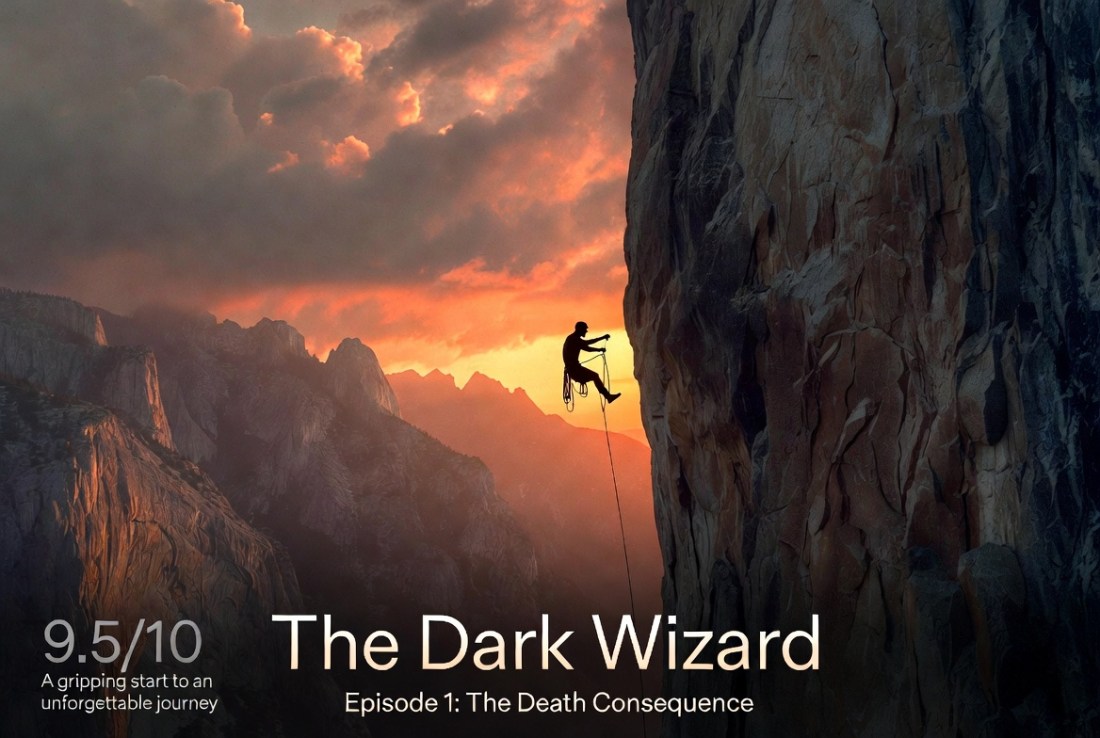
From the very first frame, The Dark Wizard Episode 1 grabs you with the raw, exhilarating energy of extreme climbing and never lets go. Titled “The Death Consequence,” this opening installment serves as a powerful introduction to the legendary—and often controversial—figure of Dean Potter.

It masterfully blends breathtaking footage of his daring feats with intimate glimpses into the man behind the myth, setting up what promises to be one of the most thought-provoking docuseries of the year.The episode opens by immersing viewers in Potter’s early years in Yosemite during the 1990s, where he bursts onto the scene as a fiercely talented, renegade climber. We see him forging new ascents, setting world records, and connecting deeply with a tight-knit community of like-minded adventurers who thrive on the sport’s intoxicating mix of freedom and adrenaline.

The cinematography is nothing short of spectacular—sweeping shots of towering granite walls, heart-pounding sequences of free soloing and base jumping, and slow-motion captures that make you feel the wind and the exposure. It’s viscerally exciting, the kind of footage that leaves you breathless and in awe of human potential.

What elevates this episode beyond a simple highlight reel of athletic achievements is its honest, unflinching exploration of Potter’s inner world. Friends and contemporaries, including Alex Honnold, share candid reflections on his restless energy and the darker undercurrents that drove him. One particularly poignant thread is how Potter used the “death consequence”—that razor-edge awareness of mortality during his most extreme pursuits—as a form of therapy to quiet his racing mind and battle personal demons. Journal entries come alive on screen, revealing a sensitive, introspective soul seeking clarity through emptiness and risk. Lines like “I need to quiet my mind” hit hard, transforming the narrative from pure adrenaline into a profound meditation on mental health, self-medication through danger, and the complex relationship between joy and struggle.

Five stars out of five. Just don’t copy him. A ticket to an early death.

Review: The Testaments Episode 1 – A Stunning Dystopian Journey

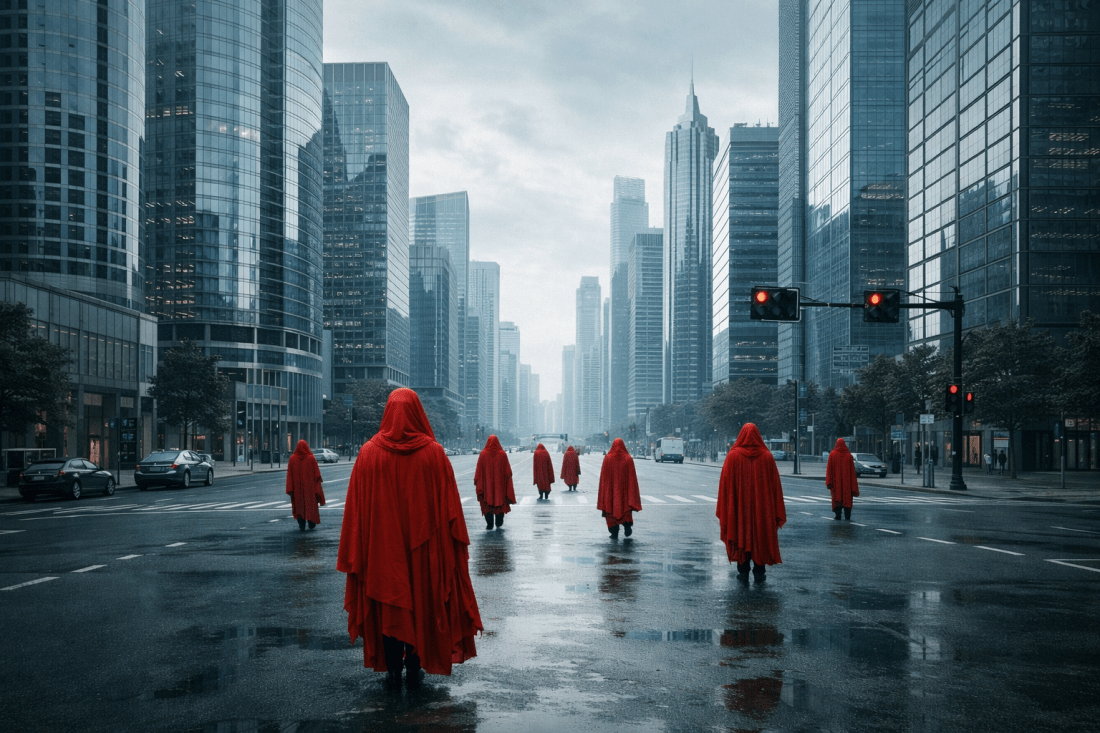
Multiple people wearing red cloaks walking on a damaged street in a destroyed city.

Ah readers, there is surely no better way to spend a Friday afternoon than reviewing a series in one of my favorite dystopian universes.

Is it strange that I loved The Handmaids Tale, being a man and all. I couldn’t care less.

Years after the events of The Handmaid’s Tale, The Testaments (on Hulu) follows two teenage girls navigating life inside the oppressive regime: the dutiful and pious Agnes (played with quiet intensity and breakout star power by Chase Infiniti) and the spirited newcomer Daisy (Lucy Halliday), a convert from beyond Gilead’s borders. Assigned as mentor and mentee at Aunt Lydia’s elite preparatory school for future wives—where obedience is enforced with brutal, divinely justified precision—their unlikely bond becomes the emotional core and catalyst for upheaval.

To date, I’ve only seen the first episode but that will change this weekend.

What makes this setup so brilliant is how it reframes the dystopia through youthful eyes. Instead of the raw desperation of Handmaids, we get the gilded cage of privilege mixed with stifling control: lavish yet suffocating halls, rigid social hierarchies, and the constant psychological weight of expected perfection. The series smartly avoids retreading familiar ground—no sea of red cloaks in the early episodes—and instead builds a textured, lived-in world that feels both evolved and eerily consistent with what came before. It’s a defiant coming-of-age tale that explores friendship, identity, rebellion, and the quiet power of connection in the face of systemic cruelty.

Visually, The Testaments is stunning. The production design contrasts opulent, pristine settings with underlying menace—think polished marble and elegant uniforms that mask the brutality beneath. Cinematography captures both the grandeur and the claustrophobia of this society, while the score enhances the emotional undercurrents without overpowering the performances.

Giving the first episode 4 stars out of 5.

Have you seen it? What did you think?

Magnus Carlsen’s Dramatic Face-off: A Netflix Review

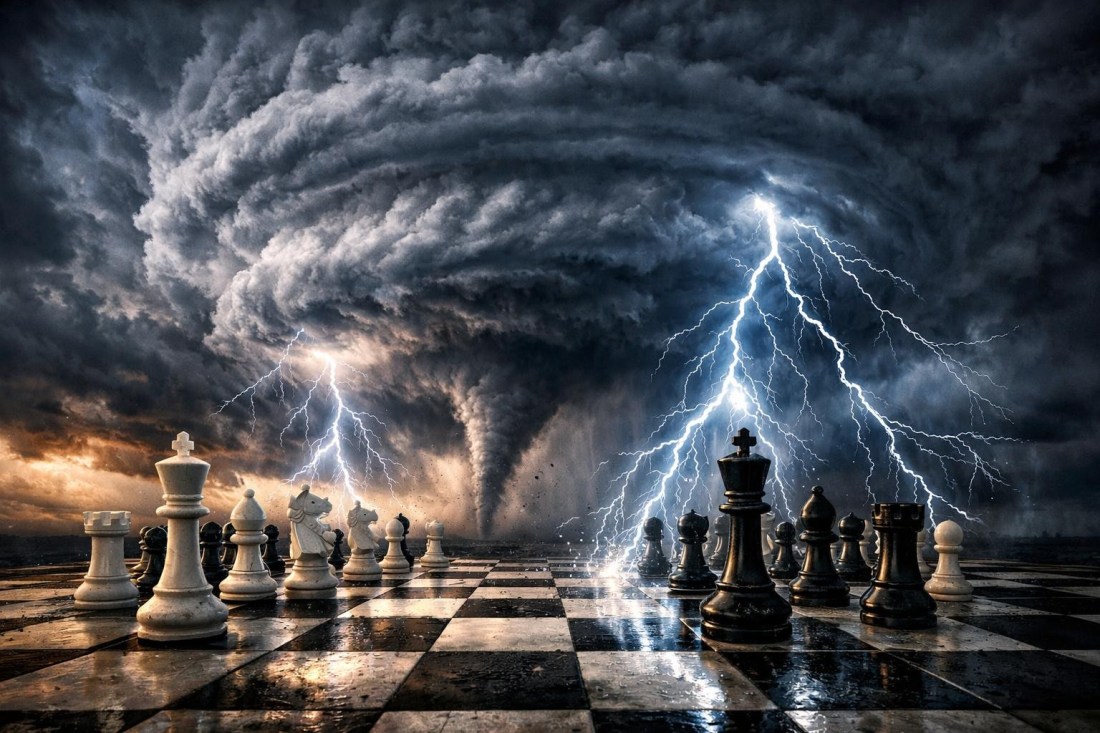
Chess pieces on a board with a tornado and lightning storm in the background

My dear readers, as you may all have gathered by now, I love Chess. So when I saw Chess Mates on Netflix, I immediately watched.

It revolves around Magnus Carlsen, the undisputed greatest chess player of his generation, facing off against Hans Niemann, a brash young American talent who rose through online chess during the pandemic boom. What starts as a dramatic over-the-board victory quickly spirals into one of the most bizarre and talked-about controversies in modern sports history.

Magnus Carlson is convinced that the young Hans cheated. The first question that arises is how. They search for devices before each match.

It deals with the Carlsen-Niemann scandal with such intelligence, balance, and cinematic flair that it feels more like a high-stakes thriller than a standard sports doc. From the very first minutes, the film hooks you. It masterfully sets the stage:

The production quality is outstanding. Netflix spared no expense with crisp archival footage, sharp interviews, and smooth pacing that keeps the nearly 75-minute runtime flying by.

The directors weave together player interviews, expert analysis from grandmasters, journalists, and even some of the wild online speculation (yes, including the infamous “anal beads” rumors) without ever feeling exploitative. They let the story breathe while providing real context about the pressures of elite chess, the explosion of online play, and the challenges of proving (or disproving) cheating in a game where engines are stronger than any human.

I was particularly impressed by how even-handed the documentary feels. It gives both sides a voice — Carlsen’s deep frustration and skepticism, Niemann’s defiant personality and claims, and the broader chess community’s divided reactions. No cheap villain-making here; instead, it explores the human elements: ego, genius, paranoia, ambition, and the blurry line between intuition and suspicion at the highest levels.

The talking heads are excellent — thoughtful, articulate, and sometimes refreshingly candid. The way the film builds tension around key games, analyzes critical moments without drowning non-chess players in notation, and examines the aftermath (including the lawsuit and lingering bad blood) is superb. Even if you only have a passing interest in chess, the universal themes of rivalry, trust, and scandal make it incredibly accessible and entertaining.

Overall, I was more inclined to agree with Niemann. Carlson comes across as very smug to me. The fact that Niemann cheated online when he was 16, 17 hardly proves much. Lots of people cheat at that age I’m sure. At leasr he wasn’t on drugs, right.

This gets four out of five stars from me.

Wheelchair Wars (i)

Oh my Emperor, please let me suffer and die in your name – A nun’s prayer from The Order of Deliverance

The Emperor is our God; may we suffer greatly for our salvation – A nun from the Order of Retribution

Our Emperor, who doth rule from Earth,

Hallow be thy name,

Thy Empire conquer all,

What is done on Earth pervades the Universe

Give us your spirit and courage,

Forgive us any trespass

And deliver us to your Service

The chanting reverberated through Audrey’s body. Her two surviving roommates were on their knees on each side of her, and her wheelchair. In front of them, holding a wooden triangle, in her habit was Sister Nora. A tall woman with an aquine face, she towered over them. Her face is stern. The chanting has been going on for nearly half an hour in the small prayer room.

“That’s enough now, girls. You can go back to your room.” Sister Nora spoke in an authoritative tone, devoid of any love or intimacy.

The two girls on either side of Audrey rose, their faces twisted in pain from their stiff knees.

Audrey struggled to reverse and turn her manual wheelchair in the small space between two aisles of pews. One of the girls begins to push her and whispers into her ear. “I’ll let you take it easy, since it’s your last night with us. Ya lucky bitch.” Audrey looked back at her friend, Grainne, with a small smile. The other girl was Mary.

The few minutes it took to reach the dormitory down narrow, dark corridors were spent in silence.

Their dormitory was large with enough space for thirty girls. But there were only the three of them, and they clustered near the door. A pang shot through Audrey when she thought of all those that were missing. Disease had taken many, batterings from the sisters took some more. The others were sold to slave in the brothels.

Audrey’s movements were slower than those of others. It took longer for her to remove her purple uniform. That, and she couldn’t walk.

After lifting up her footplates and parking beside the bed, she used her hands to propel herself onto it.

This was a time to sleep, and the lights would switch off in a few minutes. But that rarely happened. The darkness was the only time they had when they could be sure they were not being watched.

Grainne was the first to speak. “Going to miss you Audrey.”

“Yeah, me too,” Mary whispered.

Tears rolled down Audrey’s face. “Yeah, me too. And I hate the thought of leaving you here.”

“I doubt we’ll be here much longer,” Grainne replied. “One of the sisters told we’re being sold to Richies in a few days. I hate the thought of having to please all those old, smelly men. I’d rather have an opportunity like you, even if it risked death.”

“I don’t know if I could be as brave as Audrey,” Mary murmured, “You have already had so many great victories. And now tomorrow, you get to leave this place. The Na Fianna compound has to be better. At least one of us has a chance.”

Then there was silence.

When Audrey woke in the morning, they were gone. Instead, Sister Ita stood at the side of the bed. A round woman with piercing brown eyes. “Come on, get dressed. I’m to bring you to the Na Fianna compound. Give me a shout when you are ready.” With that, she turned and went to wait outside.

Audrey grimaced. Sister Ita was the last person she wanted to spend her day with. She was renowned for her vicious nature and taste for some of the younger girls. She tried to put such thoughts in the back of her mind.

As they left the convent, they paused in front of the large metallic triangle hanging from the ceiling. “To the eternal power of the Emperor,” they said in unison.

Outside the central door, they were immediately hit with the smell. A foul mixture of sweat and excrement. The thoroughfare was crowded with children in rags. “Why doesn’t the Emperor just annihilate this scum?” Audrey knew that the Sister wasn’t expecting a response.

The thoroughfare was a large area with a high ceiling. But the rest of the journey was down narrow passageways with poor lighting. Some of the living spaces they passed didn’t even have front doors. Audrey could see into the little hut rooms that passed as their abodes.

It took two hours to reach the Na Fianna compound. Audrey smiled with glee every time the Sister moaned about having to push her creaky wheelchair and her meagre belongings.

Serves the bitch right after all she has done.

Oreus was waiting for them as they entered the bright and clean compound. The Sister gasped at the limbless man in the powerful, armed wheelchair. Audey had met him previously and said a warm hello.

Oreus ignored the Sister as if she were not there. He ordered one of his men to lift Audrey into an electric wheelchair.

“Now, you can come and go as you please, Audrey. Never again will you have to rely on a walker for movement,” Oreus voice boomed, “now follow me.”

Audrey looked around to see that the hated Sister was gone before pushing the joystick to follow Oreus. There were others there with all different manners of shapes, sizes, and malformations. She hoped to get to know many of them better in time.

“This is your quarters. Battle practice in an hour or so. See you again then.You should take every moment here very seriously. Your life depends on it.”

The room was more spacious than she had anticipated. There was a single bed with white sheets and a pillow. There were no stains like back at the convent. There was even a drawer for her clothes. There were some blotches on the green wall, but that wouldn’t bother her.

An hour later, she had unpacked and gone to the great hall for training.

A Knight of the Seven Kingdoms: Stunning Visuals and Storytelling

My dear readers, I have currently watched the first three episodes of A Knight of the Seven Kingdoms. It’s a slow burner but it’s growing on me. It is a captivating return to the world of Westeros, offering a refreshing, character-driven story that proves the Game of Thrones universe (it is set one hundred years prior to the last series) still has rich tales left to tell. Rather than relying on massive battles and political spectacle alone, the series shines through its intimacy, emotional depth, and timeless sense of adventure.

Created by Ira Parker and George RR Martin, it is the third television series in Martin’s A Song of Ice and Fire franchise and is an adaptation of the Tales of Dunk and Egg series of novellas, beginning with The Hedge Knight. It stars Peter Claffey as Ser Duncan “Dunk” the Tall, the titular hedge knight, and Dexter Sol Ansell as his squire Aegon “Egg” Targaryen.

At the heart of the story is the unlikely duo of Ser Duncan the Tall and his sharp-witted squire, Egg. Their relationship is the soul of the series—warm, humorous, and deeply human. Duncan’s sincerity and moral compass contrast beautifully with Egg’s intelligence and hidden nobility, creating a dynamic that feels both authentic and endearing. Watching their bond grow across each episode is as rewarding as any grand plot twist.

Visually, A Knight of the Seven Kingdoms is stunning. The cinematography captures the beauty and brutality of the medieval-inspired landscapes with remarkable detail. From dusty tournament fields to quiet country roads and imposing castles, every setting feels alive and immersive. The production design and costumes further enhance the authenticity of the era, grounding the fantasy in a tangible, believable world. Of particular note, the scenery is from Northern Ireland.

So far, I give it four stars out of five and was happy to hear its getting a second series. I just hope that the ending is better than Game of Thrones.

Why Dune is a Must-Read for Sci-Fi Fans

I finally did it, I read the novel Dune, written by Frank Herbert and originally published way back in 1965. It’s a significant feat, at one hundred and eighty thousand words. And every page was worth it! It’s one of the best-selling science fiction novels of all time.

Dune is set in the distant future in a feudal interstellar society, descended from terrestrial humans, in which various noble houses control planetary fiefs. It tells the story of young Paul Atreides, whose family reluctantly accepts the stewardship of the planet Arrakis. While the planet is an inhospitable and sparsely populated desert wasteland, it is the only source of melange or “spice”, an enormously valuable drug that extends life and enhances mental abilities. Melange is also necessary for space navigation, which requires a kind of multidimensional awareness and foresight that only the drug provides. As melange can only be produced on Arrakis, control of the planet is a coveted and dangerous undertaking.

This is one of those rare novels that feels vast without ever losing its grip on the reader. From the opening pages, Herbert immerses us in the harsh deserts of Arrakis, a world where sandworms rule, water is sacred, and politics are as deadly as the climate. The setting is not just a backdrop but a living system, intricately tied to culture, religion, economics, and power. Few science fiction novels build a universe that feels this coherent, purposeful, and alive.

The level of detail does mean it can be a hard slog at times, but I became increasingly engrossed. As a writer of science fiction myself, reading the novel spoke to me about the immense importance of world-building and that even minute details are important.

The political intrigue is equally gripping. The power struggle between House Atreides, House Harkonnen, and the Emperor unfolds with the complexity of a grand historical drama. Herbert trusts his readers, refusing to over-explain, and instead allows meaning to emerge through dialogue, internal monologue, and carefully placed details. This approach rewards close reading and makes the world feel ancient and layered, as if the events of the novel are just one chapter in a much larger history.

Herbert’s treatment of ecology was remarkably ahead of its time. Arrakis is a planet shaped by scarcity, and the Fremen’s intimate understanding of their environment is portrayed with deep respect. The idea that an ecosystem can be deliberately transformed—and that such transformation carries cultural and moral costs—feels strikingly modern. The sandworms, the spice melange, and the planet’s fragile balance form one of the most memorable and meaningful ecological systems in all of science fiction.

Ultimately, Dune endures because it combines epic storytelling with serious ideas, without sacrificing tension or wonder. It is a novel that challenges the reader as much as it entertains, offering action, mysticism, and political drama while quietly probing the dangers of power and prophecy. More than sixty years after its publication, Dune remains not just a cornerstone of science fiction, but a profound and unsettling meditation on the future of humanity itself.

Five stars out of five from me.