Surviving the Jehovah’s Witnesses: An HBO Docuseries Review

Shadowy human forms merging with golden light energy in space

To be honest, I haven’t come across any Jehovah Witnesses recently. They used to be always around the town I’m from but in the last few years, not so much. Perhaps, it’s due to damaging revelations such aa this Spanish language series.

Surviving the Jehovah’s Witnesses (2026) is a powerful, unflinching, and ultimately hopeful HBO docuseries that stands as one of the most compelling explorations of high-control religious groups in recent years. This three-episode Spanish production (originally titled something like Sobrevivir al Paraíso) premiered on February 20, 2026, and is now streaming on platforms like HBO Max, Prime Video, and Hulu. It delivers raw, intimate testimonies from former members while providing essential historical and psychological context

The series smartly structures its narrative across three chapters—”Genesis,” “Exodus,” and “Apocalypse”—mirroring biblical themes while chronicling the real-life journeys of its protagonists. It begins by grounding viewers in the origins of the Jehovah’s Witnesses, their core beliefs, and the genuine appeal that draws people in: a tight-knit community, a clear sense of purpose, and the promise of a paradise earth. This balanced setup avoids cheap shots and instead builds empathy, helping audiences understand why rational, loving people might dedicate their lives to the organization.

What follows is profoundly moving. Former members—primarily from Spain—share deeply personal stories of growing up under strict rules, constant surveillance, shunning (disfellowshipping), and the ever-present fear of Armageddon.

Visually and narratively, the series shines. The editing, while occasionally stylized with neon doodles over archival footage (a choice some critics found jarring but which I found creatively effective at highlighting the surreal nature of the experiences), keeps the pace tight and engaging across its roughly 2-3 hour runtime. Interviews are handled with sensitivity and professionalism, allowing survivors to speak at length without interruption.

In an era of increasing scrutiny on institutional power, Surviving the Jehovah’s Witnesses excels by humanizing a faith often misunderstood from the outside. It doesn’t attack beliefs per se but thoughtfully examines practices like mandatory proselytizing, blood transfusion refusals, handling of child abuse allegations, and the suppression of critical thinking. The result is enlightening rather than preachy, fostering important conversations about consent, indoctrination, and the rights of children in religious environments.

Three stars out of five from me.

Trust Me: The False Prophet – A Gripping True Crime Docuseries

Desert outpost with buildings and watchtowers at sunset with mountains in background

My dear readers, I thought I had already heard the endgame of the FLDS but there’s more, much more. Trust Me: The False Prophet is an outstanding four-part true-crime docuseries on Netflix that stands out as one of the most gripping, authentic, and impactful investigative documentaries in recent years. Directed by the Emmy- and Peabody Award-winning Rachel Dretzin (known for her work on related FLDS stories like Keep Sweet: Pray and Obey), it masterfully blends real-time undercover footage, candid interviews, and a high-stakes narrative that feels more like a thriller than a standard retelling of events.

t its core, the series follows cult expert and survivor-advocate Christine Marie and her videographer husband Tolga Katas, who initially moved to the insular FLDS community in Short Creek, Utah (on the Utah-Arizona border), around 2016. Their goal is to document and support a fractured group still reeling from the imprisonment of notorious leader Warren Jeffs. What begins as an observational project quickly evolves into something far more urgent and dangerous: an undercover investigation into Samuel Bateman, a self-proclaimed “prophet” who positions himself as Jeffs’ spiritual successor and builds a breakaway faction around claims of divine authority.

What makes this docuseries so compelling is its unprecedented access. Christine and Tolga embed themselves deeply. Bateman’s narcissism and delusions of grandeur make it easier to capture his trust, enabling them to capture hundreds of hours of raw, intimate footage of his inner circle. Viewers get a front-row seat to how Bateman manipulates followers, “marries” dozens of women (including minors), and exerts control through a toxic mix of religious doctrine, paranoia, and abuse. The series doesn’t just recount crimes after the fact; it shows the manipulation unfolding in real time, including chilling moments of testimony, community dynamics, and escalating red flags that the couple documents while pleading with authorities to intervene.

The production shines in its balance and depth. It avoids sensationalism while never shying away from the disturbing realities of Bateman’s actions, which involved a multi-state conspiracy of child sexual abuse and exploitation. Yet it also humanizes the victims and community members—showing the psychological grip of cult dynamics, the evolution of belief systems, and the bravery of those who eventually speak out or break free. Christine’s perspective as a cult expert and advocate adds profound empathy and insight, while Tolga’s videography provides an immersive, fly-on-the-wall quality that feels incredibly immediate and authentic. The editing keeps the pacing tight across the four episodes, building tension toward the FBI raid, Bateman’s arrest, and even a shocking post-arrest kidnapping plot.

Critics and early viewers have praised it highly for good reason: it’s urgent, revelatory, and emotionally resonant. The bravery of Christine, Tolga, and the survivors who shared their stories is nothing short of inspiring—it highlights how ordinary people with cameras and conviction can help bring justice and shine a light on hidden abuses. The docuseries also thoughtfully explores broader themes of power, vulnerability in faith communities, and the long shadow of figures like Jeffs, without passing blanket judgment on all FLDS members

Visually, the desert landscapes of Short Creek evoke isolation and tension perfectly, complemented by effective (if sometimes on-the-nose) scoring that heightens the drama without overwhelming the human stories. At a compact four episodes, it never drags, delivering shocking revelations, twists, and moments of genuine hope amid the darkness.If you’re a fan of intelligent true-crime documentaries that prioritize firsthand evidence, survivor voices, and real-world impact over cheap thrills, Trust Me: The False Prophet is an absolute must-watch.

It gets five stars out of five from me.

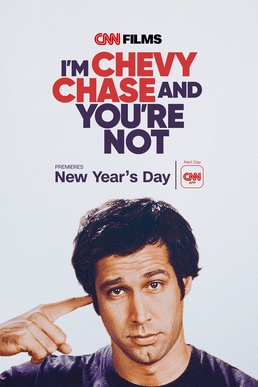
Documentary Review: I’m Chevy Chase and You’re Not

Those of my readers around in the eighties will probably remember Chevy Chase. I remembered him from comedic films from the time period, but it had been many years since I even thought of him.

So, I said I’d give this documentary film a try. Its name is “I’m Chevy Chase and You’re Not.” From the start, it becomes clear that his bad reputation as a coworker will be a big focus, as well as his past drug abuse.

The film does an excellent job of reminding you just how seismic Chase’s impact on comedy really was. Saturday Night Live doesn’t just get a nod—it gets a victory lap. Watching early clips of Gerald Ford tumbling down stairs and Chase anchoring Weekend Update is like seeing comedy history being invented in real time, mostly held together with duct tape and confidence. The documentary smartly lets these moments breathe, trusting the material to remind you why Chase was, for a time, the funniest man in America.

Then come the movies, and oh, what a parade it is. Caddyshack, Fletch, National Lampoon’s Vacation—the documentary rolls through them like a greatest-hits album where every track is either iconic or inexplicably quotable. There’s a genuine joy in revisiting how Chase perfected the art of the smug, clueless, yet weirdly lovable leading man. His comic persona—equal parts charm and chaos—gets the credit it deserves as a blueprint for generations of comedians who followed.

But then there are the drugs. And he did a lot. And he could be mean. The drug abuse, his comedy, and this meanness all likely have one source – an abusive mother. He developed it as a coping mechanism. It is one he still uses as he makes jokes to deflect difficult or awkward moments, even in his eighties. Still, even his meanness comes off as him being a bit of a rascal.

When the stories get messy. You come away with the sense that Chase’s imperfections didn’t cancel out his contributions—they complicated them, humanized them, and, strangely, made his successes even more impressive.

By the end, the documentary feels less like a verdict and more like a well-earned, slightly crooked standing ovation. It celebrates a man who made millions of people laugh, sometimes by falling down, sometimes by being the joke, and sometimes by being in on it all along.

It gets four out of five stars from me.

If you’ve seen it, what did you think?

Exploring Football’s Greatest Con: King of Lies Episode 1

Hello, my dear readers. Took an annual leave today and decided that it was important for it not to be wasted. So, I watched TV and the above documentary, in particular.

Episode 1 of King of Lies: Football’s Greatest Con launches the series with an enticing blend of mystery and tension, but it’s not without its stumbles. The premiere does a solid job establishing the central scandal, which revolves around the sale of Notts County Football Club (the oldest professional football club in the world), teasing just enough information to pique curiosity without revealing too much too soon. The opening sequences are atmospheric and stylish, setting a tone that’s equal parts investigative thriller and sports documentary.

The documentary’s greatest strength is its interviews. I was stunned to see Sven-Göran Eriksson pop into the story. The interview is from the depths of sickness shortly before he died. Unfortunately, he gets caught up in it all and quite bizarrely ends up in North Korea at one point!

However, the pacing is noticeably uneven. Some sections feel stretched out, lingering on details that don’t yet carry emotional or narrative weight. The editing sometimes jumps abruptly between timelines or perspectives, which can make the episode feel scattered,

Russell King is the conman leaving ruin wherever he goes. It’s quite a complex con, almost masterful. But it’s impossible to see his out. He needed the con or new cons to keep being successful, to not get caught.

An interesting documentary. I learned that you can’t get people to do what they don’t want to. The art of persuasion is giving them a reason to do what they want.

Yes, so, not sure if that’s a positive, but what the hell.

It gets three stars out of five from me.

Have you seen it? What do you think?

Episode 1 of King of Lies: Football’s Greatest Con is currently available on Sky Documentaries.