Why Blood Sacrifice Is a Must-Watch Nordic Noir on Netflix

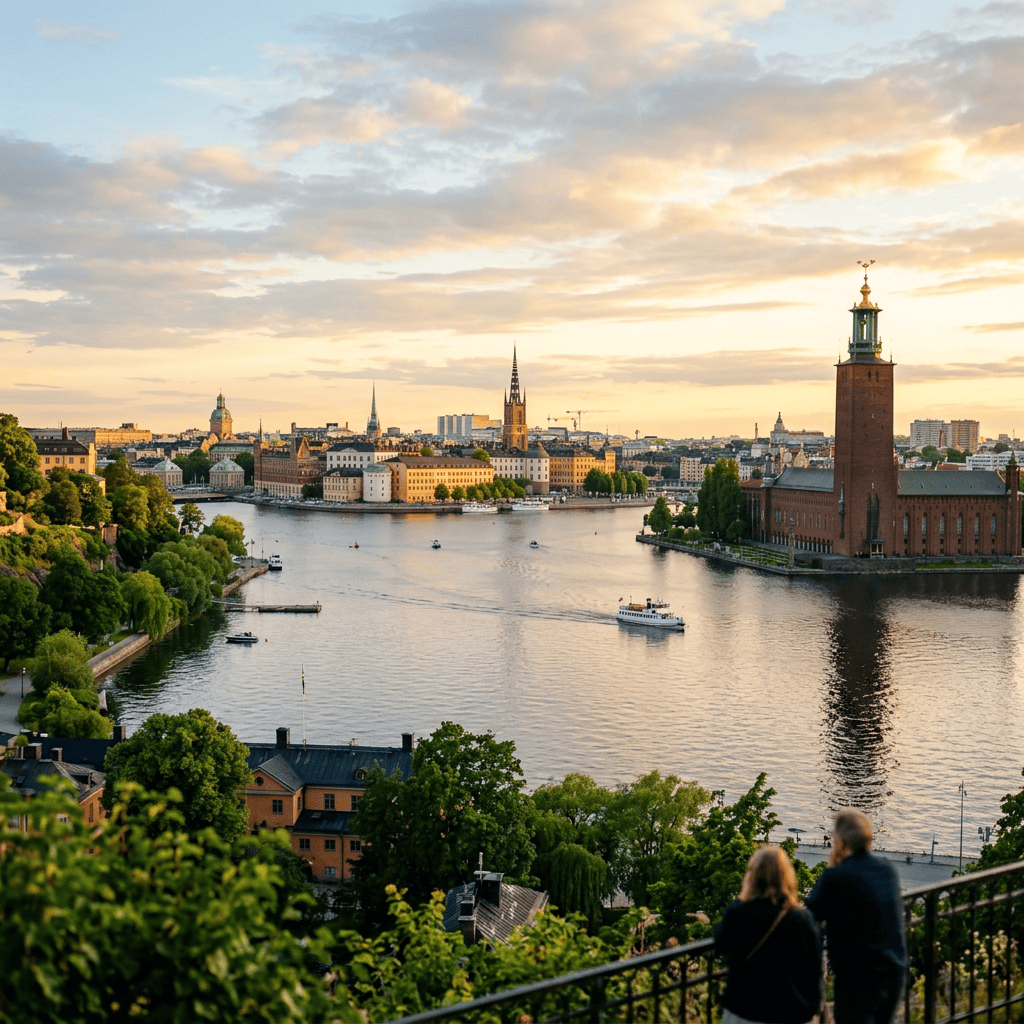
Stockholm waterfront with City Hall tower, boats, and sunset

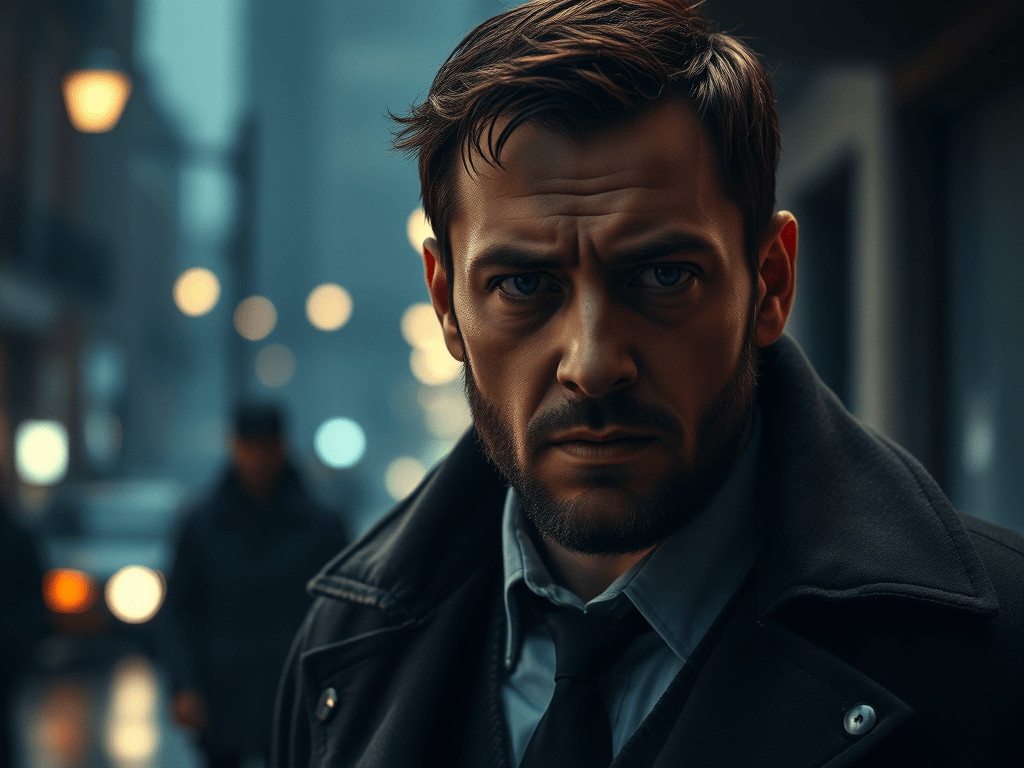
Now, for something a bit different from Sweden. Blood Sacrifice is one of the sharpest, most satisfying Nordic noirs Netflix has delivered in years. The five-episode Swedish series, created by George Kay (Lupin, Hijack) and directed by Kristoffer Nyholm (The Killing), dropped on August 20, 2026 and immediately announced itself as a late-summer standout: taut, emotionally grounded, and constructed for a single sitting.

It is summer in Stockholm, when the light never fully dies. An emergency call about a home invasion at a summer house in the archipelago sends two officers to a scene that appears empty. The next day their bodies are found. What follows is a string of attacks that appear to target the police themselves. Detective Thomas Berg (Jakob Oftebro) is put in charge and, against every instinct, turns to the last person he wants involved: his estranged father Alfred (Peter Andersson), a retired detective whose career ended in disgrace. That is the setup. The show never wastes it.

It has facets of a love story between an estranged father and son… wrapped up inside a dark horror. The procedural engine is strong—the killer’s pattern, the institutional pressure, the sense that time is running out—but the real voltage comes from the relationship between Thomas and Alfred. Oftebro plays the younger Berg as tightly controlled, professional, and quietly furious at the man who was never there. Andersson gives Alfred a lived-in mix of bitterness, residual brilliance, and the particular loneliness of someone who knows the job better than the people still doing it. Their scenes together have the uncomfortable intimacy of people who share history they would rather not examine. The supporting ensemble (Electra Hallman, Henrik Norlén, Lisette T. Pagler and others) feels lived-in rather than decorative.

Nyholm’s direction is a major asset. He uses the strange, lingering Nordic summer light as both atmosphere and metaphor: everything is visible and nothing feels safe. The Stockholm and archipelago locations are photographed with a cool precision that never tips into postcard prettiness. Violence, when it arrives, is sudden and ugly rather than stylized. The five-episode length (episodes run roughly 44–58 minutes) is the show’s secret weapon. There is no room for padding. Clues land, tensions escalate, and the father-son dynamic is allowed to breathe without being subordinated to endless red herrings. The result is a series you can finish in an evening and still feel you’ve watched something substantial.

Four stars out of five from me.
The Charles Manson Tapes: Manipulation and Control in True Crime

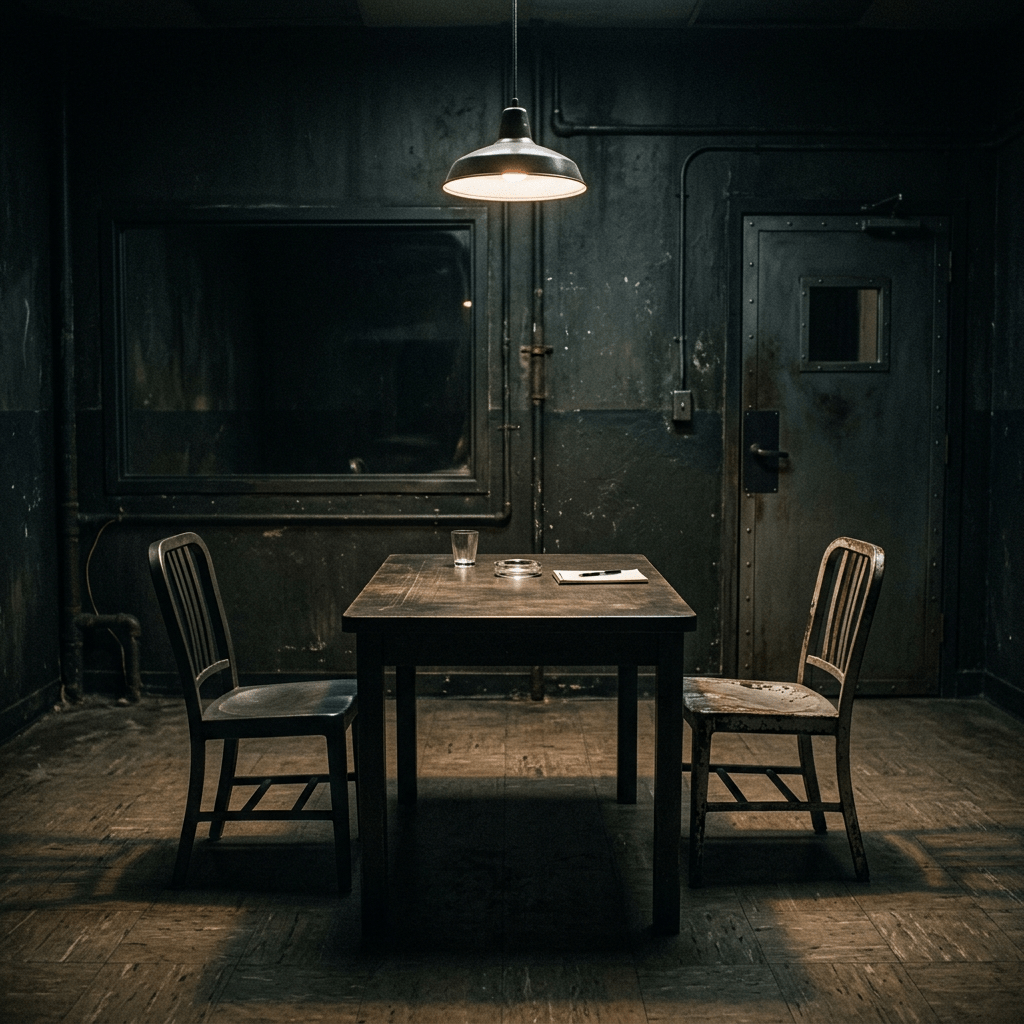
Empty table with two chairs in a dim industrial room

My dear readers, this is obviously not for the faint-hearted. So, I just had to watch.

Conversations with a Killer: The Charles Manson Tapes (often referred to simply as The Manson Tapes) is a gripping, meticulously crafted three-part Netflix docuseries that stands as a strong and fitting finale to Joe Berlinger’s long-running true-crime anthology. Released in August 2026, it draws on previously unreleased prison phone calls made by Charles Manson in his later years, combined with archival footage, contemporary interviews with former Manson Family members and law enforcement, and carefully selected period material to deliver a chilling yet insightful examination of one of the 20th century’s most infamous cases.

What elevates this entry is its focus on the systems of manipulation and control Manson built rather than simply recycling the well-worn mythology. The unreleased recordings give viewers direct access to Manson’s voice and personality in a way that feels immediate and unsettling—his chameleon-like ability to shift personas, his self-justifications, and the lingering charisma that once drew in followers come through without heavy-handed narration. It also briefly deals with how he learned some of his techniques. For instance, the book “How to make friends and Influence People is referenced. Hearing those calls alongside accounts from people who lived through the era creates a layered portrait of how a small-time criminal leveraged the disillusionment of the late-1960s counterculture to assemble a devoted group.

The three episodes are tightly structured and effectively paced. The first traces Manson’s background and the formation of the Family at the height of the hippie movement, showing how promises of love, acceptance, and freedom became tools of psychological dominance. The second examines the escalation to the 1969 Tate-LaBianca murders, exploring the delusions and dynamics that turned followers into killers while providing context that challenges some of the more sensationalized popular narratives. What really comes across is how much Manson was a tool of his own destruction. The third covers the trial and its media circus, illustrating how Manson and the Family turned the courtroom into a grotesque spectacle that cemented their place in cultural memory. Archival voice recordings of key figures such as Tex Watson, Susan Atkins, and Leslie Van Houten, paired with reflections from survivors of that world, add emotional weight and human detail.

Berlinger’s direction maintains the series’ signature strengths: a restrained use of reenactments where needed, strong visual storytelling through archival material, and an emphasis on letting the subjects’ own words drive the narrative. The result is both riveting and ominous—true crime at its most inquisitive. It doesn’t shy away from the horror of the crimes or the media frenzy that followed, yet it succeeds in examining the mechanisms of influence and the cultural moment that allowed them to take root. Viewers familiar with the case will appreciate the fresh audio and the effort to center those who experienced the events firsthand; newcomers will find a clear, compelling introduction that avoids pure sensationalism.

As the concluding chapter in the Conversations with a Killer lineup (following the Bundy, Gacy, Dahmer, and Son of Sam installments), The Charles Manson Tapes feels purposeful. It uses newly available material to dig into themes of control, myth-making, and the enduring fascination with this particular chapter of American crime history. The series is TV-MA for good reason—its content is dark and disturbing—but for fans of thoughtful true-crime documentaries, it offers a substantial, well-produced watch that rewards attention across its roughly three hours. If you’re looking for a detailed, tape-driven exploration of Manson’s rise, the murders, and their aftermath, this is a strong recommendation and a memorable close to Berlinger’s anthology. Four stars out of five from me.

Tom Hardy Shines in Mobland : A Crime Drama Review

Ladies and gentlemen, this is straight off the press. If you are going to watch one crime series this year, then let it be this one. First off you’ll recognize the list of truly great actors involved – Tom Hardy, Guy Richie, Helen Mirren and Pierce Brosnan.

The Series follows the coming and going of a family of Irish gangsters called The Harrigans. They are vicious, but it is to warm to them. Most, if not all the action revolves around Tom Hardy who plays Harry DaSouza, a loyal fixer for the family. He finds himself in different predicaments as he tries to get the family out of one mess after another. All the time, his own family are causing further difficulties.

From Wikipedia – The Harrigans, a London crime family, find themselves in a battle with the Stevensons that could end syndicates and their lives. Harry Da Souza is a street-smart and formidable fixer employed by the Harrigan family to navigate and mitigate the escalating conflict threatening their empire. As tensions between the families intensify, Harry is tasked with protecting the Harrigans’ interests and preventing an all-out gang war.

The series is gritty, full of violence and realistic twists. Da Souza is not portrayed as some sort of Superman, and the different stories seem plausible.

As usual, it’s hard to know what future series will be like. They may just get silly as sometimes happens. But Series 1 is a must see for raw drama and emotion. At times, it feels like a grand Shakespearean play. Watch it, whatever it takes. It get five stars out of five for me.

Review of “The Missing Ones” by Patricia Gibney

This was published way back in 2017. It is the author’s debut and also the first in the renowned Lottie Parker series. The author is from the same town as myself. The story is set in Ragmullin, a clever anagram of the real town.

Make no mistake, she is picturing Mullingar at every stage. It made reading the novel quite an intimate experience, immediately recognizing where the different scenes fictionally occurred. The scenes of bitter cold and snow brought my memory back to a particularly harsh few winters from nearly a decade ago.

The central character is Detective Lottie Parker. A deeply flawed hard-nosed detective trying to juggle a demanding job with a complicated family life. Her husband died a few years previous leaving her a single parent.

There are numerous complex relationships like Lottie’s relationship with fellow detective Boyd, with her Sergeant, and then each of her children.

The case she is investigating is a series in a presumably normally quiet Ragmullin. The first occurs at the town’s Cathedral and it all revolves around what happened many years beforehand. What follows is a grotesque and excellently written tale of child abuse, corruption, and murder.

It is beautifully crafted and you’re never quite sure where it will go next or who is responsible for the grizzly killings. The author has stated that she just likes writing but this was excellently planned and thought out.

The scenes of child abuse may be too much for many and for those with a weak disposition, I’d give it a wide berth. But if you’re looking for a good crime thriller, look no further. My rating is five stars out of five.

Remember to subscribe if you enjoy my writing.

Pandemic of Crime (comedy)

My dear readers, today I have to inform you about something very serious in these awful Covid-19 times.  There is a much greater pandemic that you need to fear – it is a pandemic of crime.  But not of drugs and illicit sex.

I think we can still all remember the good old days.  Remember, when all you had to worry about was getting high or maybe being robbed or knifed on your way to get some groceries.

But now the world is beset by a plague of social distancing crime.  All you have to do is look out your window to see the horror of people walking too close together or too far from their homes.  The worst is the little kiddies or what I like to call “germ grenades”.  Honestly, what way are they being raised to not know to come within two metres of anyone.

Things have gotten so bad I had to report my own parents yesterday.  They told me where they were going for their “walk” and when I did the calculation after they left, it was 2.05km away.  You can only imagine my shock.  Talk about setting their impressionable 40 year-old son a bad example.  Well being the good citizen that I am, I immediately rang the local Garda Station.

“You want to report your parents, really?”

“Yes Sir,” I replied with conviction, “and you should fine them.  They knew what they were doing.”

Things haven’t really been the same in the house since.  The parents keep saying that they don’t want me there anymore.  Eh, haven’t they learned anything?  That would just be another breach.  I told them not to worry,  I won’t leave them alone during the crisis.

That’s it for now readers.  Stay safe everyone.