Wheelchair Wars Audrey 3 (iv)

Three people inside illuminated futuristic cryogenic pods emitting mist in a sci-fi chamber

The bridge was small and difficult to drive the battle chair around. A man with long grey hair was standing in front of the viewport.

“Are you the captain?” Audrey enquired, her voice echoing around the deck.

He tuned around, adorned with deep lines across his forehead and crow’s feet. in a shabby, torn blue uniform. “Yes, I am. My name is Carthage. Sorry that the bridge is so cramped. Not very accessible. It’s not a priority where this ship is from.

Audrey shuddered. “Is there anything I need to know about it?”

He rested his hand on the captain’s seat for support. “It’s more of the shock when you come back, We will be travelling close to light speed. While you are in stasis much time will pass.”

Audrey swallowed. “I know. All in service to the Emperor.”

Carthage then continued. “Well then, you should go to your pod. When I next see you, we should have arrived.”

Audrey turned and went to the back of the ship where her pod was waiting for her. It was in the center, with row after row of other pods surrounding it.

“Enter your hibernation pods,” she bellowed.

Brona went to leave before Audrey hushed, “Not you.”

Wheelchair Wars 3 (iii)

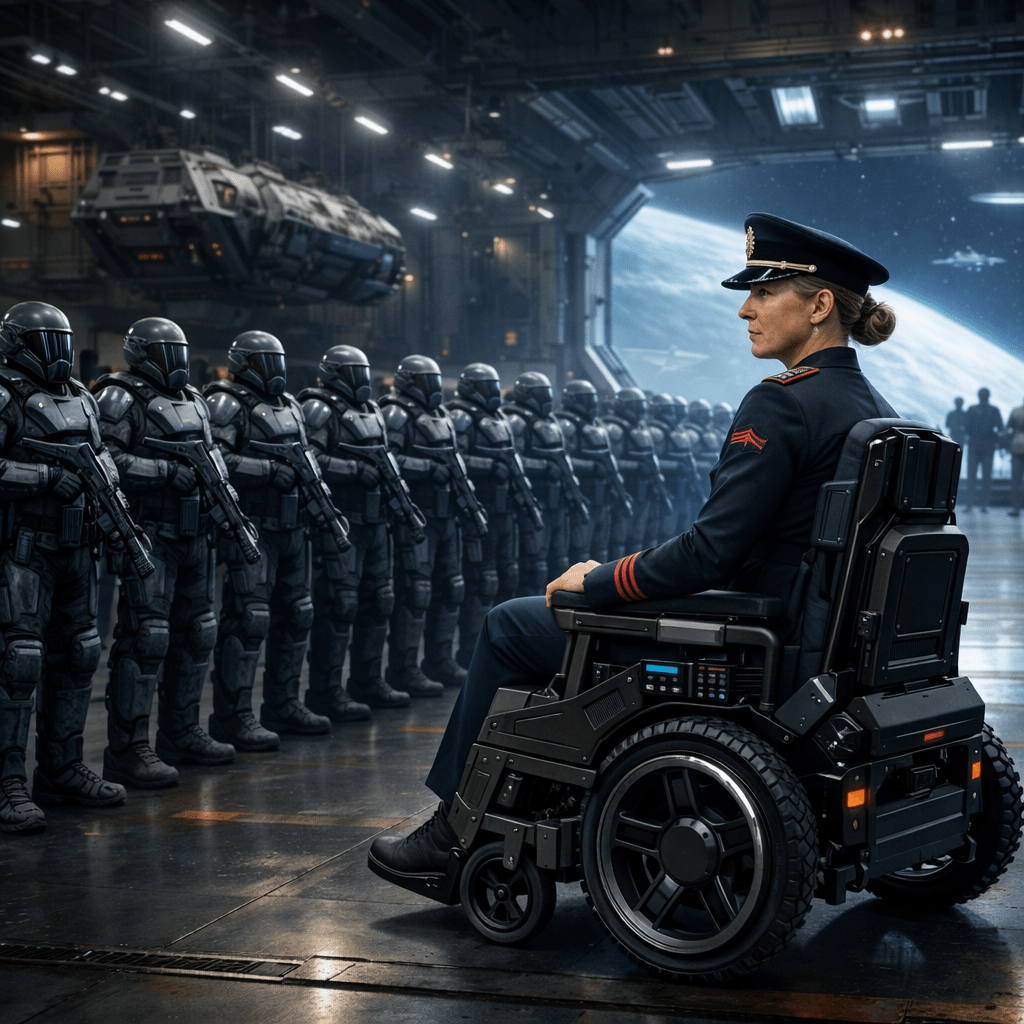
Military officer in wheelchair inspecting lined-up armored soldiers in futuristic space station

“We have been given a mission of the utmost importance by our most beloved Emperor. At all times, your total obedience and loyalty are expected.”

With that, she watched her troops, a mixture of stern-faced men and women, walk up the long ramp to the ship.

A sound of feet clattering. Audrey turned to see one of her troops running towards her.

A young woman with long, blonde hair and piercing blue eyes spoke. She was trembling. “I’m so sorry for being late. There is no excuse.”

I should really punish her. Set a good example for the others.

Audrey looked behind her. All the other troops are inside.

However, I could use an assistant. And she does look good.

“What is your name, trooper?” Audrey asks in a softer tone.

“Brona,” she replies, standing upright.

“Well, Brona, as punishment, you will be my personal assistant for the mission.”

Bron’s eyes flicker towards her and then away. “Okay, as you wish.”

“Walk behind me at all times. Speak only when spoken to. Now come along.”

Audrey pushed her joystick forward, and they made their way up the rampway into the ship. Inside, the troopers were already readying their hibernation pods.

Audrey headed to the bridge to talk to the captain.

Wheelchair Wars Audrey 3 (ii)

Rocket lifting off from a launch pad with fiery exhaust and city buildings in the background at sunset

“Your destination is over eight light-years away. It is a planet of ice and fire. Make sure to bring plenty of warm clothes. We lose heat quickly compared to the walkers. The ship Empericus 546 is awaiting you, along with over two hundred troops at your direct command.”

He turned his wheelchair around to face her.

“You will be travelling at light speed. I will have aged greatly by your return, if I am alive at all. Know that this is an important mission for the Empire.”

She replied, her voice cracking, “I will do as the Emperor commands.”

“Then, that is all, Audrey. Report to port 46Y2 in under an hour.”

Tears welled in Audrey’s eyes as she drove her chair away from Oreus’ room.

I know that I must serve the Emperor, but I thought that at least I would have Timothy by my side. I may never even see him again.

She stopped and wiped away the tears. There was much for her to do and little time.

Over fifty minutes later, she was addressing her troops, who donned white uniforms and were armed with light machine guns as they prepared to board the Empericus 546 or what they would simply call the Empericus, while on mission.

Review: The Testaments Episode 1 – A Stunning Dystopian Journey

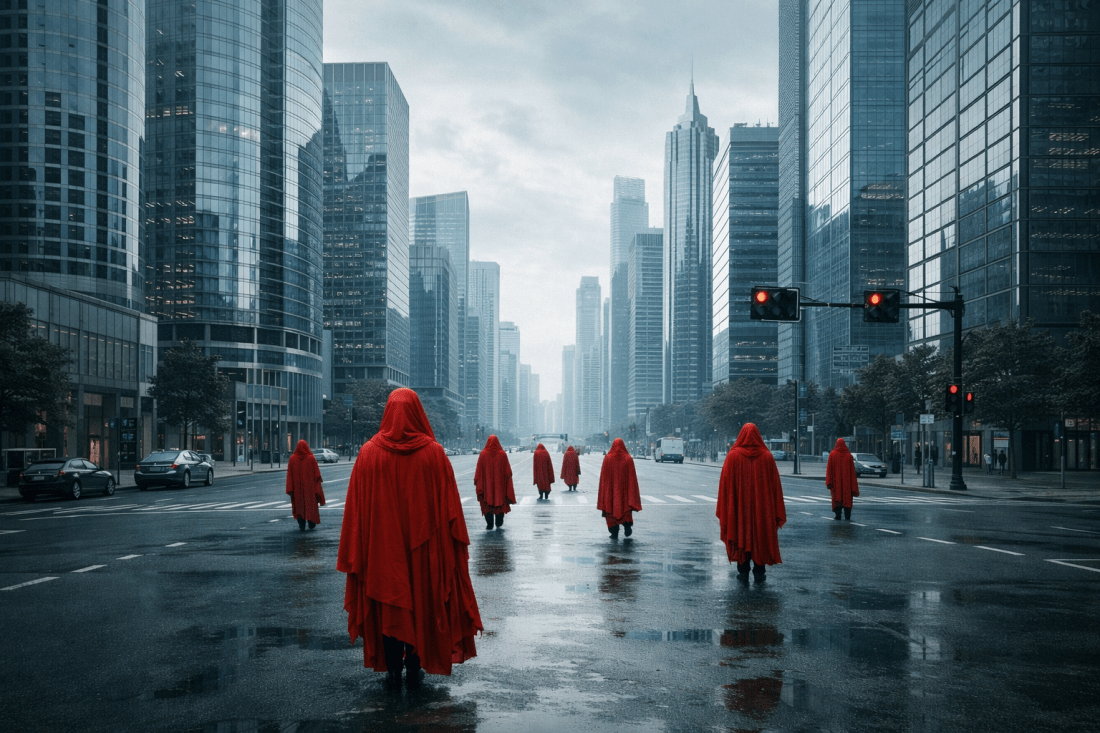
Multiple people wearing red cloaks walking on a damaged street in a destroyed city.

Ah readers, there is surely no better way to spend a Friday afternoon than reviewing a series in one of my favorite dystopian universes.

Is it strange that I loved The Handmaids Tale, being a man and all. I couldn’t care less.

Years after the events of The Handmaid’s Tale, The Testaments (on Hulu) follows two teenage girls navigating life inside the oppressive regime: the dutiful and pious Agnes (played with quiet intensity and breakout star power by Chase Infiniti) and the spirited newcomer Daisy (Lucy Halliday), a convert from beyond Gilead’s borders. Assigned as mentor and mentee at Aunt Lydia’s elite preparatory school for future wives—where obedience is enforced with brutal, divinely justified precision—their unlikely bond becomes the emotional core and catalyst for upheaval.

To date, I’ve only seen the first episode but that will change this weekend.

What makes this setup so brilliant is how it reframes the dystopia through youthful eyes. Instead of the raw desperation of Handmaids, we get the gilded cage of privilege mixed with stifling control: lavish yet suffocating halls, rigid social hierarchies, and the constant psychological weight of expected perfection. The series smartly avoids retreading familiar ground—no sea of red cloaks in the early episodes—and instead builds a textured, lived-in world that feels both evolved and eerily consistent with what came before. It’s a defiant coming-of-age tale that explores friendship, identity, rebellion, and the quiet power of connection in the face of systemic cruelty.

Visually, The Testaments is stunning. The production design contrasts opulent, pristine settings with underlying menace—think polished marble and elegant uniforms that mask the brutality beneath. Cinematography captures both the grandeur and the claustrophobia of this society, while the score enhances the emotional undercurrents without overpowering the performances.

Giving the first episode 4 stars out of 5.

Have you seen it? What did you think?

Challenging Myths: The Real History of Native Americans

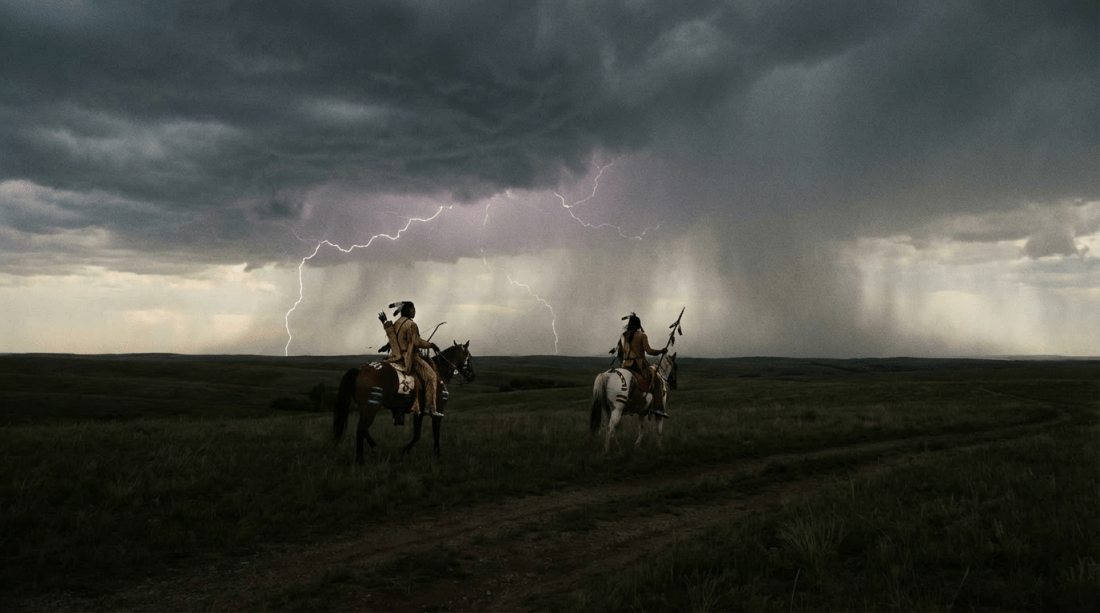
Two cowboys on horseback silhouetted against a dramatic lightning storm on the open plains.

Many of my readers may not be familiar with Matt Walsh. He is a popular right-wing YouTuber from the United States. He is as reviled as he is loved, becoming famous for his opposition to trans ideology, and especially child transitioning, describing it as child abuse.

Here, in an over one-hour-long documentary, he delves into a different contentious topic. Note that I watched it on YouTube. Also available on DailyWire+.

Matt Walsh’s “The Real History of the American Indians” is a bold, refreshing, and much-needed documentary that cuts through decades of romanticized myths and perhaps ideological propaganda. In this episode of his Real History series, Walsh delivers a clear-eyed examination of Native American history that challenges the dominant narrative taught in schools and pushed by Hollywood.

He dismantles the fairytale of universally peaceful, noble “Indians” living in perfect harmony with nature, only to be mercilessly victimized by evil European settlers. Instead, Walsh presents a more complex and historically grounded picture: one where tribes frequently engaged in brutal warfare, conquest, and slavery among themselves long before European arrival, where concepts of land ownership differed sharply from Western traditions, and where conflicts with settlers involved aggression on multiple sides rather than one-sided genocide.

He points out that pre-Civilization violence was horrific and worse on a pro rata basis than modern warfare. No prisoners were taken – everyone apart from pre-adolescents but not babies faced extermination if a battle was lost.

Although not mentioned in the series, this is one of the reasons the African populations boomed after colonization, also. Free from constant war, farmers could grow crops. Similarly, the population of Ireland grew after the arrival of the Vikings, who brought trade and settlements, reducing overall conflict.

What makes this documentary stand out is Walsh’s signature style: sharp, unapologetic, and deeply researched. He doesn’t shy away from uncomfortable truths on any side, but his core strength is exposing how selective storytelling has been weaponized to instill guilt and self-loathing in modern Americans.

Myths like the “smallpox blankets” as deliberate genocide or the idea that the entire continent was “stolen land” with no legitimate settlement are taken apart with logic, primary sources, and straightforward reasoning. The result feels liberating rather than divisive—it’s history as it actually happened, not as activists wish it had.

Visually and structurally, the film is engaging and accessible. Walsh combines narration, historical context, and pointed takedowns of mainstream shibboleths without descending into dry lecturing. Viewers come away better informed about the realities of pre-Columbian societies, intertribal conflicts, the challenges of assimilation and reservation systems, and the genuine progress that Western civilization brought to the continent. It’s a strong antidote to the guilt-tripping versions of American history that dominate today. If you’re tired of sanitized, agenda-driven accounts that treat Native Americans as cartoonish victims or infallible environmental saints, this documentary is essential viewing. Walsh does what great historians should: he tells the raw, unfiltered truth that sets the record straight and helps us understand our shared past without the self-flagellation.

Four stars out of five from me.

Have you seen it? What did you think? Let me know in the comments.

Also, don’t forget to subscribe.

The Swedish Connection: A Hidden WWII Hero

My dear readers, this is a Swedish film about a quiet, undeclared hero. The Swedish Connection (Swedish: Den svenska länken) is a World War II drama about Swedish foreign ministry bureaucrat Gösta Engzell, who develops and executes covert plans to rescue European Jewish refugees by using legal loopholes and paperwork. Released in 2026, the film stars Henrik Dorsin as Engzell and was directed by Thérèse Ahlbeck and Marcus Olsson.

It is a remarkable true story about what great things an ordinary person, not in the limelight, can achieve. It’s 1942, and neutral Germany is surrounded by Nazi Germany and its erstwhile ally Finland. A Swedish bureaucrat and his Department are doing everything they can, at times against the wishes of their government, to save as many Jews as possible by providing a connection to Sweden, and thus released.

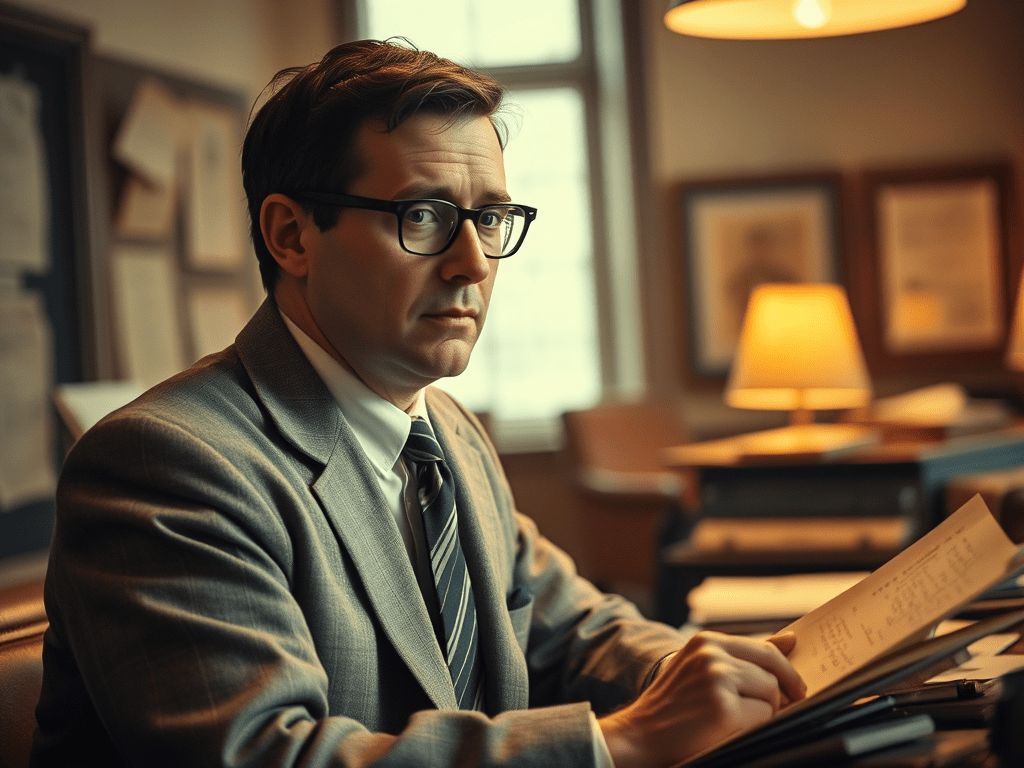
Henrik Dorsin delivers a wonderfully nuanced performance as Engzell, portraying a man who starts the story mired in rules and paperwork but grows into an unexpected moral force. His journey, guided by humanity rather than headline-making heroics, is one of the film’s most rewarding elements — it reminds us that heroism doesn’t always wear a uniform or charge into battle; sometimes it quietly persists behind desks and in government halls. Sissela Benn as Rut Vogl brings warmth, intelligence, and emotional grounding, making her interactions with Engzell some of the most heartfelt moments onscreen.

The film’s tone is another notable achievement. While it doesn’t shy away from the horrors of the Holocaust backdrop, it also finds space for hope, humility, and even light touches of humor. The result is a heartfelt, uplifting experience that honours its real-life subjects without ever feeling exploitative or overly sentimental.

The provisional visa process pioneered by Engzell’s team are credited with rescuing 100,000 Jews during the war.

Unfortunately, the Irish Government did nothing similar, when perhaps thousands more could have been saved.

Five stars out of five for me.

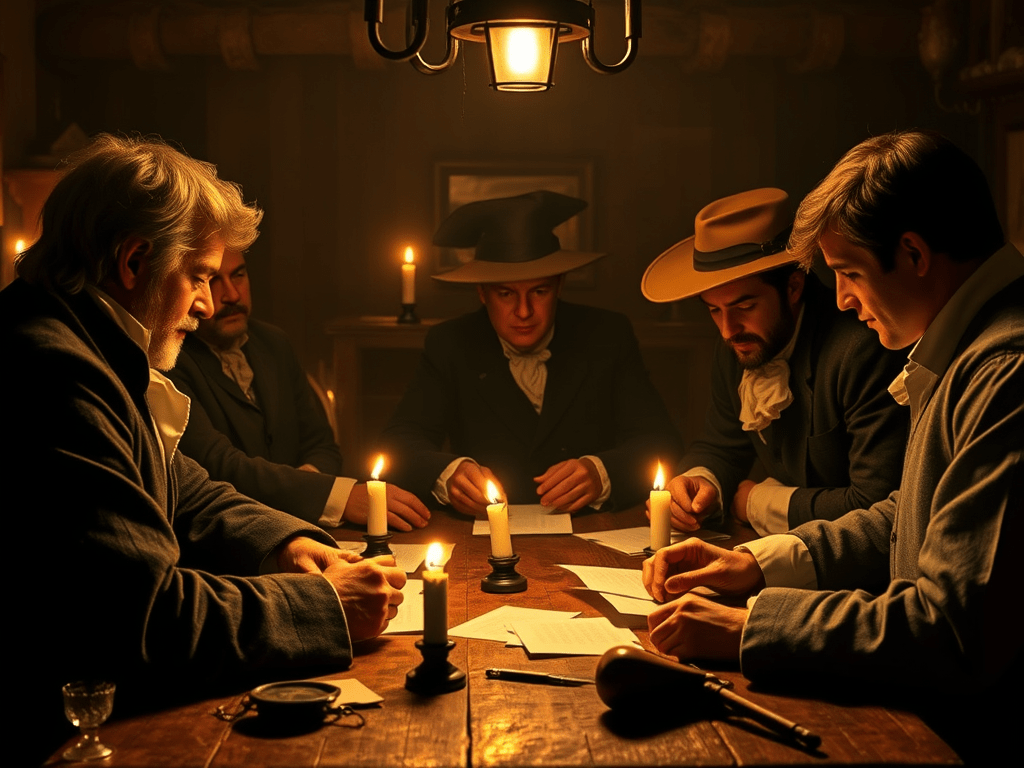
Exploring the Culper Spy Ring in Turn

Hello dear readers, I’m back to report on the Series Turn. It’s four series long, so it took a while. But it was worth it. You might wonder why I don’t give too many low ratings. Simples. If I don’t like something, I stop watching. And I loved this.

At the risk of repeating myself, Turn: Washington’s Spies (originally titled Turn and stylized as TURИ: Washington’s Spies) is an American period drama television series based on Alexander Rose’s book Washington’s Spies: The Story of America’s First Spy Ring (2007), a history of the Culper Ring.

The story covers events from 1776 to 1781 and features a farmer from Setauket, New York and his childhood friends. They form an unlikely group of spies called the Culper Ring, which eventually helps to turn the tide during the American Revolutionary War. The series begins in October 1776, shortly after British victories, recapturing of Long Island and the Port of New York for the Crown, leaving General George Washington’s army in dire straits.

But it’s going to be a long and bloody war.

It is an engaging, atmospheric historical drama that blends espionage, character-driven storytelling, and Revolutionary War intrigue into a series that is both entertaining and surprisingly educational. It’s one of those shows that manages to feel fresh even when dealing with well‑known historical events, largely thanks to its focus on the lesser‑known Culper Spy Ring and the ordinary people behind it.

It is full of twists and turns that keep the audience fully engaged.

Samuel Roukin as Captain John Graves Simcoe gives a great, memorable performance. He comes across as quite the psychopath, bringing fear even to those on his own side.

The overall narrative strikes an appealing balance between historical accuracy and dramatic tension. While the series takes creative liberties, the core storyline is grounded enough to feel authentic.

Highlights:

  • The slow-burn pacing allows character motivations and relationships to develop naturally.
  • The spycraft elements—coded messages, invisible ink, dead drops—are fascinating without feeling overly dramatized.
  • The show explores moral ambiguity, portraying both sides of the war with nuance and complexity.

The finale is a clear example of this. A war of good and evil was not fought between Britain and the UK, but in the souls of individuals themselves. America won the war, resulting in some being returned to slavery. Simcoe went on to become the Governor of a part of Canada and ended slavery in the area.

Five stars out of five from me.

Wheelchair Wars (i)

Oh my Emperor, please let me suffer and die in your name – A nun’s prayer from The Order of Deliverance

The Emperor is our God; may we suffer greatly for our salvation – A nun from the Order of Retribution

Our Emperor, who doth rule from Earth,

Hallow be thy name,

Thy Empire conquer all,

What is done on Earth pervades the Universe

Give us your spirit and courage,

Forgive us any trespass

And deliver us to your Service

The chanting reverberated through Audrey’s body. Her two surviving roommates were on their knees on each side of her, and her wheelchair. In front of them, holding a wooden triangle, in her habit was Sister Nora. A tall woman with an aquine face, she towered over them. Her face is stern. The chanting has been going on for nearly half an hour in the small prayer room.

“That’s enough now, girls. You can go back to your room.” Sister Nora spoke in an authoritative tone, devoid of any love or intimacy.

The two girls on either side of Audrey rose, their faces twisted in pain from their stiff knees.

Audrey struggled to reverse and turn her manual wheelchair in the small space between two aisles of pews. One of the girls begins to push her and whispers into her ear. “I’ll let you take it easy, since it’s your last night with us. Ya lucky bitch.” Audrey looked back at her friend, Grainne, with a small smile. The other girl was Mary.

The few minutes it took to reach the dormitory down narrow, dark corridors were spent in silence.

Their dormitory was large with enough space for thirty girls. But there were only the three of them, and they clustered near the door. A pang shot through Audrey when she thought of all those that were missing. Disease had taken many, batterings from the sisters took some more. The others were sold to slave in the brothels.

Audrey’s movements were slower than those of others. It took longer for her to remove her purple uniform. That, and she couldn’t walk.

After lifting up her footplates and parking beside the bed, she used her hands to propel herself onto it.

This was a time to sleep, and the lights would switch off in a few minutes. But that rarely happened. The darkness was the only time they had when they could be sure they were not being watched.

Grainne was the first to speak. “Going to miss you Audrey.”

“Yeah, me too,” Mary whispered.

Tears rolled down Audrey’s face. “Yeah, me too. And I hate the thought of leaving you here.”

“I doubt we’ll be here much longer,” Grainne replied. “One of the sisters told we’re being sold to Richies in a few days. I hate the thought of having to please all those old, smelly men. I’d rather have an opportunity like you, even if it risked death.”

“I don’t know if I could be as brave as Audrey,” Mary murmured, “You have already had so many great victories. And now tomorrow, you get to leave this place. The Na Fianna compound has to be better. At least one of us has a chance.”

Then there was silence.

When Audrey woke in the morning, they were gone. Instead, Sister Ita stood at the side of the bed. A round woman with piercing brown eyes. “Come on, get dressed. I’m to bring you to the Na Fianna compound. Give me a shout when you are ready.” With that, she turned and went to wait outside.

Audrey grimaced. Sister Ita was the last person she wanted to spend her day with. She was renowned for her vicious nature and taste for some of the younger girls. She tried to put such thoughts in the back of her mind.

As they left the convent, they paused in front of the large metallic triangle hanging from the ceiling. “To the eternal power of the Emperor,” they said in unison.

Outside the central door, they were immediately hit with the smell. A foul mixture of sweat and excrement. The thoroughfare was crowded with children in rags. “Why doesn’t the Emperor just annihilate this scum?” Audrey knew that the Sister wasn’t expecting a response.

The thoroughfare was a large area with a high ceiling. But the rest of the journey was down narrow passageways with poor lighting. Some of the living spaces they passed didn’t even have front doors. Audrey could see into the little hut rooms that passed as their abodes.

It took two hours to reach the Na Fianna compound. Audrey smiled with glee every time the Sister moaned about having to push her creaky wheelchair and her meagre belongings.

Serves the bitch right after all she has done.

Oreus was waiting for them as they entered the bright and clean compound. The Sister gasped at the limbless man in the powerful, armed wheelchair. Audey had met him previously and said a warm hello.

Oreus ignored the Sister as if she were not there. He ordered one of his men to lift Audrey into an electric wheelchair.

“Now, you can come and go as you please, Audrey. Never again will you have to rely on a walker for movement,” Oreus voice boomed, “now follow me.”

Audrey looked around to see that the hated Sister was gone before pushing the joystick to follow Oreus. There were others there with all different manners of shapes, sizes, and malformations. She hoped to get to know many of them better in time.

“This is your quarters. Battle practice in an hour or so. See you again then.You should take every moment here very seriously. Your life depends on it.”

The room was more spacious than she had anticipated. There was a single bed with white sheets and a pillow. There were no stains like back at the convent. There was even a drawer for her clothes. There were some blotches on the green wall, but that wouldn’t bother her.

An hour later, she had unpacked and gone to the great hall for training.

Unforgettable Performances: Jodie Foster’s Best Roles

My earliest memory of watching Jodie Foster was as Clarice Starling, an FBI trainee in one of my favorite films of all time – The Silence of the Lambs. Her acting, and that of Anthony Hopkins, was unforgettable. In particular, the conversations between Clarice and Dr. Hannibal Lecter.

For many years, I had thought that was her breakout role. But I was wrong.

Foster first stunned audiences with her haunting performance in Taxi Driver, directed by Martin Scorsese, as a child prostitute. At just 14 years old, she delivered a performance of extraordinary emotional intelligence and control, earning an Academy Award nomination. It was immediately clear she was not a typical child actor but a serious dramatic force. Set in a decaying New York City following the Vietnam War, it stars Robert De Niro as veteran Marine and taxi driver Travis Bickle, whose mental state deteriorates as he works nights in the city.

Jodie Foster has since built one of the most intelligent, fearless, and enduring careers in modern cinema. From child prodigy to two-time Academy Award winner to respected director, her body of work reflects an artist who consistently chooses depth over glamour and complexity over cliché.

Throughout the 1980s and 1990s, Foster solidified her reputation for portraying fiercely intelligent, resilient women. Her Oscar-winning role in The Accused showcased her extraordinary courage and vulnerability, anchoring a difficult, socially significant story with nuance and dignity. She followed that triumph with perhaps her most iconic performance as Clarice Starling in the previously mentioned The Silence of the Lambs.

What distinguishes Foster’s career is her commitment to intelligence—both her own and that of her audience. In films like Contact, directed by Robert Zemeckis, she brought emotional gravity to philosophical science fiction, grounding big ideas in human vulnerability. Even in high-concept thrillers such as Panic Room, she elevated genre material through subtle character work and psychological realism.

Beyond acting, Foster has also proven herself an accomplished director. With films like Little Man Tate and The Beaver, she demonstrated a thoughtful, character-driven approach behind the camera, often exploring themes of identity, intelligence, and emotional isolation—subjects that have consistently fascinated her throughout her career.

Another hallmark of Foster’s legacy is longevity. The most recent work I’ve seen her in was the fourth season of True Detective. It is set in the fictional town of Ennis, Alaska, north of the Arctic Circle, during polar night. It follows the investigation of the disappearance of eight men from a research station. The season stars Jodie Foster and Kali Reis as Detectives Liz Danvers and Evangeline Navarro.

Foster’s character is central to each episode. Despite her increasing age, the inner beauty shines through in a determined, eerie performance.

Lets hope she keeps going for another few decades.

A Knight of the Seven Kingdoms: Stunning Visuals and Storytelling

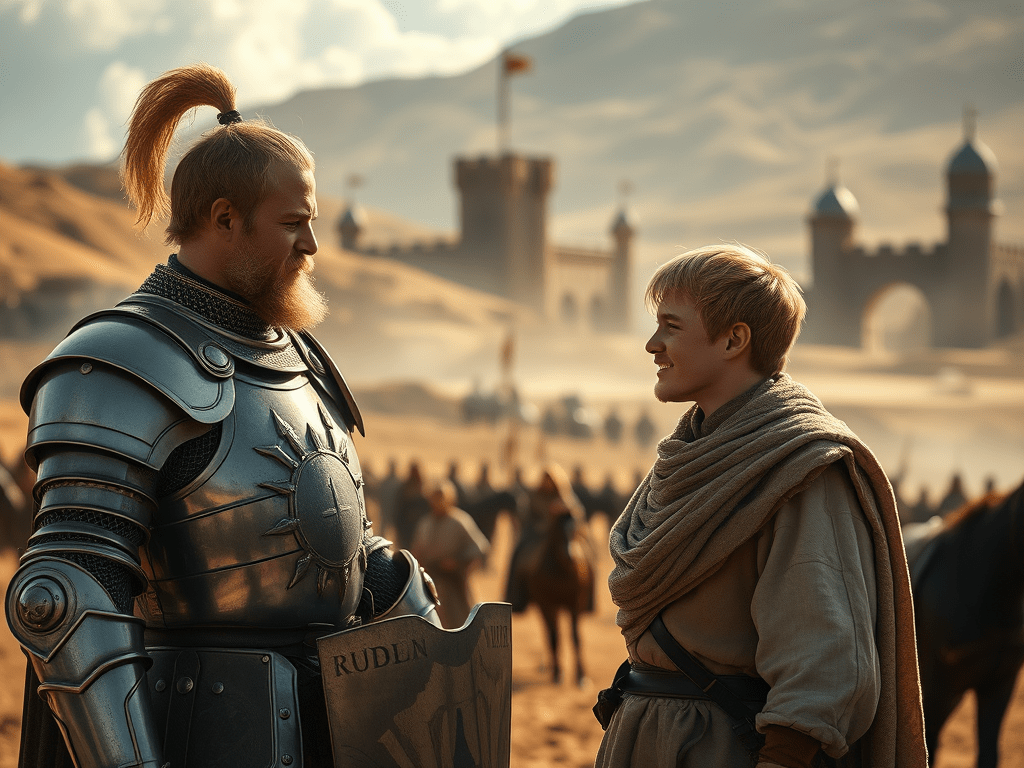
My dear readers, I have currently watched the first three episodes of A Knight of the Seven Kingdoms. It’s a slow burner but it’s growing on me. It is a captivating return to the world of Westeros, offering a refreshing, character-driven story that proves the Game of Thrones universe (it is set one hundred years prior to the last series) still has rich tales left to tell. Rather than relying on massive battles and political spectacle alone, the series shines through its intimacy, emotional depth, and timeless sense of adventure.

Created by Ira Parker and George RR Martin, it is the third television series in Martin’s A Song of Ice and Fire franchise and is an adaptation of the Tales of Dunk and Egg series of novellas, beginning with The Hedge Knight. It stars Peter Claffey as Ser Duncan “Dunk” the Tall, the titular hedge knight, and Dexter Sol Ansell as his squire Aegon “Egg” Targaryen.

At the heart of the story is the unlikely duo of Ser Duncan the Tall and his sharp-witted squire, Egg. Their relationship is the soul of the series—warm, humorous, and deeply human. Duncan’s sincerity and moral compass contrast beautifully with Egg’s intelligence and hidden nobility, creating a dynamic that feels both authentic and endearing. Watching their bond grow across each episode is as rewarding as any grand plot twist.

Visually, A Knight of the Seven Kingdoms is stunning. The cinematography captures the beauty and brutality of the medieval-inspired landscapes with remarkable detail. From dusty tournament fields to quiet country roads and imposing castles, every setting feels alive and immersive. The production design and costumes further enhance the authenticity of the era, grounding the fantasy in a tangible, believable world. Of particular note, the scenery is from Northern Ireland.

So far, I give it four stars out of five and was happy to hear its getting a second series. I just hope that the ending is better than Game of Thrones.