Dear Killer Nannies – Must Watch Series

Vintage microphone, photographs, and red threads arranged on a detective evidence board

Okay, everyone I think everyone agrees that Pablo Escobar has been done to death. But this series comes from a new vantage point – that of his son.

Dear Killer Nannies is one of the most distinctive and emotionally resonant crime dramas of recent years — a coming-of-age story told from inside one of history’s most infamous households rather than another retread of Pablo Escobar’s empire.

Co-created by Juan Pablo Escobar (Sebastián Marroquín) himself, the eight-episode Hulu/Disney+ miniseries follows young Juampi as he grows up in luxury in 1980s Medellín, surrounded by bodyguards he treats as playmates and nannies. He sees his father as a generous benefactor. The devastating revelation that those caregivers are hired killers, and that his father is the world’s most wanted drug trafficker, is handled with unusual restraint and psychological honesty.

What sets the series apart is its focus on the quieter devastation of a child losing his innocence. The obligatory shootouts and car crashes exist, but the real impact comes from bloodless moments: a boy finishing off an injured animal because the men around him treat it as normal, the slow collapse of his idealized image of his father, and the weight of a surname that turns his life into a flight from death. The time jumps between childhood, adolescence, and later years feel purposeful rather than gimmicky, building a portrait of inherited trauma and the struggle to choose a different path.

The performances elevate the material. John Leguizamo brings unexpected warmth and complexity to Pablo, portraying a loving father whose affection is constantly at war with his criminal life. The young actors playing Juampi at different ages — especially Miguel Tamayo as the seven-year-old — capture both wide-eyed belief and the first cracks of understanding with remarkable naturalism. The ensemble of “nannies” (Juanita Molina, Danharry Colorado, Rafael Zea, and others) makes the surreal domestic arrangement feel lived-in and strangely intimate: hardened killers who are also dysfunctional uncles and protectors. Laura Rodríguez grounds the family as Victoria, a mother desperately trying to shield her children while knowing the truth.

The first-person narration by the real Juan Pablo adds a layer of intimacy and moral ambiguity that most cartel stories lack. The show never excuses the violence or the empire, but it humanizes the boy caught in its crossfire and the men assigned to keep him alive. Production values, period atmosphere, and the mix of Spanish-language authenticity with accessible storytelling make it bingeable in its half-hour episodes without sacrificing weight.

This is not just another Pablo Escobar show. It is a surprisingly literate examination of adultification, masculinity, loyalty, and the long shadow of a last name. For anyone who thinks the subject has been exhausted, Dear Killer Nannies proves there was still a deeply personal story left to tell — and it tells it with heart, craft, and unexpected tenderness.

Make sure to give it a watch. Four stars from me.

War of the Worlds: A Stellar Sci-Fi Series Review

Large alien spacecraft firing energy beams over a city with buildings engulfed in flames and smoke

My dear readers, it has been some time since I last did a review. I’ve been working away on Wheelchair Wars, which I hope to finish this year.

In the meantime, I recently started streaming War of the Worlds. (TV Series). It stands tall as a smart, haunting, and emotionally resonant reimagining of H.G. Wells’ classic. This multi-season international co-production (originally airing on Canal+ in Europe and Epix in the US) shifts the action to contemporary Europe and delivers a slow-burn apocalypse that prioritizes human drama, mystery, and creeping dread over nonstop action. Anchored by a stellar cast led by Gabriel Byrne, it’s a compelling genre series.

Gabriel Byrne, in a stellar performance, brings gravitas and weary intensity to Bill Ward, a brilliant but flawed astrophysicist/neuroscientist whose personal demons and scientific curiosity drive much of the narrative. His grouchy, world-weary performance grounds the chaos, making Bill a relatable everyman hero who’s equal parts determined and haunted. Byrne’s chemistry with the ensemble elevates every scene.

What sets this War of the Worlds apart is its eerie, understated tone. The invasion begins not with fireworks but with a mysterious signal from space, building anticipation before unleashing silent, efficient horror. Alien “Mechanicals” (killer machines) and ships create a sense of overwhelming technological superiority without constant spectacle. The quiet desolation of emptied cities, abandoned streets, and pockets of desperate survivors is palpably unsettling—think The Walking Dead meets thoughtful hard sci-fi.

The production values are top-tier across its three seasons. Pan-European filming locations give it a grounded, international scope that feels authentic. The visual effects are impressive yet restrained, emphasizing scale and otherworldliness. A haunting soundtrack amplifies the tension, blending electronic dread with moments of fragile hope.

This isn’t a straightforward retelling—it’s a loose, modern adaptation that explores colonialism, human nature under pressure, survival ethics, and even time travel in later seasons. The mystery of the invaders’ motives unfolds gradually, keeping viewers hooked with revelations that tie into bigger philosophical questions. Season arcs build cleverly: Season 1 focuses on the immediate aftermath and survival; later seasons expand into resistance, conspiracy, and high-stakes temporal elements that pay off in satisfying (if bold) ways.

Gabriel Byrne’s commanding presence makes this series essential viewing. If you crave intelligent sci-fi with heart, mystery, and emotional depth— then this is for you.

Five stars out of five from me.

The Boroughs Review: Aging with Monsters and Heart

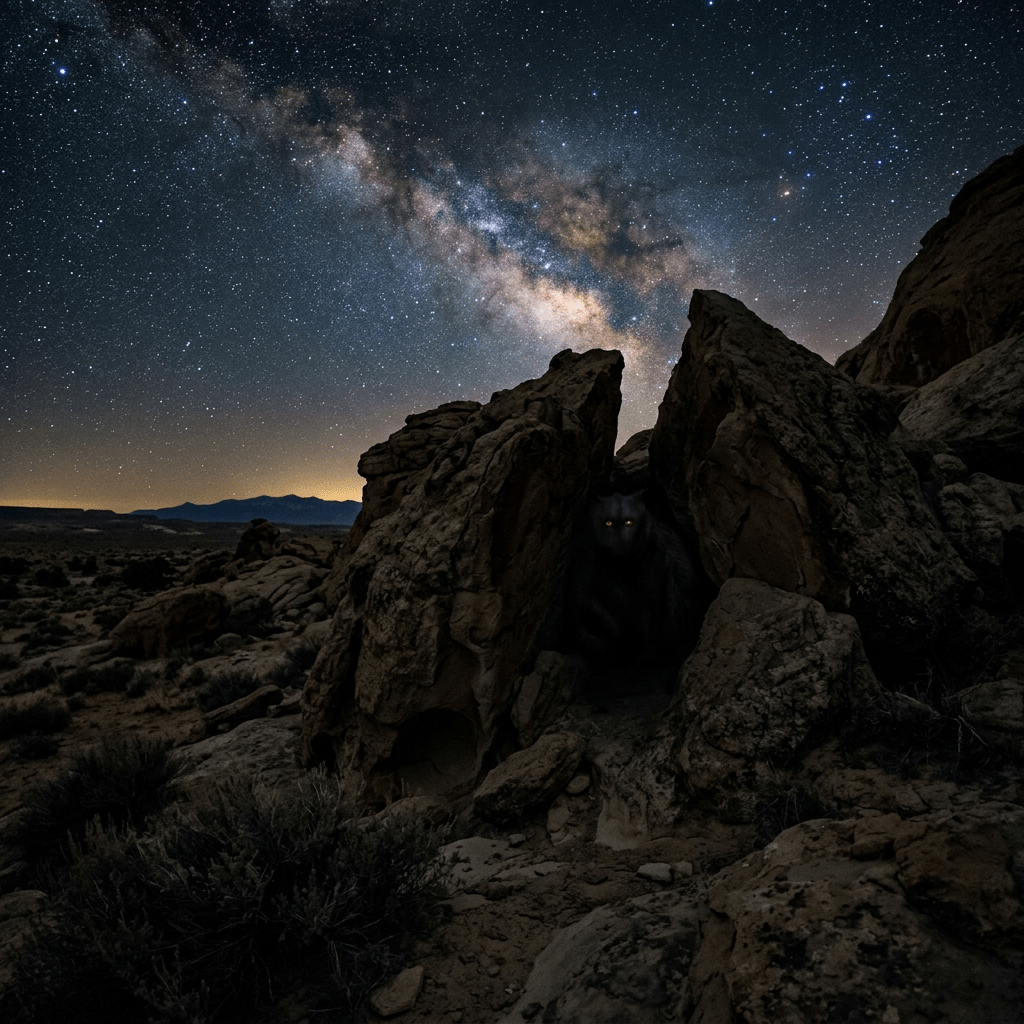
Rocky desert landscape at night with glowing eyes in shadows beneath starry sky

For those that have been missing Stranger Things, I have great news, the Duffy Brothers are back, at least as executive producers.

The Boroughs is an American science fiction television series created by Jeffrey Addiss and Will Matthews. It premiered on Netflix on May 21, 2026.

Set in the sun-drenched New Mexico desert, The Boroughs follows a picturesque retirement community that promises its residents the “time of their lives.” On the surface, it’s idyllic: golf carts, barbecues, lifelong friendships, and a sense of purpose in the golden years. But beneath that lies a sinister, otherworldly threat that’s literally stealing the one thing these retirees don’t have in abundance—time itself.

What starts as a seemingly light supernatural mystery evolves into a high-stakes battle for survival, blending creature-feature horror, clever sci-fi twists, and genuine human drama. The show excels at balancing Spielbergian wonder and scares with deep empathy for its characters’ experiences of aging, loss, friendship, and rediscovering purpose later in life. It’s never preachy or maudlin—it’s fun, propulsive, and often hilarious.

The all-star ensemble is the heart of the show. Alfred Molina shines as Sam Cooper, a grieving widowed engineer who’s reluctantly moved in after losing his wife. His journey from cynical outsider to determined hero is beautifully layered—funny, vulnerable, and heroic without ever feeling forced.

Geena Davis giving a stand out performance brings charisma and fire as Renee, while Alfre Woodard delivers gravitas and sharp wit as Judy. The supporting cast is equally fantastic: Denis O’Hare (a standout for his hilarious yet poignant Wally), Clarke Peters, Bill Pullman, and more round out a group of misfit retirees who feel like real people you’d want to hang out with. Their chemistry crackles in every barbecue scene, late-night conversation, or improvised plan against the threat. These aren’t caricatured “cute old folks”—they’re complex, flawed, vibrant humans with rich backstories, romantic entanglements, and plenty of edge.

The first episodes hook you with mystery and charm, then ramp up the tension and spectacle perfectly across the season. The creature design and effects are impressive—eerie, inventive, and integrated seamlessly into the story.

If you’re craving smart sci-fi with monsters, mystery, and massive heart, or just a story that makes you laugh, gasp, and root hard for its characters, The Boroughs is must-watch television. It reminds us that even in life’s later chapters, the best stories—and the biggest fights—can still be ahead.

Five stars out of five from me. Make sure to give it a watch.

Review: The Testaments Episode 1 – A Stunning Dystopian Journey

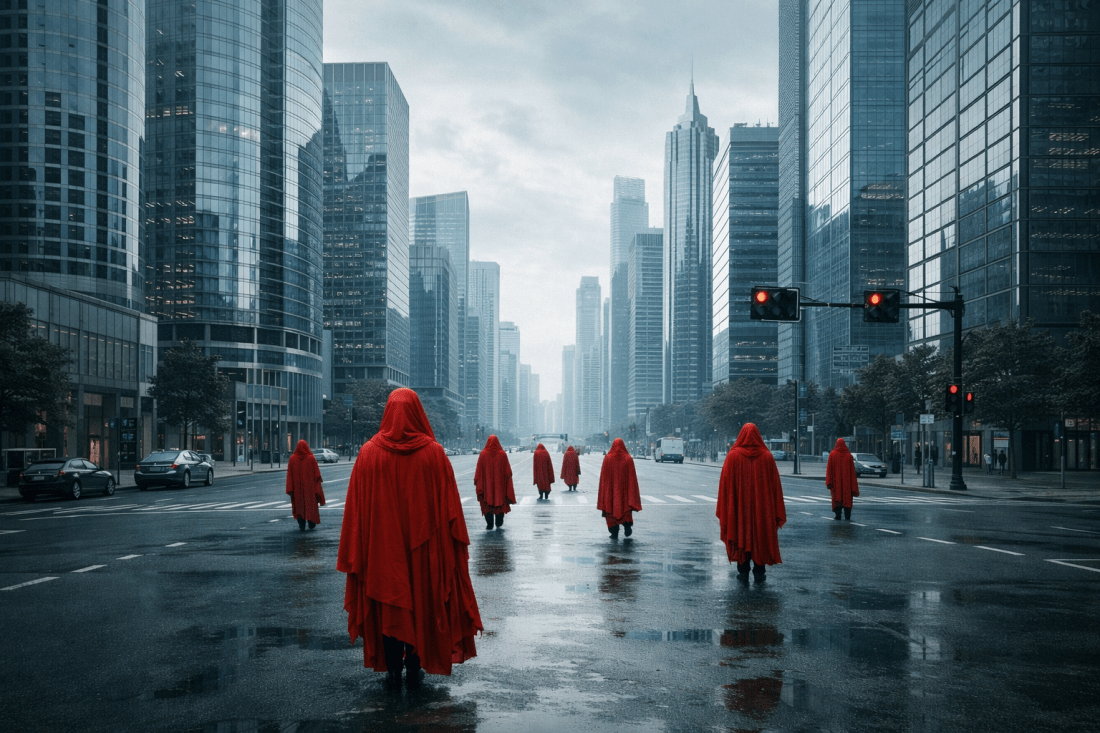
Multiple people wearing red cloaks walking on a damaged street in a destroyed city.

Ah readers, there is surely no better way to spend a Friday afternoon than reviewing a series in one of my favorite dystopian universes.

Is it strange that I loved The Handmaids Tale, being a man and all. I couldn’t care less.

Years after the events of The Handmaid’s Tale, The Testaments (on Hulu) follows two teenage girls navigating life inside the oppressive regime: the dutiful and pious Agnes (played with quiet intensity and breakout star power by Chase Infiniti) and the spirited newcomer Daisy (Lucy Halliday), a convert from beyond Gilead’s borders. Assigned as mentor and mentee at Aunt Lydia’s elite preparatory school for future wives—where obedience is enforced with brutal, divinely justified precision—their unlikely bond becomes the emotional core and catalyst for upheaval.

To date, I’ve only seen the first episode but that will change this weekend.

What makes this setup so brilliant is how it reframes the dystopia through youthful eyes. Instead of the raw desperation of Handmaids, we get the gilded cage of privilege mixed with stifling control: lavish yet suffocating halls, rigid social hierarchies, and the constant psychological weight of expected perfection. The series smartly avoids retreading familiar ground—no sea of red cloaks in the early episodes—and instead builds a textured, lived-in world that feels both evolved and eerily consistent with what came before. It’s a defiant coming-of-age tale that explores friendship, identity, rebellion, and the quiet power of connection in the face of systemic cruelty.

Visually, The Testaments is stunning. The production design contrasts opulent, pristine settings with underlying menace—think polished marble and elegant uniforms that mask the brutality beneath. Cinematography captures both the grandeur and the claustrophobia of this society, while the score enhances the emotional undercurrents without overpowering the performances.

Giving the first episode 4 stars out of 5.

Have you seen it? What did you think?

Challenging Myths: The Real History of Native Americans

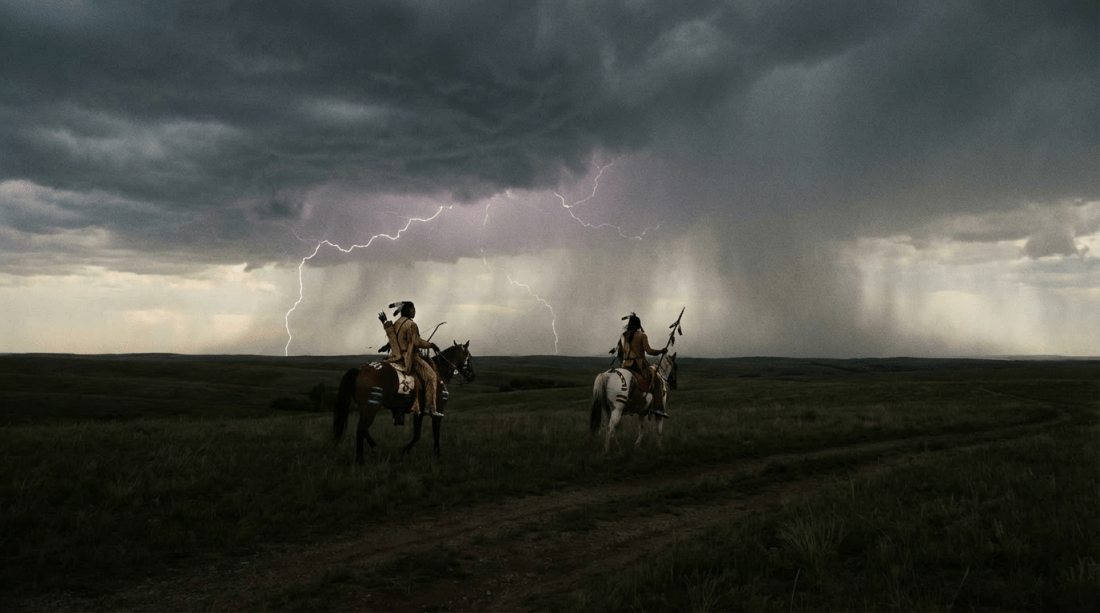
Two cowboys on horseback silhouetted against a dramatic lightning storm on the open plains.

Many of my readers may not be familiar with Matt Walsh. He is a popular right-wing YouTuber from the United States. He is as reviled as he is loved, becoming famous for his opposition to trans ideology, and especially child transitioning, describing it as child abuse.

Here, in an over one-hour-long documentary, he delves into a different contentious topic. Note that I watched it on YouTube. Also available on DailyWire+.

Matt Walsh’s “The Real History of the American Indians” is a bold, refreshing, and much-needed documentary that cuts through decades of romanticized myths and perhaps ideological propaganda. In this episode of his Real History series, Walsh delivers a clear-eyed examination of Native American history that challenges the dominant narrative taught in schools and pushed by Hollywood.

He dismantles the fairytale of universally peaceful, noble “Indians” living in perfect harmony with nature, only to be mercilessly victimized by evil European settlers. Instead, Walsh presents a more complex and historically grounded picture: one where tribes frequently engaged in brutal warfare, conquest, and slavery among themselves long before European arrival, where concepts of land ownership differed sharply from Western traditions, and where conflicts with settlers involved aggression on multiple sides rather than one-sided genocide.

He points out that pre-Civilization violence was horrific and worse on a pro rata basis than modern warfare. No prisoners were taken – everyone apart from pre-adolescents but not babies faced extermination if a battle was lost.

Although not mentioned in the series, this is one of the reasons the African populations boomed after colonization, also. Free from constant war, farmers could grow crops. Similarly, the population of Ireland grew after the arrival of the Vikings, who brought trade and settlements, reducing overall conflict.

What makes this documentary stand out is Walsh’s signature style: sharp, unapologetic, and deeply researched. He doesn’t shy away from uncomfortable truths on any side, but his core strength is exposing how selective storytelling has been weaponized to instill guilt and self-loathing in modern Americans.

Myths like the “smallpox blankets” as deliberate genocide or the idea that the entire continent was “stolen land” with no legitimate settlement are taken apart with logic, primary sources, and straightforward reasoning. The result feels liberating rather than divisive—it’s history as it actually happened, not as activists wish it had.

Visually and structurally, the film is engaging and accessible. Walsh combines narration, historical context, and pointed takedowns of mainstream shibboleths without descending into dry lecturing. Viewers come away better informed about the realities of pre-Columbian societies, intertribal conflicts, the challenges of assimilation and reservation systems, and the genuine progress that Western civilization brought to the continent. It’s a strong antidote to the guilt-tripping versions of American history that dominate today. If you’re tired of sanitized, agenda-driven accounts that treat Native Americans as cartoonish victims or infallible environmental saints, this documentary is essential viewing. Walsh does what great historians should: he tells the raw, unfiltered truth that sets the record straight and helps us understand our shared past without the self-flagellation.

Four stars out of five from me.

Have you seen it? What did you think? Let me know in the comments.

Also, don’t forget to subscribe.

Exploring the Culper Spy Ring in Turn

Hello dear readers, I’m back to report on the Series Turn. It’s four series long, so it took a while. But it was worth it. You might wonder why I don’t give too many low ratings. Simples. If I don’t like something, I stop watching. And I loved this.

At the risk of repeating myself, Turn: Washington’s Spies (originally titled Turn and stylized as TURИ: Washington’s Spies) is an American period drama television series based on Alexander Rose’s book Washington’s Spies: The Story of America’s First Spy Ring (2007), a history of the Culper Ring.

The story covers events from 1776 to 1781 and features a farmer from Setauket, New York and his childhood friends. They form an unlikely group of spies called the Culper Ring, which eventually helps to turn the tide during the American Revolutionary War. The series begins in October 1776, shortly after British victories, recapturing of Long Island and the Port of New York for the Crown, leaving General George Washington’s army in dire straits.

But it’s going to be a long and bloody war.

It is an engaging, atmospheric historical drama that blends espionage, character-driven storytelling, and Revolutionary War intrigue into a series that is both entertaining and surprisingly educational. It’s one of those shows that manages to feel fresh even when dealing with well‑known historical events, largely thanks to its focus on the lesser‑known Culper Spy Ring and the ordinary people behind it.

It is full of twists and turns that keep the audience fully engaged.

Samuel Roukin as Captain John Graves Simcoe gives a great, memorable performance. He comes across as quite the psychopath, bringing fear even to those on his own side.

The overall narrative strikes an appealing balance between historical accuracy and dramatic tension. While the series takes creative liberties, the core storyline is grounded enough to feel authentic.

Highlights:

  • The slow-burn pacing allows character motivations and relationships to develop naturally.
  • The spycraft elements—coded messages, invisible ink, dead drops—are fascinating without feeling overly dramatized.
  • The show explores moral ambiguity, portraying both sides of the war with nuance and complexity.

The finale is a clear example of this. A war of good and evil was not fought between Britain and the UK, but in the souls of individuals themselves. America won the war, resulting in some being returned to slavery. Simcoe went on to become the Governor of a part of Canada and ended slavery in the area.

Five stars out of five from me.

Exploring _The Salt Path Scandal_: A Review

Well, readers, I watched this gem on Sky earlier. The first few minutes revisit what had been a best-selling book, later turned into a starring Gillian Anderson.

The show lulls you into a tranquil daze. There are drone shots of cliffs that look like they’ve been photoshopped by the concept of serenity itself. Gentle strings hum. Someone says something earnest about “healing.” You exhale. It’s about a 650-mile walk you can do in the South West of England as told by Raynor Winn. She had just lost her house, and her husband was diagnosed with a terminal illness. The walk was transformative.

And then—record scratch—a talking head appears to ask a question so sharp it could open tinned beans: “But did that actually happen?” From there, The Salt Path Scandal becomes less a journey and more a brisk hike through footnotes.

The documentary’s true star is its tone, which can best be described as polite British skepticism wearing a fleece. Nobody yells. Nobody lunges. Instead, the filmmakers deploy the deadliest weapon in the national arsenal: calm, persistent follow-ups. “Just to clarify,” a narrator says, with the menace of a librarian about to revoke privileges. Every “just to clarify” lands like a small pebble in your shoe—annoying, impossible to ignore, and increasingly painful over time.

You see, the book claimed to be a memoir. Like, it was supposed to be true. But once, a journalist, Hadjimatheou, probed a bit. Well, there were reasons to be skeptical.

Structurally, the series is a masterclass in pacing. Each episode introduces a claim, lets it bask in sunlight, then quietly rotates it to reveal a price tag, a date discrepancy, or a witness who remembers things… differently. It’s less gotcha journalism and more hmm, interesting journalism,

By the finale, you’re left amused, mildly scandalized, and deeply suspicious of any memoir. The truth is out there somewhere.

It gets four stars out of five from me.

Have you seen it? Let me know what you think.

Heaven’s River: A Review of the Latest Bobiverse Adventure

Hello, dear readers, I finished reading this novel by Dennis E. Taylor last night. It is the fourth book in the Bobiverse series. I have reviewed the others previously and given them strong reviews. But what of this one?

Well, dear readers, to fully appreciate each novel, I recommend reading them in order. It’s a big Universe after all, and so many stories to be told.

The Bobs are copies of the digitally stored personality of a dead human (“Bob”), carried in self-replicating Von Neumann probes. The original mission to explore new worlds was originally tied to saving humanity.

With each replication, there is a drift from the original personality. At this stage, some bobs are the thirtieth generation or more. This has led to factions forming within the Bobiverve, such as Star Trek and the Skippies.

Starfleet believes that the Bobiverse should cease its interaction with biologicals, especially those that don’t engage in space travel, calling it the Prime Directive.

The Skippies want to build a superintelligent AI from scratch.

Each new Bob replicant has an individual name. One of them, Bender, hasn’t been heard from in a very long time. More than a hundred years ago, Bender set out for the stars and was never heard from again. There has been no trace of him despite numerous searches by his clone-mates. Now Bob is determined to organize an expedition to learn Bender’s fate—whatever the cost.

Bob (more or less the original) goes on the same journey where he picks up an alien signal. He deduces that Bender would have followed it. It leads to the discovery of a giant megastructure – rivers that encircle a star. Inside, live a pre-steam civilization, the Quinlans.

The discovery creates a stir throughout the Bobiverse. Starfleet believes that the Quinlans should be left alone, citing the Prime Directive, but Bob would never stop his search for Bender.

It leads to war in the Bobiverse and an epic journey through a truly new world.

I give “Heaven’s River” five stars out of five. Although long, it engages from start to finish. You meet interesting new characters and catch up on old ones. It is very immersive, allowing you to fully engage with the new Quinlan civilization. It has the necessary reveals and plot twists to keep the reader going.

Have you read this novel?

Let me know what you thought in the comments.

Pagasus (Part 84)

Seeing that the food was similar to my home habitat was a pleasant surprise. I ordered turkey and ham for myself, whereas Tabitha ordered some salmon.

“Why salmon?” I asked.

“Actually, I’ve never tried it before. But I’ve heard about it. Might as well give it a try.”

I felt an urge to say more.

“It was a wild fish that once roamed the seas of earth before being wiped out by the change in climatic conditions. But fortunately for them, and us there are specifically built habitats just to breed them for our palates.”

“Oh, they are so lucky,” Tabitha replied smiling.

“Oh yes, so very lucky.”

It took some time for the food to arrive and our conversation turned to more pressing matters. Top of the list was that we were already running short of money and were nowhere close to accomplishing our end goal.

“We need to work or do something,” Tabitha said, looking down at the table.

“There might be work with artifacts that we can do here. There are so many people here, some of them must want something.

The meals finally arrived after nearly an hour.

“So, sorry,” the waitress nervously blurted out.

Tabitha took one bite of the salmon before her facial muscles tensed up.

“You don’t like it, do you?”

We quickly swapped dishes.

Review of “War Bodies” by Neal Asher

First of all, one very big Happy Christmas to all my readers! I just love this time of year and hope you got lots of presents. If you haven’t already done so, please don’t forget to subscribe.

This novel is a real gem for sci-fi lovers. It is set in the Polity Universe. Piper has grown up in Founder’s World. It was created by a faction that rejected AI and left the rest of humanity many thousands of years ago. Still, they idolize machines and like to replace their body parts with machine parts. Many of them have only a few human parts left. They are ruled by a despot called Castron and as a people, they have somewhat stagnated having a much lower level of advancement and population than would otherwise be expected.

However, recently the Polity have made contact. They are made up of the humans who remained on Earth. AI was totally embraced, and now they even count AIs among their citizens. They are much more advanced and numerous in the Universe. They are also fighting against a great enemy called the Prador who threatens all of humanity.

Piper suffers a work accident that almost costs him his life. However, it unleashes a series of events that come thick and fast. You see, Piper has been created as a weapon using technology beyond even that of the Polity. He never knew but his parents were rebels. What follows is great science fiction and a journey through the entire Polity Universe. The story unfolds beautifully and you’re never really sure who can truly trusted until right up near the end.

The descriptions of space and land battles playing out are brilliant. It also makes you ask interesting questions like whether should AIs be counted as war dead. I’d strongly recommend you give this a read with four stars out of five.

Have you read anything by this author?

Let me know in the comments section below.