Person of Interest: A Masterpiece of Smart Television That Deserves Every Bit of Its Cult Status

Night cityscape with digital surveillance and tracking data overlays on buildings and map

I was hopping through my various TV entertainment options when I came across the boxset for Person of Interest on Netflix. God, I love Netflix. There were a few episodes I had missed from years ago so I eagerly pressed play. If you haven’t watched Person of Interest (2011–2016), you’re missing one of the smartest, most consistently excellent dramas of the 2010s. Created by Jonathan Nolan and produced with a perfect blend of CBS procedural DNA and ambitious, high-concept storytelling, this five-season series starts as a stylish vigilante-of-the-week show and quietly evolves into one of the most compelling explorations of artificial intelligence, surveillance, privacy, and the future of humanity ever put on television. It is, quite simply, a gem.

John Reese (Jim Caviezel), a haunted ex-CIA operative presumed dead, is pulled out of his self-destructive spiral by the eccentric, reclusive billionaire Harold Finch (Michael Emerson). Finch has built “The Machine”—an all-seeing artificial intelligence that predicts violent crimes before they happen by monitoring every camera, phone call, and digital footprint in the United States. Because the government only uses The Machine for terrorist threats, Finch and Reese take the “irrelevant” numbers (ordinary people about to be victims or perpetrators of everyday crimes) and intervene anonymously. What begins as a weekly rescue mission slowly reveals itself as something far larger: a shadow war between competing AIs, government agencies, and private interests.The beauty is how organic this escalation feels. The show never betrays its roots; it simply grows in scope and depth season after season.

Person of Interest was ahead of its time. It grappled with mass surveillance, the ethics of AI, predictive policing, privacy versus security, and the dangers of unchecked power long before these became daily headlines. It asks big questions: What happens when an AI becomes sentient? Who gets to decide whose life is “relevant”? Can good people maintain their humanity when operating outside the law with god-like tools? Yet it never feels preachy. The philosophical depth is woven seamlessly into thrilling, character-driven stories.

In an era of bloated, effects-heavy spectacles, Person of Interest proves that clever writing, strong characters, and thoughtful themes can carry a show further than any CGI budget. It respects the audience’s intelligence while delivering popcorn entertainment. It’s rare to find a series that improves almost every season and ends on such a strong note.

Five stars out of five from me. Make sure to give it a watch if you haven’t already done so.
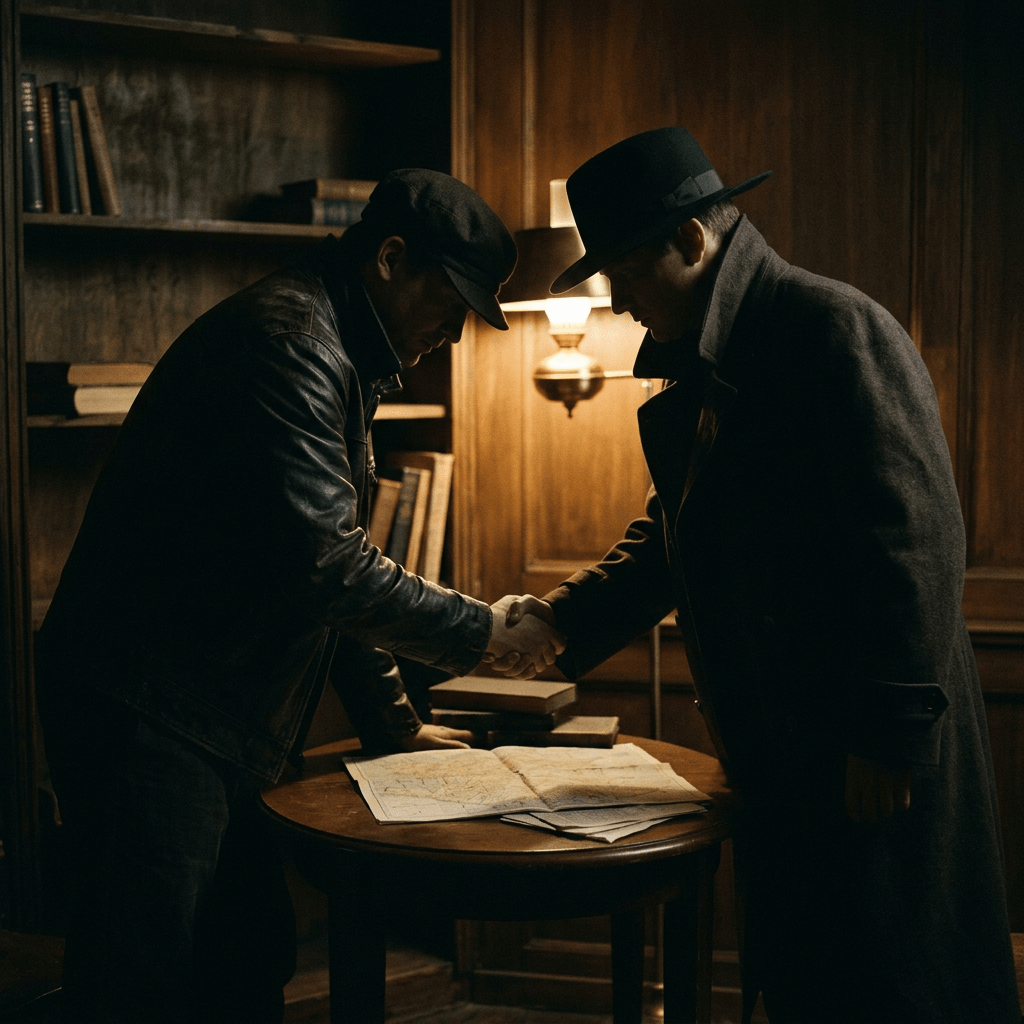
Distant Love (Part 73)

Two men wearing hats and coats shaking hands over a table with maps and books in a dimly lit wood-paneled room

Hours pass and there is a buzz in the house. The two women have smiles on their faces as they tidy and prepare a meal.

Derek knows that he needs to advance things further. “So, how did you meet these friends, Maeve?”

The auntie stops preparing the chicken that she is putting stuffing into. “Your an awful divil, Derek.”

Smiling, Derek replies, “What do ya mean?”

“You know well they are part of the Resistance. Lets not beat about the bush. You’re too smart for that sort of thing,” she replies.

Derek grins. “Fair enough. You’re a smart woman too. Maeve is part of my future. If she’s part of the resistance, or an associate, then its important I know about it.”

Maeve took his hand and their eyes. “Yes, it is. I was just waiting for the best time to tell you. Everyone in my family is involved, in some way or another.”

She sits down at the table beside him. “I’m what they call a cadet, the lowest level in the organization. It was something that I was born into, but I also believe in the cause. My Mum was much more involved, she was what you call a chief.”

Wheelchair Wars Audrey (xi)

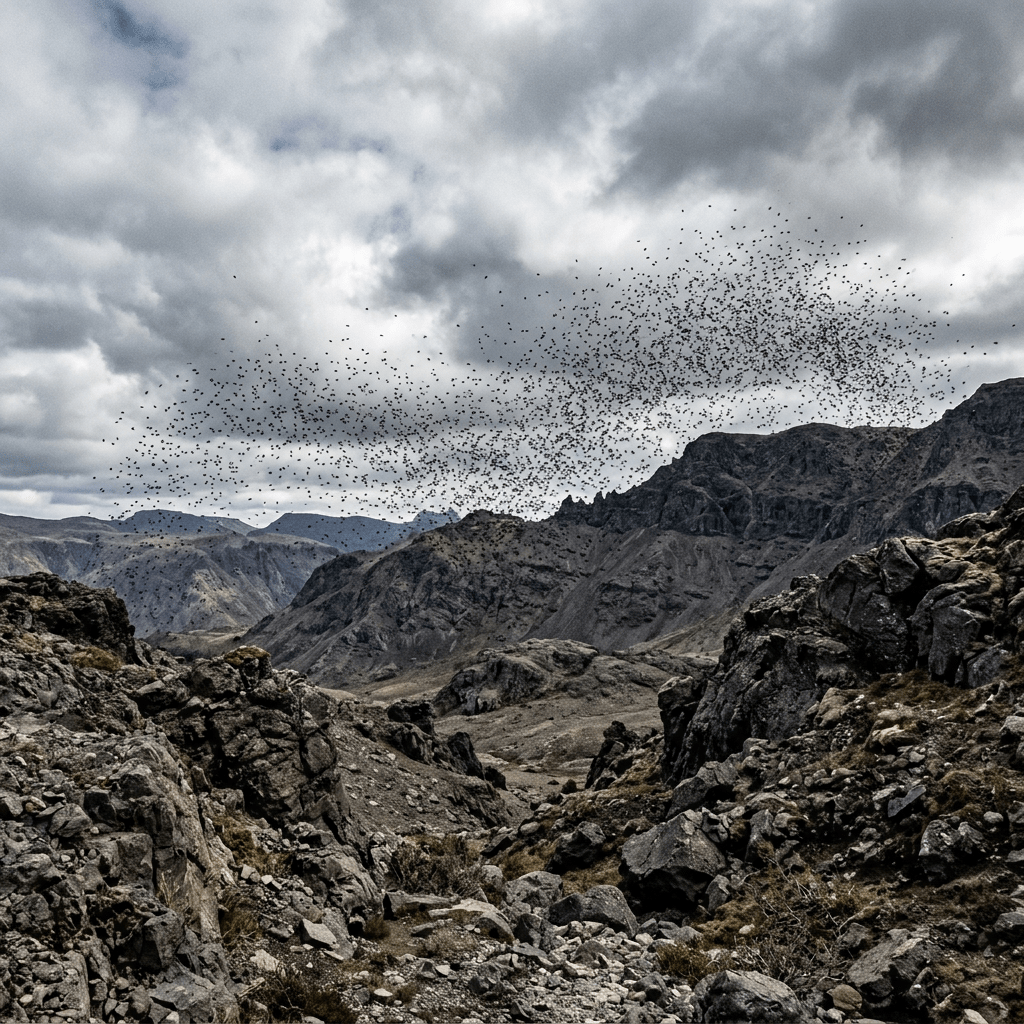
Flock of birds flying above rocky mountain valley with cloudy sky

“How many Troopers have we left?” Audrey wheezed.

“Only about seventy, and some of them are injured.”

Audrey got lost in her thoughts. It would be standard practice to kill those injured that might hold them back. Brona protected me.

“Try to bring the injured with us as best we can.”

They were in a plateau under a light blue sky. The granite rock beneath them was smooth. Huge mountains were to their left right, with streams of lava flowing down. The air stank of sulphur. In the distance, an artificial oblate structure loomed large.

The battle chair activated to Audrey’s touch. A hologram of the planet appeared before her. A flash red dot highlighted their current position near the equator. The artificial structure close to them was the largest on the planet. It was named as The Convent. Audrey felt a shudder down her spine.

She faced the Troopers and told them to move out.

Progress was slow. Audrey felt pain after every bump.

Specks of black dots appeared above the structure. Then they headed straight for them. It could only be one thing – drones.

“Defensive circular formation,” Audrey commanded. Her tone frantic. “Fire at will.”

She turned on the machine guns of the battle chair.

Wheelchair Wars Audrey (Part x)

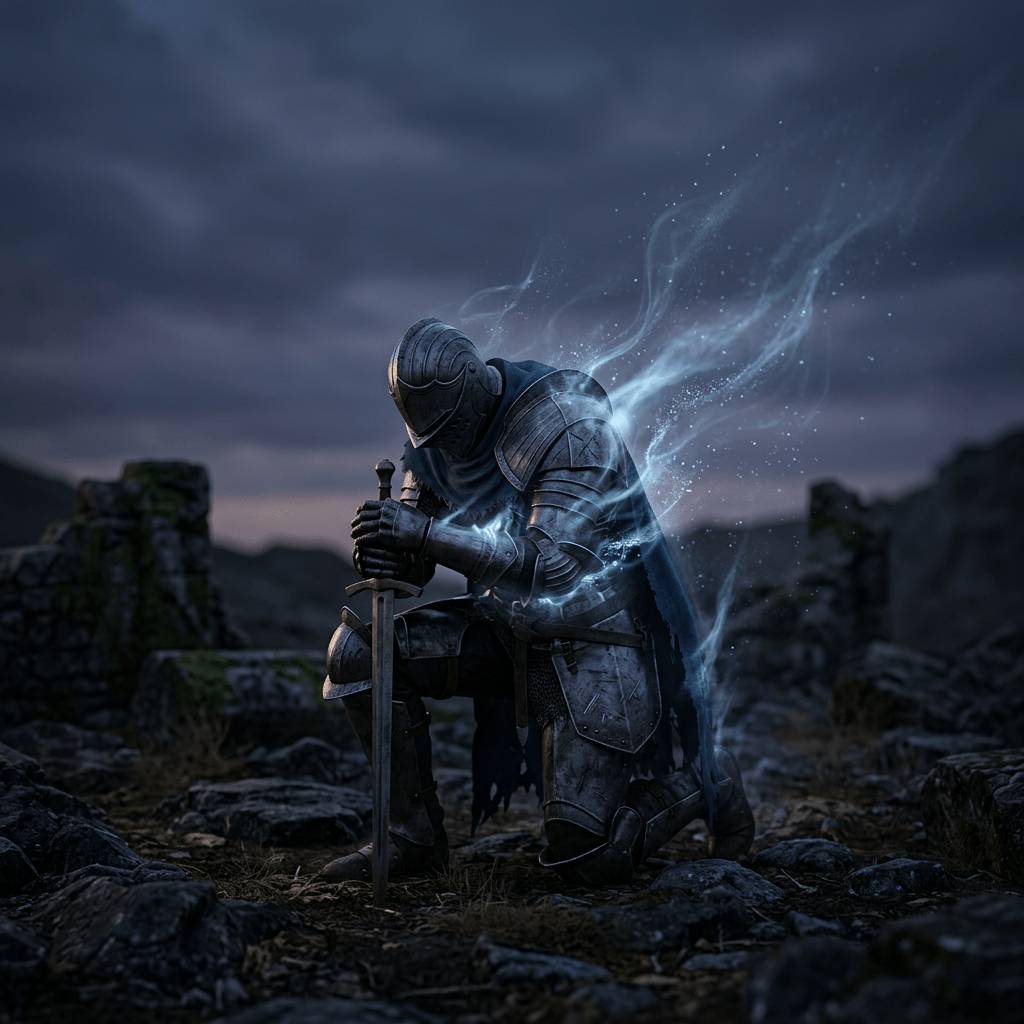
Kneeling knight in dark armor holding a sword with glowing magical aura

Brona placed her hands on Audrey’s face to quell the bleeding. “You’re going to be okay.”

Behind her one of the other Troops said, “Leave her, she’s finished and will only slow us down.”

“Never.” Brona shot back, “anyone who touches her is answerable to me”.

Audrey felt her energy draining away. A few seconds later she had lost consciousness.

She awoke in what she recognized as a standard imperial tent. Brona was by her side rubbing her face with a wet cloth..

“Welcome back commander. You gave me a bit of a scare back there. I had to stitch up the side of your face. It will scar but hopefully you can have it cleared up when you back on Uisneach. Amazingly, you have no broken bones.”

Audrey smiled on her good side. “I won’t be beautiful again for some time.”

Brona took her hand. “You will always be beautiful.” The two women got lost in one another’s eyes.

A clamor came from outside and Brona went outside, before returning. “They want to know if you are okay to continue.”

Audrey nodded in the affirmative. “It may not be much longer before we come under attack.”

Two Troopers entered and lifted her out and back into the battle chair.

Wheelchair Wars Audrey (Part ix)

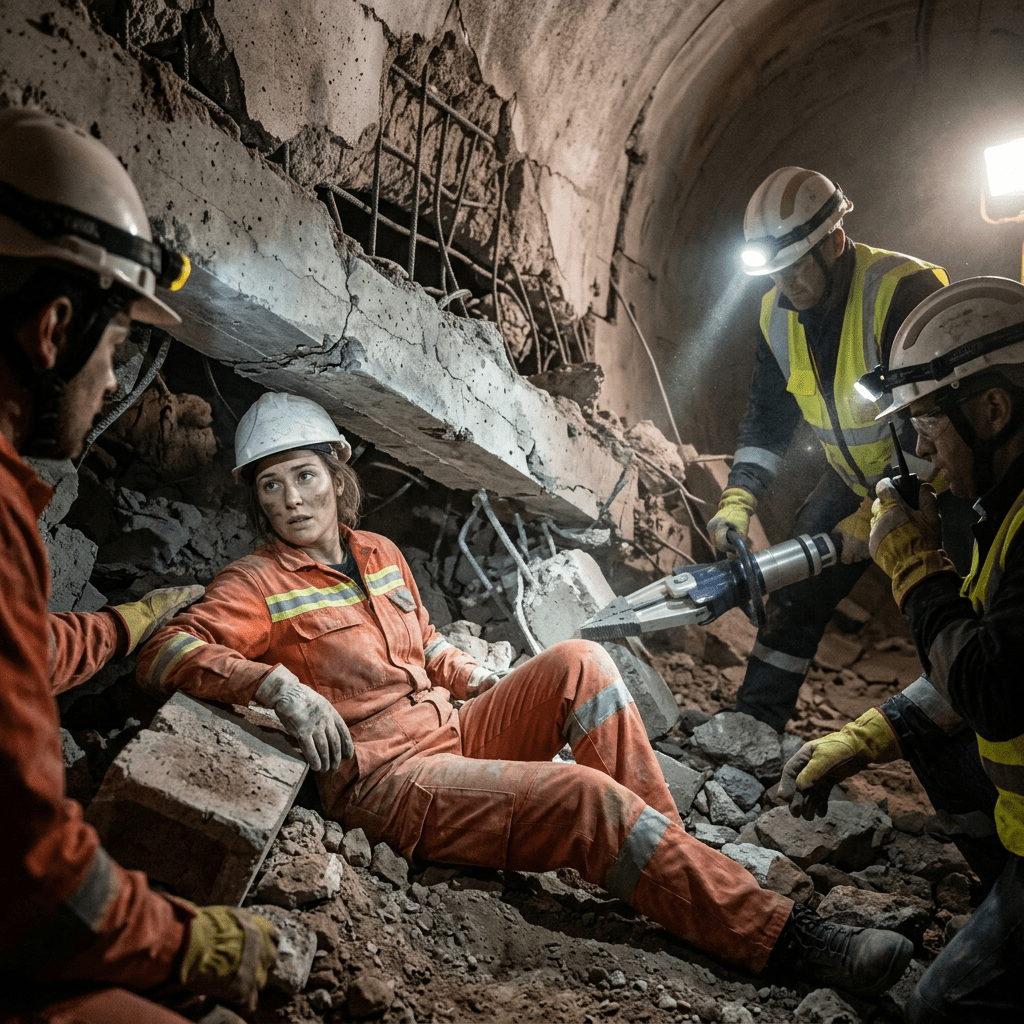
Rescue workers helping an injured person trapped under rubble in a tunnel collapse

Audrey winced and opened her eyes, to see only darkness. Blood dripped from a gash on her face. The carbonite battle chair should be fine but her body was pressed down, unable to reach the controls.

This could be the way I meet my death, not gloriously in an arena or battle but alone on an unknown world.

Hours passed. She struggled to move but to no avail.

A clink. Did I imagine it?

The almost inaudible sound of voices.

It grows louder. Is that Brona?

Audrey tries to shout out her name. Her mouth is dry, her throat sore.

Soon, Brona’s voice can be clearly heard.

“Brona, over here,” she gasped.

“Yes, commander. We’re almost there.”

Audrey smiled till the pain hit her. “Don’t worry, I’m not going anywhere.”

A few minutes later a dink of light appeared. The Emperor has looked kindly on me.

Brona appeared peering at her. “A section of the ceiling collapsed on top of you. A piece has cut into your cheek. It could cause a lot of damage lifting it off.”

“Do it, Brona. We could be about to come under attack, for all we know.”

“Yes, commander.”

The debris lifts, pulling at Audrey’s face. It takes every bit of resolve not to scream.

Wheelchair Wars Audrey (Part viii)

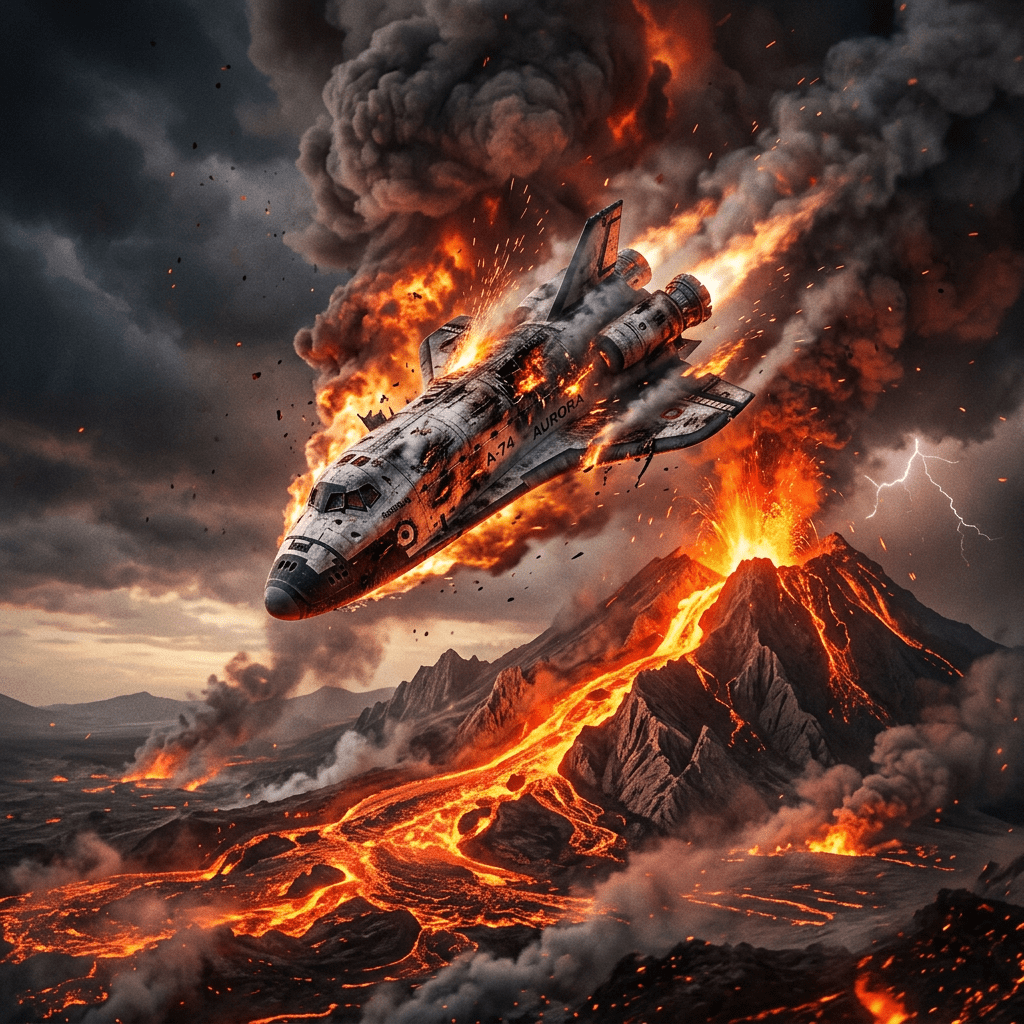
Space shuttle burning and falling near erupting volcano with lava and smoke

After a few seconds, Audrey felt her head being pushed back onto her headrest from the change in g force as the ship pulled up from the mountainous lava filled world below. Then relief, as the ship pulled level.

The captain turned his chair, with a large smile over his lined face. “We’re through the worst of it. We will be at our soft crash site momentarily, commander. The ship may even be space worthy after a few repairs.”

The ship shuddered and he swirled back to the control panel. “We’ve been hit. There’s major damage.” For the first time, Audrey sensed fear.

The ship began to rattle and a large erupting mountain came into view.

The captain yelled, “We’re going to have to go around it.”

Audrey gripped her chair as the mountain loomed, coming ever closer..

The ship swerved to the left making a large screeching noise.as it underbelly scraped the mountainside. Then, a plateau appeared.

The ship descended fast despite the best efforts of the captain, who was pulling and pressing every lever.

Audrey said a quiet prayer to the Emperor

A huge thud as the ship crashed.

All her thoughts turned to Timothy, before she blacked out.

Wheelchair Wars 3 (vii)

Futuristic spaceship flying through colorful storm clouds with lightning and rocky terrain below

The aged captain shouted back from the controls, “We came under fire from the planet on our approach.”

Loud cackling noises were coming from the ship.

Audrey shouted once more, “Did you provide the security clearance?” She could see a red and blue planet looming large, and flashes of yellow light trying to hit the spaceship.

“Of course I did. You need to prepare for a crash landing.”

For a moment, time seemed to stop. Her heart was pounding, sweat dripping down her brow. “Brona, inform the troops to prepare for a crash landing.”

Her eyes narrowed. “What about you?”

Audrey pressed a button on the underside of her control panel. Magnets bolted the chair to the floor, and extra safety straps wrapped around her. “I’ll be more fine than anybody else. Now go.”

Brona sprinted out.

“Do you have any preference as to where to land?” the Captain asked.

“Yes, somewhere relatively flat and close to where that firing is coming from.”

The ship began to shake as they entered the atmosphere. Audrey tried to control her breathing. There was still a chance that she might yet survive and have a further chance to serve the Emperor.

The front of the shop was now turning a bright white.

Wheelchair Wars 3 (vi)

Futuristic spaceship bridge with crew working on consoles and battle occurring outside

Audrey gasped for breath. Pain was emanating from every limb and crevice of her body. Someone was talking to her, but she was groggy. She shook her head, trying to regain control of her senses.

A few seconds later, her eyes began to focus. It was Brona, her eyes red with tears flowing down her eyes, who was trying to speak to her. Audrey realized that she was back sitting in her battle chair.

Brona shook her. “Commander, the ship has come under attack. What are your orders? We had to do an emergency evacuation from your pod. That is why you are nauseous.”

Audrey looked around in horror as the stench of burning bodies hit. Most of the pods were alight or smashed. Screams of pain echoed around the ship. We need to get to the deck. The rest of the troopers should try to save as many of their fellows as they can.

Brona nodded and gave the troopers beside her instructions. “Let’s go, commander. I will clear the way.”

Audrey pushed her controller forward as Brona pulled bodies, dead or alive, as well as broken pods and other debris out of the way.

They reached the bridge, the door automatically opening.

“What is happening, captain?” Audrey shouted.

Trust Me: The False Prophet – A Gripping True Crime Docuseries

Desert outpost with buildings and watchtowers at sunset with mountains in background

My dear readers, I thought I had already heard the endgame of the FLDS but there’s more, much more. Trust Me: The False Prophet is an outstanding four-part true-crime docuseries on Netflix that stands out as one of the most gripping, authentic, and impactful investigative documentaries in recent years. Directed by the Emmy- and Peabody Award-winning Rachel Dretzin (known for her work on related FLDS stories like Keep Sweet: Pray and Obey), it masterfully blends real-time undercover footage, candid interviews, and a high-stakes narrative that feels more like a thriller than a standard retelling of events.

t its core, the series follows cult expert and survivor-advocate Christine Marie and her videographer husband Tolga Katas, who initially moved to the insular FLDS community in Short Creek, Utah (on the Utah-Arizona border), around 2016. Their goal is to document and support a fractured group still reeling from the imprisonment of notorious leader Warren Jeffs. What begins as an observational project quickly evolves into something far more urgent and dangerous: an undercover investigation into Samuel Bateman, a self-proclaimed “prophet” who positions himself as Jeffs’ spiritual successor and builds a breakaway faction around claims of divine authority.

What makes this docuseries so compelling is its unprecedented access. Christine and Tolga embed themselves deeply. Bateman’s narcissism and delusions of grandeur make it easier to capture his trust, enabling them to capture hundreds of hours of raw, intimate footage of his inner circle. Viewers get a front-row seat to how Bateman manipulates followers, “marries” dozens of women (including minors), and exerts control through a toxic mix of religious doctrine, paranoia, and abuse. The series doesn’t just recount crimes after the fact; it shows the manipulation unfolding in real time, including chilling moments of testimony, community dynamics, and escalating red flags that the couple documents while pleading with authorities to intervene.

The production shines in its balance and depth. It avoids sensationalism while never shying away from the disturbing realities of Bateman’s actions, which involved a multi-state conspiracy of child sexual abuse and exploitation. Yet it also humanizes the victims and community members—showing the psychological grip of cult dynamics, the evolution of belief systems, and the bravery of those who eventually speak out or break free. Christine’s perspective as a cult expert and advocate adds profound empathy and insight, while Tolga’s videography provides an immersive, fly-on-the-wall quality that feels incredibly immediate and authentic. The editing keeps the pacing tight across the four episodes, building tension toward the FBI raid, Bateman’s arrest, and even a shocking post-arrest kidnapping plot.

Critics and early viewers have praised it highly for good reason: it’s urgent, revelatory, and emotionally resonant. The bravery of Christine, Tolga, and the survivors who shared their stories is nothing short of inspiring—it highlights how ordinary people with cameras and conviction can help bring justice and shine a light on hidden abuses. The docuseries also thoughtfully explores broader themes of power, vulnerability in faith communities, and the long shadow of figures like Jeffs, without passing blanket judgment on all FLDS members

Visually, the desert landscapes of Short Creek evoke isolation and tension perfectly, complemented by effective (if sometimes on-the-nose) scoring that heightens the drama without overwhelming the human stories. At a compact four episodes, it never drags, delivering shocking revelations, twists, and moments of genuine hope amid the darkness.If you’re a fan of intelligent true-crime documentaries that prioritize firsthand evidence, survivor voices, and real-world impact over cheap thrills, Trust Me: The False Prophet is an absolute must-watch.

It gets five stars out of five from me.

Exploring Dean Potter: The Dark Wizard of Extreme Climbing

My dear readers. As a person who never walked, climbing was way out of reach. It is something that occasionally fascinates me. I’ll be honest, if I was able bodied, I wouldn’t risk it. I definitely wouldn’t free climb.

If you want to know how nutty people can be, then you need to watch this.

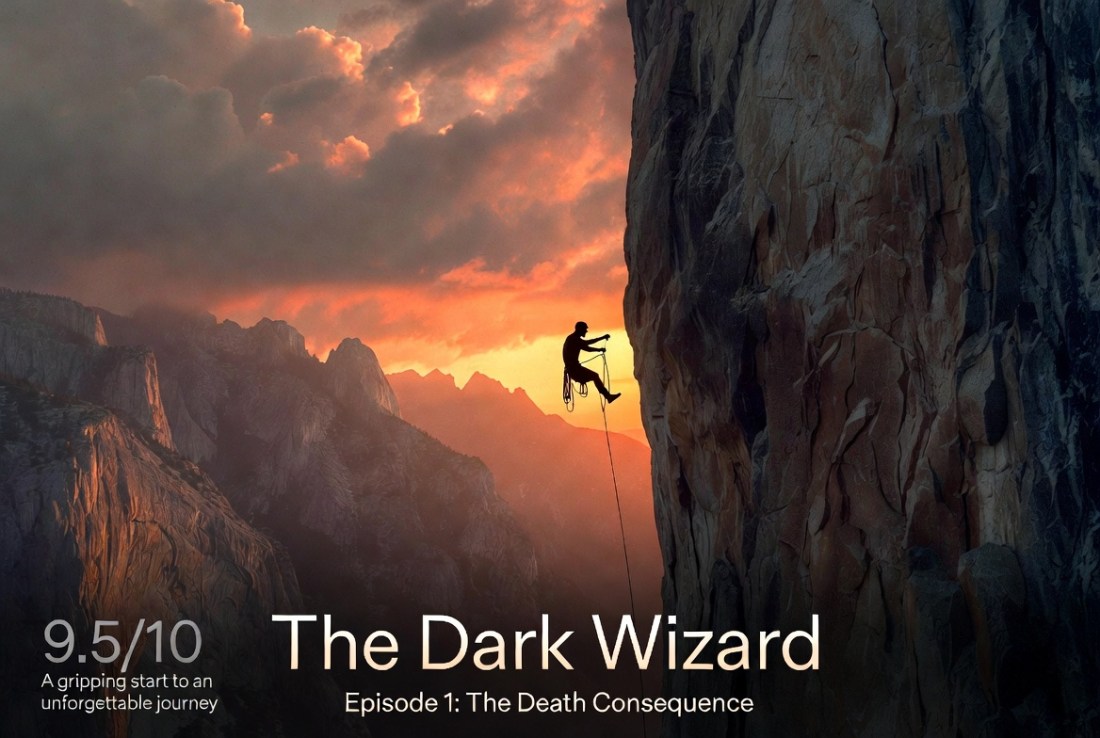
From the very first frame, The Dark Wizard Episode 1 grabs you with the raw, exhilarating energy of extreme climbing and never lets go. Titled “The Death Consequence,” this opening installment serves as a powerful introduction to the legendary—and often controversial—figure of Dean Potter.

It masterfully blends breathtaking footage of his daring feats with intimate glimpses into the man behind the myth, setting up what promises to be one of the most thought-provoking docuseries of the year.The episode opens by immersing viewers in Potter’s early years in Yosemite during the 1990s, where he bursts onto the scene as a fiercely talented, renegade climber. We see him forging new ascents, setting world records, and connecting deeply with a tight-knit community of like-minded adventurers who thrive on the sport’s intoxicating mix of freedom and adrenaline.

The cinematography is nothing short of spectacular—sweeping shots of towering granite walls, heart-pounding sequences of free soloing and base jumping, and slow-motion captures that make you feel the wind and the exposure. It’s viscerally exciting, the kind of footage that leaves you breathless and in awe of human potential.

What elevates this episode beyond a simple highlight reel of athletic achievements is its honest, unflinching exploration of Potter’s inner world. Friends and contemporaries, including Alex Honnold, share candid reflections on his restless energy and the darker undercurrents that drove him. One particularly poignant thread is how Potter used the “death consequence”—that razor-edge awareness of mortality during his most extreme pursuits—as a form of therapy to quiet his racing mind and battle personal demons. Journal entries come alive on screen, revealing a sensitive, introspective soul seeking clarity through emptiness and risk. Lines like “I need to quiet my mind” hit hard, transforming the narrative from pure adrenaline into a profound meditation on mental health, self-medication through danger, and the complex relationship between joy and struggle.

Five stars out of five. Just don’t copy him. A ticket to an early death.