Distant Love (Part 59)

Derek moves his mouse this way, then that way. Anything to keep his mind occupied. There are only a few dots in orbit around the moon for him to worry about. It has been a boring shift. It’s been six Earth days since he met Lulu, and it is now in the middle of the lunar night in his part of the rock. There are only the stars and a distant Earth outside the habitat.

He longs for Earth to breathe natural air and to see its diverse landscapes.

An icon in the bottom-right corner of his screen flashes, with the name Maeve appearing in Times Roman above. His heart beat faster; he had been hesitant to contact her after Lulu, but now had no choice. He couldn’t afford to be seen as not complying with a request from the Lunar Police.

He clicks on the icon.

  • Hi Derek, how have you been? You haven’t been on Darko World recently. I’ve missed our chats.

Derek taps his fingers against the table.

What should I do? Maeve wouldn’t hurt a fly, but her family must be very different. All I know is that I care about her. I’m not going to let them lock her up and throw away the key,

|

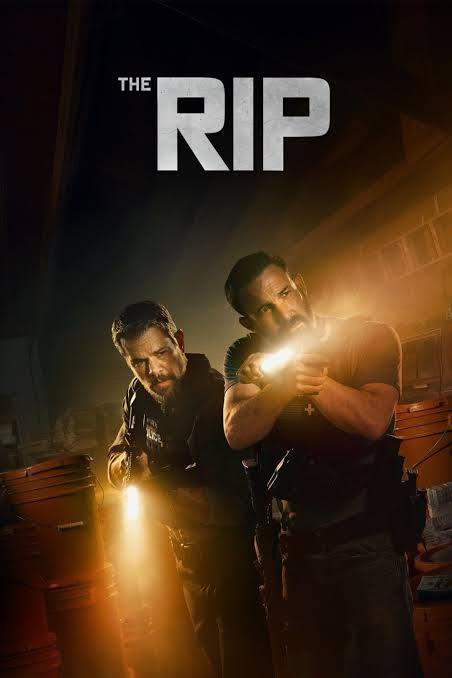
Why You Need to Watch The Rip Right Now!

My dear readers, I have an urgent message for you. Stop whatever you are doing, subscribe to Netflix or a dodgy box, and watch The Rip. Quite simply, it is that good. An easy five stars out of five, and the best gangster type film I’ve seen in years.

The Rip is a 2026 American action thriller film written and directed by Joe Carnahan, who developed the story with Michael McGrale. The film stars Matt Damon and Ben Affleck as police officers within the narcotics unit of the Miami-Dade Police Department. They give stellar performances. It also stars Steven Yeun, Teyana Taylor, Sasha Calle, Catalina Sandino Moreno, Scott Adkins, and Kyle Chandler.

It is inspired by the true story of Miami-Dade County Sheriff Chris Casiano. This film tells the story of a group of police officers who, during a raid on a hidden cash operation, find their trust broken down as team members suspect each other of trying to steal a large sum of cash.

The Rip is a gripping, confidently made film that lingers long after the credits roll. From its opening moments, it establishes a tense, immersive atmosphere and never lets go, pulling the viewer into a story that feels both intimate and unsettling. The film’s greatest strength lies in how controlled and purposeful it is—every scene, every beat, feels intentional.

The performances are a standout across the board. The cast delivers raw, believable work that grounds the film’s more intense moments in genuine emotion. Rather than relying on exaggerated reactions, The Rip allows its characters to unravel in subtle, human ways, making their choices and consequences feel painfully real. This emotional restraint makes the film’s most powerful moments hit even harder.

Visually, The Rip is striking without being showy. The cinematography uses framing, lighting, and movement to reinforce the story’s themes, often communicating more through silence and composition than dialogue ever could. The film has a strong sense of place, and the environment itself becomes part of the storytelling, heightening tension and reinforcing the characters’ inner turmoil.

It is all brought to a well-thought-out and masterful conclusion. No need to thank me. Start Netflixing.

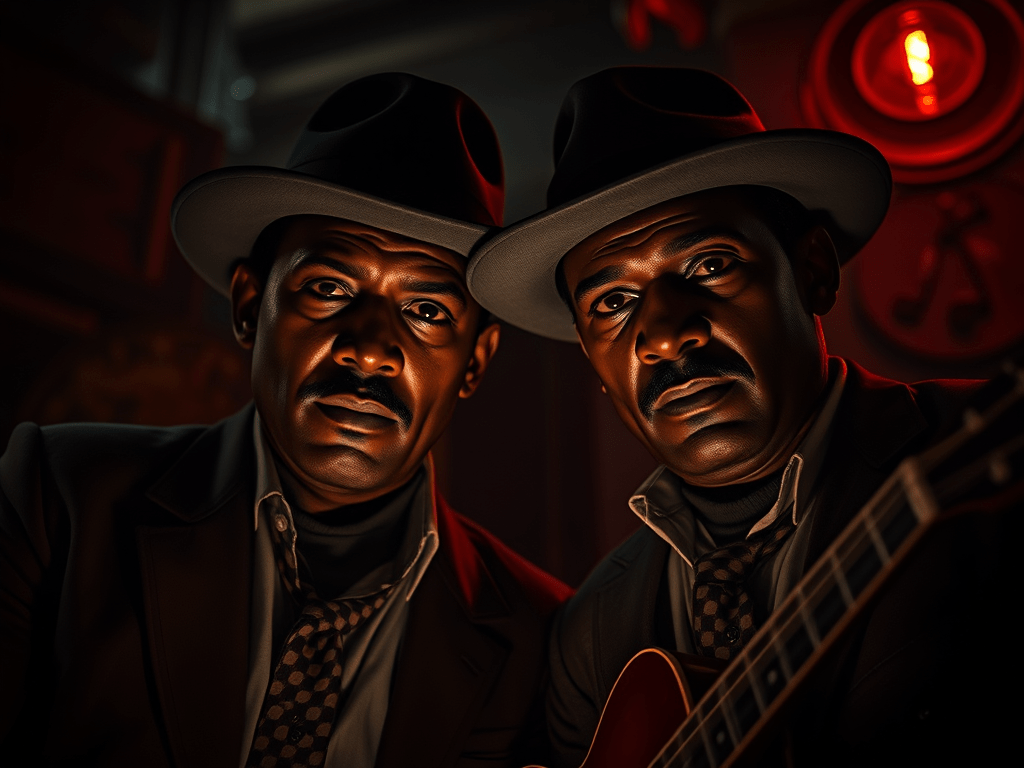
Exploring Horror and Music in Sinners: A Unique Film Review

Hello, my dear readers. Are you in the mood for some horror? I certainly was last Sunday, when I watched Sinners.

Set in 1932 Mississippi, Sinners follows twin brothers Smoke and Stack Moore (both played with stunning nuance by Michael B. Jordan) as they return to their hometown with dreams of opening a juke joint and leaving behind their troubled pasts. They seem to have made it big, splashing their cash at the locals. And they have big dreams.

This period drama was the part of the film I liked the most. I love films from this period, and it was covering a part of the US that I had not witnessed before. It showed the harshess of their environment as they clung to existence.

Then the horror starts. Irish immigrant vampire Remmick shelters from Choctaw vampire hunters with a married Klansman couple, whom he turns into vampires. They are attracted to the Duke joint on its opening night.

One of the things that makes this horror unique is the use of music not just as accompaniment but as a narrative force. Blues sequences aren’t just evocative backdrops — they become conduits for emotion, cultural memory, and even supernatural influence.

There is a lot I like about this film, but the vampires’ behavior was erratic, making it seem too silly at times.

I give the film three stars out of five.

Will Smith shines in new series Pole to Pole

Hi readers, I was flicking through the TV during the week, when I thought I saw Will Smith. So, I flicked back, and there he was. I hadn’t seen him on TV since he gave that Chris Rock (an insidious man if ever there was one) a good slap. Then Will just disappeared. This didn’t really linger in my mind or anything until I saw him again.

And he was going to Antarctica as part of a new documentary series! I’m guessing this has something to do with him seeking redemption. Well, if he’s brave enough to do that, I’m won over already.

I love Antarctica. Well, the idea of it anyway. I might survive for thirty seconds or less in that environment. Richard Parks, the former Welsh rugby player, was his companion. They climb up ice walls and visit three Brazilian researchers in a very remote base.

In fairness to Will, he brings good humor. When talking about the researchers, he says, “What’s our evacuation plan if they start tripping?”

At another point, he shows the proper way to look at a map if you’re in a film.

As a series opener, it succeeds on multiple levels: it’s visually stunning, emotionally grounded, and intellectually engaging. By the end of the episode, Pole to Pole feels less like a traditional documentary and more like an invitation to learn, to care, and to keep watching.

I give the first episode five stars out of five.

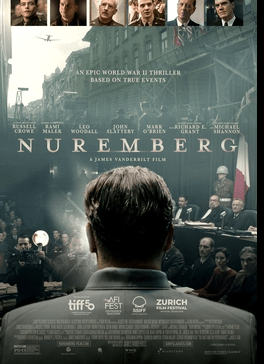
Nuremberg (2025): A Cinematic Exploration of Justice

Not for the faint-hearted, this film is currently being shown on Sky Movies. Nuremberg (2025) is a compelling and meticulously crafted film that succeeds both as a historical drama and as a deeply human exploration of justice, morality, and responsibility. From its opening moments to its final, reflective scenes, the film commands attention with quiet confidence and emotional weight.

One of the film’s greatest strengths is its restrained yet powerful storytelling. Rather than relying on spectacle or melodrama, Nuremberg allows tension to build through dialogue, performance, and ethical confrontation. The screenplay is intelligent and precise, presenting complex legal and moral questions in a way that feels accessible without ever being simplistic. The pacing is deliberate, giving viewers time to absorb the gravity of the events while remaining consistently engaging.

Nuremberg is a 2025 American psychological thriller historical drama film written, co-produced, and directed by James Vanderbilt. Based on the 2013 book The Nazi and the Psychiatrist by Jack El-Hai, the film follows U.S. Army psychiatrist Douglas Kelley (Rami Malek) seeking to carry out an assignment to investigate the personalities and monitor the mental status of Hermann Göring (Russell Crowe) and other high-ranking Nazis in preparation for and during the Nuremberg trials. Leo Woodall, John Slattery, Mark O’Brien, Colin Hanks, Wrenn Schmidt, Lydia Peckham, Richard E. Grant, and Michael Shannon have supporting roles in the film.

Russell Crowe, in particular, gives a breathtaking performance as Hermann Göring. The back and forth of his testimony is the central plank of the film.

Visually, Nuremberg (2025) is striking in its understatement. The cinematography favors muted tones and carefully composed frames, reinforcing the somber atmosphere without feeling oppressive. Production design is detailed and immersive, effectively transporting the audience to the post-war setting while maintaining a grounded, realistic feel. The score is used sparingly but effectively, enhancing emotional moments without overwhelming them.

What truly elevates the film is its thematic depth. Nuremberg does not simply recount historical events—it invites reflection on accountability, the rule of law, and the enduring consequences of moral choices. The film resonates strongly in a modern context, reminding viewers why truth, justice, and ethical responsibility remain essential values. Its relevance feels intentional and timely, adding an extra layer of significance to the viewing experience.

In the end, Nuremberg (2025) stands out as a thoughtful, mature, and deeply respectful film. It is not only an important historical portrayal but also a gripping cinematic experience that lingers long after the credits roll. Powerful without being preachy and emotional without being manipulative, it is a film that rewards careful attention and thoughtful reflection. Highly recommended for audiences seeking intelligent, meaningful cinema.

The film gets five stars out of five from me. Beware, there are some horrific images from the concentration camps in the film.

Have you seen it? Let me know in the comments.

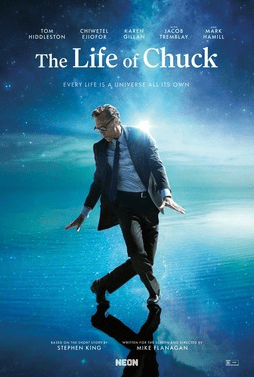
Exploring The Life of Chuck: A Review of a Fantasy Drama

Hi, my readers, I hope you are having a good weekend. This is a different kind of film I watched recently that I found quite entertaining. And maybe you’ll like it too.

The Life of Chuck is a 2024 American fantasy drama film written for the screen, co-produced, edited, and directed by Mike Flanagan. It is based on the 2020 novella of the same name by Stephen King. The film stars Tom Hiddleston, Chiwetel Ejiofor, Karen Gillan, Mia Sara, Carl Lumbly, Benjamin Pajak, Jacob Tremblay, and Mark Hamill, with narration by Nick Offerman.

The film’s plot follows the formative moments in the life of Charles “Chuck” Krantz, chronicled in reverse chronological order, from his death, depicted as the end of the universe, to his childhood.

The film’s greatest strength is its unconventional narrative design. The story unfolds like a memory being gently rewound, each chapter revealing not only new information but also new emotional context. What initially feels mysterious and even abstract gradually becomes intimate and profoundly relatable. The structure isn’t a gimmick—it reinforces the film’s central idea that every life, no matter how ordinary it seems from the outside, contains multitudes.

There are chapters to the film. The first is Act 3, Thanks, Chuck

Chuck mostly doesn’t appear in this Act. Middle school teacher Marty Anderson notes unusual things happening around the world, from natural disasters to the worldwide loss of the Internet. Several billboards and advertisements popping up everywhere display a picture of an accountant named Charles “Chuck” Krantz, accompanied by the words “Charles Krantz: 39 Great Years! Thanks, Chuck!” Marty’s ex-wife, Felicia Gordon, calls him, and they ponder if the end of the universe is upon them. Marty describes Carl Sagan’s Cosmic Calendar, a method to visualise the age of the universe in a single calendar year. Both of them begin seeing more disasters and supernatural occurrences.

After losing telephone service and electricity, Marty goes to Felicia’s home so they can stay with one another in the universe’s final moments, watching as the stars vanish one by one. The end of the universe is revealed to be connected to 39-year-old Chuck, who is bedridden in a hospital, dying from a brain tumor. He is accompanied by his wife, Ginny, and his son Brian. Chuck passes away as Ginny tells him, “39 great years. Thanks, Chuck. Meanwhile, Marty tells Felicia, “I love you,” just as the universe abruptly ends.

You realize that what you have been watching is the destruction of Chuck’s mind.

The next two Acts deal with important moments in Chuck’s life, both sorrowful and joyful. By the end, you realize that Chuck was no boring accountant, but lived a full life. Even if he died at just 39 years of age.

I give it four stars out of five. Now, stop wasting your life, and go watch some TV!

Distant Love (Part 58)

Lula puts her hand through her hair. “Well, it’s not Maeve exactly, more her family. We’re not sure exactly if she is involved.”

“Involved in what?”

“The transportation of drugs from low Earth orbit.”

Derek could feel his heart thumping. “No way!”

Lulu gets out of her seat and stands beside him, showing him her badge.

“Blasters.”

“Hey, no need for foul language. Now make sure to keep smiling. I don’t want to have to bring you to the station for interrogation.”

Derek raises his eyebrows. “Why would you do that?”

Her voice is more aggressive now. “Because, Derek, this is a very serious matter. The quantity of drugs is huge. But most importantly, it will earn me a nice promotion. You will help me, or you’ll be prosecuted as a conspirator. How does that sound?”

The Lunar police had a terrible reputation for corruption and targeting innocents. Derek never thought he’d ever get in their crosshairs. But he had.

“What could you possibly want me to do? Like, I haven’t even ever actually met her.”

Lulu puts her arm around him. “She is the weak link in the family, and you are the closest thing she has to an actual boyfriend. So, for now, keep on talking to her, and I’ll be in touch. I’ve seen how you have been looking at the women here, I’ll give you a piece of what you have been looking for.”

With that, she leans in, kissing him. Her tongue brushes against his lips.

And then she is gone.

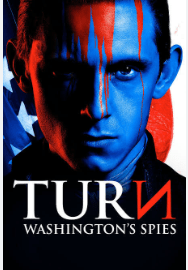
Binge-Watching Turn: Washington’s Spies Review

Well, my dear readers, I am writing at a furious pace to tell you about a series I have been binge-watching. It’s called Turn: Washington’s Spies, and I’ve watched Series 1 and 2 to date. It definitely gets five stars from me.

The series spans the events from 1776 to 1781 and features Abraham Woodhull, a farmer from Setauket, New York, and his childhood friends. They form an unlikely group of spies called the Culper Ring, which eventually helps to turn the tide during the American Revolutionary War. The series begins in October 1776, shortly after British victories, recapturing of Long Island and the Port of New York for the Crown, leaving General George Washington’s army in dire straits.

The show is based on a true story, but fictionalized. The costumes and attention to detail immerse you in the time period.

Season One’s greatest strength is its patient, immersive storytelling. Rather than rushing headlong into espionage theatrics, Series One takes time to establish Setauket as a lived-in community, making the risks of spying feel personal and devastatingly real. The show captures the moral ambiguity of the era: loyalties are divided, neutrality is dangerous, and survival often requires compromise. The often testy relationship between Abraham, and his father is a microcosm of what’s happening in the nation overall. This slow-burn approach pays off by grounding the suspense in genuine human stakes rather than spectacle alone.

The pace in Series Two goes up a notch as things start to become critical for both the spies and the Continental Army.

The best thing about the show is the various characters. My favorite one is Simcoe, a psychopathic British officer who keeps both the sense of threat and intrigue running high.

Running a close second is Anna Strong, who is a spy and at the start, runs the local public house. Her perceived main contribution in the ring was to relay signals to a courier who ran smuggling and military missions for General George Washington. She has a complex, fluid relationship with Abraham, and plays a vital role in what is achieved.

What more can I tell you? It’s currently on Netflix.

Distant Love Part 57

Derek still has some time, and decides, what the hell, he’d have another one.

He feels someone pushing him.

Who is doing that, and where am I?

His eyes dart open to see the lady with the tattoo standing in front. She smells of strong perfume. His head feels clearer. The bar is still full with music blaring.

“Who are you?” Derek enquires. “Are you following me?”

“I’m with the Lunar police, and I’ve been trailing you.”

Derek’s heart shudders. This is far more serious than he would have thought. “Me?”

She gives a wry smile, lifting her right eyebrow. “Yes, more difficult to trail a guy in a wheelchair than I would have thought. I’m patient, but when I realized you had really fallen asleep, and I could be moping around here for hours, I decided to take a more direct approach. Voila, here I am.”

“What could you possibly want with me? I’m Mr. Nobody, sure.”

A drunk woman with brown, curly hair approaches the table, but does a quick turnaround on seeing the woman’s badge.

“I’m Lulu, by the way. She pulls on an e-cigarette. I’m here about your friend, Maeve.”

“Maeve? What has this got to do with her?”

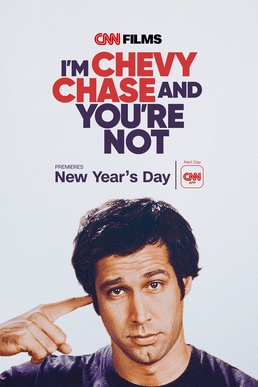
Documentary Review: I’m Chevy Chase and You’re Not

Those of my readers around in the eighties will probably remember Chevy Chase. I remembered him from comedic films from the time period, but it had been many years since I even thought of him.

So, I said I’d give this documentary film a try. Its name is “I’m Chevy Chase and You’re Not.” From the start, it becomes clear that his bad reputation as a coworker will be a big focus, as well as his past drug abuse.

The film does an excellent job of reminding you just how seismic Chase’s impact on comedy really was. Saturday Night Live doesn’t just get a nod—it gets a victory lap. Watching early clips of Gerald Ford tumbling down stairs and Chase anchoring Weekend Update is like seeing comedy history being invented in real time, mostly held together with duct tape and confidence. The documentary smartly lets these moments breathe, trusting the material to remind you why Chase was, for a time, the funniest man in America.

Then come the movies, and oh, what a parade it is. Caddyshack, Fletch, National Lampoon’s Vacation—the documentary rolls through them like a greatest-hits album where every track is either iconic or inexplicably quotable. There’s a genuine joy in revisiting how Chase perfected the art of the smug, clueless, yet weirdly lovable leading man. His comic persona—equal parts charm and chaos—gets the credit it deserves as a blueprint for generations of comedians who followed.

But then there are the drugs. And he did a lot. And he could be mean. The drug abuse, his comedy, and this meanness all likely have one source – an abusive mother. He developed it as a coping mechanism. It is one he still uses as he makes jokes to deflect difficult or awkward moments, even in his eighties. Still, even his meanness comes off as him being a bit of a rascal.

When the stories get messy. You come away with the sense that Chase’s imperfections didn’t cancel out his contributions—they complicated them, humanized them, and, strangely, made his successes even more impressive.

By the end, the documentary feels less like a verdict and more like a well-earned, slightly crooked standing ovation. It celebrates a man who made millions of people laugh, sometimes by falling down, sometimes by being the joke, and sometimes by being in on it all along.

It gets four out of five stars from me.

If you’ve seen it, what did you think?