Mourinho: The Rise of Football’s ‘Special One’ Unveiled

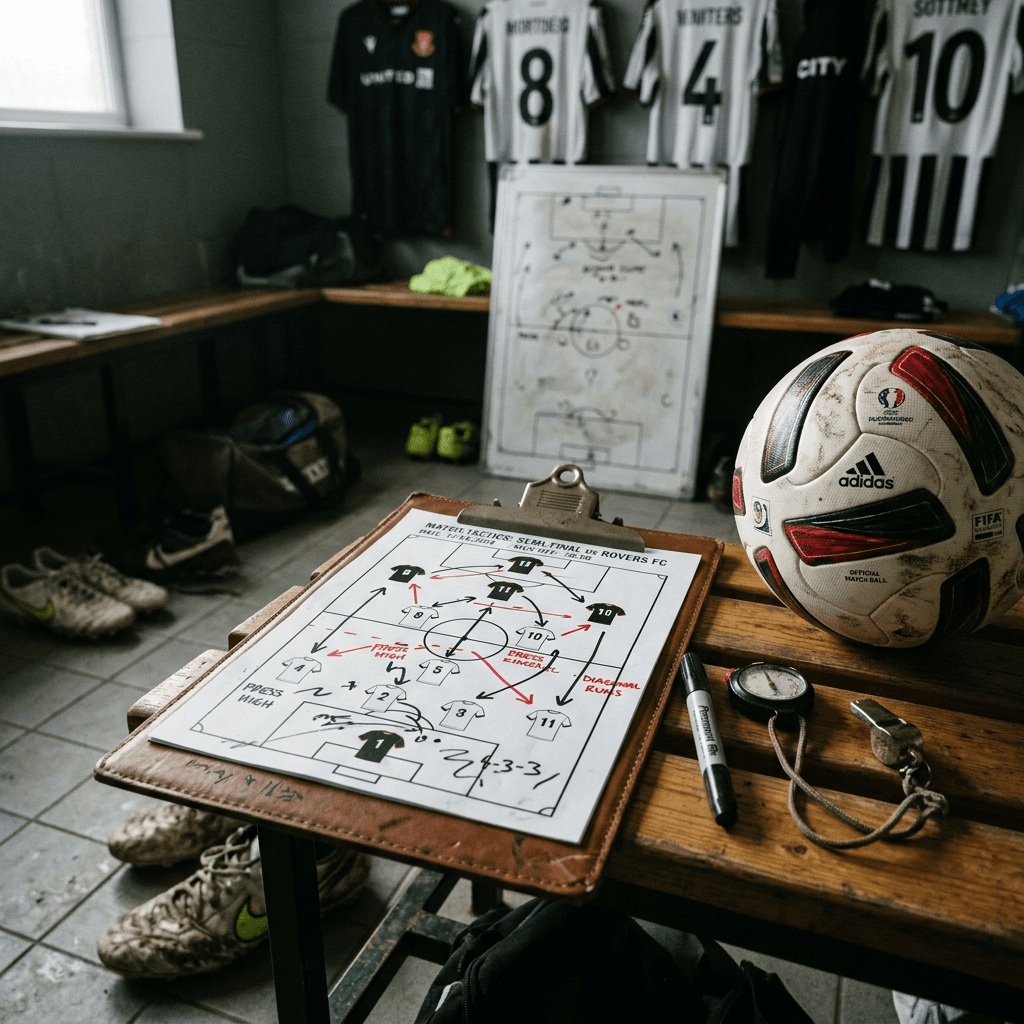
Soccer tactical plan clipboard with a ball, whistle, and stopwatch on a bench in a locker room

The best thing about Mourinho as far as I’m concerned was the role he played in crushing the Manchester Utd, Arsenal duopoly in the Premier League. For that reason, he will always be “The Special One.” It was with some nostalgia that I watched this series last night.

Mourinho is a thoroughly engaging, high-production three-part Netflix documentary series that delivers an intimate, trophy-laden portrait of one of football’s most charismatic, polarizing, and successful managers. Released globally on 11 August 2026 and directed by BAFTA- and Emmy-nominated Joe Pearlman (known for work on Robbie Williams and Lewis Capaldi: How I’m Feeling Now), with production from double Academy Award-winner John Battsek (of the acclaimed Beckham series), it benefits from two years of exclusive access to José Mourinho himself.

The series charts the arc of “The Special One” with energy and style, beginning with his breakthrough at Porto—capped by the stunning 2004 Champions League triumph—and moving through his transformative first spell at Chelsea, the historic treble-winning campaign at Inter Milan, the intense Real Madrid years, and key later chapters. It captures the essence of a manager who won league titles in four different countries and lifted the Champions League twice, revolutionizing what it meant to lead elite clubs while generating endless headlines and contradictions.

What elevates Mourinho is the exceptional roster of interviewees who bring the story to life with candid reflections. Sir Alex Ferguson, Didier Drogba, Frank Lampard, John Terry, Zlatan Ibrahimović, Samuel Eto’o, Iker Casillas, Marcelo, Javier Zanetti, Petr Čech, Eden Hazard, and many others offer firsthand accounts of Mourinho’s methods, motivational genius, and larger-than-life presence. These voices illuminate why players would “run through walls” for him and how he commanded dressing rooms across Europe. Mourinho’s own interviews form the emotional core—charismatic, self-assured, and occasionally revealing—including the notable confession about nearly succeeding Ferguson at Manchester United in 2013 before choosing to return to Chelsea for a sense of belonging and love after his Madrid experience.

The production values shine throughout. Archival footage of iconic matches and celebrations pairs seamlessly with contemporary reflections, creating a dynamic, fast-paced narrative that feels both celebratory and insightful. Mourinho’s personality leaps off the screen: the competitive fire, the tactical obsession, the theatrical flair, and the unapologetic drive that turned him into a global icon. Moments of vulnerability—such as reflections involving family—add human depth without diluting the larger-than-life mythos. As Mourinho himself notes in spirit, you don’t make a documentary about someone who wins nothing; this series earns its subject by focusing on two decades of sustained excellence and the force-of-nature persona that made him essential viewing.

For football fans, Mourinho is pure box office. It celebrates the wins, the rivalries, the mind games, and the pure drama of a career that redefined modern management. Even as it portrays football’s ultimate contradiction—the winner the game can’t live without and sometimes struggles to live with—it leaves you admiring the relentless ambition and the special quality that made José Mourinho a legend.

Still, I felt that some of the conflict was glossed over. There was ittle mention of the Champions League semi final with Barcelona that almost totally boiled over

Three stars out of five from me.

2026 World Cup Highlights: Spain’s Triumph and Record Attendance

Glowing soccer ball flying over Earth with digital light trails representing global connection

Hello readers, I don’t know about you but I thoroughly enjoyed the World Cup. Okay, it helps that I won 150 euro with Argentina at my work draw. And the actual final was a bore fest.

Still, The 2026 FIFA World Cup, co-hosted by the United States, Canada, and Mexico, was an unqualified triumph—the biggest, most attended, and one of the most thrilling editions in the tournament’s history. From June 11 to July 19, this expanded 48-team spectacle delivered drama, upsets, record crowds, and unforgettable moments, culminating in Spain’s deserved 1-0 extra-time victory over defending champions Argentina in the final at MetLife Stadium.

The numbers alone tell a story of massive success. Attendance shattered the 1994 record (set in the U.S.), surpassing 3.6 million early and ultimately drawing well over 4.6 million fans across 104 matches with a staggering 99.7% stadium occupancy rate and averages around 64,000–65,000 per game.

It was also a tournament where the world’s best players shone, especially Messi and Mbappe. We are truly blessed to be able to witness such great players.

Spain emerged as the undisputed stars, claiming their second World Cup title (first since 2010) with a masterclass in possession, defense, and clinical finishing. They extended an unbeaten run to 38 games, conceded just one goal all tournament, and dominated the final despite Argentina’s resilience. Rodri earned the Golden Ball as the tournament’s best player, while young talents like Lamine Yamal shone brightly. Their extra-time winner—Ferran Torres volleying home after a brilliant Nico Williams header in the 106th minute—capped a controlled performance where Argentina managed zero shots on target.

Argentina fought valiantly to defend their crown, with Lionel Messi delivering moments of magic. But they let themselves down badly in the final with over defensive play, cheating and bad tackles. And I was supporting them.

The real heroes included underdogs like Cape Verde, the smallest nation ever to reach the knockouts. They drew with Spain, pushed Argentina to extra time in a 3-2 thriller, and captured hearts with their resilience and skill. Other surprises, strong runs from teams like Morocco, Norway.

Highlights abounded: dramatic comebacks (e.g., Argentina’s 3-2 turnaround), penalty shootouts, end-to-end thrillers, and emotional celebrations. The third-place playoff saw England edge France 6-4 in a goal-fest. Host nations punched above expectations at times, with passionate crowds creating a festival vibe. One thing I hope never to see again though is farcical water breaks when they are not needed.

The 2026 World Cup wasn’t just bigger; it felt more inclusive and joyful. It blended established powerhouses with fresh narratives, high-stakes football with global party energy, and legacy venues with modern flair. Spain’s triumph symbolized a new era of exciting, disciplined play, while underdog stories and record engagement showed football’s universal pull.

Liverpool’s Istanbul: A Miracle Documentary Review

Atletico Madrid players celebrating with fans after 3-3 draw vs Liverpool

Untold UK: Liverpool’s Miracle of Istanbul is not just another documentary about that legendary 2005 Champions League final—it’s the one fans have been waiting for. Streaming on Netflix, this 78-minute film captures the drama, emotion, and sheer improbability of Liverpool’s comeback from 3-0 down at half-time against AC Milan with a freshness and intimacy that makes it feel brand new, even two decades later.

I still remember the night unfolding as a Liverpool supporter. The horror, then the very unexpected elation. I was the only person in the house so I could shout as loud as I wanted.

From the opening minutes, director Matt Rudge sets the stage perfectly. The 2004/05 season was turbulent: a new manager in Rafael Benítez, key departures (including the looming exit of Michael Owen), squad uncertainty, and a rocky path through the competition.

Jamie Carragher gives an intriguing insight into what is happening. He is at an England and newly appointed Benitez arrives to have a meeting with his three star Liverpool players – Owen, Gerrard and Owens. Carragher expects him to give them a warm embrace and his plans for the future of the team. Instead, he concentrates on where they need to improve as individuals – Owen leaves the club. Gerrard thinks about it. It takes time for them to warm to Benitez, but things gradually click.

The film doesn’t rush to the final. It builds the context beautifully—Liverpool’s struggles, the tactical masterclass that got them to Istanbul, and the underdog spirit that defined the club. Archive footage is crisp, evocative, and plentiful, blending seamlessly with modern interviews that feel raw and reflective.

The real magic lies in the voices. Steven Gerrard, Jamie Carragher, Xabi Alonso, and Rafa Benítez (among others) speak with the hindsight of champions but the passion of men who still can’t quite believe what happened. Gerrard’s leadership and that iconic half-time team talk, Carragher’s never-say-die attitude, Alonso’s cool penalty, and Benítez’s tactical tweaks come alive in ways that go beyond the highlights we’ve all seen a thousand times. You feel the tension in the dressing room, the roar of the Liverpool fans in the stands, and the disbelief as goals from Gerrard, Šmicer, and Alonso turned the game on its head before the dramatic penalty shootout.

Five stars out of five from me. A must watch for all Liverpool supporters, or people who love the beautiful game.