
Hello everyone, yesterday I went to see my first film in years. Cinemas have changed quite a bit over the years. Using smartphones to book seats. How strange! All the posters to say what was on were no more. It was mostly teenagers; they must have wondered what the auld fella was up to.
But what did I think of the film?
The Odyssey (2026), directed by Christopher Nolan, is a breathtaking, monumental achievement—an IMAX-scale epic that transforms Homer’s timeless poem into a visceral, emotionally resonant cinematic voyage of unmatched ambition and power. From the opening moments, Nolan plunges us into a world of myth and consequence that feels both ancient and prescient.
Matt Damon delivers a stellar performance as Odysseus, the cunning, battle-weary king of Ithaca whose decade-long struggle to return home after the Trojan War becomes a profound meditation on guilt, resilience, leadership, and the longing for home. Damon captures every facet of the character: the brilliant strategist, the flawed warrior haunted by his choices, the devoted husband and father, and the survivor who must confront the cost of his own cleverness. His Odysseus is fully human—proud, resourceful, and deeply complicated—never reduced to a simple action hero.
Anne Hathaway is equally extraordinary as Penelope, radiantly strong and fiercely intelligent as she holds Ithaca together against the predatory suitors who overrun her household. Her quiet determination and emotional depth anchor the film’s parallel storyline. Tom Holland brings youthful intensity and growth to Telemachus, the son searching for both his missing father and his own place in a fractured world. The supporting cast is a dazzling ensemble: Robert Pattinson is perfectly hateable as the sleazy Antinous; Charlize Theron is mesmerizing as the alluring Calypso; Samantha Morton is chilling and magnetic as Circe; Zendaya brings quiet power and wisdom as Athena; Lupita Nyong’o shines in dual roles as Helen and Clytemnestra; and John Leguizamo adds heartfelt loyalty as the faithful Eumaeus.
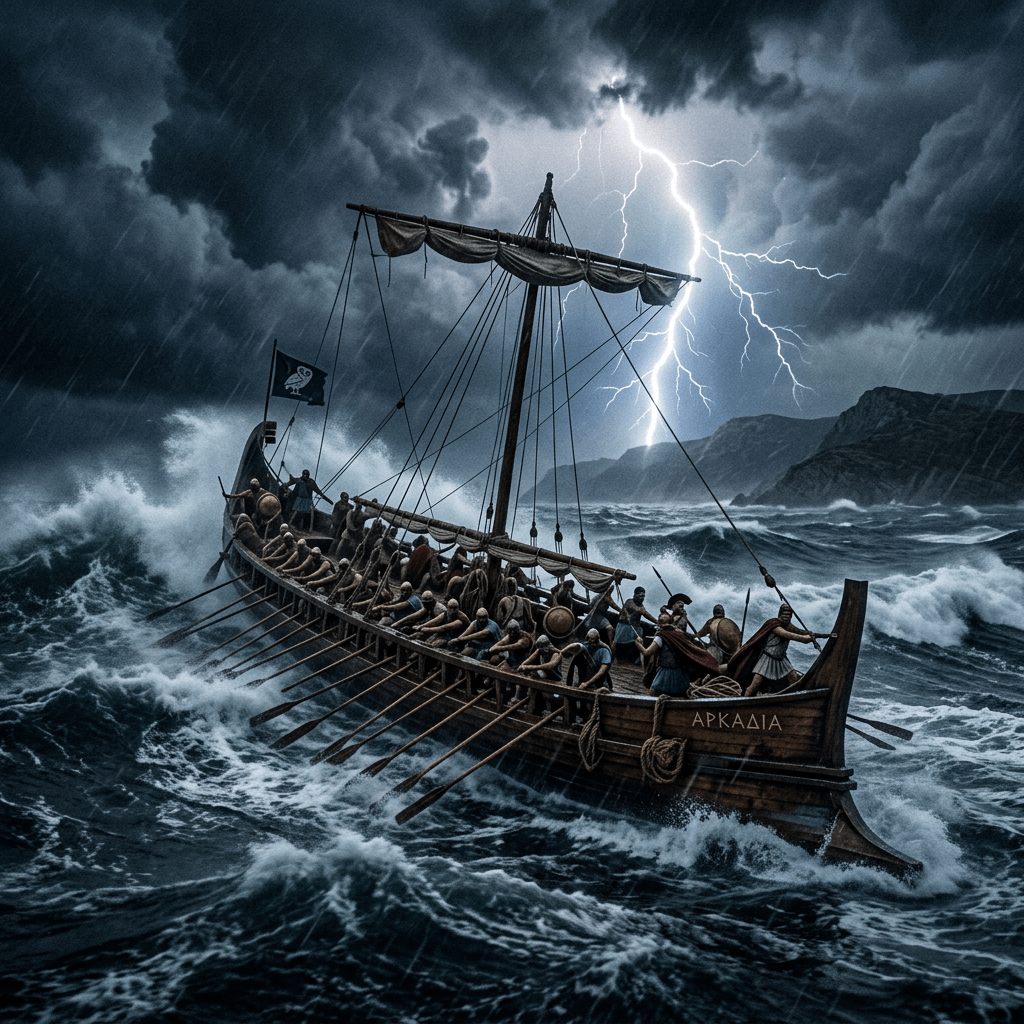
Nolan’s direction is at its most confident and expansive. Shot entirely on IMAX 70mm film cameras, the film is a technical marvel—every frame brimming with tactile grandeur. The practical effects, sweeping location work across Greece, Morocco, Iceland, and beyond, and Hoyte van Hoytema’s cinematography create an immersive experience that no digital spectacle can match. You feel the spray of the sea, the weight of the Trojan Horse, the terror of the Cyclops’s cave, the seductive pull of the Sirens, and the raw chaos of battle. Ludwig Göransson’s score elevates every sequence with thunderous, haunting power that underscores both the mythic scale and the intimate human drama.
What elevates The Odyssey beyond pure spectacle is its emotional and philosophical richness. Nolan weaves the classic episodes—Polyphemus, Circe, the Underworld, Scylla and Charybdis, Calypso—into a non-linear tapestry that explores fate versus free will, the burdens of war, the meaning of hospitality and loyalty, and the hard path toward redemption and reunion. The film honors the spirit of Homer while thoughtfully expanding the narrative with material from related myths, creating a cohesive, thrilling whole that never loses sight of the characters’ hearts. The final act, in particular, delivers a cathartic, rousing payoff that feels earned and deeply moving.
The Odyssey is Christopher Nolan at the height of his powers: a grand, passionate, visually stunning homecoming story that reminds us why these ancient myths still matter. It is one of the most impressive and rewarding epic films of the decade—best experienced on the largest screen possible. Do not miss it.
Four stars out of five from me.
 Mark's Writing Corner