
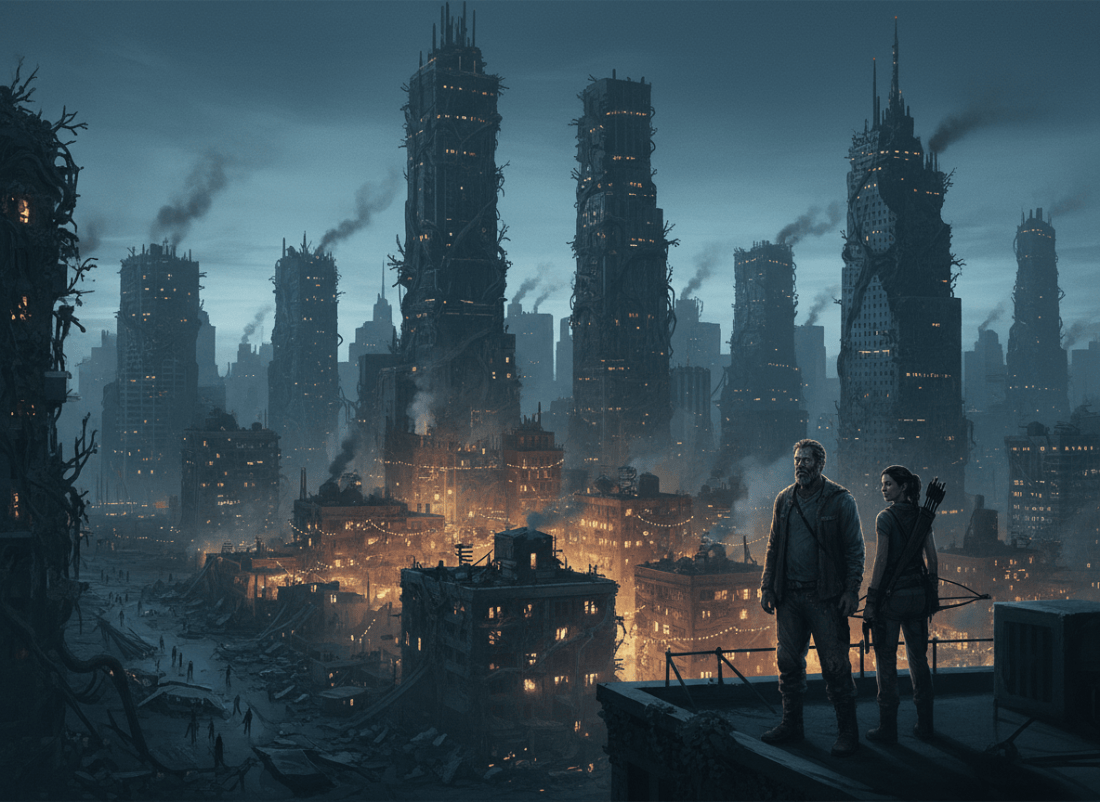
My fellow zombie lovers, you will delighted to hear that Series 3 of Dead City is out. So far I’ve watched the first two episodes and I haven’t been disappointed.
The Walking Dead: Dead City Season 3 is the season this spin-off has been circling for two years: leaner, warmer, and finally built around what Maggie and Negan can become together rather than what they keep refusing to forgive.
After seasons that sometimes felt trapped in the same argument, Season 3 lets the pair stop circling the grave and start building something. The official pitch is simple and surprisingly effective: Maggie and Negan put their differences aside to help create the first thriving community in Manhattan since the fall. That shift, under new showrunner Seth Hoffman, is the whole point. The show still has walkers, raids, and ugly choices, but the engine is no longer revenge. It is whether two people with a decade of blood between them can share a purpose without collapsing.
Lauren Cohan and Jeffrey Dean Morgan have always been the reason to watch. Here they finally get scenes that treat their history as settled enough to work with, not as a reset button. Maggie is a leader again, not just a wound in motion. Negan is useful, funny, and still dangerous, but the performance is less about swagger and more about someone who wants a place to stand. Their chemistry is sharper when they are allies with unfinished business than when they are enemies reciting the same speech. Hershel’s presence gives that alliance a future instead of just a score to settle
The new company helps. Aimee Garcia’s Renata and Raúl Castillo’s Luis give the season a community with a pulse: siblings trying to make a hospital and a neighborhood feel like a home instead of a bunker. Jimmi Simpson’s Dillard is the season’s wild card, eccentric and increasingly unhinged, the kind of guest star who makes every scene tilt. The show uses these characters to ask a better question than “Who is the next warlord?” It asks what happens when hope advertises itself in a city that has learned not to trust beacons.
Hoffman has talked about wanting hope after years of writing some of the franchise’s bleakest stretches, and you can feel that intention. Season 3 is still violent and messy. It is also interested in work, mentorship, apartments, overflow survivors, and the awkward business of living next to people you did not choose. Manhattan looks better for it. The city is not just rubble and set dressing; it is a place characters want to keep.
Four stars out of five from me.

