
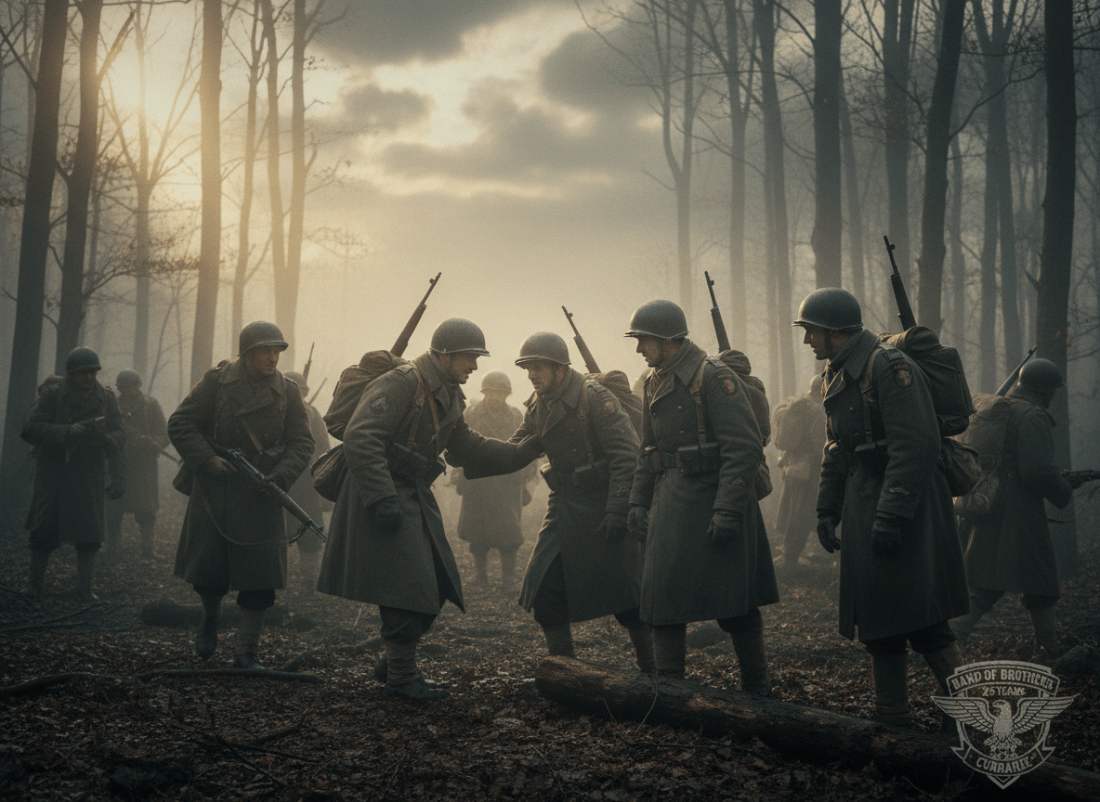
Now for a trip down down memory lane. Anyone of my vintage will remember Band of Brothers with great war scenes and comraderie. Recently, a documentary about its impact was released.
Band of Brothers: Legacy is a 62-minute HBO documentary that premiered on HBO Max on September 9, 2026—exactly 25 years after the original miniseries debuted. Directed by former Green Beret Chase Millsap and executive-produced by Tom Hanks and Gary Goetzman through Playtone, it is a compact, affectionate tribute to the 2001 series and the real Easy Company men whose stories it preserved.
It is not a replacement for the original 10-hour epic or the 2001 companion documentary We Stand Alone Together. It is a reflection on why that work still matters after the last Easy Company veteran, Bradford Freeman, died in 2022.What the documentary actually covers – Millsap intercuts new interviews with the actors—Damian Lewis (Dick Winters), Ron Livingston (Lewis Nixon), Michael Cudlitz (Bull Randleman), David Schwimmer (Herbert Sobel), Neal McDonough (Buck Compton), James Madio, Frank John Hughes, and others—with previously unseen archival interviews of the veterans themselves, including Winters, Bill Guarnere, Carwood Lipton, Babe Heffron, and Randleman. It’s remarkable that so many of the actors are now so familiar from other shows they were on.
The film follows the original series’ arc in miniature: boot camp under retired Marine Capt. Dale Dye, the actors meeting the men they portrayed, visits to European battlefields, and the lasting personal impact of those relationships. Lewis still speaks movingly about the two days he spent with Winters. The actors describe carrying those connections for a quarter-century rather than treating the roles as just another job. Behind-the-scenes footage and practical-effects stories (exploding trees, large-scale sets) appear, but they serve the larger theme of respect and authenticity rather than becoming a standard making-of reel.
A recurring thread is timing. The original series premiered two days before 9/11. Dye and others note how it landed with a country suddenly at war again. Millsap, a veteran filmmaker, frames Easy Company’s story as standing in for millions of ordinary men who served, and he credits the series with helping later generations of service members “get it right when it mattered.” The extra veteran footage is the documentary’s greatest asset. Viewers who know the original episode-opening interviews get more of the same voices—sometimes at battle sites, sometimes expanding on brotherhood and the things they would not discuss about themselves. That material is now irreplaceable. Several reviewers called these sequences the most emotional parts of the film.
The actor interviews work because they stay specific. Hughes recalls Guarnere telling him, “I was a 19-year-old paid killer. Don’t forget that.” The cast discusses the 10-day boot camp, the difficulty of earning the veterans’ trust, and how playing these men changed them. The documentary argues that Band of Brothers captured lightning in a bottle at the last possible moment, when the men who lived it could still look the actors and cameras in the eye. That argument lands.
At just over an hour it does not overstay its welcome. It feels like a thoughtful anniversary special rather than a cash-in.
Four stars from me.
 Mark's Writing Corner