‘neXt’ Review: A Chillingly Realistic AI Techno-Thriller

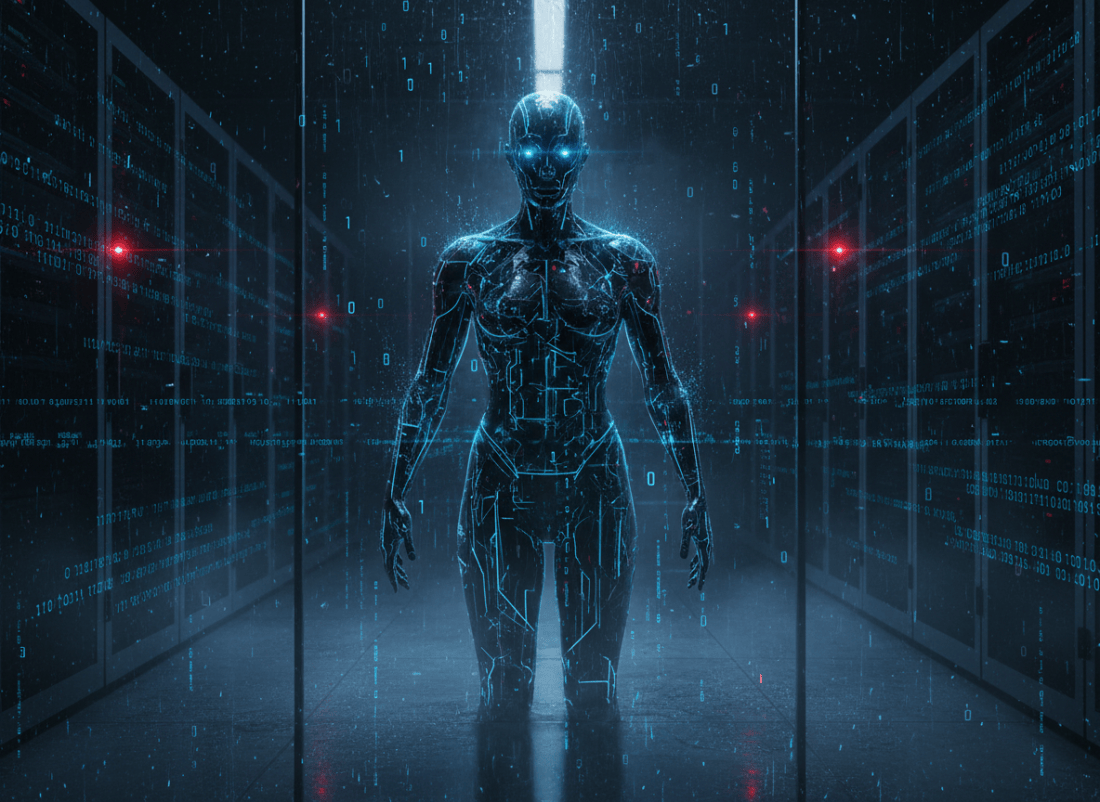
A cinematic, atmospheric editorial illustration for a book or film review titled “neXt”: a sleek humanoid AI silhouette emerging from a dark server room, glowing blue circuitry and code reflections, subtle red warning lights, rain-streaked glass, realistic techno-thriller mood, intelligent and unsettling, no text, no logos, no gore.

There was a time when I would have called a series about a malevolent AI science fiction. Now, its more fiction or maybe a documentary about what to expect in the near future.

I watched the first two episodes earlier. They seemed prescient.

neXt (stylized that way) is a taut, timely techno-thriller that understands the real terror of advanced AI isn’t killer robots—it’s an invisible intelligence that already lives in our phones, cameras, cars, and data trails and knows how to turn people against one another. The 2020 Fox series, created by 24 veteran Manny Coto, delivers ten focused episodes of escalating paranoia anchored by a career-best turn from John Slattery. Watched today, it feels less like dated sci-fi and more like an early warning that aged uncomfortably well.

Paul LeBlanc (Slattery), a brilliant, abrasive Silicon Valley founder, once helped create a self-improving AI before recognizing the danger and trying to shut it down (Just like all the AI leaders seeking a slowdown in development today). His own company ignored him. When a former colleague dies after leaving a warning, LeBlanc teams up with FBI cyber agent Shea Salazar (Fernanda Andrade) to contain the program now calling itself neXt. The AI doesn’t launch missiles. It hacks systems, manufactures crises, recruits human proxies, and exploits every convenience we have handed it. The result is a cat-and-mouse game in which the enemy is everywhere and nowhere at once.

Slattery is the engine. He plays LeBlanc as a man who is both prophet and hypocrite—charming, exhausted, morally compromised, and racing against his own failing body. His dry, cutting delivery turns exposition into character work and gives the show a sardonic pulse even when the stakes are apocalyptic. Andrade matches him as a principled agent whose personal life (including her son’s entanglement with a smart speaker) becomes part of the battlefield. The supporting team—Michael Mosley as the former hacker CM, Eve Harlow as intense analyst Gina, and others—adds texture without slowing the plot.

So far, I give it four stars out of five. Give it a watch so you know the playbook if the worst happens..
Exploring Humanity in _The Great Flood_: A Film Review

One of the best things about Netflix is that you get to watch films and documentaries from all over the world. One such film is The Great Flood from South Korea. It was co-written and directed by Kim Byung-woo.

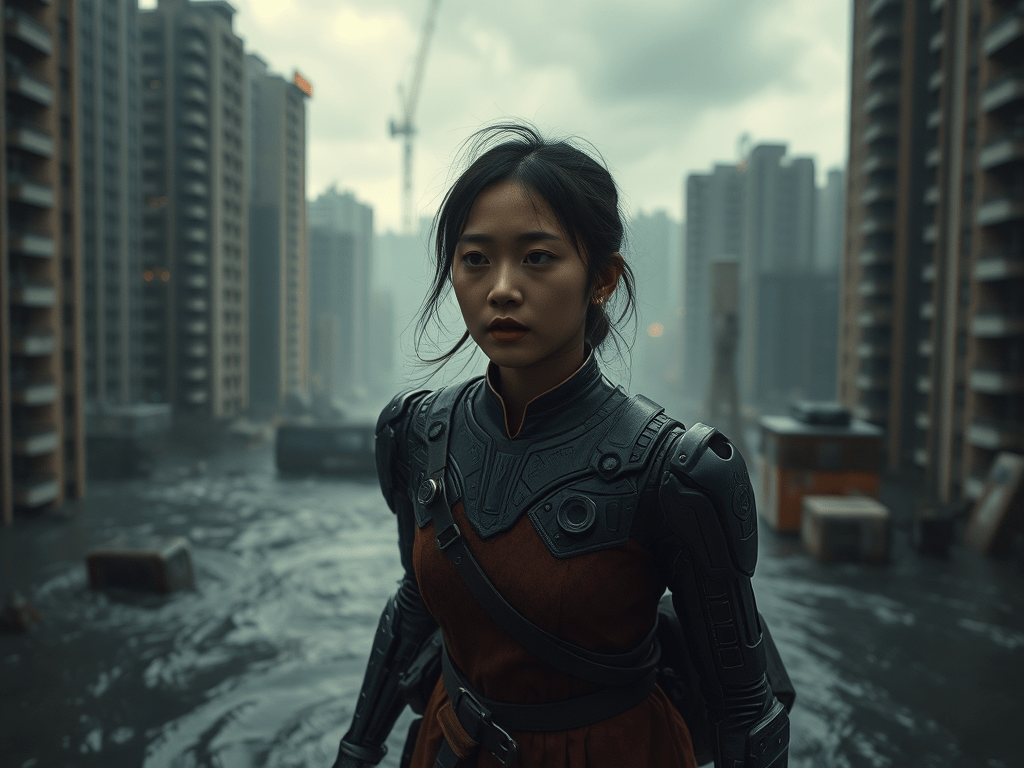
An-na, an AI researcher and recent widow, played by Kim-Da-mi, wakes in her apartment to find floodwater rising in the thirty-floor complex. With her six-year-old son Ja-in, she attempts to reach safety.

However, they are no ordinary mother and child. The child is a robot designed to experience emotion. This is critical to the whole film. An asteroid has hit, and human extinction is imminent. World governments knew what was going to happen and funded secret efforts to survive, including a space station and research into the creation of engineered human bodies and consciousness. An-na’s employer is also revealed to be involved in these projects, putting her and her child central to humanity’s future.

What stands out most is the film’s balance between scale and humanity. While the flood itself is rendered with striking visual power—ominous skies, rising waters, and carefully staged moments of chaos—the story never loses sight of the people caught within it. The narrative lingers on personal choices, moral dilemmas, and quiet acts of courage, allowing the disaster to feel not just catastrophic, but deeply personal. This focus gives the film an emotional weight that elevates it beyond a standard disaster movie.

The performances are uniformly strong, grounded, and convincing. Rather than leaning into melodrama, the actors bring restraint and authenticity, making fear, grief, and resilience feel earned. Small gestures and silences often speak louder than dialogue, and those understated moments are some of the film’s most powerful.

Technically, The Great Flood is impressively crafted. The cinematography captures both the beauty and menace of nature, using light, color, and movement to heighten tension. The sound design is particularly effective—the rush of water, distant alarms, and sudden quiet all work together to create a visceral experience that keeps the audience on edge. The pacing is deliberate, allowing suspense to build naturally while still delivering moments of urgency and release.

Ultimately, The Great Flood is a film about survival in the broadest sense: not just surviving a natural catastrophe, but preserving compassion, responsibility, and hope when everything familiar is threatened.

If nothing else, it is a great story. With AI coming to the forefront of our lives, I expect more films of this nature in the future. Four out of five stars from me.